
Types Of Sand Used For Construction In India 2026: Use Cases, Prices, and Comparison
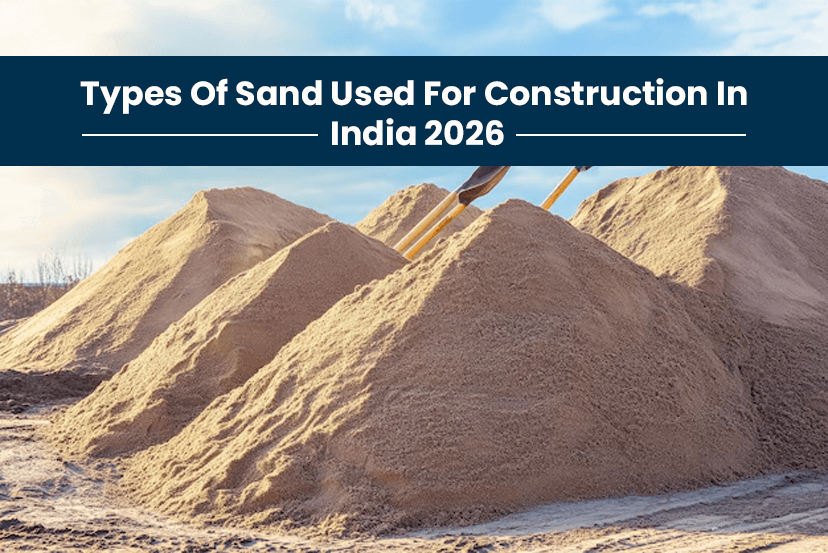
Sand is one of the core raw materials of the construction industry, forming the backbone of concrete, mortar, plaster, roads, and infrastructure projects. From small residential homes to massive highways, bridges, and commercial complexes, the quality and type of construction aggregates used directly influence structural strength, durability, finish, and overall project cost. Industries and construction businesses looking to procure sand in bulk of different types, then Moglix is the right platform to buy it from reliable suppliers.
As India continues its rapid urbanization and infrastructure development in 2026, alongside stricter environmental regulations on sand mining, choosing the right type of construction sand has become more important than ever. This comprehensive guide explains the types of sand used for construction in India, their features, applications, importance, and latest price trends.
Why Sand Is So Important in Construction
Sand acts as a filler and binding material when mixed with cement, lime, and water. Its role is crucial in:
- Improving compressive strength of concrete
- Enhancing workability and bonding
- Reducing shrinkage and cracking
- Ensuring smooth plaster finishes
- Increasing the durability and lifespan of structures
Using the wrong type of sand can lead to weak concrete, excessive cracks, corrosion of reinforcement, and long-term structural damage.
Check out the Types of Sand used in various construction work
1. River Sand (Natural Sand)
River sand is naturally sourced from river beds and banks. Due to continuous water flow, the sand particles become smooth, rounded, and well-graded over time.
Key Features
- Fine to medium-sized grains
- Smooth texture and good workability
- Light brown, off-white, or grey color
- Low clay content when properly washed
Common Use Cases
- Brick masonry work
- Wall plastering and finishing
- Flooring and tiling base
- General RCC work (when quality tested)
Importance in Construction
River sand has long been considered the gold standard due to its excellent bonding properties and smooth finish. It is especially preferred for plastering, where fine texture and finish quality are critical.
However, due to government restrictions, environmental concerns, and depletion of river beds, availability has become limited in many states.
River Sand Price in India (2026)
- ₹2,200 – ₹3,200 per tonne
- Prices vary based on state regulations, transportation distance, and seasonal demand
2. M-Sand (Manufactured Sand)
M-Sand is an artificially produced sand made by crushing hard stones such as granite and basalt in controlled conditions. It is now the most widely used alternative to river sand in India.
Key Features
- Angular and cubical particle shape
- Uniform grading and consistent quality
- Low silt, clay, and organic impurities
- Better compressive strength in concrete
- Environment-friendly and sustainable
Types of M-Sand
- Concrete M-Sand – Designed for RCC and structural work
- Plastering M-Sand – Finer particles for smooth plaster finish
- Brickwork M-Sand – Optimized for masonry applications
Use Cases
- RCC structures (columns, beams, slabs)
- Roads, highways, and flyovers
- Precast concrete products and blocks
- Brick and block masonry
- Infrastructure and industrial projects
Importance in 2026
With river sand becoming scarce, M-Sand has emerged as the preferred construction sand due to:
- Predictable quality
- Easy availability across India
- Lower cost compared to river sand
- Compliance with sustainable construction norms
M-Sand Price in India (2026)
- ₹1,400 – ₹2,200 per tonne
- Generally, 15–30% cheaper than river sand
3. Pit Sand (Coarse Sand)
Pit sand is extracted from pits or inland deposits away from river beds. It is naturally coarse and angular.
Key Features
- Sharp, angular particles
- Reddish-brown color due to iron content
- High strength and good cement bonding
- Free from salt contamination
Use Cases
- Concrete foundations
- Structural RCC work
- Road construction
- Heavy-load bearing structures
Importance
Pit sand provides excellent interlocking with cement, making it ideal for structural and foundation work where strength is more critical than finish.
Price Range
- Comparable to river sand, depending on local availability
- Transport cost significantly affects final pricing
4. Sea Sand
Sea sand is found along coastal regions but is generally avoided for mainstream construction due to high salt content.
Key Features
- Fine particles
- Contains chlorides and sulphates
- High corrosion risk
Use Cases
- Landfilling and leveling
- Non-structural applications (after extensive washing)
Limitations
Untreated sea sand can:
- Corrode steel reinforcement
- Reduce concrete durability
- Cause long-term structural failure
Price
- Lower raw cost, but treatment and washing increase expenses
5. Desert Sand
Found mainly in arid regions like Rajasthan, desert sand is abundant but rarely used in construction.
Key Features
- Extremely fine and rounded particles
- Poor bonding properties
- Smooth texture
Use Cases
- Rarely used without processing
- Experimental or blended applications only
Why It’s Not Preferred
Due to its smooth and round grains, desert sand does not bind well with cement, resulting in weak concrete and mortar.
6. Silica Sand
Silica sand has a high silicon dioxide (SiO₂) content and is mainly used for industrial and specialty applications.
Key Features
- High purity and hardness
- White or translucent appearance
- Chemically stable
Use Cases
- Glass manufacturing
- Ceramics and foundries
- Decorative concrete and flooring
- Water filtration systems
Construction Relevance
Not commonly used for general construction, but valuable for specialized architectural and industrial purposes.
Sand Price Influencing Factors in India (2026)
Sand prices are affected by:
- Type and quality of sand
- Mining and environmental regulations
- Transportation distance and fuel costs
- Seasonal demand (peak construction months)
- Regional availability and government permits
Quick Comparison Table
| Sand Type | Best Use | Strength | Cost | Availability |
| River Sand | Plastering, masonry | Medium–High | High | Limited |
| M-Sand | RCC, infrastructure | High | Medium | High |
| Pit Sand | Foundations | Very High | Medium–High | Regional |
| Sea Sand | Land filling | Low | Low | Coastal |
| Desert Sand | Rare use | Low | Low | Limited |
| Silica Sand | Industrial | High | High | Controlled |
Conclusion
In 2026, India’s construction sector is rapidly shifting toward manufactured sand solutions to balance quality, cost, and sustainability. While river sand still holds value for finishing work, M-Sand has become the most practical and future-ready choice for large-scale and structural construction. If you are also looking to buy sand online in bulk, then Moglix is the one-stop destination to procure it seamlessly.
Choosing the right type of sand based on application ensures:
- Stronger structures
- Better finishes
- Lower maintenance costs
- Long-term durability
Understanding sand types is no longer optional—it is a critical decision that directly impacts construction success.


 Back
Back