
Electrical Wire Colour Code in India 2026: Types, Safety, and Codes
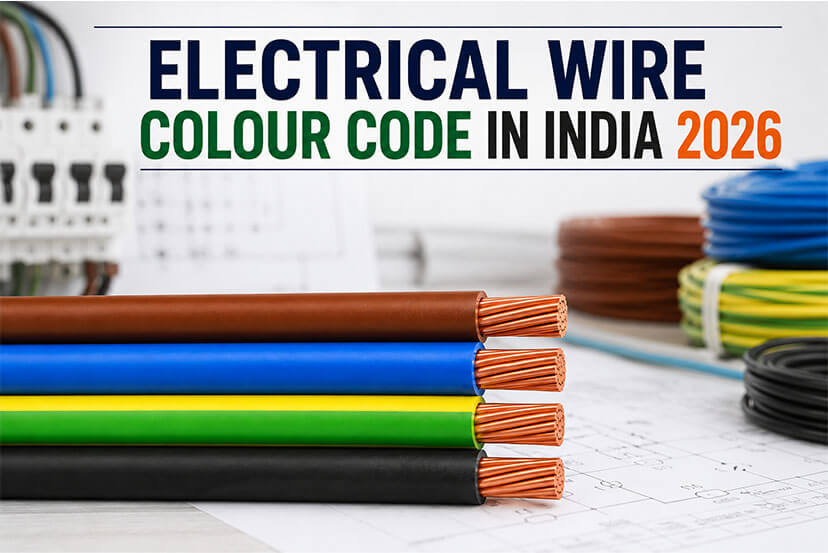
Electrical wires are an essential part of every residential, commercial, and industrial electrical installation. However, correctly identifying the phase, neutral, and earth wires is just as important as choosing the right wire size and insulation. This is where the electrical wire colour code in India plays a critical role. For conventional Indian fixed wiring, the commonly specified colour arrangement remains Red/Yellow/Blue for three-phase conductors, Black for Neutral, and Green/Yellow-Green for protective earthing, depending on the application and applicable specification.
CPWD’s 2023 electrical work specifications, for example, specify Red/Yellow/Blue for three-phase wiring; Red for single-phase live; Black for neutral; and Yellow/Green for earth. Understanding these codes is important whether you are installing house wiring, electrical cables, industrial wiring, control panels, or three-phase electrical systems.
Also read: 7 Types of Electrical Wiring for House Installation in 2026
What Is an Electrical Wire Colour Code?
An electrical wire colour code is a standardised method of identifying electrical conductors by their insulation colour. Each colour represents a particular electrical function, such as:
- Phase/Live wire – carries electrical power to the load
- Neutral wire – provides the return path in an AC circuit
- Earth/Protective conductor – provides a safe path for fault current
- Three-phase conductors – identify different phases in a three-phase system
Electrical Wire Colour Code in India 2026
The following table provides a practical overview of the commonly used Indian colour identification system:
| Wire/Conductor | Common Colour in India | Function |
| Single-phase Live/Phase | Red | Carries current to the load |
| Phase 1 (L1) | Red | First phase in a three-phase system |
| Phase 2 (L2) | Yellow | Second phase |
| Phase 3 (L3) | Blue | Third phase |
| Neutral (N) | Black | Return path for current |
| Protective Earth (PE) | Green/Yellow-Green | Safety and fault-current path |
Single-Phase Wire Colour Code in India
Single-phase wiring is commonly used in homes, apartments, small offices, shops, and other low-power installations.
A typical single-phase circuit contains three conductors:
1. Red – Live or Phase Wire
The red wire is traditionally used to identify the live or phase conductor in conventional Indian single-phase wiring. It carries electrical energy from the supply to the electrical load, such as:
- Lights
- Fans
- Switchboards
- Sockets
- Small appliances
- Other electrical equipment
The live wire is potentially hazardous because it can be at supply voltage relative to earth.
2. Black – Neutral Wire
The black wire is commonly used for the neutral conductor in conventional Indian wiring. The neutral completes the AC circuit by providing a return path for current. Although neutral is generally close to earth potential under normal conditions, it should not be assumed to be safe to touch.
3. Green or Yellow-Green – Earth Wire
The earth wire, also called the protective conductor, is identified using green or green-and-yellow/yellow-green identification, depending on the applicable wiring specification. Its primary purpose is safety.
Also Read: Top 10 Wire Manufacturing Companies in India 2026
Three-Phase Wire Colour Code in India
Three-phase electrical systems are widely used in:
- Factories
- Manufacturing plants
- Commercial buildings
- Large offices
- Workshops
- Pumps
- Motors
- HVAC systems
- Industrial machinery
The conventional Indian three-phase colour code is:
| Phase | Colour | Identification |
| Phase 1 | Red | L1 |
| Phase 2 | Yellow | L2 |
| Phase 3 | Blue | L3 |
| Neutral | Black | N |
| Earth | Green/Yellow-Green | PE |
Government electrical specifications and Indian electrical documentation continue to show Red, Yellow, and Blue for the three phases and Black for neutral. Correct phase identification is particularly important for three-phase motors and rotating machinery, because incorrect phase sequence can affect the direction of motor rotation.
Electrical Wire Colour Code for Home Wiring
For conventional house wiring in India, a basic circuit may include:
Red – Live/Phase
Black – Neutral
Green/Yellow-Green – Earth
The phase conductor is routed through the appropriate switching/protection arrangement, while neutral and protective conductors are handled according to the wiring design and applicable standards. Government electrical specifications also emphasise that the phase/live conductor should be looped at the switch box and that wiring should be arranged so the neutral is not unnecessarily interrupted.
Electrical Wire Colour Code for Switchboards
A typical switchboard may contain:
- Phase/live conductor
- Neutral conductor
- Earth/protective conductor
- Switch wires
- Circuit connections
- Terminal blocks
The phase wire should be correctly connected to the switching device so that switching the appliance disconnects the live supply as intended. The earth conductor should be connected to the appropriate protective terminal and exposed conductive parts where required. Never modify switchboard wiring based only on wire colour.
Electrical Wire Colour Code Standards in India 2026
Several Indian standards and electrical specifications are relevant to conductor identification and wiring.
1. IS 11353:2023
IS 11353:2023 is the revised Indian Standard dealing with the identification of equipment terminals, conductor terminations, and conductors. BIS lists it as the first revision and identifies it as identical under dual numbering with IEC 60445:2021.
This is important when discussing the latest electrical wire colour code in India, because it represents the current Indian standard for conductor identification.
2. National Electrical Code of India 2023
The National Electrical Code of India 2023 (SP 30) references IS 11353 for the identification of insulated and bare conductors. Its wiring provisions also provide recommended conductor colours, including Red/Yellow/Blue for three-phase AC, Black for Neutral, and Green-Yellow for the protective conductor in single-phase systems.
3. IS 732
IS 732 is associated with the Code of Practice for Electrical Wiring Installations and is an important reference for electrical wiring installation practices.
When planning or executing electrical wiring, colour identification should be considered together with requirements covering conductor size, installation method, protection, earthing, testing, and other applicable standards.
What Is the Difference Between Live, Neutral and Earth Wire?
Although all three conductors may be present in the same electrical circuit, they perform very different functions.
| Feature | Live/Phase Wire | Neutral Wire | Earth Wire |
| Main purpose | Supplies power | Completes circuit | Provides electrical protection |
| Common Indian colour | Red | Black | Green/Yellow-Green |
| Carries current normally? | Yes | Yes | Normally no |
| Connected to load? | Yes | Yes | Connected to equipment body/protective system |
| Safety role | Dangerous when energised | Can still be hazardous | Protects against faults |
The earth wire is not a substitute for neutral, and neutral should not be used as a protective earth conductor.
Why Is Electrical Wire Colour Coding Important?
The correct wire colour code for electrical wiring offers several benefits.
1. Improves Electrical Safety: Colour identification makes it easier to distinguish live, neutral, and protective conductors, reducing the risk of accidental connections.
2. Makes Troubleshooting Easier: Electricians can identify circuits more quickly during maintenance and fault finding.
3. Reduces Wiring Errors: A consistent colour system helps minimise incorrect connections during installation.
4. Supports Maintenance: When electrical systems are repaired or modified years after installation, standard conductor identification makes the system easier to understand.
5. Helps During Emergency Work: Clear conductor identification can help qualified personnel work more efficiently during electrical faults and emergencies.
Electrical Wire Types Used in India
The colour of an electrical wire tells you its function, but it does not tell you everything about the wire. Electrical wires are also selected based on conductor material, insulation, voltage rating, cross-sectional area, flexibility, and application.
1. Copper Wires
Copper wires are widely used for residential, commercial, and industrial electrical installations because copper offers high electrical conductivity and good mechanical performance.
Common applications include:
- House wiring
- Lighting circuits
- Power circuits
- Control panels
- Industrial equipment
2. Aluminium Wires and Cables
Aluminium is lighter than copper and is commonly used in applications where weight and cost are important considerations.
It is frequently found in:
- Power distribution
- Large electrical installations
- Overhead systems
- Certain industrial applications
3. PVC Insulated Wires
PVC-insulated electrical wires are widely used for internal wiring and general electrical applications.
They are available in different sizes and insulation ratings depending on the application.
4. FR Wires
Flame-retardant wires are designed to limit the spread of flame along the cable under specified test conditions.
They are commonly considered for residential and commercial electrical wiring.
5. FRLS/FRLSH Wires
FRLS and FRLSH wires are selected for applications where reduced flame spread and lower smoke or halogen-related characteristics are required, subject to the relevant product standard and specification.
6. Flexible Wires
Flexible electrical wires contain stranded conductors and are suitable for applications where the cable needs to bend or move.
They are commonly used in:
- Appliances
- Extension leads
- Control equipment
- Portable electrical devices
- Machinery connections
How to Choose the Right Electrical Wire
When you are looking to buy electrical wire, colour should be only one consideration.
Check the following factors:
1. Wire Size: Select the appropriate conductor cross-sectional area based on load, installation method, permissible voltage drop, temperature, and applicable standards.
2. Conductor Material: Choose between copper and aluminium according to the electrical design and application.
Also read: Aluminum Wire vs Copper Wire: Use Cases, Benefits, Differences, and Price
3. Insulation Type: Consider PVC, FR, FRLS, FRLSH, XLPE, or another suitable insulation system based on the application.
4. Voltage Rating: Ensure that the cable or wire is rated for the voltage of the electrical system.
5. Current Capacity: The wire must be capable of carrying the expected load without exceeding its permissible operating conditions.
6. Application: The right electrical wire for home, industrial wiring, control panels, machinery, or outdoor applications can differ considerably.
7. Applicable Standards: Look for products manufactured and tested according to the relevant BIS/IS standards and project specifications.
Electrical Wire Colour Code: Quick Reference Chart
| Application | Phase/Live | Neutral | Earth |
| Conventional single-phase Indian wiring | Red | Black | Green/Yellow-Green |
| Conventional three-phase Indian wiring | Red/Yellow/Blue | Black | Green/Yellow-Green |
| IEC-harmonised equipment | Brown | Light Blue | Green-Yellow |
| Three-phase IEC-harmonised equipment | Brown/Black/Grey | Light Blue | Green-Yellow |
Note: The table is a practical identification guide, not a substitute for the applicable electrical standard, installation drawing, or professional testing.
Safety Tips for Electrical Wiring
Follow these electrical safety practices when dealing with wiring:
- Always switch off and isolate the electrical supply before working.
- Never rely on wire colour alone to determine whether a conductor is live.
- Use appropriate electrical test instruments.
- Use correctly rated circuit protection.
- Ensure proper earthing and bonding.
- Do not overload electrical circuits.
- Avoid loose or exposed connections.
- Use suitable connectors and terminals.
- Follow the manufacturer’s installation instructions.
- Use qualified electrical professionals for electrical installation and repair work.
- Follow applicable Indian Standards and local electrical regulations.
For industrial installations, additional requirements may apply based on voltage level, machinery, hazardous location, fire protection, and the nature of the installation.
Conclusion
Understanding the electrical wire colour code in India 2026 is essential for safe electrical installation, maintenance, and troubleshooting. The conventional Indian system uses Red for single-phase live, Red/Yellow/Blue for three-phase conductors, Black for neutral, and Green or Yellow-Green for protective earthing. Current Indian conductor-identification standards include IS 11353:2023, while the National Electrical Code of India 2023 references this standard for conductor identification.
If you are planning house wiring, industrial electrical wiring, control-panel wiring, or electrical cable installation, select the wire based not only on colour but also on wire size, conductor material, insulation, voltage rating, current capacity, application, and applicable BIS/IS standards. Proper installation by a qualified electrician remains the safest approach.
Frequently Asked Questions
What is the electrical wire colour code in India?
For conventional Indian wiring, Red is used for single-phase live and the three phases are commonly Red, Yellow and Blue. Black is used for neutral, while Green or Green-Yellow identifies the protective/earth conductor under applicable specifications.
What is the colour of the live wire in India?
The conventional colour for a single-phase live or phase wire in Indian wiring is Red. In three-phase systems, the phases are conventionally identified as Red, Yellow and Blue.
What is the colour of the neutral wire in India?
The conventional Indian colour for the neutral wire is Black.
What is the earth wire colour in India?
The protective earth conductor is commonly identified using Green or Green-Yellow/Yellow-Green, depending on the applicable specification and cable type. CPWD’s 2023 specification identifies the earth conductor as Yellow/Green.
What are the 3 phase wire colours in India?
The conventional three-phase wire colours are:
- Red – Phase 1
- Yellow – Phase 2
- Blue – Phase 3
Black is commonly used for neutral, with green/yellow-green used for protective earthing.
Is blue wire neutral in India?
Not necessarily. In the conventional Indian three-phase identification scheme, Blue is used for the third phase, while Black is used for neutral. However, IEC-harmonised equipment can use light blue for neutral. Therefore, colour alone should not be relied upon when working on an existing circuit.
Is green wire always earth?
Green or green-yellow identification is associated with protective earthing, but existing installations may contain incorrect or non-standard wiring. Always verify before working on a conductor.
Which wire is positive and negative in AC wiring?
AC supply does not use positive and negative conductors in the same way as a basic DC circuit. AC systems generally use phase/live, neutral, and protective earth conductors.


 Back
Back