
Top 10 Heavy Fabrication Companies in India 2026
Top 10 Heavy Fabrication Companies in India 2026
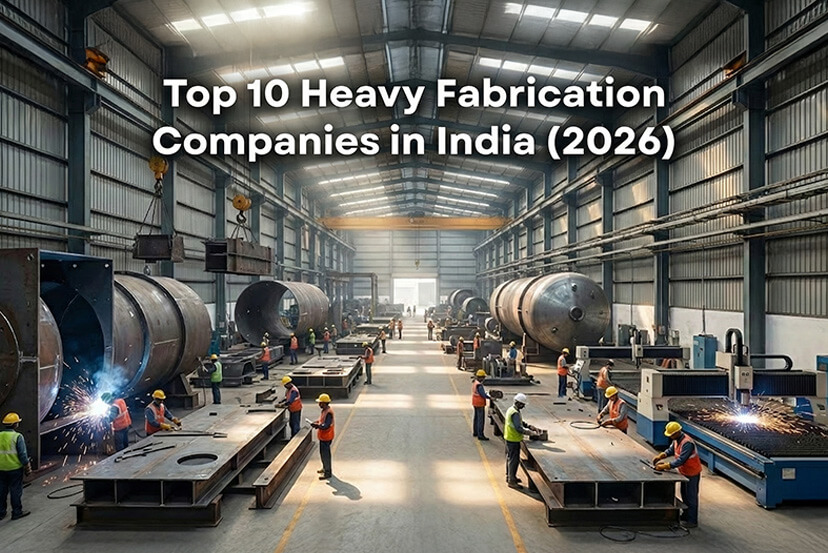
The heavy fabrication industry in India forms the backbone of sectors like infrastructure, power, oil & gas, steel, defense, transportation, and industrial machinery. Heavy metal fabrication involves transforming steel and metals into large structural components, industrial machinery parts, pressure vessels, boilers, piping systems, and more, often using cutting-edge engineering techniques such as welding, machining, bending, and assembly. However, if you are looking to enjoy multiple fabrication works at the most competitive prices, then Moglix Business is the right platform to collaborate with. We provide you with complete fabrication possibilities like forging, forming, Machining, Heat treatment, casting, and many more.
With India’s manufacturing and infrastructure sectors booming under initiatives like Make in India, National Infrastructure Pipeline, and accelerated industrial spending, demand for robust fabrication services is rising sharply in 2026. Below are the top 10 heavy fabrication companies in India that are shaping the future of fabrication and heavy engineering:
Check Out The List Of The Top 10 Heavy Fabrication Companies You Can Opt For
We have collected the latest data and curated a comprehensive list of the best heavy structural fabrication companies you can rely on for various fabrication purposes.
1. Larsen & Toubro (L&T) – The Engineering Giant
Larsen & Toubro is India’s most diversified and largest heavy engineering and fabrication company, with global operations and a strong domestic footprint. Its Heavy Engineering division delivers pressure vessels, heat exchangers, reactors, large welded structures, and EPC solutions across power, petrochemical, oil & gas, and industrial sectors.
Why It’s #1:
- Significant heavy fabrication and metal structure production capacity
- Major international and domestic orders in 2025–26, worth ₹1,000–2,000 cr+ in heavy engineering alone.
- Integrated EPC capabilities — from design to installation
Services: Industrial boilers, columns, vessels, structural steel, petrochemical fabrication.
2. ISGEC Heavy Engineering Ltd – Heritage Heavy Engineering
ISGEC (formerly Indian Sugar & General Engineering Corp.) is a major public company specializing in industrial fabrication — boilers, pressure vessels, process equipment, press machines, and castings — with strong export markets.
Strengths:
- Nearly a century of fabrication experience
- Manufacturing facilities across India (Yamunanagar, Dahej, Bawal, Muzaffarnagar)
- EPC solutions and contract manufacturing for global clients
Focus Areas: Boilers, industrial machinery, steel & iron castings, heavy equipment.
3. Bharat Heavy Electricals Ltd (BHEL) – National Fabrication Leader
BHEL is India’s largest public-sector heavy electrical equipment maker, with huge fabrication capacity for power generation equipment — turbines, boilers, generators and structural steel assemblies.
Why It Matters:
- Long-standing supplier to India’s power and industrial sectors
- Large fabrication yards and advanced welding and machining facilities
- Expertise in large, high-precision assemblies
4. Mukand Ltd – Steel & Structural Fabrication Specialist
A key steel and heavy fabrication player under the Bajaj Group, Mukand produces alloy/stainless steel products, industrial machinery, crane girders, and large structural components — critical in fabrication projects across industries.
Strengths:
- Specialized in high-strength steel components
- Unique capacity for large industrial cranes and structural fabrication
5. Bharat Forge Ltd – Forging & Fabrication Excellence
Part of the Kalyani Group, Bharat Forge is one of the world’s largest forging facilities, producing heavy forged and fabricated parts used in automotive, oil & gas, marine, infrastructure, and defense.
Key Competencies:
- High-precision forging integrated with fabrication
- Strong global client base and export market
6. Walchandnagar Industries Ltd – Heavy Engineering & Fabrication
Walchandnagar Industries is a Mumbai-based heavy engineering and fabrication company serving energy, defense, industrial, and nuclear sectors with boilers, heavy machinery components, and EPC services.
Notable Strengths:
- Over a century of experience
- Fabrication capabilities for complex assemblies
7. Braithwaite & Co. Ltd – PSU Structural Fabricator
A Government of India enterprise under the Ministry of Railways, Braithwaite manufactures heavy structural steel products, industrial components, railway wagons, and cranes with high fabrication precision.
Why It’s Important:
- Serves the railways and infrastructure sectors
- Focus on heavy-welded assemblies and structural fabrication
8. Thermex Process & Pipe Fabricators
Thermax and similar firms play a strong role in process piping and pressure system fabrication, including high-pressure piping for energy, chemical, and industrial plants.
Capabilities:
- High-precision pipe fabrication
- Integration with process equipment
- Engineering and design support
9. Zetwerk – Modern Fabrication & Contract Manufacturing
A newer but fast-growing fabrication and manufacturing firm, Zetwerk focuses on custom steel fabrication and supply chain integration for heavy industrial clients and OEMs.
Why it’s Rising:
- Modern fabrication technologies
- Strong digital procurement and execution model
10. PCB Power / Specialized Fabricators
Several niche and specialized heavy fabricators offer advanced steel fabrication services — including PCB Power (steel fabrication), Ritvi Steel, and others, catering to industry-specific needs.
Why Included:
- Specialized structural steel fabrication
- Focus on regional and industrial applications
Key Trends in Heavy Fabrication (2026)
Integration with EPC and Manufacturing
Heavy fabrication companies are increasingly integrated with EPC (Engineering, Procurement & Construction) services, offering end-to-end solutions from design and procurement to on-site assembly — reducing timelines and improving quality.
Advanced Processes & Automation
Industry 4.0 adoption in welding robots, CNC machining, and digital fabrication tracking is improving precision and reducing costs.
Renewables & Energy Fabrication Growth
Growth in power sector projects (solar, wind, nuclear) fuels demand for specialized fabricated equipment, structural assemblies, and pressure vessels.
Export & International Expansion
Indian fabricators are exporting heavy equipment and structures to global markets, strengthening India’s position in fabrication globally.
Conclusion
India’s heavy fabrication industry in 2026 is dynamic, diversified, and globally competitive. From stalwarts like Bhilai, L&T, ISGEC, and BHEL to emerging players like Zetwerk, the space is rich with companies capable of delivering complex structural steel assemblies, industrial equipment, and bespoke fabrication solutions for infrastructure, power, defense, and industrial sectors.
Whether you are an investor, procurement professional, or industry enthusiast, these companies represent the strength of India’s industrial backbone and its rapid evolution into a global fabrication powerhouse.
Top 10 Aluminum Die Casting Manufacturing Companies in India 2026 – Latest Ranking & Insights
Top 10 Aluminum Die Casting Manufacturing Companies in India 2026 – Latest Ranking & Insights
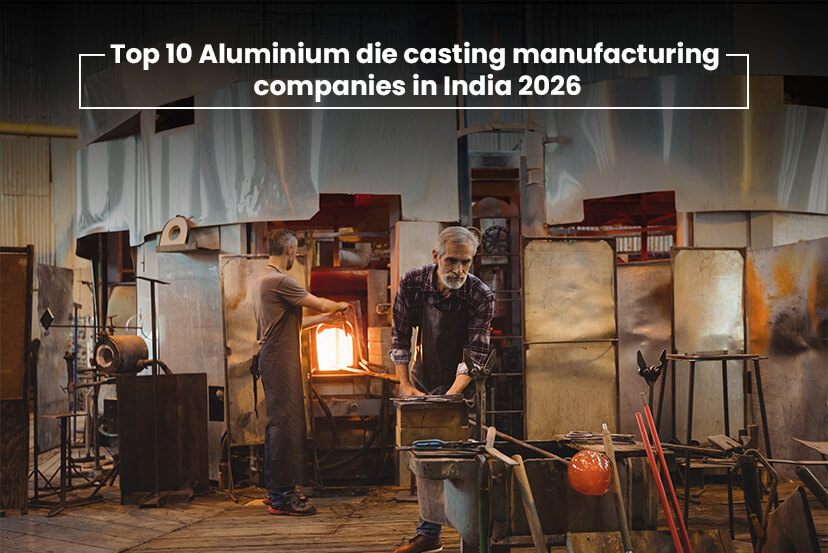
The aluminum die casting industry in India is booming, driven by rising demand from automotive, aerospace, EV, electronics, consumer goods, and industrial sectors. Aluminum castings deliver lightweight strength, corrosion resistance, consistent precision, and cost-effective mass production – making them indispensable for modern manufacturing. India’s aluminum die casting market is poised for robust growth (estimated at around USD 1.7 B+ by 2025 and expanding further through 2030), thanks to electrification trends, local OEM sourcing, and export push. However, if you are looking for a complete range of casting solutions in one place, Moglix is the right platform to partner with. Moglix provides you with a complete range of casting capabilities, such as Die casting, sand casting, investment casting, centrifugal casting, permanent mold casting, and many more, serving numerous EPC infrastructure and manufacturing companies in India.
Below is the 2026 updated ranking of the top 10 aluminum die casting manufacturers in India, based on industry presence, technological capabilities, market reach, certifications, and product breadth.
Check Out The Updated List Of The Best Aluminum Die Casting Manufacturers For 2026
To choose the right and reliable metal casting company, we have curated a list of the latest and top-rated companies. Let’s have a quick look at them:
1. Marcus Hi-Tech Engineering (Marcus India)
One of India’s most technologically advanced castings companies, Marcus excels in high-pressure die casting (HPDC), rapid prototyping, and in-house toolroom services. Their focus on R&D, quality systems, and complex part manufacturing makes them a top choice across automotive, EV, electrical, and solar sectors.
Why they’re ranked #1
- IATF certified and quality-driven
- Full ERP & rapid prototyping services
- Emerging leader in EV component production
2. Endurance Technologies Ltd
Endurance is a globally recognized automotive die casting powerhouse headquartered in Aurangabad. Known for aluminum high-pressure, low-pressure, and gravity die casting, it supplies major OEMs worldwide with engine, structural, and suspension components.
Key strengths
- Extensive global OEM agreements
- High-volume industrial capacity
- Intelligent manufacturing and real-time quality controls
3. Rockman Industries Limited
A Hero Group flagship, Rockman is a leading aluminum die casting supplier, especially for automotive applications. With multiple plants across India, they deliver precision HPDC components and assemblies with stringent quality standards.
Highlights
- Large-scale automotive focus
- Strong engineering and machining ecosystem
- Innovation in thin-wall and lightweight castings
4. Samvardhana Motherson Group
A major global auto parts and die casting player, Motherson’s manufacturing network caters to international quality standards. Known for precision aluminum and magnesium die castings, they support complex assembly and tooling under one roof.
What sets them apart
- Integrated tooling and machining
- Global footprint with technology transfer
- Diverse castings for auto & EV sectors
5. Sandhar Technologies Ltd
Sandhar focuses on aluminum casting solutions for internal combustion engine (ICE) vehicles and EV platforms. With specialized surface finishes and mechanical assemblies, they are a key supplier to OEMs and Tier-1 partners.
Competitive edge
- Automobile + EV components portfolio
- Strong R&D investment
- Strategic automotive partnerships
6. Spark Minda (Ashok Minda Group)
Part of a diversified automotive giant, Spark Minda integrates die casting with electronics and mechanical systems, enabling complex part delivery for modern vehicles.
Strength areas
- Electro-mechanical assemblies
- Integrated casting + wiring systems
- Automotive safety components
7. Sipra Engineers Pvt. Ltd
With a legacy spanning over five decades, Sipra is one of western India’s premier aluminum die casting specialists. Their in-house design, tooling, and certification credentials make them a trusted partner for local and global OEMs.
Why they matter
- Deep die casting expertise (HPDC)
- ISO, TS, and OEM certified
- Strong quality assurance and supply reliability
8. Indian Diecasting Industries
Operating since 1964, this Aligarh-based company is a veteran die casting manufacturer serving automotive and general industrial segments with customizable die cast components and molds.
Core strengths
- Customized castings and tooling
- Long history & manufacturing experience
- Diverse industrial customer base
9. Esko Die Casting Pvt Ltd
Esko is a respected aluminum die casting supplier with decades of experience, offering both high-pressure and gravity die cast solutions, plus tool development services — often chosen for cost-effective quality production.
Solid attributes
- Longstanding market presence
- Tool design + casting services
- National supply network
10. Gujarat Precision Cast Pvt. Ltd
A reputable die casting firm from western India, Gujarat Precision Cast, delivers precision-engineered castings for automotive, industrial, and consumer products. They round out the top 10 with strong regional production capacity.
Reasons they’re in the top 10
- Quality precision casting
- Wide alloy use, including aluminum
- Growth aligned with manufacturing sector expansion
Emerging & Noteworthy Mentions
While not in the strict top 10 ranking, several other companies are worth watching in 2026:
- Aarna Enterprise – Specializes in precision automotive castings with ISO/TS credentials.
- Arcotherm Pvt. Ltd. – Advanced HPDC capacity with growing OEM clientele.
- New Lotus Industries – Low-pressure and consumer segment casting focus.
- Shree Die Casting & AutoAlum Castings – Regional champions with strong output.
What are the Industry Trends Shaping 2026?
Booming EV & Automotive Demand
The transition to electric vehicles and lightweight auto parts is driving increased demand for aluminum die casting – especially for battery housings, motor brackets, and structural components.
Localization & Supply Chain Strengthening
Global OEMs are shifting sourcing to India, accelerating investments and local capacity expansions – such as the recent ₹200 crore expansion by Jaya Hind Industries near Chennai.
Automation & Industry 4.0
Companies are integrating automated die casting machines, real-time quality controls, and advanced machining to improve efficiency, reduce defects, and enable just-in-time supply.
Conclusion
India’s aluminum die casting industry in 2026 is marked by rapid growth, technological adoption, and strong OEM partnerships. From global players like Endurance and Rockman to niche innovators such as Marcus and Sipra, the competitive landscape spans high-capacity production, precision engineering, and increasingly, EV-centric components. Therefore, Moglix Business has been serving casting capabilities efficiently to various manufacturing and EPC infrastructure industries. Whether you are a buyer, investor, or manufacturer, these top 10 companies represent the pulse of India’s aluminum die casting revolution, combining heritage manufacturing with future-ready capabilities.
What Is Fabrication and How Does It Work?
What Is Fabrication and How Does It Work?
In today’s manufacturing-driven world, fabrication plays a vital role in transforming raw materials into functional products used across industries. From construction and automotive to electronics and industrial machinery, fabrication is the backbone of modern production. But what exactly is fabrication, and how does it work? Let’s explore the concept in detail, step by step.
What does fabrication work mean?
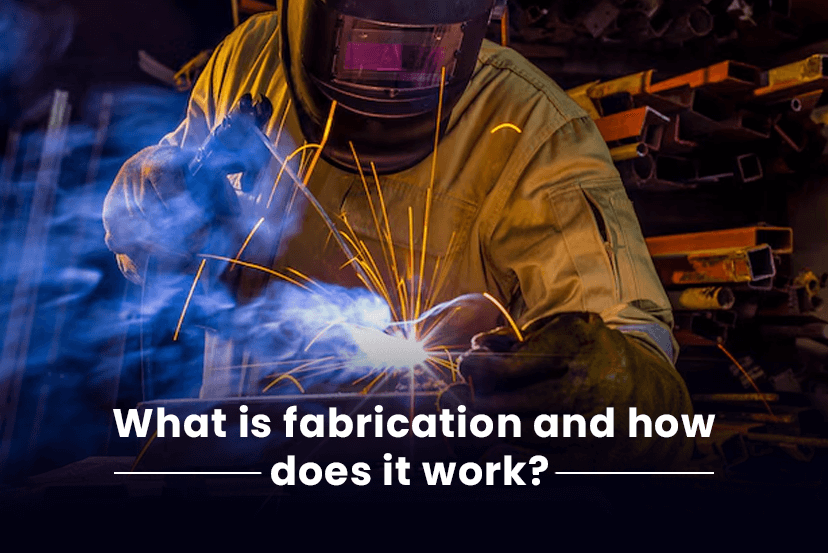
Focusing on the Fabrication work means the process of converting raw materials into finished or semi-finished products using various industrial techniques such as cutting, bending, assembling, welding, and finishing. Unlike simple assembly, fabrication involves reshaping and modifying materials to meet design and functional requirements.
Fabrication work is commonly associated with metals, but it also applies to plastics, glass, wood, composites, and electronic components.
What are the Types of Fabrication
Fabrication methods vary depending on material, use cases, and industry.
1. Metal Fabrication
Metal fabrication involves transforming metals like steel, aluminum, copper, and iron into usable components. It is widely used in:
- Construction
- Automotive manufacturing
- Aerospace and heavy machinery
2. Structural Fabrication
This type focuses on creating load-bearing structures such as beams, frames, and columns, commonly used in bridges, buildings, and factories.
3. Sheet Metal Fabrication
Sheet metal fabrication uses thin metal sheets to create enclosures, cabinets, ducts, and panels through cutting and bending processes.
4. Industrial Fabrication
Industrial fabrication produces large-scale equipment, machines, and customized tools used in manufacturing plants and heavy industries.
How Does Fabrication Work? (Step-by-Step Process)
Fabrication usually follows a well-structured process to ensure accuracy, strength, and quality. If you want to know the complete process of fabrication work, check out the steps listed below.
Step 1: Design and Engineering
The process begins with technical drawings or CAD (Computer-Aided Design) models. These designs specify:
- Dimensions
- Materials
- Tolerances
- Functional requirements
Step 2: Material Selection
Raw materials are selected based on:
- Strength requirements
- Environmental conditions
- Cost efficiency
- Durability and corrosion resistance
Common materials include steel, stainless steel, aluminum, and alloys.
Step 3: Cutting
Cutting is used to shape materials into required sizes using tools such as:
- Laser cutting
- Plasma cutting
- Waterjet cutting
- Sawing and shearing
Accurate cutting ensures minimal material wastage and precise dimensions.
Step 4: Forming and Bending
In the forming and bending stage, flat or straight materials are reshaped using:
- Press brakes
- Roll forming machines
- Forging techniques
Forming adds strength and allows components to fit together correctly.
Step 5: Assembly and Welding
Multiple parts are joined using:
- Welding
- Bolting
- Riveting
- Adhesives
Welding is the most common method, ensuring high strength and structural integrity.
Step 6: Machining
Machining refines fabricated parts to achieve high precision using:
- Drilling
- Turning
- Milling
- Tapping
This step ensures parts meet tight tolerances and exact specifications.
Step 7: Finishing and Surface Treatment
Finishing improves appearance, durability, and corrosion resistance. Common finishing techniques include:
- Painting
- Powder coating
- Polishing
- Galvanizing
- Anodizing
Step 8: Quality Inspection
The final step involves inspection and testing to ensure:
- Dimensional accuracy
- Structural strength
- Safety compliance
- Surface quality
Quality control prevents defects and ensures reliability.
Tools and Equipment Used in Fabrication
Fabrication relies on specialized machinery, such as:
- CNC machines
- Laser cutters
- Welding machines
- Press brakes
- Grinding and polishing tools
Advanced fabrication facilities often use automation and robotics for improved efficiency and consistency.
Applications of Fabrication
Fabrication processes are used across multiple sectors, including:
- Construction and infrastructure
- Automotive and transportation
- Power plants and the energy sector
- Electronics and appliances
- Furniture and consumer goods
Almost every physical product we use today has undergone some form of fabrication.
Advantages of Fabrication
Fabrication plays a vital role in modern manufacturing because it offers flexibility, efficiency, and reliability across industries. Below are the key advantages of fabrication, explained clearly and practically:
Customization and Design Flexibility
Fabrication allows products to be custom-made according to specific requirements. Whether it’s size, shape, material, or finish, fabrication supports tailor-made solutions that standard products cannot offer.
High Strength and Durability
Fabricated components are designed to withstand heavy loads, pressure, and harsh environments. Advanced joining and forming techniques ensure strong, long-lasting structures.
Cost-Effective Production
Fabrication helps reduce overall costs by:
- Minimizing material waste
- Enabling bulk production
- Reducing rework and errors
Precision and Accuracy
Modern fabrication uses CNC machines and automated tools, ensuring tight tolerances and high dimensional accuracy. This results in consistent quality and minimal defects.
Faster Production Time
With automated cutting, welding, and forming processes, fabrication significantly reduces production lead time, enabling faster project completion and quicker market delivery.
Future of Fabrication
The future of fabrication lies in:
- Automation and robotics
- AI-driven design and quality checks
- Additive manufacturing (hybrid fabrication)
- Sustainable and eco-friendly materials
Conclusion
Fabrication is a core manufacturing process that turns raw materials into functional, high-quality products used across industries. Understanding what fabrication is and how it works helps businesses make informed decisions, improve production efficiency, and achieve better product quality.
Whether it’s a simple metal component or a large industrial structure, fabrication remains essential to modern engineering and industrial growth.


 Back
Back