
Top 10 Battery Manufacturing Companies in India 2026: Latest Ranking, Types, Prices & Features
Top 10 Battery Manufacturing Companies in India 2026: Latest Ranking, Types, Prices & Features
India’s battery industry is entering a transformative phase in 2026, driven by surging demand for lithium-ion batteries (for EVs, renewable energy storage, and high-performance electronics) alongside traditional primary batteries like alkaline (LR), lithium coin cells (CR), zinc-carbon, and PR (zinc-air) types. This growth is fuelled by electric mobility ambitions, the electrification of rural homes, and the rapid adoption of portable electronics. Here’s a comprehensive ranking of the top 10 battery manufacturers in India in 2026, with insights on types, features, and price trends.
Check Out The Latest And Top 10 List Of Battery Manufacturers In India 2026
It is necessary to understand the reputable and trustworthy cell and battery manufacturing companies to rely on. We have curated a list of the top 10 best battery manufacturers in India who have been serving various industries and businesses, and you can opt for bulk procurement of batteries through the Moglix platform.
1. Exide Industries Ltd.
Headquarters: Kolkata, West Bengal
Overview: Exide is India’s largest battery manufacturer, known for its extensive range of products spanning lead-acid, lithium-ion, and industrial storage solutions. It is rapidly expanding into lithium-ion cells and packs for electric vehicles and energy storage systems through its subsidiary and new manufacturing facilities.
Battery Types: Lead-acid, lithium-ion, tubular, inverter/UPS.
Key Features:
- Wide product range and robust dealer network.
- Investment in EV battery manufacturing with technology partnerships.
Approx. Price Range: - Lead-acid: ₹2,000 – ₹15,000+
- Lithium-ion packs: ₹50,000 – ₹2,00,000+ (depending on capacity and application)
2. Amara Raja Batteries Ltd. (Amaron)
Headquarters: Tirupati, Andhra Pradesh
Amaron is one of India’s leading battery brands, traditionally in the automotive and power backup sectors. The company is building lithium-ion gigafactories with global partners to produce advanced lithium cells domestically — reducing import dependence.
Battery Types: Lead-acid, lithium-ion cells & packs, industrial batteries.
Key Features:
- Strong brand trust in maintenance-free lead-acid batteries.
- Growing portfolio for EV & energy storage applications.
Price Range: Similar to Exide for comparable battery types.
3. Eveready Industries India Ltd.
Headquarters: Kolkata, West Bengal
Overview: Eveready is among India’s most recognized battery brands and dominates the primary battery segment — especially zinc-carbon and alkaline (LR) cells – used in everyday devices like remotes, toys, torches and clocks. It also offers some rechargeable solutions.
Battery Types: Alkaline (LR), zinc-carbon (primary), rechargeable, small lithium batteries.
Key Features:
- Massive market share in primary batteries.
- Extensive distribution across India.
Typical Price Range: - AA/AAA alkaline: ₹30 – ₹150 per pack (varies by brand and count)
4. Indo National Ltd. (Nippo Batteries)
Headquarters: Chennai, Tamil Nadu
Overview: Nippo is a major dry cell battery manufacturer in India, best known for alkaline and zinc-carbon batteries that power everyday electronics. Its products reach millions of households and retail outlets across the country.
Battery Types: Alkaline cells (LR), zinc-carbon cells.
Key Features:
- Strong presence in the consumer primary battery market.
- Recognized for performance and affordability.
5. Luminous Power Technologies
Overview: Luminous is a key player in backup power solutions for homes and businesses, including inverter batteries and lithium-ion-based solar and ESS products. It serves residential, industrial and commercial markets with advanced energy storage solutions.
Battery Types: Lead-acid, lithium-ion, tubular, solar ESS.
Key Features:
- Trusted for reliability and long battery life.
- Growing lithium-ion presence for off-grid and solar storage.
6. Okaya Power Pvt. Ltd.
Overview: Okaya makes a diverse range of batteries — from conventional lead-acid to solar and lithium-ion storage — catering to residential, industrial and solar backup needs.
Battery Types: Lead-acid, lithium-ion, solar ESS.
Key Features:
- Affordable and scalable solutions.
- Good after-sales support network.
7. Shizen Energy India
Overview: A rapidly growing company focused on lithium-ion battery manufacturing for EVs, energy storage systems (ESS) and material handling equipment. It offers custom packs, built-in battery management systems (BMS) and scalable solutions.
Battery Types: Lithium-ion (Li-ion) cells & packs, ESS, EV applications.
Key Features:
- Strong R&D and ISO-certified production.
- Export-ready battery systems.
8. Loom Solar
Overview: Loom Solar specializes in lithium-ion batteries and storage solutions tailored for residential solar systems and backup power. Its products are increasingly popular in the renewable energy segment.
Battery Types: Lithium-ion solar storage.
Key Features:
- Online distribution advantage.
- High-capacity offerings.
Typical Price Range:
- Solar Li-ion packs: ₹80,000 – ₹1,50,000+ depending on capacity.
9. Future Hi-Tech Batteries
Overview: Focuses on custom lithium-ion battery systems, industrial and EV applications, and tailor-made packs for OEM use.
Battery Types: Lithium-ion, ESS, industrial battery solutions.
Key Features:
- Emphasis on innovation and bespoke solutions.
10. Su-Kam Power Systems Ltd.
Overview: Known initially for inverter and power backup products, Su-Kam has diversified into lithium-ion-based storage as part of its mission to provide sustainable energy solutions.
Battery Types: Lead-acid, lithium-ion, solar hybrid systems.
Key Features:
- R&D focus with patented technology.
- Solar battery systems with integrated lithium storage.
Battery Types Explained (2026)
1. Lithium-Ion Batteries
- High energy density and rechargeability.
- Used in EVs, solar storage, UPS systems and high-end electronics.
- Popular chemistries include LFP (Lithium Iron Phosphate) and NMC.
- Prices vary widely based on capacity: typically ₹50,000 – ₹2,00,000+ for home/EV packs.
2. Alkaline Batteries (LR)
- Primary disposable cells like LR6 (AA), LR03 (AAA), LR14 (C), LR20 (D).
- Common in remote controls, toys, clocks and flashlights.
- Low cost, reliable for everyday use.
3. Lithium Coin Cells (CR Series)
- Small primary batteries such as CR2032 (lithium manganese dioxide).
- Used in watches, calculators, key fobs and medical devices.
- Long shelf life and stable voltage output.
4. Zinc-Carbon Batteries
- Standard primary cells for low-power devices (torches, radios).
- Economical option but lower capacity compared to alkaline cells.
5. PR Batteries (Zinc-Air)
- High-energy-density primary batteries using zinc and oxygen.
- Often used in hearing aids and medical devices (PR41/PR48 types).
Battery Price Snapshot (India 2026)
| Battery Type | Typical Price Range |
| Alkaline (AA/AAA) | ₹30 – ₹150 per pack |
| Lithium Coin Cells (CR) | ₹50 – ₹300+ |
| Zinc-Carbon Cells | ₹20 – ₹120 |
| Zinc-Air (PR) | ₹150 – ₹500 (small medical cells) |
| Lead-Acid Backup | ₹2,000 – ₹15,000+ |
| Li-ion Backup/EV Packs | ₹50,000 – ₹2,00,000+ |
Future Outlook
With supportive government policies such as battery production incentives and increasing EV adoption, India’s battery manufacturing landscape is poised for significant growth. Domestic production of advanced lithium-ion cells will reduce import dependence and boost innovation in storage technologies. From everyday primary batteries used in households to high-capacity advanced lithium-ion solutions, these top companies are shaping India’s energy future in 2026 and beyond.
Rahul Garg on Building Moglix and Scaling India’s B2B Commerce

Rahul Garg on Building Moglix and Scaling India’s B2B Commerce
Reflecting on Moglix’s journey, Rahul Garg spoke about solving procurement inefficiencies through technology, supplier integration, and disciplined execution.
Top 10 Road Roller Compactor Brands in India 2026: Price, Types, and Features to Look For

Top 10 Road Roller Compactor Brands in India 2026: Price, Types, and Features to Look For
Road construction and infrastructure development continue to boom in India, powering demand for reliable and efficient compaction equipment. At the heart of any quality pavement or highway project lies a good road roller compactor machine, the machine that ensures soil and asphalt are compacted uniformly, strengthening the road and extending its lifespan. Road construction industries and businesses rent road roller compactor for various projects, and Moglix is the right platform to hire and procure road roller construction equipment the the most competitive prices from various manufacturers and brands. In this comprehensive 2026 guide, we’ll cover the top 10 road roller compactor brands in India, typical price ranges, types of rollers, and key features buyers should consider when choosing the right machine.
What Is a Road Roller Compactor?
A construction road roller compactor (often simply referred to as a roller) is heavy construction machinery used to compact soil, gravel, concrete, or asphalt. It utilizes one or more heavy steel drums to deliver downward pressure, thereby reducing air gaps and increasing density, a crucial factor for road, highway, and airport construction.
Types Of Road Rollers You Can Hire At Moglix
Different projects require different roller types. Here are the most common:
1. Single Drum Rollers
- Best for soil compaction.
- One large steel drum in front with tyres at the back.
- Ideal for sub-grade and earthwork preparation.
2. Double Drum or Tandem Rollers
- Two steel drums (front and rear).
- Excellent for asphalt compaction and final pavement surfacing.
3. Pneumatic Tyre Rollers
- Uses rubber tyres instead of drums.
- Offers uniform compaction and better kneading action for asphalt layers.
4. Mini / Walk-behind Rollers
- Compact machines for small or tight areas.
- Used for patches, walkways, and small road repair work.
Top 10 Road Roller Compactor Brands in India
We have curated the complete list of the best road roller compactor brands that can be hired easily at Moglix. It makes it easy for you to choose the right road roller machine brand and product based on your project requirements.
1. JCB
JCB is one of India’s most trusted and widely used construction equipment brands, known for reliability and a strong nationwide presence. Popular models like the VMT 860 Eco and VM117 are widely used in road and asphalt projects. With an estimated price range of ₹25 – ₹38 lakh (ex-showroom), JCB rollers offer excellent operator comfort, easy maintenance, and strong resale value backed by robust after-sales support.
2. L&T (Larsen & Toubro)
L&T manufactures rugged, heavy-duty road rollers specifically designed for Indian working conditions. Models such as 990HFi, 2490 HD, and 1190D are preferred for large infrastructure and highway projects. Priced between ₹27 – ₹60 lakh, L&T rollers are known for powerful engines, superior build quality, and long service life.
3. Volvo
Volvo road rollers represent premium Swedish engineering focused on smooth performance and fuel efficiency. Popular models like the DD90C Asphalt Compactor and PT220 pneumatic roller are widely used in high-quality asphalt and expressway projects. With prices ranging from ₹45 – ₹70 lakh, Volvo machines deliver superior ride comfort, advanced hydraulics, and exceptional reliability.
4. Hamm (Wirtgen Group)
Hamm, part of the Wirtgen Group, is globally recognized for precision compaction technology and advanced engineering. Models such as HD 99 and HC 119i are commonly used on large-scale infrastructure projects. Priced around ₹40 – ₹75 lakh, Hamm rollers offer fuel efficiency, ergonomic cabins, and consistent compaction performance.
5. SANY
SANY has rapidly gained popularity in India by offering high-performance road rollers at competitive prices. Models like SSR120C-10 and SSR220C-8H are suitable for both soil and asphalt compaction tasks. With a price range of ₹45 – ₹60 lakh, SANY rollers deliver strong power output, modern features, and good value for money.
6. ACE
ACE is a well-known Indian manufacturer focused on cost-effective and dependable construction equipment. Its road roller models such as ACE 1107 and ADD-95, are ideal for small to medium-scale road projects. Priced between ₹20 – ₹35 lakh, ACE rollers are affordable, easy to operate, and suitable for contractors with budget constraints.
7. Dynapac
Dynapac is a premium Swedish brand known for its high compaction efficiency and operator-friendly designs. Popular models like CA245 CEV-V and CA405D are widely used in demanding infrastructure projects. With prices ranging from ₹50–₹75 lakh, Dynapac rollers offer excellent comfort, precision control, and consistent performance.
8. Liugong
Liugong has established a growing footprint in India by offering durable machines with strong performance at competitive pricing. Models such as LiuGong 611 and 6210E are widely used for road base and asphalt compaction. Priced around ₹30 – ₹50 lakh, Liugong rollers feature robust construction, powerful engines, and good fuel efficiency.
9. Ammann
Ammann is a Swiss brand known for innovation and intelligent compaction technologies. Models like ARS 70 and ARS 110.2 are designed to deliver uniform compaction with minimal fuel consumption. With prices starting from ₹27 – ₹35 lakh and above, Ammann rollers stand out for vibration control systems and environmentally efficient operation.
10. CAT (Caterpillar)
Caterpillar is a globally respected brand known for unmatched durability and performance in heavy construction equipment. Models such as CS11GC Soil Compactor and CW series pneumatic rollers are commonly used in large-scale highway and mining projects. Priced between ₹60 – ₹80 lakh, CAT rollers offer world-class reliability, excellent service support, and long machine life.
Key Features to Look for When Buying
Selecting the best road roller isn’t just about brand; you should carefully evaluate the following features:
1. Compaction Force
- Measured in kN (kilonewtons), a higher compaction force means better performance on tougher materials.
2. Engine Power & Fuel Efficiency
- A powerful, fuel-efficient engine reduces operational cost and improves productivity.
3. Drum Width & Weight
- Wider drums and heavier machines generally cover more area faster and deliver better compaction in fewer passes.
4. Vibration Frequency & Amplitude
- Adjustable vibration allows you to tailor compaction to soil or asphalt types.
5. Operator Comfort
- Comfortable seating, easy controls, and good visibility reduce fatigue and increase safety.
6. After-Sales Support
- Good service network and spare parts availability are crucial — especially when working across India.
Expected Road Roller Price 2026 in India
Before you plan to buy or hire a Road roller compactor, you must know the cost of road rollers that suit your budget.
| Brand | Estimated Range | Typical Use |
| ACE | 20–35 lakh | Small/Medium projects |
| JCB | 25–38 lakh | All-around |
| L&T | 27–60 lakh | Heavy duty |
| Volvo | 45–70 lakh | Asphalt work |
| Hamm | 40–75 lakh | Large infrastructure |
| Dynapac | 50–75 lakh | Precision jobs |
| Liugong | 30–50 lakh | Mid-range |
| Ammann | 27–35 (+) lakh | Smart control compactors |
| SANY | 45–60 lakh | Productivity focus |
| CAT | 60–80 lakh | Big, tough jobs |
Prices are ex-showroom and indicative; actual costs vary based on model, configuration, taxes, and dealer location.
Conclusion
Whether you’re a contractor, rental business owner, or infrastructure planner, choosing the right road roller compactor makes a big difference in quality, cost efficiency, and timeline of your projects. If you are looking to buy or hire a road roller, then Business Moglix is the reliable platform for bulk procurement. From a heavy-duty road roller to a mini road roller, we assist you in hiring a road compactor machine through a seamless process. India’s market presents a strong lineup of global and home-grown brands, each offering unique strengths in performance, price, and features.
Capability Over Cost: Shifting Global Supply Chains
Capability Over Cost: Shifting Global Supply Chains
In ET Manufacturing, Rahul Garg emphasized the shift toward capability-led supply chains, where infrastructure, skills, and reliability are increasingly shaping sourcing decisions.
Top 10 Paint Companies in India 2026: Latest Ranking, Types, Prices, and Features to Look for in Industrial Paints
Top 10 Paint Companies in India 2026: Latest Ranking, Types, Prices, and Features to Look for in Industrial Paints
The paint industry in India is vibrant and rapidly evolving with innovation, sustainability, and performance driving choices for both residential and industrial applications. Whether you’re a manufacturer, builder, contractor, or facility manager, choosing the right industrial paint, Epoxy coating paint, PU coating paint, and many more, choosing a trustworthy brand can save high costs over the long term while improving durability and performance. However, if you are looking to procure paints in bulk from the no. 1 paint company in India, then Moglix is the right platform to buy at competitive prices and get delivered across India.
In this comprehensive blog, we’ll walk you through:
- The top 10 paint companies in India in 2026
- Types of industrial paints and where they are used
- Price ranges you should expect
- Key features to look for when selecting industrial paints
Executive Summary
India’s paint and coatings industry has matured into a diversified, innovation-driven sector, with leaders like Asian Paints, Berger, and Kansai Nerolac competing alongside fast-scaling challengers such as JSW Paints and Birla Opus. This guide ranks the top 10 paint companies in India for 2026, breaks down the six major categories of industrial paint (from epoxy and PU coatings to zinc-rich primers and heat-resistant paints), and lays out realistic per-litre price ranges so procurement teams can budget accurately.
It also covers the non-negotiable performance features – durability, adhesion, UV stability, and VOC compliance – that separate a good industrial coating from a poor one. Rounding out the guide is a look at the five biggest trends reshaping India’s paint industry in 2026, from waterborne chemistry adoption to infrastructure-led demand, so buyers and procurement leads can plan bulk purchases with an eye on where the market is headed.
Check out the List of Top 10 and best Paint brands in India
India’s paint industry in 2026 is led by companies that combine innovation, strong distribution networks, and a diverse portfolio of decorative and industrial coatings. These manufacturers are trusted across residential, commercial, and heavy industrial sectors for their quality, durability, and performance.
- Asian Paints Ltd is India’s largest and most recognized paint company, offering an extensive range of decorative and industrial coatings. Its industrial portfolio includes anti-corrosive paints, epoxy coatings, and polyurethane (PU) finishes designed for long-term protection. The brand is widely known for its superior color range, excellent durability, and unmatched distribution network across the country.
- Berger Paints India Ltd is a leading Indian multinational with a strong foothold in industrial paints such as epoxy, polyurethane, and advanced protective coatings. The company’s products are engineered to deliver excellent resistance against corrosion, chemicals, and extreme weather conditions, making them ideal for infrastructure, power plants, and heavy engineering projects
- Kansai Nerolac Paints Ltd has a dominant presence in the industrial coatings segment, particularly in automotive, powder coatings, and performance coatings. As a subsidiary of Japan’s Kansai Paint, the company is known for its advanced coating technologies, low-VOC formulations, and high standards of environmental compliance.
- JSW Paints has emerged as one of the fastest-growing paint brands in India, strengthened further by its acquisition of Akzo Nobel’s Indian operations. The company focuses on innovation, consistency, and high-performance coatings, quickly positioning itself as a strong competitor in both decorative and industrial paint segments.
- Akzo Nobel India (Dulux) is a global coatings leader renowned for its premium industrial and protective paint solutions. The brand is especially respected in marine, automotive, and heavy industrial applications due to its high-performance coatings. In India, a significant part of its domestic operations is now under JSW Paints, enhancing its market reach and capabilities.
- Indigo Paints Ltd is an emerging player known for its innovative, value-driven paint solutions. While it gained early recognition in decorative paints, the company is steadily expanding its industrial paint portfolio, offering enamels and specialty coatings that cater to small and mid-scale industrial requirements.
- Nippon Paint India brings advanced Japanese coating technology to the Indian market, offering industrial paints with features such as anti-bacterial properties, low odor, and enhanced durability. The brand is trusted for its consistent performance and strong focus on environmental and safety compliance.
- Shalimar Paints is one of India’s oldest paint manufacturers with a long-standing reputation for quality. The company offers a range of industrial-grade and protective coatings used in infrastructure, railways, and industrial maintenance applications, making it a reliable heritage brand in the sector.
- Sirca Paints is an Italian-origin premium paint manufacturer that has gained popularity in India for its luxury finishes and specialized coatings. The brand is increasingly making inroads into industrial and commercial projects by offering bespoke finishes, high-end wood coatings, and premium performance solutions.
- Birla Opus Paints, backed by Grasim Industries, is a relatively new entrant in the paint industry but has quickly gained attention for its focus on quality and value. The brand is being widely adopted in commercial and industrial projects, positioning itself as a strong future contender in India’s competitive paint market.
Types of Industrial Paints you can procure at Moglix
Industrial paints are engineered to protect and enhance materials in demanding environments. Here are the most common types:
1. Epoxy Coatings
- Excellent adhesion, chemical & abrasion resistance.
- Used on metal machinery, factory floors, and structural steel.
- High durability makes them ideal for heavy-duty environments.
2. Polyurethane (PU) Paints
- Superior UV and weather resistance.
- Ideal for outdoor structures, pipelines, and storage tanks.
- Provides a long-lasting glossy finish.
3. Zinc-Rich Primers
- Contain zinc particles for cathodic protection – excellent for corrosion prevention on steel structures.
4. Alkyd Paints
- Budget-friendly, general-purpose coatings.
- Suitable for indoors and places with moderate exposure conditions.
5. Heat-Resistant Paints
- Withstand high temperatures – perfect for furnaces, chimneys, engines.
6. Bituminous/Protective Coatings
- Water and chemical resistant – used for underground or marine structures.
Go Through The Estimated Paint Price Ranges In India
Prices vary drastically based on type, coating performance, and brand reputation:
Note: Bulk orders of paints for industrial projects can influence pricing significantly – always negotiate with suppliers or directly procure through a B2B commerce platform like Moglix for project-specific quotes.
Key Features to Look for in Industrial Paints
Choosing the right paint goes beyond price – these features are vital for performance:
Durability & Resistance
- Must withstand abrasion, moisture, corrosion, and chemicals.
- Epoxy and PU systems typically offer the best long-term protection.
Strong Adhesion
- Prevents peeling or flaking under stress or environmental exposure
UV & Weather Stability
- Essential for outdoor structures exposed to sun, rain, and pollution.
Quick Drying & Ease of Application
- Saves labor cost and reduces downtime.
Environmental Compliance
- Low or zero-VOC paints reduce harmful emissions, improving worker safety and regulatory compliance.
Cost-effectiveness
- Not just about upfront cost, but lifecycle cost – durable paints reduce maintenance and repainting frequency.
Paint & Coatings Industry Trends and 2026 Data
1. India’s paint and coatings market is expanding at a strong clip. Estimates for 2026 vary by research firm and scope, but most place India’s overall paints and coatings market well into multi-billion-dollar territory, with several reports projecting a CAGR in the high single digits (roughly 7 – 9%) over the next five to six years. Growth is being driven by infrastructure expansion, rising industrial output, and deeper penetration into Tier 2 – 4 towns.
2. Industrial coatings specifically are growing on the back of infrastructure spend. India’s industrial paints and coatings segment alone was valued at a couple of billion dollars in 2025, with sustained growth expected through the next decade. Government programs like Smart Cities, AMRUT, and the Jal Jeevan Mission are directly fueling demand for protective, anti-corrosive, and durable coatings on treatment plants, pipelines, and public infrastructure.
3. VOC regulation is pushing a shift to water-borne chemistry. Enforcement of volatile organic compound (VOC) limits by BIS and CPCB is steering manufacturers toward water-borne and low/zero-VOC formulations. Demand for eco-friendly coatings has been projected to grow at a notably faster rate than the overall market, as regulatory pressure and buyer awareness both increase.
4. Capacity expansion is reshaping competitive dynamics. Paint production capacity in India is on track to nearly double by FY 2027, as both established leaders and new entrants like JSW Paints and Birla Opus scale up manufacturing. This is intensifying price competition even as overall volumes rise, which is good news for bulk industrial buyers negotiating on cost.
5. Automotive and general industrial coatings remain a high-value niche. While architectural/decorative paint still makes up the bulk of market volume (over three-quarters of total value by some estimates), non-architectural segments – automotive refinish, marine, protective, and general industrial coatings – continue to command premium pricing and are seeing steady share gains as manufacturing and auto production scale up.
Paint Smart, Procure Right: Choose the Best Industrial Paint Partner in 2026
Selecting the right paint company isn’t just about brand recognition – it’s about matching coating type, price, and performance to your project’s real-world demands. Whether you need epoxy coatings for a factory floor, PU finishes for outdoor storage tanks, or zinc-rich primers to protect structural steel, established leaders like Asian Paints, Berger, and Kansai Nerolac offer proven reliability, while fast-growing players like JSW Paints and Birla Opus are bringing fresh competition and value to the table.
With India’s industrial coatings market expanding on the back of infrastructure investment and tightening VOC norms, now is the time to lock in reliable suppliers and negotiate bulk pricing before capacity-driven cost shifts settle in. Explore Moglix Business’s industrial paints catalog to compare brands, request project-specific quotes, and procure at scale with confidence.
Explore Industrial Paints on Moglix Business
Frequently Asked Questions
1. Which industrial paint is best for factory floors and metal machinery?
Epoxy coatings are generally the best choice for factory floors and machinery due to their excellent abrasion resistance and strong chemical adhesion. They also hold up well under heavy foot and equipment traffic.
2. What’s the difference between epoxy and PU (polyurethane) coatings?
Epoxy coatings offer superior chemical and abrasion resistance, making them ideal for indoor industrial surfaces. PU coatings provide better UV and weather resistance, making them the better choice for outdoor structures and pipelines.
3. How much does industrial paint typically cost per litre in India?
Basic industrial paints range from around ₹100 – ₹300 per litre, while premium epoxy and PU coatings can cost ₹500 – ₹1,200 per litre depending on brand and formulation. Bulk procurement can significantly reduce per-unit costs.
4. Why is VOC compliance important when choosing industrial paint?
Low or zero-VOC paints reduce harmful emissions, improving worker safety and helping companies meet BIS and CPCB regulatory standards. They’re increasingly becoming a default requirement rather than a premium add-on.
5. Is it cheaper to procure industrial paint in bulk through a B2B platform?
Yes, bulk orders through B2B platforms like Moglix typically unlock project-specific pricing that’s more competitive than retail rates. It also simplifies sourcing from multiple reputed brands through a single procurement channel.
Top 10 Power Transformer Manufacturing Companies in India 2026: Types, Prices, and Features to Look For
Top 10 Power Transformer Manufacturing Companies in India 2026: Types, Prices, and Features to Look For
India’s power infrastructure is rapidly expanding, driven by urbanization, renewable energy integration, and a growing industrial base. Central to this growth are power transformers, vital electrical assets that ensure efficient transmission and distribution of electricity across the grid. In this comprehensive and innovative blog, we’ll explore the top 10 power transformer manufacturing companies in India for 2026, understand the major transformer types, examine approximate price ranges, and highlight key features to consider before making a purchase. If you are looking for a Power transformer supplier to procure them in bulk, then Moglix is the one-stop destination to buy them seamlessly.
Why Power Transformers Matter?
Power transformers are essential devices used to step voltage levels up or down between generation, transmission, and distribution systems. They’re found in power plants, substations, industries, railways, and renewable energy projects, helping reduce energy losses and maintain grid stability. The demand for high-quality, efficient transformers in India is on the rise, with the sector projected to grow steadily due to government initiatives and green energy targets.
Check Out the List of Top 10 Power Transformers Companies in India (2026)
Here’s a curated list of the most respected and innovative transformer manufacturing companies operating in India, drawing from industry reports and company rankings:
1. Bharat Heavy Electricals Limited (BHEL)
BHEL is India’s largest public-sector power equipment manufacturer, offering power, distribution, and special transformers for utility-scale applications. The company specializes in extra-high-voltage transformers up to 765–800 kV, widely used in national transmission grids. Its strengths lie in indigenous manufacturing, large project execution capability, and long-term reliability.
2. ABB India / Hitachi Energy
ABB India (Hitachi Energy) is a global technology leader in power and utility transformers designed for modern smart grids. Its products feature high energy efficiency, digital condition monitoring, and advanced insulation systems. Strong R&D capabilities and global best practices make ABB a preferred choice for large utilities and renewable projects.
3. Siemens Energy India
Siemens Energy India manufactures high-end power and grid transformers for critical infrastructure projects. The company is known for digital integration, eco-friendly designs, and lifecycle performance optimization. Its advanced testing facilities and engineering precision ensure high operational reliability for transmission networks.
4. Crompton Greaves (CG Power & Industrial Solutions)
CG Power is a legacy Indian brand offering a wide range of power, distribution, and specialty transformers. The company combines strong domestic manufacturing, advanced design capabilities, and ongoing capacity expansion. It serves utilities, industries, and railways with consistent quality and nationwide service support.
5. Voltamp Transformers Ltd.
Voltamp Transformers is a leading private-sector manufacturer of oil-filled and dry-type transformers up to high MVA ratings. Known for robust build quality, thermal efficiency, and low losses, Voltamp has a strong domestic and export presence. Its financial stability and focused transformer portfolio drive steady long-term growth.
6. Transformers & Rectifiers (India) Ltd. (TRIL)
TRIL manufactures power, distribution, furnace, and specialty transformers across a wide voltage spectrum. The company supports ultra-high-voltage projects up to 1,200 kV, including HVDC applications. Its key strengths include engineering customization, export capability, and advanced testing infrastructure.
7. Kirloskar Electric Company Ltd.
Kirloskar Electric offers industrial and utility transformers known for durability and consistent performance. With decades of manufacturing experience, the company focuses on robust design, stable electrical output, and long service life. It remains a trusted name for industrial and infrastructure power solutions.
8. Schneider Electric India
Schneider Electric India specializes in dry-type and liquid-filled transformers with smart features. Its products emphasize energy efficiency, digital readiness, and safety-oriented designs. Schneider’s transformers are widely used in commercial buildings, data centers, and smart infrastructure projects.
9. Gujarat Transformers Pvt. Ltd.
Gujarat Transformers has over 50 years of experience in manufacturing power and distribution transformers. The company is known for consistent quality control, compliance with Indian standards, and customized solutions. It serves utilities, EPC contractors, and industrial clients across India.
10. Kotsons Pvt. Ltd.
Kotsons Pvt. Ltd. manufactures power and distribution transformers with a strong focus on reliability. The company operates a well-equipped manufacturing facility with rigorous testing procedures. Its strength lies in delivering cost-effective, standards-compliant transformers for utility and industrial applications.
Honorable Mentions
Emerging players such as Servokon Systems, EVR Power, Uttam Bharat Electricals, and Raychem RPG are gaining market traction. These companies focus on specialized transformers, energy-efficient designs, and niche industrial or renewable energy applications, making them important contenders in India’s evolving power transformer landscape.
Types of Transformers at Moglix with Approximate Price Ranges
Transformers vary widely in design depending on application, voltage level, and load capacity:
| Transformer Type | Voltage / Use | Approx. Price (INR) |
| Power Transformers | 33 kV – 765 kV | ₹10 lakh – ₹5 crore |
| Distribution Transformers | 11 kV – 33 kV | ₹1.5 lakh – ₹50 lakh |
| Dry-Type Transformers | Indoor, sensitive environments | ₹1 lakh – ₹25 lakh |
| Instrument (CT/PT) Transformers | Metering & protection | ₹10,000 – ₹5 lakh |
| Furnace Transformers | Industrial heating | ₹5 lakh – ₹50 lakh |
| Auto Transformers | Voltage regulation | ₹50,000 – ₹10 lakh |
| Traction Transformers | Rail systems | ₹20 lakh – ₹2 crore |
Note: Prices can vary significantly based on capacity (kVA/MVA), cooling method (oil or dry), construction quality, standards compliance, and customization.
Key Features to Look For in 2026
When selecting a transformer manufacturer or specific model, here are the critical features and criteria to consider:
1. Compliance with International Standards
Ensure adherence to IS, IEC, and BIS standards for safety, performance, and durability. Modern transformers should meet these criteria for global and domestic projects.
2. Efficiency and Loss Characteristics
High-efficiency transformers, often with amorphous core materials or low-loss silicon steel, reduce energy losses, especially for large power systems.
3. Cooling Method
- Oil-Filled (ONAN/ONAF): Better heat dissipation for high MVA units
- Dry-Type: Safer for indoor and public spaces with lower maintenance
4. Smart Monitoring & Digital Integration
Look for models with IoT sensors, remote diagnostics, and real-time performance monitoring for predictive maintenance.
5. Warranty & After-Sales Support
A strong support network for installation, testing, and maintenance can save downtime and extend service life.
6. Sustainability Credentials
Eco-friendly materials (e.g., ester oil), recyclable components, and lower environmental impact are increasingly important considerations.
Conclusion
The Indian transformer industry is robust and diversified, offering solutions from legacy giants like BHEL, ABB, Siemens, and CG Power to specialized manufacturers such as TRIL, Voltamp, and Gujarat Transformers. Understanding transformer types, price brackets, and essential features is key to choosing the right partner for your power distribution needs in 2026 and beyond. However, you don’t have to worry about searching for transformer manufacturers near me queries, since Moglix Business is the right place to procure them effectively. Whether you’re powering a new grid substation, upgrading industrial infrastructure, or integrating renewable sources, this guide equips you with the latest industry insights to make a confident, informed decision.
Top 10 best CCTV Camera Manufacturers in India 2026: Types, Prices & Features to Look For
Top 10 best CCTV Camera Manufacturers in India 2026: Types, Prices & Features to Look For
In 2026, CCTV (Closed-Circuit Television) systems will no longer be just a “nice to have.” They have become essential for homes, small businesses, industrial sites, and city-wide security networks. With rapid advancements in AI analytics, 4K imaging, wireless connectivity, remote monitoring, and smart surveillance features, the CCTV market in India has evolved significantly, offering solutions for every budget and security requirement.
This guide highlights the top 10 CCTV camera manufacturers in India, the types of cameras they offer, approximate price ranges, and the key features you should consider before investing in a CCTV surveillance system.
Go Through the List of The Best CCTV Camera Brands In India
1. Hikvision
Hikvision is one of the market leaders in India, offering a comprehensive range of CCTV systems from entry-level to enterprise-grade solutions, including both IP and analog cameras.
Types: Bullet, Dome, PTZ, Thermal, 4K IP cameras
Price Range (Approx.): ₹4,000 – ₹1,50,000+
Key Features:
- Advanced AI motion detection and analytics
- Excellent low-light and night-vision performance
- Highly scalable systems for large installations
Best For: Residential societies, warehouses, large commercial and industrial properties
2. Dahua Technology
Dahua is a strong competitor to Hikvision, known for its robust night-vision technology and AI-enabled surveillance solutions.
Types: IP Cameras, PTZ cameras, NVR systems
Price Range: ₹4,000 – ₹1,20,000+
Key Features:
- Wide Dynamic Range (WDR) for difficult lighting conditions
- Advanced person and vehicle detection
- Seamless integration with enterprise security systems
Best For: Medium to large businesses and industrial facilities
3. CP Plus
CP Plus is one of India’s most popular CCTV brands, valued for its affordability, reliability, and extensive service network.
Types: Analog & IP cameras, Wi-Fi CCTV, DVR/NVR kits
Price Range: ₹775 – ₹20,000+
Key Features:
- Smart IR night vision
- Mobile app-based remote monitoring
- Easy installation with strong after-sales support
Best For: Budget-conscious users, homes, and small offices
4. Godrej Security Solutions
Godrej is a trusted Indian brand offering durable and easy-to-use CCTV solutions suited for Indian environmental conditions.
Types: Bullet and dome IP cameras, hybrid systems
Price Range: ₹3,400 – ₹41,250
Key Features:
- Night vision range up to 30 meters
- Weather-resistant designs
- Strong and durable hardware
Best For: Homes, offices, and integrated security systems
5. Sony
Sony focuses on premium imaging quality and advanced surveillance analytics, making it a preferred choice for high-end installations.
Types: IP cameras, high-resolution CCTV systems
Price Range: ₹4,000 – ₹40,000+
Key Features:
- AI-based motion detection
- Superior image clarity with low noise
Best For: Corporate offices, luxury properties, and premium retail spaces
6. Samsung (Hanwha Techwin)
Samsung (Hanwha) is known for high-performance cameras with intelligent imaging and analytics.
Types: 4K IP cameras, AI-enabled CCTV systems
Price Range: ₹6,000 – ₹50,000+
Key Features:
- Wide field of view
- Defocus detection and image correction
Best For: Commercial buildings, malls, and retail surveillance
7. Toshiba / TVT
Toshiba/TVT has emerged as a reliable mid-range CCTV brand offering good performance at competitive prices.
Types: IP cameras, HD-over-coax cameras
Price Range: ₹1,000 – ₹12,000+
Key Features:
- Balanced performance and affordability
Best For: SMEs, housing societies, and residential complexes
8. Zebronics
Zebronics is a budget-friendly brand offering essential surveillance features for basic security needs.
Types: Indoor and outdoor IP cameras
Price Range: ₹1,000 – ₹5,000+
Key Features:
- Two-way audio communication
- Motion detection alerts
- Cloud storage support
Best For: Small homes and entry-level CCTV users
9. Panasonic
Panasonic is a Japanese brand known for durability, reliability, and strong optics, suitable for harsh environments.
Types: Analog and IP cameras
Price Range: ₹2,599 – ₹25,450+
Key Features:
- Rugged construction
- High-quality lenses for clear footage
Best For: Outdoor surveillance and industrial applications
10. Axis Communications
Axis Communications is a premium IP-focused brand widely used in enterprise and smart city surveillance projects.
Types: High-end IP cameras
Price Range: ₹2,400 – ₹40,000+
Key Features:
- Network-centric security architecture
- Highly scalable enterprise solutions
Best For: Corporate campuses, infrastructure projects, and smart cities
Comprehensive Price Comparison of Best CCTV Camera Brands
| Brand | Price Range | Notes |
| Hikvision | ₹1,200 – ₹20,000+ | Strong range from basic to advanced IP cameras |
| CP Plus | ₹775 – ₹20,450+ | Very wide range with both analog & smart IP options |
| Dahua | ₹1,000 – ₹27,000 | Competitive pricing, strong AI features |
| Godrej | ₹3,400 – ₹41,250 | Mid-to-premium range |
| Panasonic | ₹2,599 – ₹25,450 | Focus on durability and professional use |
| Samsung (Hanwha) | ₹6,000 – ₹33,000 | Higher-end consumer/enterprise models |
| Zebronics | ₹900 – ₹4,950 | Budget-friendly options |
| Sony | ₹5,000 – ₹20,000+ | Premium image quality |
| Axis Communications | ₹2,400 – ₹40,000 | Enterprise IP solutions |
Types of CCTV Cameras Explained
- Bullet Cameras: Cylindrical, visible deterrent, weatherproof—ideal for outdoor use
- Dome Cameras: Compact, tamper-resistant, suitable for indoor ceilings
- PTZ Cameras: Pan-tilt-zoom functionality for large areas and active monitoring
- IP Cameras: High-resolution digital cameras for modern network-based systems
- 4G/Sim Cameras: Operate without Wi-Fi, ideal for remote locations
- Wireless/Wi-Fi Cameras: Easy installation with remote mobile access
CCTV Camera Key Features to Look For in 2026
1. Resolution & Image Quality
- Minimum 2MP (1080p) for basic surveillance
- 4K resolution for high-detail monitoring
2. Night Vision
- Infrared (IR) night vision
- Full-color night vision for better identification
3. Smart Analytics
- AI motion detection
- Person and vehicle detection
- Custom activity zones
4. Connectivity
- PoE (Power over Ethernet) for simplified wiring
- Wi-Fi or 4G options for flexible installations
5. Storage & Remote Access
- Cloud storage and SD card support
- Mobile apps for real-time monitoring
6. Weatherproof Rating
- Minimum IP66 or IP67 rating for outdoor durability
Final Thoughts
In 2026, India’s CCTV market offers solutions for every security requirement and budget, from affordable Wi-Fi cameras for homes to enterprise-grade surveillance systems for large-scale projects. You can buy CCTV cameras in bulk at Moglix Business easily by raising an RFQ precisely. By understanding your coverage needs, required features, connectivity options, and future scalability, you can choose the right CCTV brand and system with confidence.
Safety Shoes Buying Guide: What Features to Look For Before Ordering in Bulk
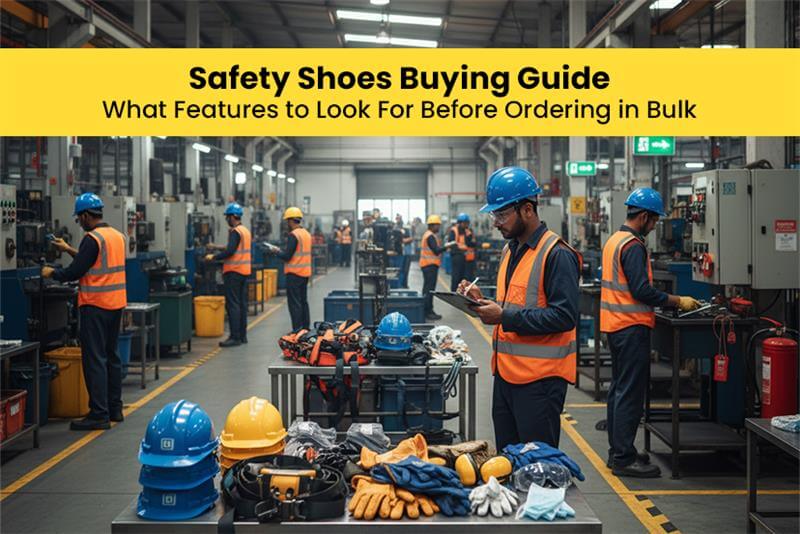
Safety Shoes Buying Guide: What Features to Look For Before Ordering in Bulk
Whether you’re equipping a construction crew, factory workforce, warehouse team, or infrastructure project staff, safety shoes are a critical part of personal protective equipment (PPE). Buying in bulk can bring cost savings, uniform protection, and easier inventory management, but only if you choose the right features that genuinely safeguard your workers. This safety shoe buying guide breaks down the essential features and considerations you should evaluate before placing a bulk order.
Why Feature Selection Matters?
Safety shoes protect feet from heavy objects, sharp materials, slippery surfaces, electrical hazards, chemicals, and day-to-day workplace wear. The right pair does far more than look tough — it actively reduces injuries, prevents long-term fatigue, and ensures compliance with safety standards.
Before you order in bulk, consider:
- Type of work environment
- Hazard levels
- Worker comfort and acceptance
- Compliance with safety regulations
Top Features To Look For Before Buying Safety Shoes For Various Applications
If you are planning to buy safety shoes online in bulk, then you need to focus on the various features that match your purposes and workplace requirements. Here is the list of top features you must look for:
- Steel Toe Caps (or Composite Toe Caps):
Steel-toe caps provide strong impact and compression resistance, ideal for high-risk environments. Composite toe caps offer lighter, non-metallic protection and are suitable for sites with electrical hazards or metal detector checkpoints.
- Anti-Slip and Anti-Skid Soles
Anti-slip soles prevent slips and falls on wet, oily, or uneven surfaces. Look for deep tread patterns and specialized rubber compounds that improve grip.
- Oil and Chemical Resistance
Oil-resistant soles minimize slip risks in industries dealing with lubricants, chemicals, or fuel. They also last longer in environments where chemicals can degrade standard materials.
- Shock Absorption and Cushioning
Shock-absorbing midsoles help reduce fatigue for workers who walk or stand for long hours. Better cushioning directly contributes to comfort and reduces joint stress.
- Comfort & Fit
Comfort affects both safety and productivity. Ensure shoes offer good ventilation, padded linings, ergonomic insoles, and a wide size range to accommodate your workforce. - Material Types
- Leather: Durable, breathable, and built for rugged conditions.
- Synthetic Materials: Lightweight, cost-effective, and easy to clean.
- Rubber/PVC: Ideal for wet or chemical environments with strong anti-slip properties.
Additional Considerations Before Bulk Ordering
- Regulatory Compliance: Only choose safety shoes that meet the required protection standards applicable to your sector.
- Durability and Lifespan: For bulk purchases, long-lasting shoes reduce replacement costs and downtime.
- Budget vs. Safety Needs: Evaluate the balance between cost-efficiency and essential safety features.
- Supplier Reliability: A dependable supplier ensures consistent quality, accurate size distribution, and timely delivery.
Why You Should Choose Moglix for Bulk Buying?
When it comes to industrial PPE procurement, selecting the right partner is as important as selecting the right product features. Moglix brings a structured, reliable, and cost-efficient approach to bulk safety shoe procurement:
Certified and Compliant Product Range
Moglix offers safety shoes that meet national and international safety standards, ensuring your workforce gets only quality-verified protection.
Wide Assortment Across Use-Cases
From steel-toe boots for construction sites to lightweight safety shoes for logistics and warehousing, you can choose from a comprehensive range tailored to specific hazards.
Bulk Procurement Expertise
Moglix supports large-scale orders with consistent supply, accurate size distribution, and product traceability — reducing the burden on your procurement team.
Competitive Pricing and Cost Savings
With its strong supplier network and efficient supply chain, Moglix helps organizations optimize spend without compromising on quality.
Pan-India Fulfillment and Quick Delivery
Whether your project operates in a metro city or a remote project site, Moglix ensures timely delivery through robust logistics capabilities.
Dedicated Support for Enterprises
Moglix provides expert guidance on product selection, safety standards, and inventory planning, enabling smooth and compliant safety procurement.
Conclusion
Safety shoes serve as the frontline defense against workplace injuries in industrial and infrastructure environments. Before buying in bulk, focus on critical features like steel toe protection, anti-slip soles, oil resistance, shock absorption, comfort, and durable materials. Now you can buy a complete range of safety shoes used for various purposes and suitable for different industries at Business Moglix. Pairing these essential features with a trusted procurement partner like Moglix ensures that you receive certified products, timely delivery, and cost-effective solutions, all while enhancing worker safety and productivity.
Global Road Construction Conference 2025
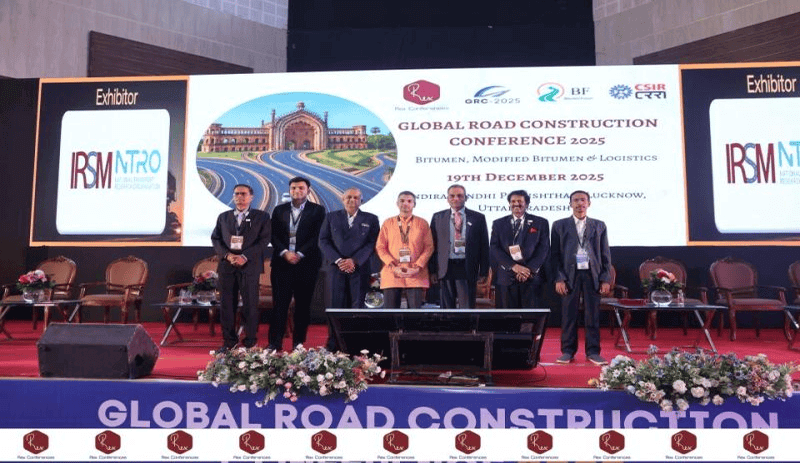
Global Road Construction Conference 2025
Date: 18th Dec
Organizer: Rex Fuels Management Pvt Ltd
About the Event: Gulfam Khan, Associate Director at Moglix, recently shared insights at the 5th Edition of the Global Road Construction Conference 2025, organized by Rex Fuels Management Pvt Ltd, speaking on “Transforming Road Construction with Digital Procurement and Sustainable Materials.”
Top 10 Kota Stone Manufacturers in India (2026): Types, Prices & Features
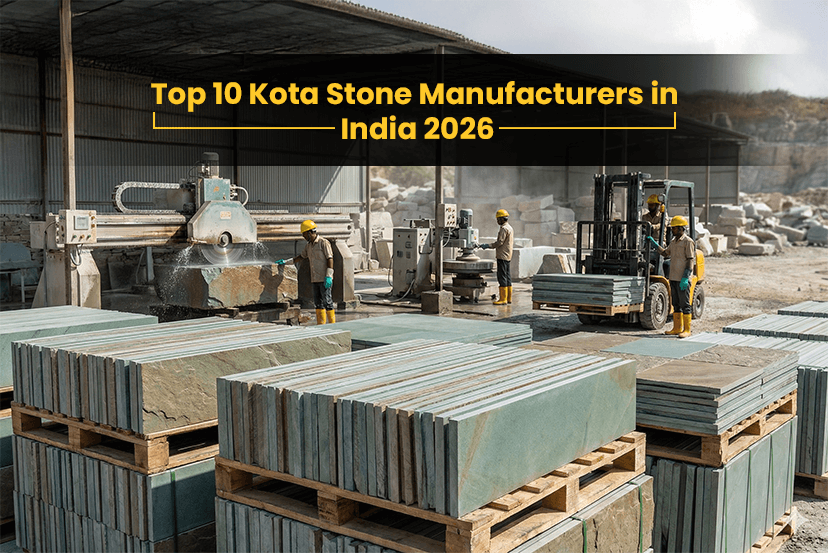
Top 10 Kota Stone Manufacturers in India (2026): Types, Prices & Features
Kota stone is one of India’s most popular natural flooring materials, a fine-grained limestone quarried primarily in the Kota and Ramganj Mandi regions of Rajasthan. Known for its durability, timeless aesthetics, and affordability, Kota stone has wide use in residential, commercial, institutional, and industrial flooring applications. Its natural hues, from blue, brown, black, to honey and red Mandana variants, offer an earthy, elegant finish that enhances interior and exterior spaces.
In 2026, demand continues strong as builders, architects, and homeowners seek cost-effective, long-lasting materials with low maintenance. Below are the top Kota stone manufacturers/companies in India, along with product offerings, features, and typical pricing insights.
Why Choose Kota Stone for Flooring?
Before we list the manufacturers, here’s why Kota stone remains a preferred choice:
- Natural Beauty & Unique Texture: Each slab has subtle variations that add character to floors.
- Durability: With good compressive strength and resistance to daily wear, it’s suitable for high-traffic areas.
- Affordability: Generally lower cost per square foot compared to marble and granite.
- Versatile Finishes: Available in honed, polished, leather, shot-blast, and natural finishes.
- Eco-friendly: A natural stone that requires minimal chemical processing.
Top 10 Kota Stone Manufacturers in India (2026)
1. Lion Stones – Kota Stone Manufacturer & Supplier
A reputed name in the Kota stone market, Lion Stones has over three decades of experience in quarrying and processing high-quality natural Kota limestone. They handle the entire production chain from quarry to finished slab, ensuring consistency in thickness and finish – ideal for both residential flooring and large commercial projects. Their eco-friendly methods also focus on sustainable extraction.
Best For: Premium residential and commercial flooring
Specialties: Customized cuts, polished slabs, consistent quality
2. Shreejee Stones – Established Premium Supplier
With 40+ years in the industry, Shreejee Stones is known for a wide range of Kota products — from flooring slabs to tiles in multiple finishes (mirror, river wash, leather, honed). They serve markets across India and export internationally.
Best For: Architects, institutional, and infrastructure projects
Features: Multiple finishes and color options, pan-India delivery
3. Suzuki Stone Slab & Tiles
Suzuki Stones is a significant manufacturer and exporter of Kota stone and related limestone products since 1998. It holds major production capacity and is known for supplying innovative block cutting and ready-to-install slabs. They also produce designer basalt and sandstone products that complement Kota stone flooring.
Best For: Large projects and export supplies
Features: Advanced machinery, calibrated thickness, ready-fit tiles
4. Sethi Stones
A long-standing Kotah supplier based in Jaipur, Sethi Stones offers a broad collection of Kota stone — including blue, brown, black, yellow, and red Mandana variants. Their offerings focus on ready-to-fit tiles with precise edge cutting and box-packed delivery, which accelerates installation time and reduces wastage.
Best For: Residential and office flooring
Features: Box packing, variety of stone colors and finishes
5. Pandit Kota Stone & Marble
Established in the 1980s, Pandit Kota Stone & Marble combines traditional craftsmanship with modern machinery. They produce a spectrum of stone finishes – rough, polished, diamond cut, and sand blast — and serve builders, interior designers, and bulk buyers across India and abroad.
Best For: Custom stone orders and high-volume supply
Features: Versatile finishes, strong quality checks
6. Natraj Stone Suppliers
Based in Ramganj Mandi, Natraj Stone Suppliers provide a wide range of Kota stone options, including flooring tiles in various shades and finishes (brown, blue, shot blast). They emphasize stringent quality checks and competitive pricing, making them a reliable choice for home and commercial flooring needs.
Best For: Cost-competitive local projects
Features: Broad color range, quality verified stones
7. Naisha Falak Exports
While known as a broader natural stone exporter, Naisha Falak International supplies premium Kota stone products tailored to both domestic and overseas markets. Their in-house polishing and packaging ensure durability and rich finishes suitable for high-end applications.
Best For: Export quality stone and luxury projects
Features: Polished stones with export standards
8. Niche Local Manufacturers
Several highly rated local manufacturers such as Kotah Stone Industries, Shreeji Stone & Marble, Rahul Stone Industries, and Gayatri Stone Impex have strong reputations in Kota, Mandsaur, and surrounding regions. These businesses often serve regional contractors and homeowners with competitive pricing and quick delivery.
Best For: Local and small to medium projects
Features: Affordable variants, personalized service
9. Ancillary & OEM Producers
Beyond the major names, there are numerous OEM and integrated factory producers (like smaller quarries and processing units) that supply Kota stone slabs and tiles in bulk for civil contractors and developers. These suppliers often offer flexible sizes and finishes, catering to customized flooring specifications.
Best For: Contractors and bespoke orders
Features: Flexible product dimensions, regional pricing
10. Quarry-Direct Suppliers
Many smaller but reputed quarry-direct vendors in Ramganj Mandi and nearby areas supply natural Kota stone at lower costs by eliminating middlemen. These suppliers can be found through vendor networks and industry directories; they are often very price-competitive for large flooring orders.
Best For: Budget-sensitive bulk flooring
Features: Direct quarry sourcing, competitive pricing
Types of Kota Stone Flooring
Kota stone varies by color and finish, including:
- Kota Blue Stone: Classic bluish-grey tones suitable for elegant interiors.
- Kota Brown Stone: Warmer, earthy tones are ideal for homes and patios.
- Black and Red Mandana: Bold variants for statement flooring.
- Honed & Polished: Smoother surface finishes for modern designs.
- Shot Blast & Leather: Textured finishes for slip resistance and rustic appeal.
Cost of Kota Stone (2026 Market Snapshot)
Kota stone pricing depends on quality, finish, size, and processing:
- Basic Unpolished Flooring: ₹40–₹60 per sq.ft
- Polished/Kota Stone Finished: ₹60–₹80 per sq.ft
- Premium & Large Slabs: ₹80–₹120+ per sq.ft
- Special Mirror/High Finish: ₹55–₹220 per sq ft (premium variants)
Prices vary by region, stone thickness, and finish. Transportation and installation costs will add to the final project expense.
How to Choose the Right Kota Stone Manufacturer
To find the best Kota stone partner for your flooring project, consider:
- Stone Finish & Color Needs: Make sure the supplier offers the specific finish you want (e.g., polished vs honed).
- Delivery Capability: Pan-India delivery is crucial for large projects.
- Quality Control: Check for consistent thickness, minimal cracks, and uniform coloration.
- Quarry-Direct Access: Manufacturers with their own quarries often offer better pricing and quality control.
- Client References: Ask for past project photos and testimonials.
Conclusion
Kota stone flooring remains a top choice in India’s building and interior design scene in 2026. Its combination of natural aesthetics, durability, and cost efficiency continues to appeal across residential, commercial, and institutional projects. Choosing a reputable manufacturer, whether a large name like Lion Stones, Shreejee Stones, Suzuki Stones, or Sethi Stones, or a trusted regional supplier, will help ensure beautiful, long-lasting floors that elevate any space. Now you can buy top-quality kota stone in bulk at Moglix Business from reputed and top brands at the most competitive prices.


 Back
Back