
What Is Stone Dust? Meaning, Prices, Types, And Use Cases Explained
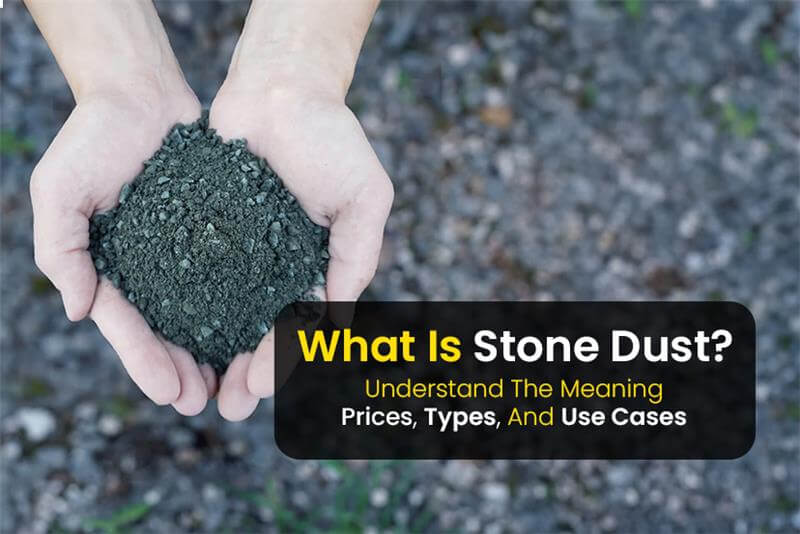
Stone dust is one of the most widely used construction materials in infrastructure, landscaping, and civil engineering projects. It is a fine, powder-like material created as a by-product during the crushing of stones, rocks, and aggregates. Due to its excellent binding ability, affordability, and versatility, stone dust plays a crucial role in modern construction and road development. At Moglix, you can buy stone dust online in bulk from various reputed suppliers and sources at the most effective prices.
In this detailed guide, you’ll learn everything about stone dust, its meaning, types, prices in India, properties, advantages, and major use cases.
What Is Stone Dust?
Stone dust, also known as quarry dust or crusher dust, is a finely crushed powder produced during the processing of stones such as granite, limestone, basalt, or sandstone.
It is usually obtained from stone crushing units while manufacturing aggregates for construction purposes.
Key Characteristics
- Fine particle size (0–6 mm)
- High compaction strength
- Excellent binding properties
- Good drainage capability
- Cost-effective alternative to sand
Because of these properties, stone dust is widely used as a replacement for river sand in construction projects.
How Stone Dust Is Made?
Stone dust is produced during the stone crushing process in quarries. The process involves:
- Stone blasting and extraction
- Crushing in machines
- Screening to separate aggregates
- Collection of fine dust particles
This fine residue is what we call stone dust.
What are the various Types of Stone Dust?
Stone dust can be classified based on the type of stone used and particle size.
1. Granite Stone Dust
- Made from crushed granite rocks
- Highly durable and strong
- Used in concrete mixtures and road base
2. Limestone Stone Dust
- Derived from limestone crushing
- Smooth texture
- Ideal for landscaping and paver installations
3. Basalt Stone Dust
- Extremely hard material
- Used in high-strength construction projects
4. Quarry Dust
- Generic term for stone crushing residue
- Commonly used as sand replacement
5. Crusher Run Dust
- Mixed with small aggregate particles
- Ideal for road sub-base construction
Check Out the Stone Dust Price in India (2026)
The price of stone dust varies depending on location, quality, and type of stone.
Average Price Range
| Type | Price Per Ton |
| Granite Stone Dust | ₹500 – ₹900 |
| Limestone Dust | ₹400 – ₹700 |
| Quarry Dust | ₹300 – ₹600 |
| Crusher Dust | ₹350 – ₹650 |
Factors Affecting Price
- Transportation cost
- Stone quality
- Demand in construction
- Local quarry availability
- Bulk purchase discounts
Stone dust is generally 30–50% cheaper than river sand, making it highly economical.
Understand the Properties of Stone Dust
1. High Compressive Strength
It improves structural stability when used in concrete.
2. Good Compaction Ability
Creates a strong base for roads and pavements.
3. Excellent Drainage
Allows water to pass through easily.
4. Eco-Friendly Material
Recycling quarry waste reduces environmental impact.
5. Low Permeability
Helps in binding and strengthening structures.
Quick Look at Uses of Stone Dust
Stone dust has numerous applications across industries.
1. Construction Industry
It is commonly used in:
- Concrete manufacturing
- Plastering work
- Brick laying
- Mortar mixtures
- Floor leveling
Many builders use stone dust as a partial replacement for sand.
2. Road Construction
Stone dust is widely used for:
- Road base layers
- Highway construction
- Pavement compaction
- Filling potholes
It improves load-bearing capacity.
3. Paver Block Installation
Stone dust acts as a bedding layer beneath pavers due to its compaction strength.
4. Landscaping Projects
Used for:
- Pathways
- Garden leveling
- Artificial turf base
- Decorative ground cover
5. Agricultural Applications
In some regions, it is used to:
- Improve soil drainage
- Add minerals to soil
- Stabilize farm roads
Advantages of Using Stone Dust
Cost Effective
Much cheaper than river sand.
Environment Friendly
Utilizes quarry waste material.
Strong Binding
Improves strength of construction mixes.
Easily Available
Widely available across India.
Better Compaction
Provides firm base layers.
Stone Dust vs River Sand
| Feature | Stone Dust | River Sand |
| Cost | Low | High |
| Availability | High | Limited |
| Strength | Higher | Moderate |
| Workability | Slightly lower | Excellent |
| Eco Impact | Environment friendly | Causes river erosion |
Today, many projects prefer stone dust due to environmental regulations on sand mining.
Who are the Major Suppliers in India?
Several construction material companies supply stone dust, including:
- UltraTech Cement
- ACC Limited
- Ambuja Cements
These companies provide quality aggregate materials across India.
Follow the Tips while Buying Stone Dust
Before purchasing, consider:
- Check particle size
- Ensure minimal impurities
- Compare transport cost
- Verify moisture content
- Buy from certified suppliers
Future Demand of Stone Dust in India
The demand for stone dust is increasing rapidly due to:
- Rising infrastructure projects
- Government smart city initiatives
- Sand mining restrictions
- Growth in road construction
Experts predict strong growth in the next decade.
Conclusion
Stone dust is an essential, economical, and eco-friendly construction material widely used in building, road construction, and landscaping. Its strong binding ability, durability, and affordability make it an excellent alternative to river sand.
With increasing environmental concerns and infrastructure development, the demand for stone dust is expected to grow significantly in India.


 Back
Back