
Electrical Wire Colour Code in India 2026: Types, Safety, and Codes
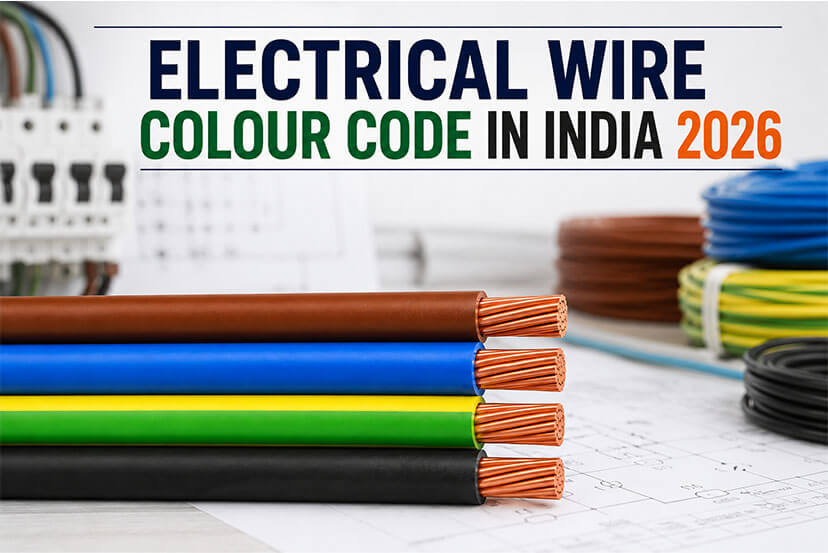
Electrical Wire Colour Code in India 2026: Types, Safety, and Codes
Electrical wires are an essential part of every residential, commercial, and industrial electrical installation. However, correctly identifying the phase, neutral, and earth wires is just as important as choosing the right wire size and insulation. This is where the electrical wire colour code in India plays a critical role. For conventional Indian fixed wiring, the commonly specified colour arrangement remains Red/Yellow/Blue for three-phase conductors, Black for Neutral, and Green/Yellow-Green for protective earthing, depending on the application and applicable specification.
CPWD’s 2023 electrical work specifications, for example, specify Red/Yellow/Blue for three-phase wiring; Red for single-phase live; Black for neutral; and Yellow/Green for earth. Understanding these codes is important whether you are installing house wiring, electrical cables, industrial wiring, control panels, or three-phase electrical systems.
Also read: 7 Types of Electrical Wiring for House Installation in 2026
What Is an Electrical Wire Colour Code?
An electrical wire colour code is a standardised method of identifying electrical conductors by their insulation colour. Each colour represents a particular electrical function, such as:
- Phase/Live wire – carries electrical power to the load
- Neutral wire – provides the return path in an AC circuit
- Earth/Protective conductor – provides a safe path for fault current
- Three-phase conductors – identify different phases in a three-phase system
Electrical Wire Colour Code in India 2026
The following table provides a practical overview of the commonly used Indian colour identification system:
| Wire/Conductor | Common Colour in India | Function |
| Single-phase Live/Phase | Red | Carries current to the load |
| Phase 1 (L1) | Red | First phase in a three-phase system |
| Phase 2 (L2) | Yellow | Second phase |
| Phase 3 (L3) | Blue | Third phase |
| Neutral (N) | Black | Return path for current |
| Protective Earth (PE) | Green/Yellow-Green | Safety and fault-current path |
Single-Phase Wire Colour Code in India
Single-phase wiring is commonly used in homes, apartments, small offices, shops, and other low-power installations.
A typical single-phase circuit contains three conductors:
1. Red – Live or Phase Wire
The red wire is traditionally used to identify the live or phase conductor in conventional Indian single-phase wiring. It carries electrical energy from the supply to the electrical load, such as:
- Lights
- Fans
- Switchboards
- Sockets
- Small appliances
- Other electrical equipment
The live wire is potentially hazardous because it can be at supply voltage relative to earth.
2. Black – Neutral Wire
The black wire is commonly used for the neutral conductor in conventional Indian wiring. The neutral completes the AC circuit by providing a return path for current. Although neutral is generally close to earth potential under normal conditions, it should not be assumed to be safe to touch.
3. Green or Yellow-Green – Earth Wire
The earth wire, also called the protective conductor, is identified using green or green-and-yellow/yellow-green identification, depending on the applicable wiring specification. Its primary purpose is safety.
Also Read: Top 10 Wire Manufacturing Companies in India 2026
Three-Phase Wire Colour Code in India
Three-phase electrical systems are widely used in:
- Factories
- Manufacturing plants
- Commercial buildings
- Large offices
- Workshops
- Pumps
- Motors
- HVAC systems
- Industrial machinery
The conventional Indian three-phase colour code is:
| Phase | Colour | Identification |
| Phase 1 | Red | L1 |
| Phase 2 | Yellow | L2 |
| Phase 3 | Blue | L3 |
| Neutral | Black | N |
| Earth | Green/Yellow-Green | PE |
Government electrical specifications and Indian electrical documentation continue to show Red, Yellow, and Blue for the three phases and Black for neutral. Correct phase identification is particularly important for three-phase motors and rotating machinery, because incorrect phase sequence can affect the direction of motor rotation.
Electrical Wire Colour Code for Home Wiring
For conventional house wiring in India, a basic circuit may include:
Red – Live/Phase
Black – Neutral
Green/Yellow-Green – Earth
The phase conductor is routed through the appropriate switching/protection arrangement, while neutral and protective conductors are handled according to the wiring design and applicable standards. Government electrical specifications also emphasise that the phase/live conductor should be looped at the switch box and that wiring should be arranged so the neutral is not unnecessarily interrupted.
Electrical Wire Colour Code for Switchboards
A typical switchboard may contain:
- Phase/live conductor
- Neutral conductor
- Earth/protective conductor
- Switch wires
- Circuit connections
- Terminal blocks
The phase wire should be correctly connected to the switching device so that switching the appliance disconnects the live supply as intended. The earth conductor should be connected to the appropriate protective terminal and exposed conductive parts where required. Never modify switchboard wiring based only on wire colour.
Electrical Wire Colour Code Standards in India 2026
Several Indian standards and electrical specifications are relevant to conductor identification and wiring.
1. IS 11353:2023
IS 11353:2023 is the revised Indian Standard dealing with the identification of equipment terminals, conductor terminations, and conductors. BIS lists it as the first revision and identifies it as identical under dual numbering with IEC 60445:2021.
This is important when discussing the latest electrical wire colour code in India, because it represents the current Indian standard for conductor identification.
2. National Electrical Code of India 2023
The National Electrical Code of India 2023 (SP 30) references IS 11353 for the identification of insulated and bare conductors. Its wiring provisions also provide recommended conductor colours, including Red/Yellow/Blue for three-phase AC, Black for Neutral, and Green-Yellow for the protective conductor in single-phase systems.
3. IS 732
IS 732 is associated with the Code of Practice for Electrical Wiring Installations and is an important reference for electrical wiring installation practices.
When planning or executing electrical wiring, colour identification should be considered together with requirements covering conductor size, installation method, protection, earthing, testing, and other applicable standards.
What Is the Difference Between Live, Neutral and Earth Wire?
Although all three conductors may be present in the same electrical circuit, they perform very different functions.
| Feature | Live/Phase Wire | Neutral Wire | Earth Wire |
| Main purpose | Supplies power | Completes circuit | Provides electrical protection |
| Common Indian colour | Red | Black | Green/Yellow-Green |
| Carries current normally? | Yes | Yes | Normally no |
| Connected to load? | Yes | Yes | Connected to equipment body/protective system |
| Safety role | Dangerous when energised | Can still be hazardous | Protects against faults |
The earth wire is not a substitute for neutral, and neutral should not be used as a protective earth conductor.
Why Is Electrical Wire Colour Coding Important?
The correct wire colour code for electrical wiring offers several benefits.
1. Improves Electrical Safety: Colour identification makes it easier to distinguish live, neutral, and protective conductors, reducing the risk of accidental connections.
2. Makes Troubleshooting Easier: Electricians can identify circuits more quickly during maintenance and fault finding.
3. Reduces Wiring Errors: A consistent colour system helps minimise incorrect connections during installation.
4. Supports Maintenance: When electrical systems are repaired or modified years after installation, standard conductor identification makes the system easier to understand.
5. Helps During Emergency Work: Clear conductor identification can help qualified personnel work more efficiently during electrical faults and emergencies.
Electrical Wire Types Used in India
The colour of an electrical wire tells you its function, but it does not tell you everything about the wire. Electrical wires are also selected based on conductor material, insulation, voltage rating, cross-sectional area, flexibility, and application.
1. Copper Wires
Copper wires are widely used for residential, commercial, and industrial electrical installations because copper offers high electrical conductivity and good mechanical performance.
Common applications include:
- House wiring
- Lighting circuits
- Power circuits
- Control panels
- Industrial equipment
2. Aluminium Wires and Cables
Aluminium is lighter than copper and is commonly used in applications where weight and cost are important considerations.
It is frequently found in:
- Power distribution
- Large electrical installations
- Overhead systems
- Certain industrial applications
3. PVC Insulated Wires
PVC-insulated electrical wires are widely used for internal wiring and general electrical applications.
They are available in different sizes and insulation ratings depending on the application.
4. FR Wires
Flame-retardant wires are designed to limit the spread of flame along the cable under specified test conditions.
They are commonly considered for residential and commercial electrical wiring.
5. FRLS/FRLSH Wires
FRLS and FRLSH wires are selected for applications where reduced flame spread and lower smoke or halogen-related characteristics are required, subject to the relevant product standard and specification.
6. Flexible Wires
Flexible electrical wires contain stranded conductors and are suitable for applications where the cable needs to bend or move.
They are commonly used in:
- Appliances
- Extension leads
- Control equipment
- Portable electrical devices
- Machinery connections
How to Choose the Right Electrical Wire
When you are looking to buy electrical wire, colour should be only one consideration.
Check the following factors:
1. Wire Size: Select the appropriate conductor cross-sectional area based on load, installation method, permissible voltage drop, temperature, and applicable standards.
2. Conductor Material: Choose between copper and aluminium according to the electrical design and application.
Also read: Aluminum Wire vs Copper Wire: Use Cases, Benefits, Differences, and Price
3. Insulation Type: Consider PVC, FR, FRLS, FRLSH, XLPE, or another suitable insulation system based on the application.
4. Voltage Rating: Ensure that the cable or wire is rated for the voltage of the electrical system.
5. Current Capacity: The wire must be capable of carrying the expected load without exceeding its permissible operating conditions.
6. Application: The right electrical wire for home, industrial wiring, control panels, machinery, or outdoor applications can differ considerably.
7. Applicable Standards: Look for products manufactured and tested according to the relevant BIS/IS standards and project specifications.
Electrical Wire Colour Code: Quick Reference Chart
| Application | Phase/Live | Neutral | Earth |
| Conventional single-phase Indian wiring | Red | Black | Green/Yellow-Green |
| Conventional three-phase Indian wiring | Red/Yellow/Blue | Black | Green/Yellow-Green |
| IEC-harmonised equipment | Brown | Light Blue | Green-Yellow |
| Three-phase IEC-harmonised equipment | Brown/Black/Grey | Light Blue | Green-Yellow |
Note: The table is a practical identification guide, not a substitute for the applicable electrical standard, installation drawing, or professional testing.
Safety Tips for Electrical Wiring
Follow these electrical safety practices when dealing with wiring:
- Always switch off and isolate the electrical supply before working.
- Never rely on wire colour alone to determine whether a conductor is live.
- Use appropriate electrical test instruments.
- Use correctly rated circuit protection.
- Ensure proper earthing and bonding.
- Do not overload electrical circuits.
- Avoid loose or exposed connections.
- Use suitable connectors and terminals.
- Follow the manufacturer’s installation instructions.
- Use qualified electrical professionals for electrical installation and repair work.
- Follow applicable Indian Standards and local electrical regulations.
For industrial installations, additional requirements may apply based on voltage level, machinery, hazardous location, fire protection, and the nature of the installation.
Conclusion
Understanding the electrical wire colour code in India 2026 is essential for safe electrical installation, maintenance, and troubleshooting. The conventional Indian system uses Red for single-phase live, Red/Yellow/Blue for three-phase conductors, Black for neutral, and Green or Yellow-Green for protective earthing. Current Indian conductor-identification standards include IS 11353:2023, while the National Electrical Code of India 2023 references this standard for conductor identification.
If you are planning house wiring, industrial electrical wiring, control-panel wiring, or electrical cable installation, select the wire based not only on colour but also on wire size, conductor material, insulation, voltage rating, current capacity, application, and applicable BIS/IS standards. Proper installation by a qualified electrician remains the safest approach.
Frequently Asked Questions
What is the electrical wire colour code in India?
For conventional Indian wiring, Red is used for single-phase live and the three phases are commonly Red, Yellow and Blue. Black is used for neutral, while Green or Green-Yellow identifies the protective/earth conductor under applicable specifications.
What is the colour of the live wire in India?
The conventional colour for a single-phase live or phase wire in Indian wiring is Red. In three-phase systems, the phases are conventionally identified as Red, Yellow and Blue.
What is the colour of the neutral wire in India?
The conventional Indian colour for the neutral wire is Black.
What is the earth wire colour in India?
The protective earth conductor is commonly identified using Green or Green-Yellow/Yellow-Green, depending on the applicable specification and cable type. CPWD’s 2023 specification identifies the earth conductor as Yellow/Green.
What are the 3 phase wire colours in India?
The conventional three-phase wire colours are:
- Red – Phase 1
- Yellow – Phase 2
- Blue – Phase 3
Black is commonly used for neutral, with green/yellow-green used for protective earthing.
Is blue wire neutral in India?
Not necessarily. In the conventional Indian three-phase identification scheme, Blue is used for the third phase, while Black is used for neutral. However, IEC-harmonised equipment can use light blue for neutral. Therefore, colour alone should not be relied upon when working on an existing circuit.
Is green wire always earth?
Green or green-yellow identification is associated with protective earthing, but existing installations may contain incorrect or non-standard wiring. Always verify before working on a conductor.
Which wire is positive and negative in AC wiring?
AC supply does not use positive and negative conductors in the same way as a basic DC circuit. AC systems generally use phase/live, neutral, and protective earth conductors.
Top 10 Best Tile Adhesive Brands in India 2026: Price and Benefits

Top 10 Best Tile Adhesive Brands in India 2026: Price and Benefits
Choosing the right tile adhesive is just as important as selecting the right tiles. A good-quality adhesive creates a strong bond between the tile and substrate, improves installation quality, reduces the risk of tile debonding, and helps the finished surface remain durable for years. Unlike conventional cement-sand mortar, modern tile adhesives are formulated with cement, graded aggregates, polymers, and performance-enhancing additives for specific applications. The right product can vary according to tile type, tile size, substrate, location, and exposure to moisture or movement.
If you are looking to procure adhesives or tiles in bulk, you can purchase them from the Moglix business. We assist businesses and industries in procuring various adhesives like epoxy adhesive, acrylic adhesive, hot melt adhesive, silicone adhesive, curing rubber adhesive, etc., at the best prices.
This guide covers the top 10 tile adhesive brands in India in 2026, ranked broadly on brand popularity, product range, performance, application versatility, and market presence.
Also Read: What Is Silicone Glue: Types, Uses, Features, And Specifications
Quick Comparison: Top Tile Adhesive Brands in India 2026
| Rank | Brand | Indicative Price Range* | Best Suited For | Segment |
| 1 | Roff by Pidilite | Rs 300 – Rs 1,500+ / 20 kg | Ceramic, vitrified, natural stone, exterior | Budget – Premium |
| 2 | MYK LATICRETE | Rs 350 – Rs 1,500+ / 20 kg | Residential, commercial, large-format tiles | Budget – Premium |
| 3 | Saint-Gobain Weber | Rs 280 – Rs 1,500+ / 20 kg | Indoor/outdoor tiles, stone, wet areas | Budget – Premium |
| 4 | ARDEX ENDURA | Rs 500 – Rs 2,100+ / 20 kg | Premium tiling and demanding applications | Mid – Premium |
| 5 | Sika | Rs 500 – Rs 1,800+ / 20 kg | Wet areas, vitrified, large-format tiles | Mid – Premium |
| 6 | MAPEI | Rs 600 – Rs 2,000+ / 20 kg | Premium tile and stone installations | Mid – Premium |
| 7 | Asian Paints SmartCare | Rs 400 – Rs 1,200+ / 20 kg | Home renovation and general tiling | Budget – Mid |
| 8 | Fosroc | Rs 400 – Rs 1,500+ / 20 kg | Construction and commercial projects | Mid – Premium |
| 9 | UltraTech TileFixo | Rs 300 – Rs 900+ / 20 kg | Residential and general construction | Budget – Mid |
| 10 | Lapifix | Rs 300 – Rs 1,000+ / 20 kg | General tile installation | Budget – Mid |
*Prices are indicative market ranges for commonly available pack sizes and are not fixed MRP. Premium grades, white adhesives, flexible adhesives, and specialty products may cost considerably more.
Complete List Of The Best Tile Adhesives You Can Opt For In 2026
1. Roff by Pidilite
Roff, from Pidilite Industries, is one of the most recognised tile and stone fixing brands in India. Its portfolio includes adhesives designed for ceramic, vitrified and natural stone tiles, along with specialised solutions for interior and exterior applications. Roff offers products such as Vitrofix, Vitrofix Ultra, Extrofix, Extrofix Ultra, Masterfix and other specialised tile-fixing solutions.
A major advantage of Roff is the breadth of its product range. Buyers can select a standard adhesive for regular ceramic tiles or move to higher-performance formulations for vitrified tiles, natural stone, exterior areas and substrates such as plywood, metal and cement boards.
Indicative price: Rs 300 – Rs 1,500+ per 20 kg, depending on grade.
Key benefits:
- Strong brand recognition and wide availability
- Multiple adhesive grades for different tile types
- Options for indoor and outdoor applications
- Products available for vitrified and natural stone tiles
- Specialised solutions for demanding substrates
- Suitable options for residential and commercial projects
Best for: Home construction, renovation, vitrified tiles, natural stone, and exterior applications.
2. MYK LATICRETE
MYK LATICRETE is a well-established name in premium tile and stone installation solutions. Its products are designed for different tile formats, substrates, and performance requirements, making the brand popular among homeowners, contractors, architects, and professional installers.
The brand is particularly suitable when the project requires improved bonding, flexibility, or specialised installation performance. Its range includes products for ceramic, vitrified, stone, and large-format applications.
For example, MYK LATICRETE 315 Plus is available in the market as a 20 kg product, with current listings around Rs 625 – Rs 775 depending on seller and variant. MYK Laticrete 315 Plus Tile Adhesive, Grey, 20 Kg Bag
Indicative price: Rs 350 – Rs 1,500+ per 20 kg.
Key benefits:
- Strong adhesion
- Wide range of grades
- Suitable for ceramic and vitrified tiles
- Options for large-format applications
- Suitable for professional projects
- Good choice for demanding installations
Best for: Premium residential projects, commercial construction, vitrified tiles and specialised tile installations.
3. Saint-Gobain Weber
Saint-Gobain Weber offers one of the more extensive tile adhesive portfolios available in India. Its range covers standard ceramic tile adhesives as well as products for vitrified tiles, natural stone, tile-on-tile installation, large-format tiles, swimming pools, and demanding commercial applications.
Its product range includes WeberSet Premier, WeberSet Classic, WeberSet Firm, WeberSet Flex, WeberSet Flex, WeberSet Ultra, and Weber epoxy adhesive, among others. Weber also provides a tile adhesive selector that considers the application area, tile type, substrate, and tile dimensions before recommending a suitable product.
Indicative price: Rs 280 – Rs 1,500+ per 20 kg.
Key benefits:
- Extensive product range
- Solutions for indoor and outdoor applications
- Options for ceramic, vitrified and natural stone
- Products for tile-on-tile applications
- Flexible solutions for areas with movement
- Specialty products for wet and heavy-duty environments
Best for: Buyers who want to select an adhesive based specifically on tile, substrate, and application conditions.
4. ARDEX ENDURA
ARDEX ENDURA is a strong choice for customers looking for high-performance tile and stone adhesives. The brand offers products ranging from standard high-polymer adhesives to premium flexible formulations for large-format tiles and demanding installations.
Its Silver Star Plus and Platinum Star Plus ranges illustrate the difference between standard and high-performance adhesive grades. Current listings show Silver Star Plus 20 kg around Rs 936 and Platinum Star Plus 20 kg around Rs 1,900 – Rs 2,100, although prices vary by seller and variant.
Indicative price: Rs 500 – Rs 2,100+ per 20 kg.
Key benefits:
- High-polymer formulations
- Strong bonding performance
- Premium options for demanding applications
- Suitable for tile and stone installations
- Flexible grades available
- Suitable for professional projects
Best for: Large-format tiles, premium homes, commercial spaces, and projects where higher adhesive performance is required.
5. Sika
Sika is another major construction-chemical brand offering a broad range of tile adhesives under its SikaCeram portfolio. Its Indian range includes products for standard ceramic and vitrified tiles as well as high-performance solutions for large-format tiles, wet areas, and demanding applications.
For example, SikaCeram-212 Non-Slip is a polymer-modified cementitious adhesive designed for ceramic and vitrified tiles and is suitable for indoor and outdoor applications. Sika states that the product conforms to IS 15477-2019 Type-2 ‘T’ and EN 12004-2 C2TE classifications.
For larger and more demanding installations, SikaCeram-255 Large Tile and SikaCeram-288 Flex S1 offer higher-performance options.
Indicative price: Rs 500 – Rs 1,800+ per 20 kg.
Key benefits:
- Strong product range
- Anti-slip options
- Solutions for large-format tiles
- Indoor and outdoor suitability
- Wet-area applications
- Flexible and deformable grades available
- Products meeting recognised standards
Best for: Bathrooms, balconies, terraces, large-format tiles, vitrified tiles, and commercial applications.
6. MAPEI
MAPEI is a global construction-materials manufacturer with a strong focus on tile and stone installation systems. Its Indian portfolio includes adhesives, grouts, sealants, primers, crack-isolation systems, and other installation accessories.
MAPEI products are designed for applications ranging from residential floors and walls to demanding environments such as swimming pools, steam rooms, façades, and commercial buildings. The brand also offers solutions for ceramic, mosaic, and natural stone coverings.
Indicative price: Rs 600 – Rs 2,000+ per 20 kg equivalent, depending on product.
Key benefits:
- Premium-quality formulations
- Wide tile and stone application range
- Solutions for demanding environments
- Strong technical product portfolio
- Options for interior and exterior use
- Suitable for professional installations
Best for: Premium homes, commercial projects, large-format tiles, natural stone and specialised installations.
7. Asian Paints SmartCare
Asian Paints SmartCare is a convenient option for homeowners and contractors who already use Asian Paints construction solutions. The brand’s construction-chemical portfolio includes tile-fixing and related products designed for residential construction and renovation.
Its major advantage is brand familiarity and accessibility. For regular home applications, buyers can compare SmartCare adhesive grades according to the tile type, surface, and required performance.
Indicative price: Rs 400 – Rs 1,200+ per 20 kg.
Key benefits:
- Well-known Indian construction brand
- Suitable for residential applications
- Convenient option for renovation projects
- Different grades for different requirements
- Easy availability through building-material channels
Best for: Residential flooring, wall tiling, and general home renovation.
8. Fosroc
Fosroc is widely recognised for construction chemicals and specialised building solutions. Its tile and stone installation products are particularly relevant for construction professionals and commercial projects where substrate compatibility, bonding, and long-term performance matter.
Fosroc can be considered when the project requires more than a basic tile-fixing adhesive, particularly in professional construction environments.
Indicative price: Rs 400 – Rs 1,500+ per 20 kg, depending on product grade.
Key benefits:
- Established construction-chemical brand
- Professional-grade solutions
- Suitable for construction projects
- Options for different substrates and applications
- Focus on performance and durability
Best for: Commercial construction, professional contractors and demanding building projects.
9. UltraTech TileFixo
UltraTech TileFixo is a practical option for general residential and construction applications. The brand benefits from UltraTech’s established position in the Indian building-material market and provides tile-fixing solutions for common installation requirements.
For buyers working on standard ceramic or vitrified tile installations, TileFixo can be considered as a budget-to-mid-range alternative. The exact adhesive grade should be selected according to tile type, size, and substrate.
Indicative price: Rs 300 – Rs 900+ per 20 kg.
Key benefits:
- Budget-friendly options
- Suitable for common tile applications
- Convenient for residential projects
- Available in different grades
- Suitable for routine construction work
Best for: Residential floors, walls, and standard tile installation projects.
10. Lapifix
Lapifix is another tile adhesive brand available in the Indian market, offering products for different tile-fixing requirements. It can be considered by buyers looking for budget and mid-range alternatives for residential and general construction work.
As with any adhesive brand, buyers should select the exact grade according to the tile material, surface, location, and environmental conditions rather than choosing solely on price.
Indicative price: Rs 300 – Rs 1,000+ per 20 kg.
Key benefits:
- Budget-to-mid-range options
- Suitable for general tile installation
- Different product grades available
- Useful for residential projects
- Cost-conscious option for routine applications
Best for: General indoor tiling and budget-conscious construction projects.
How Much Does Tile Adhesive Cost in India in 2026?
The price of tile adhesive depends heavily on its formulation and intended application. A basic adhesive for regular ceramic tiles can cost considerably less than a flexible adhesive designed for large-format porcelain, natural stone, or exterior applications.
As a broad guide:
| Tile Adhesive Segment | Approx. Price for 20 kg |
| Basic/standard | Rs 250 – Rs 500 |
| Improved polymer-modified | Rs 500 – Rs 900 |
| Premium | Rs 900 – Rs 1,500 |
| High-performance/flexible | Rs 1,500 – Rs 2,500+ |
| Specialised epoxy/PU | Can be considerably higher |
What Are the Benefits of Using Tile Adhesive?
1. Stronger Tile Bond: Tile adhesives are engineered to provide better adhesion between tiles and compatible substrates than traditional cement-sand mortar for many modern tiling applications.
2. Better Support for Vitrified and Porcelain Tiles: Low-porosity vitrified and porcelain tiles generally require an adhesive formulated for their characteristics. Choosing an appropriate polymer-modified adhesive can improve bonding performance.
3. Suitable for Large-Format Tiles: Large tiles require careful adhesive selection and installation. Premium and flexible adhesives can provide better coverage and accommodate certain substrate movements.
4. Better Adhesion in Wet Areas: Specialised products are available for bathrooms, kitchens, balconies, terraces, and swimming pools. However, the adhesive should always be selected according to the manufacturer’s stated application.
5. Reduced Tile Slippage: Some formulations include anti-slip or reduced-slip properties, making them particularly useful for vertical wall installations.
6. Faster and Cleaner Installation: Ready-to-mix powder adhesives generally require only the specified quantity of water and can be applied using a notched trowel, helping create a more controlled adhesive bed.
7. Better Compatibility: Different grades are available for concrete, cement screed, existing tiles, gypsum boards, metal, and other substrates. Compatibility should always be checked in the technical data sheet.
How to Choose the Best Tile Adhesive?
Selecting the best tile adhesive in India should not be based only on brand or price. Consider these factors before buying:
1. Tile Type
Ceramic, vitrified, porcelain, glass mosaic, marble, and natural stone may require different adhesive grades.
2. Tile Size
Small tiles can often use standard formulations, while large-format and thin tiles may require high-performance or flexible adhesives.
3. Substrate
Check whether you are fixing tiles on concrete, cement screed, existing tiles, gypsum board, metal or another surface.
4. Indoor or Outdoor Application
For outdoor areas, select a product specifically rated for exterior use and consider exposure to rain, temperature changes, and substrate movement.
5. Moisture Exposure
Bathrooms, swimming pools, terraces, and kitchens require products appropriate for wet or moisture-prone environments.
6. Flexibility
Areas exposed to movement or thermal changes may benefit from a flexible or deformable adhesive. For example, Sika’s SikaCeram-288 Flex S1 is specifically designed for demanding indoor and outdoor applications and is classified as C2TES1.
7. Adhesive Classification
Look for the relevant classification on the product packaging and technical data sheet. For example, Weber explains that cementitious adhesives can be classified as C1 for normal performance and C2 for improved performance, with additional designations indicating properties such as slip resistance and extended open time.
8. Manufacturer’s Coverage Recommendation
Actual consumption depends on tile size, substrate profile, adhesive-bed thickness, and installation technique. Sika, for example, provides different consumption guidance based on tile size and adhesive-bed thickness and recommends full coverage of the tile back in relevant applications.
Final Verdict: Which Is the Best Tile Adhesive Brand in India?
There is no single tile adhesive that is best for every project. Roff and MYK LATICRETE are strong all-round choices because of their broad product ranges and market presence. Weber stands out for its extensive application-specific range and product-selection support. ARDEX ENDURA, Sika, and MAPEI are strong choices when higher performance is required for large-format tiles, demanding environments or professional installations.
For budget-conscious residential projects, standard products from Roff, Weber, Sika, UltraTech TileFixo, or other suitable brands can be considered. Most importantly, choose the adhesive based on the tile, substrate, size, indoor/outdoor location, and moisture or movement conditions – not simply by brand name or lowest price.
Frequently Asked Questions
Q1. Which is the best tile adhesive brand in India?
Roff, MYK LATICRETE, Weber, ARDEX ENDURA, Sika, and MAPEI are among the leading options. The best choice depends on tile type, substrate, and application conditions.
Q2. How much does a 20 kg tile adhesive bag cost in India?
A 20 kg bag can broadly range from around Rs 250 to Rs 2,500+, depending on formulation, performance grade, and brand. Specialty epoxy and polyurethane products can cost more.
Q3. Which tile adhesive is best for vitrified tiles?
Use an adhesive specifically recommended for vitrified or low-porosity tiles. Roff, MYK LATICRETE, Weber, Sika, ARDEX ENDURA, and MAPEI offer suitable grades.
Q4. Can tile adhesive be used outdoors?
Yes, but the specific product must be rated for exterior use. Outdoor areas may require improved or flexible adhesives because of moisture, temperature variation, and substrate movement.
Q5. Is tile adhesive better than cement mortar?
For many modern tile installations, tile adhesive offers better controlled bonding and easier application. However, the right solution depends on the tile, substrate, and project requirements.
Q6. Can tile adhesive be used for tile-on-tile installation?
Yes, but only when the selected adhesive is specifically approved for tile-on-tile application and the existing tiles are properly prepared.
Q7. How much area does a 20 kg tile adhesive bag cover?
Coverage varies according to tile size, substrate, trowel notch, bed thickness, and application technique. Always use the manufacturer’s consumption figure rather than relying on a generic estimate.
Q8. Should I choose grey or white tile adhesive?
Grey is commonly used for many standard applications, while white adhesive is often preferred for light-coloured tiles, natural stone, or applications where the adhesive colour may affect the finished appearance. Always follow the tile and adhesive manufacturer’s recommendations.
Top 10 Solar CCTV Cameras in India 2026 With WiFi and SIM
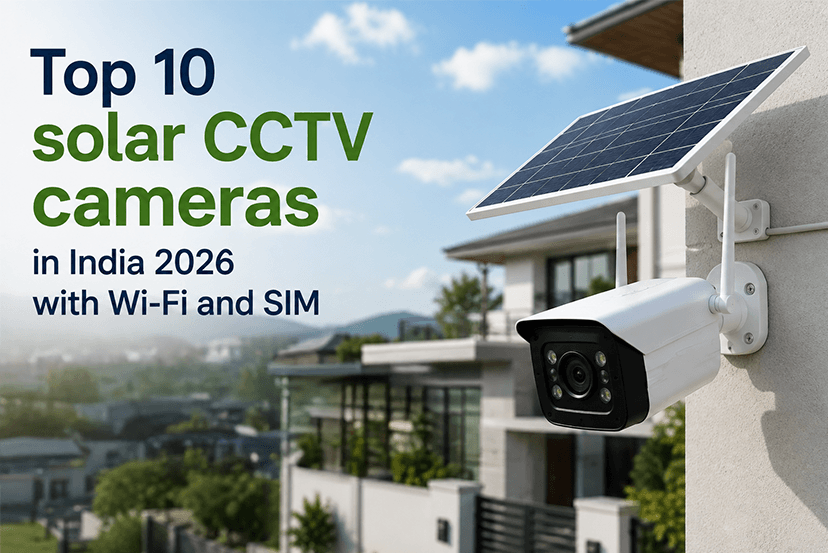
Top 10 Solar CCTV Cameras in India 2026 With WiFi and SIM
Solar CCTV cameras are becoming a practical security solution for homes, farms, warehouses, construction sites, shops, parking areas, and other outdoor locations where running electrical wiring can be difficult. By combining a solar panel, rechargeable battery, CCTV camera, and wireless connectivity, these systems can provide surveillance with less dependence on conventional power infrastructure. Businesses and industries looking for bulk procurement of CCTV cameras or solar equipment can find them on Moglix Business at wholesale prices.
In 2026, buyers can choose between WiFi solar CCTV cameras for locations with reliable internet and 4G SIM-based solar CCTV cameras for remote areas where WiFi is unavailable. Many newer models also offer features such as PTZ movement, colour night vision, AI human detection, motion alerts, two-way audio, local SD-card storage, and mobile-app monitoring. This guide covers some of the top solar CCTV cameras in India in 2026, their important features, ideal applications, and factors to consider before buying.
What Is a Solar CCTV Camera?
A solar CCTV camera is a surveillance camera powered by a solar panel and rechargeable battery rather than depending entirely on a conventional electrical connection. The solar panel converts sunlight into electricity, which charges the battery and helps operate the camera.
Depending on the model, connectivity can be provided through WiFi, 4G SIM, or both. A 4G solar CCTV camera is particularly useful for farms, construction sites, and remote properties because it can transmit footage through a cellular network without requiring a WiFi router.
Top 10 Solar CCTV Cameras in India 2026
The following models and product families represent notable options available in the Indian market. Features and prices can vary by configuration, seller, and availability, so buyers should verify the latest specifications before purchasing.
1. CP Plus CP-Z44R 4G Outdoor PT Solar Camera
Best for: Homes, shops, warehouses and outdoor areas
The CP Plus CP-Z44R is a 4MP 4G outdoor PT solar camera designed for users who want SIM-based remote surveillance. Its listed features include a built-in battery, two-way communication, motion detection, colour night vision and support for microSD storage up to 256GB.
The model is particularly suitable when WiFi is unavailable but a stable 4G network is accessible. A current Moglix listing showed the CP-Z44R at around ₹8,999, although prices can change with offers and availability.
Key features:
- 4MP image resolution
- 4G SIM connectivity
- Solar-powered operation
- Built-in rechargeable battery
- Pan-and-tilt functionality
- Colour night vision
- Motion detection
- Two-way audio
- Up to 256GB microSD support
2. Trueview 4MP Smart 4G Solar Bullet Camera
Best for: Farms, construction sites and remote properties
The Trueview 4MP Smart 4G Solar Bullet Camera is designed for off-grid surveillance. It combines a 5W solar panel with a 10,400mAh rechargeable battery and supports 4G connectivity.
The camera includes a PIR sensor, human detection, motion alerts, two-way audio, colour vision and H.265+ video compression. It also supports microSD storage up to 256GB and optional cloud storage. Its IP66 rating makes it suitable for outdoor deployment.
Key features:
- 4MP resolution
- 4G connectivity
- 10,400mAh battery
- 5W solar panel
- PIR motion sensor
- Human detection
- Colour night vision
- Two-way audio
- IP66 weather protection
- Up to 256GB microSD support
3. Trueview 3MP 4G Solar Dual-Lens Mini PT Camera
Best for: Wide outdoor coverage
For users looking for greater coverage, the Trueview 3MP 4G Solar Dual-Lens Mini Pan-Tilt Camera is another option. The camera supports horizontal and vertical movement and combines a large 18,000mAh battery with a 7W solar panel.
It also includes two-way audio, PIR sensing, active defence features, and solar charging, making it suitable for farms, warehouses, and other outdoor locations.
Key features:
- Dual-lens design
- 4G SIM connectivity
- Pan-and-tilt movement
- 18,000mAh battery
- 7W solar panel
- PIR sensor
- Two-way audio
- Active siren and lights
- Outdoor solar operation
4. Maizic Smarthome Ultragenie 4G Solar Triple-Lens Camera
Best for: Large outdoor areas requiring multiple views
The Maizic Ultragenie combines three 5MP lenses with a triple-screen viewing system. It supports 4G connectivity, AI human detection, PTZ functionality, colour night vision and two-way audio.
The manufacturer’s current collection lists the model with an IP66 waterproof rating. It is aimed at outdoor surveillance where a single camera needs to provide multiple viewing angles.
Key features:
- Triple 5MP lenses
- 15MP combined configuration
- 4G SIM connectivity
- AI human detection
- PTZ functionality
- Triple-screen live view
- Colour night vision
- Two-way audio
- IP66 protection
5. Maizic Supercam 4K 4G Solar CCTV Camera
Best for: High-resolution outdoor monitoring
If image clarity is a priority, a 4K solar CCTV camera can be worth considering. The Maizic Supercam is listed as a 12MP 4K dual-lens 4G wireless solar camera with dual-screen viewing, AI human detection, colour night vision and IP66 protection.
It also supports local SD-card storage, allowing users to save recordings without relying entirely on cloud storage.
Key features:
- 4K/12MP configuration
- Dual-lens design
- 4G wireless connectivity
- Solar-powered operation
- AI human detection
- Colour night vision
- Two-way audio
- IP66 waterproofing
- SD-card storage
6. Maizic Photon X 12MP 4K 4G Solar Camera
Best for: Farms and large open outdoor areas
The Maizic Photon X is another high-resolution option, featuring a 12MP 4K configuration, 4G SIM connectivity, a 100W integrated street-light-style illumination system and an 18,000mAh battery according to the manufacturer’s current listing.
Its 360-degree pan-and-tilt capability makes it suitable for locations where users need to monitor a relatively wide outdoor area from a single installation point.
Key features:
- 12MP/4K resolution
- 4G SIM connectivity
- 18,000mAh battery
- Solar charging
- 360-degree pan and tilt
- IP66 protection
- Outdoor monitoring
- Night illumination
7. Maizic Trion 4G Solar 5MP Triple-Lens Camera
Best for: Multi-angle surveillance
The Maizic Trion combines three 5MP lenses with 4G connectivity and solar power. It is designed for users who want multiple views from one surveillance unit.
Features listed by the manufacturer include automatic tracking, human detection and colour night vision.
Key features:
- Triple 5MP camera configuration
- 4G SIM support
- Solar-powered operation
- Auto tracking
- Human detection
- Colour night vision
- Outdoor surveillance
8. Maizic Supercam WiFi Solar Dual-Lens Camera
Best for: Homes and properties with WiFi
Not every solar CCTV camera needs a SIM card. If your property already has reliable WiFi, a WiFi solar security camera can be a simpler option.
The Maizic Supercam WiFi model is listed with dual lenses, dual-screen viewing, 5MP resolution, AI humanoid detection, remote PTZ control, 360-degree viewing, colour night vision and IP66 protection.
Key features:
- WiFi connectivity
- Dual-lens design
- 5MP configuration
- Dual-screen monitoring
- 360-degree PTZ
- AI human detection
- Colour night vision
- Two-way audio
- IP66 protection
9. Maizic TRIGENIE 4G Solar Triple-Lens Camera
Best for: Advanced multi-view surveillance
The TRIGENIE 4G Solar Camera is designed for users who want multiple camera views and AI-assisted monitoring. The listed configuration combines three 6MP lenses, giving a total advertised 18MP configuration.
It includes triple-screen live viewing, AI PTZ, human detection, full-colour night vision, two-way audio and IP66 weather protection.
Key features:
- Triple 6MP lenses
- 18MP advertised configuration
- 4G SIM connectivity
- AI PTZ
- Human detection
- Full-colour night vision
- Two-way audio
- IP66 protection
10. Maizic 3-in-1 3K 6MP Triple-View 4G Solar Camera
Best for: Budget-conscious buyers wanting multiple views
For buyers who want a multi-view solar CCTV camera without moving into the highest price segment, a 3K 6MP triple-view 4G solar camera can be considered.
The manufacturer’s current listing describes this configuration as a wireless 4G SIM solar camera with triple-view functionality. As with other models in this category, buyers should verify the exact lens configuration, battery capacity, storage support, and warranty before placing an order.
Key features:
- 3K/6MP configuration
- Triple-view monitoring
- 4G SIM connectivity
- Solar-powered operation
- Wireless installation
- Outdoor surveillance
Quick Comparison of the Top Solar CCTV Cameras
| Camera | Connectivity | Resolution | Solar | Key Advantage |
| CP Plus CP-Z44R | 4G SIM | 4MP | Yes | Established CCTV brand |
| Trueview 4MP Solar Bullet | 4G SIM | 4MP | Yes | Large battery + IP66 |
| Trueview Dual-Lens Mini PT | 4G SIM | 3MP | Yes | Dual lens + PTZ |
| Maizic Ultragenie | 4G SIM | 15MP | Yes | Triple lens |
| Maizic Supercam 4K | 4G SIM | 12MP | Yes | 4K dual-lens setup |
| Maizic Photon X | 4G SIM | 12MP | Yes | 360° PTZ + high battery |
| Maizic Trion | 4G SIM | 15MP | Yes | Triple lens + tracking |
| Maizic Supercam WiFi | WiFi | 5MP | Yes | WiFi + dual lens |
| Maizic TRIGENIE | 4G SIM | 18MP | Yes | Triple-screen monitoring |
| Maizic 3-in-1 | 4G SIM | 6MP | Yes | Multi-view at lower cost |
Specifications are based on currently available manufacturer and marketplace information and can vary by product variant.
WiFi Solar CCTV Camera vs 4G SIM Solar CCTV Camera
One of the most important decisions is whether you need WiFi or SIM connectivity.
WiFi Solar CCTV Camera
A WiFi solar CCTV camera connects to an existing wireless internet network.
Advantages:
- No separate SIM data plan
- Convenient for homes and offices with WiFi
- Easy mobile-app access
- Suitable for locations with stable broadband
Best for: Homes, shops, offices, terraces and properties that already have reliable WiFi.
4G SIM Solar CCTV Camera
A 4G solar CCTV camera uses a SIM card and cellular network to transmit video and alerts.
Advantages:
- Does not require a WiFi router
- Suitable for remote locations
- Useful for farms and construction sites
- Can provide remote monitoring where broadband is unavailable
Best for: Farms, warehouses, construction sites, agricultural land, parking areas and remote properties.
Current 2026 products show that 4G solar cameras are increasingly positioned specifically for locations without conventional internet or electrical infrastructure.
Where Can You Use Solar CCTV Cameras?
Solar-powered CCTV cameras can be used for:
- Homes: Monitor gates, gardens, driveways and terraces.
- Farms: Monitor agricultural land, equipment and access points.
- Construction sites: Protect materials, machinery and unfinished structures.
- Warehouses: Monitor outdoor storage and loading areas.
- Shops: Secure entrances, parking and surrounding areas.
- Parking lots: Monitor vehicles and movement.
- Factories: Cover perimeter areas and outdoor equipment.
- Schools and institutions: Monitor outdoor entry and activity areas.
- Remote properties: Provide surveillance without extensive electrical wiring.
How to Install a Solar CCTV Camera
A basic installation process generally involves the following steps:
Step 1: Select the Location
Choose a location with a clear view of the area you want to monitor and sufficient sunlight for the solar panel.
Step 2: Check Network Coverage
For a WiFi camera, confirm that WiFi reaches the installation point. For a 4G camera, check the cellular signal from the intended SIM provider.
Step 3: Mount the Camera
Secure the camera and solar panel using the supplied mounting hardware. Make sure the installation is stable and protected from unnecessary obstruction.
Step 4: Insert the SIM or Configure WiFi
For SIM-based models, insert a compatible SIM card according to the manufacturer’s instructions. For WiFi models, connect the camera to the appropriate wireless network.
Step 5: Install the Mobile App
Download the manufacturer’s app, pair the camera and configure the required settings.
Step 6: Test the Camera
Check daytime footage, night vision, motion detection, notifications, two-way audio, and remote access before completing the installation.
Things to Consider Before Buying
A solar CCTV camera should not be selected only by looking at the megapixel count. Consider the complete system.
Ask these questions before buying:
- Does the installation site have WiFi?
- If not, is 4G coverage reliable?
- How much solar exposure is available?
- What battery capacity does the camera have?
- What resolution is sufficient for the area?
- Do you need PTZ movement?
- Is colour night vision necessary?
- How much storage is required?
- Does the camera support local SD-card recording?
- Is the mobile application reliable and easy to use?
- What is the IP rating?
- What warranty and after-sales support are provided?
- What is the total cost, including SIM data and optional cloud storage?
Solar CCTV Camera Price in India 2026
The price of solar CCTV cameras in India can vary considerably depending on resolution, battery capacity, number of lenses, connectivity, PTZ functionality, storage, and AI features.
Budget-oriented models can be available in the lower thousands, while advanced 4G solar PTZ and multi-lens cameras can cost considerably more. For example, a current Moglix listing showed the CP Plus CP-Z44R at ₹8,999, while Trueview’s current listing showed its 4MP Smart 4G Solar Bullet Camera at ₹5,484. Manufacturer listings for advanced Maizic multi-lens models currently span several thousand rupees and can exceed ₹8,000 depending on the configuration.
Prices should therefore be treated as indicative rather than fixed.
Final Thoughts
Solar CCTV cameras offer a practical way to extend surveillance to locations where electricity and WiFi infrastructure may be limited. In 2026, the market includes WiFi solar cameras for connected homes as well as 4G SIM-based models designed for farms, warehouses, construction sites, and remote properties.
When choosing among the top solar CCTV cameras in India, look beyond resolution and compare connectivity, battery capacity, solar-panel performance, night vision, PTZ coverage, AI detection, storage, weather protection, mobile-app functionality, and after-sales support.
For remote monitoring, a 4G SIM solar CCTV camera can be especially useful because it removes the need for a WiFi router. For connected homes and businesses, a WiFi solar CCTV camera can offer a simpler and cost-effective setup.
Frequently Asked Questions
1. Do solar CCTV cameras work without electricity?
Yes. Solar CCTV cameras use solar panels to charge a rechargeable battery. The battery can power the camera when sunlight is unavailable, although the duration depends on the battery capacity, sunlight and camera usage.
2. Can a solar CCTV camera work without WiFi?
Yes. A 4G SIM solar CCTV camera can connect to the internet through a cellular network instead of WiFi. However, you need adequate 4G coverage and an appropriate data plan.
3. Which is better: WiFi or 4G solar CCTV?
Neither is universally better. WiFi is generally suitable where reliable broadband is already available, while 4G is more suitable for remote locations without WiFi.
4. Do solar CCTV cameras record at night?
Yes. Models with infrared or colour night vision can record after dark. The camera’s battery capacity and illumination technology influence night-time performance.
5. How long does a solar CCTV camera battery last?
Battery backup varies by model and usage. PTZ movement, continuous recording, night lights, frequent motion alerts and poor sunlight can increase energy consumption.
6. Can I watch a solar CCTV camera from my phone?
Many smart solar CCTV cameras support mobile applications that allow live viewing, playback, notifications and other remote-control features.
7. Are solar CCTV cameras suitable for farms?
Yes. They can be particularly useful for farms because solar power reduces dependence on electrical wiring and 4G connectivity can enable remote monitoring where WiFi is unavailable.
How to Connect CCTV Camera to a Phone: 8 Easy Steps
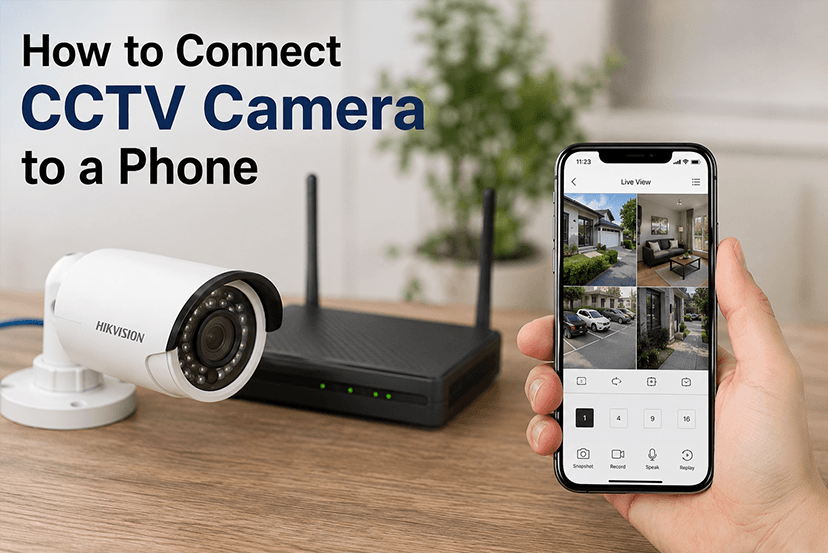
How to Connect CCTV Camera to a Phone: 8 Easy Steps
CCTV cameras have become an important part of home, office, shop, warehouse, and commercial security systems. With modern IP and Wi-Fi-enabled CCTV cameras, you can monitor live footage, receive motion alerts, record videos, and even communicate through two-way audio directly from your smartphone.
Connecting a CCTV camera to a phone may seem complicated at first, but most modern systems can be configured in a few simple steps. You generally need a compatible CCTV camera, a stable internet connection, the manufacturer’s mobile application, and a smartphone.
This guide explains how to connect a CCTV camera to a phone, including both Wi-Fi and wired CCTV setups, as well as troubleshooting tips and important factors to consider when purchasing a camera.
Why Connect a CCTV Camera to a Phone?
Connecting your CCTV camera to your smartphone gives you convenient remote access to your security system. Instead of being physically present near the camera or DVR, you can check your property from almost anywhere with an internet connection.
Some major benefits include:
- Remote live monitoring: View live CCTV footage directly on your phone.
- Motion notifications: Get alerts when movement is detected.
- Video playback: Access previously recorded footage from compatible systems.
- Two-way communication: Speak with people near the camera if two-way audio is supported.
- Remote control: Certain cameras allow pan, tilt, zoom, or other functions through the app.
- Multiple-camera viewing: Monitor cameras installed at different locations through one application.
- Improved security: Quickly check suspicious activity when you are away.
What You Need to Connect CCTV Camera to a Phone
Before starting the setup, make sure you have the following:
- CCTV camera: A Wi-Fi, IP, or compatible analog camera system.
- Smartphone: Android or iOS device.
- Internet connection: A stable Wi-Fi or broadband connection is recommended.
- Mobile application: Install the official app recommended by the CCTV manufacturer.
- Camera login details: You may need the device ID, username, password, QR code, or verification code.
- DVR/NVR: Required when your CCTV cameras are connected through a recorder rather than directly to the internet.
- Power supply: Ensure the camera or recorder is properly powered.
How to Connect a Wi-Fi CCTV Camera to a Phone
Wi-Fi CCTV cameras are generally among the easiest cameras to connect to smartphones. Follow these steps.
Step 1: Power On the CCTV Camera
Connect the camera to its recommended power adapter and switch it on. Wait for the camera to complete its startup process.
Some cameras use indicator lights or voice prompts to show that they are ready for configuration.
Step 2: Download the Official CCTV App
Search for the manufacturer’s official mobile application on the Google Play Store or Apple App Store.
Install the correct application and create an account if required. Avoid downloading unknown third-party applications, particularly when they request unnecessary permissions.
Step 3: Connect Your Phone to Wi-Fi
Connect your smartphone to the Wi-Fi network that you want the CCTV camera to use.
Many Wi-Fi cameras work most reliably when the camera and phone are initially connected through the same network during setup.
Step 4: Add the CCTV Camera to the App
Open the CCTV application and look for an option such as:
- Add Device
- Add Camera
- Set Up Device
- Device
- Scan QR Code
Select the appropriate option.
Step 5: Scan the Camera’s QR Code
Many modern CCTV cameras have a QR code printed on the device, packaging, or setup label.
Use the app’s scanning function to scan this QR code. Depending on the model, you may instead need to enter the device serial number or ID manually.
Step 6: Enter the Wi-Fi Details
Select your Wi-Fi network and enter the correct password.
The camera will attempt to connect to the network. Keep the camera within a reasonable range of the Wi-Fi router during the initial setup.
Step 7: Create or Enter the Camera Password
For security, you may be asked to create a device password or enter the default credentials.
Always change the default password if the camera is using one. Use a strong, unique password rather than a simple combination that can be easily guessed.
Step 8: Complete the Setup
Once the camera connects successfully, it should appear in the mobile application.
Tap the camera name to open the live-view screen. You can now monitor the camera from your smartphone.
Also Read: Top 10 best CCTV Camera Manufacturers in India 2026
How to Connect a CCTV Camera to a Phone Through DVR or NVR
If your CCTV system uses multiple wired cameras connected to a DVR (Digital Video Recorder) or NVR (Network Video Recorder), the process is slightly different.
Step 1: Connect the Cameras to the DVR/NVR
Connect your CCTV cameras to the appropriate ports on the DVR or NVR. Ensure that every camera receives adequate power and that the connections are secure.
Step 2: Connect the Recorder to the Internet
Use an Ethernet cable to connect the DVR/NVR to your router or network switch.
A stable internet connection is important for remote viewing.
Step 3: Install the Manufacturer’s App
Download the mobile application recommended for your DVR/NVR from the official app store.
Create an account if required.
Step 4: Find the Device ID or QR Code
Open the DVR/NVR’s settings menu and locate its device information.
Depending on the system, you may find:
- QR code
- Serial number
- Device ID
- Cloud ID
- Verification code
Step 5: Add the DVR/NVR to Your Smartphone
Open the mobile application and select Add Device.
Scan the QR code or enter the device information manually.
Step 6: Enter Login Credentials
Enter the required username and password. Make sure these credentials match the DVR/NVR settings.
Step 7: View the Cameras
Once the recorder is successfully linked, the connected CCTV cameras should appear in the application.
You can select individual cameras or view multiple camera feeds simultaneously if your system supports it.
How to Connect CCTV Camera to Phone Without Wi-Fi?
Not every CCTV camera requires Wi-Fi at the camera itself. Wired CCTV systems can use Ethernet cables to connect cameras to an NVR, while the NVR connects to the internet through a router.
For remote smartphone access, however, the recorder or camera generally needs some form of internet connectivity.
If there is no internet connection at the location, you may still be able to view locally recorded footage through the DVR/NVR, but remote monitoring from another location may not be available.
How to Connect CCTV Camera to Phone Using Mobile Data
Once your CCTV camera or DVR/NVR has been configured for remote access, you can usually view the footage using your phone’s mobile data.
The basic process is:
- Connect and configure the CCTV system to the internet.
- Add the camera or DVR/NVR to its official mobile app.
- Verify that remote viewing works while your phone is connected to Wi-Fi.
- Turn off Wi-Fi on your phone.
- Enable mobile data.
- Open the CCTV application.
- Select the camera and check the live feed.
If remote viewing does not work over mobile data, check whether remote access or cloud/P2P functionality is enabled on your CCTV system.
How to Connect Multiple CCTV Cameras to One Phone
Many CCTV applications allow multiple cameras to be managed from one smartphone.
If all cameras are connected to a compatible DVR/NVR, simply add the recorder to the mobile app. The application can then display the connected cameras.
For independent IP or Wi-Fi cameras, add each compatible camera individually to the same account or application.
This can be particularly useful for:
- Homes
- Retail stores
- Offices
- Warehouses
- Schools
- Restaurants
- Construction sites
- Small businesses
Common Problems When Connecting CCTV to a Phone
Sometimes the CCTV camera may not connect to your smartphone on the first attempt. The following are some common problems and solutions.
Camera Not Showing in the App
Check whether the camera is powered on and whether the mobile application supports your specific camera model.
Restarting both the camera and application can also resolve temporary connection problems.
Wi-Fi Connection Failed
Check the Wi-Fi password and make sure the camera is within range of the router.
Some cameras support only certain Wi-Fi bands during setup, so check the manufacturer’s specifications.
QR Code Is Not Scanning
Clean the camera lens or QR code area and ensure sufficient lighting.
You can also increase the phone’s screen brightness if the QR code is displayed on another device.
CCTV Works on Wi-Fi but Not on Mobile Data
This may indicate that remote access has not been configured correctly.
Check the camera or DVR/NVR’s internet, cloud, P2P, or remote-access settings. Also verify that the mobile application has the required permissions.
CCTV Camera Shows Offline
Check:
- Internet connectivity
- Power supply
- Ethernet cable
- Wi-Fi signal
- Router status
- Device login credentials
- App status
Restarting the router and CCTV equipment can sometimes restore the connection.
Security Tips for CCTV Camera Connected to Phone
A CCTV camera connected to the internet should be secured properly because unauthorized access can compromise your privacy.
Follow these security practices:
Change Default Passwords
Never continue using easily identifiable default credentials. Create a strong password containing a combination of letters, numbers, and special characters where supported.
Use the Official App
Download the CCTV manufacturer’s application from a trusted app store. Avoid unofficial applications that could expose your account or device information.
Keep Firmware Updated
Manufacturers periodically release firmware updates to improve performance and address security vulnerabilities. Check for updates through the official device or application interface.
Secure Your Wi-Fi Network
Use a strong Wi-Fi password and modern wireless security standards supported by your router and camera.
Enable Two-Factor Authentication
If the manufacturer’s application supports two-factor authentication, enable it for additional account protection.
Review Connected Devices
Periodically check which smartphones, users, or accounts have access to your CCTV system and remove access that is no longer required.
How to Choose a CCTV Camera for Mobile Monitoring
If you are planning to buy a CCTV camera that can be connected to your smartphone, consider the following specifications.
Camera Resolution
Resolution determines the level of detail captured by the camera. Common options include Full HD and higher-resolution models.
For areas where identifying faces, vehicles, or other details is important, choose a resolution suitable for the required viewing distance and environment.
Night Vision
If the camera will operate at night, look for infrared or other low-light capabilities.
Wi-Fi or Wired Connectivity
Wi-Fi cameras are convenient for locations where running cables is difficult. Wired IP cameras can provide a stable network connection and may be preferable for larger installations.
Storage
Check whether the camera supports:
- MicroSD card storage
- NVR storage
- Cloud storage
- Network storage
Choose a storage option based on your recording requirements.
Motion Detection
Motion detection can help reduce unnecessary recordings and send alerts when activity is detected.
Two-Way Audio
If you want to communicate through the camera, choose a model with a built-in microphone and speaker.
Weather Resistance
For outdoor installation, check the camera’s IP rating and ensure it is designed for the environmental conditions at the installation location.
Mobile App Compatibility
Before purchasing, verify that the CCTV camera supports Android and/or iOS and that the manufacturer’s app provides the remote monitoring features you need.
CCTV Camera Buying Checklist
| Feature | Why It Matters |
| Resolution | Determines image clarity and detail |
| Night Vision | Helps monitor areas in low-light conditions |
| Wi-Fi/Ethernet | Determines how the camera connects to the network |
| Storage | Defines how recordings are saved |
| Motion Detection | Helps identify movement and trigger alerts |
| Two-Way Audio | Enables communication through the camera |
| Remote Viewing | Allows monitoring through a smartphone |
| Weather Resistance | Important for outdoor installations |
| Mobile App | Provides smartphone access and controls |
| Password Security | Helps protect the camera from unauthorized access |
Benefits of Smartphone-Connected CCTV Cameras
A smartphone-connected CCTV system offers more than simple video recording. It provides a convenient way to stay informed about activity at your property.
Real-Time Monitoring
Check your property from virtually anywhere with an internet connection.
Instant Alerts
Compatible systems can send notifications when motion or other events are detected.
Remote Playback
Review recorded footage without physically accessing the DVR or memory card.
Easy Management
Manage cameras, recording settings, notifications, and other supported functions through a mobile application.
Better Accessibility
Business owners and homeowners can monitor multiple locations without being physically present at each site.
Final Thoughts
Learning how to connect a CCTV camera to a phone is relatively straightforward when you have a compatible camera, a reliable internet connection, and the correct manufacturer’s application. Wi-Fi cameras can often be configured directly through a smartphone, while wired CCTV systems generally connect through a DVR or NVR.
Before buying a CCTV camera, consider important specifications such as resolution, night vision, storage, connectivity, motion detection, weather resistance, and smartphone compatibility. Most importantly, secure your system with strong passwords, updated firmware, and trusted applications.
If you are looking for CCTV cameras for home, office, shop, warehouse, or commercial security, choose a model based on the installation environment, coverage area, recording requirements, and mobile monitoring features. The right CCTV system can provide reliable surveillance while making security monitoring much more convenient through your smartphone.
Frequently Asked Questions
Can I connect any CCTV camera to my phone?
No. The CCTV camera or its DVR/NVR must support mobile or remote access. Check the manufacturer’s specifications and compatible mobile application before purchasing.
Can I connect a CCTV camera directly to my phone?
Some Wi-Fi and smart CCTV cameras can be configured directly through a smartphone application. Traditional analog cameras usually require a DVR or compatible recorder.
Can I watch CCTV from my phone when I am away from home?
Yes, if the CCTV system supports remote viewing and is connected to the internet. You also need the manufacturer’s compatible mobile application and properly configured remote access.
Can I connect multiple CCTV cameras to one mobile phone?
Yes. Depending on the application and system, you can connect multiple cameras individually or access multiple cameras through a single DVR/NVR.
Does CCTV require Wi-Fi to work?
No. Wired CCTV systems can operate through cables and a DVR/NVR. However, internet connectivity is generally required for remote smartphone monitoring from outside the local network.
Why is my CCTV camera offline on my phone?
The camera may be offline because of a power failure, weak Wi-Fi, internet problems, disconnected Ethernet cables, incorrect credentials, or an issue with the application or remote-access service.
Can CCTV work with mobile data?
Yes. Once remote access has been correctly configured, many CCTV systems can be viewed using your smartphone’s mobile data connection.
10 Best Colour Combinations for Hall and Living Room

10 Best Colour Combinations for Hall and Living Room
The hall or living room is often the first space guests notice, so choosing the right wall colour can significantly influence the overall look and feel of your home. A well-planned paint colour combination can make the room appear brighter, larger, warmer, or more sophisticated. Two-colour schemes are particularly versatile because they create contrast and visual depth without making the space feel overly busy. Interior design guides also recommend combining complementary or balanced shades rather than using random colours together.
Whether you prefer a modern, minimalist, elegant, or vibrant interior, there are plenty of hall colour combinations to explore. From timeless white and grey to earthy beige and green, here are 10 of the best paint colour combinations for halls and living rooms.
Complete List Of Living Room And Hall Wall Colour Combinations You Can Opt For In 2026
Based on the latest reviews and people’s choices, we have collected the data and find 10 best and most used hall colour combinations. Lets have a quick look at them.

1. White and Light Grey
White and light grey are a timeless combination that works particularly well in modern living rooms. White keeps the space bright and airy, while light grey adds subtle depth and sophistication. Use white on three walls and light grey on the TV or sofa wall to create a simple accent-wall effect.
Best for: Modern, minimalist, and compact living rooms
Tip: Add wooden furniture and metallic décor for warmth and contrast.

2. Beige and Warm White
If you want a welcoming and elegant living room, beige and warm white make an excellent combination. Beige introduces warmth without being overpowering, while warm white keeps the room visually open. This palette works especially well with wooden flooring, cream sofas, and natural-fibre furnishings.
Best for: Classic, contemporary, and luxury interiors
Tip: Choose warm lighting to enhance the cosy appearance.

3. Sage Green and Off-White
Sage green has become a popular choice for interiors because its muted appearance brings a natural and calming feel to a room. Pairing it with off-white prevents the green from becoming too dominant and creates a balanced look.
Best for: Nature-inspired and contemporary homes
Tip: Complement the combination with indoor plants, wooden furniture and neutral curtains.

4. Navy Blue and White
Navy blue and white create a striking contrast while maintaining a sophisticated appearance. Navy works particularly well as an accent wall behind a television unit, artwork or sofa, while white can be used on the remaining walls.
Best for: Modern and statement-making living rooms
Tip: Add brass, gold or wooden accents to soften the darker shade.

5. Peach and Cream
Peach and cream can give your hall a soft, warm, and inviting appearance. The combination works particularly well when you want to introduce colour without making the room feel too bold. Muted peach shades can also function almost like contemporary neutrals.
Best for: Warm, cheerful, and contemporary interiors
Tip: Pair with cream upholstery and light-coloured wooden furniture.

6. Olive Green and Beige
Olive green and beige create an earthy and sophisticated colour palette. The deeper green adds character, while beige balances the room with a lighter neutral tone. This combination is especially attractive with wooden elements and natural textures.
Best for: Earthy, modern, and premium interiors
Tip: Use olive green on one feature wall instead of covering the entire room.

7. Charcoal Grey and Soft White
For a contemporary and dramatic look, charcoal grey and soft white are an excellent choice. Charcoal creates depth and makes architectural features stand out, while soft white prevents the room from appearing too dark.
Best for: Large halls and modern interiors
Tip: Use charcoal selectively, especially in rooms with limited natural light.

8. Terracotta and Cream
Terracotta brings warmth, personality, and an earthy character to the living room. Pairing it with cream creates a softer balance and prevents the colour scheme from becoming overwhelming. Earthy tones are also increasingly being incorporated into contemporary interior palettes.
Best for: Bohemian, rustic, and contemporary homes
Tip: Add cane furniture, wooden décor, and neutral fabrics for a cohesive look.

9. Pastel Pink and Soft Green
Pastel pink and soft green can create a fresh and youthful living room aesthetic. Using muted versions of both colours keeps the combination sophisticated rather than overly bright. This pairing is particularly suitable for homeowners looking for something different from conventional neutral palettes.
Best for: Contemporary, artistic, and playful interiors
Tip: Keep furniture and curtains neutral to allow the wall colours to stand out.

10. Brown and Cream
Brown and cream remain dependable choices for creating a warm and comfortable living room. Brown adds richness and depth, while cream provides brightness and balance. The combination works naturally with wooden furniture, leather sofas, and warm lighting.
Best for: Traditional, classic, and luxury interiors
Tip: Use brown as an accent shade rather than covering every wall.
How to Choose the Right Paint Colour Combination for Your Hall
Choosing a colour combination is not only about selecting two shades that look attractive together. Consider the room’s size, natural light, furniture, flooring, and overall interior style before finalising your colours.
1. Consider the Size of the Room
Light shades such as white, cream, beige, and pastel colours can make a smaller hall feel more spacious and open. Darker colours can add depth to larger rooms but may make compact spaces feel visually smaller.
2. Check the Natural Lighting
A room with abundant sunlight can accommodate deeper colours more easily. If your hall receives limited natural light, consider lighter combinations such as cream and white, beige and off-white or pastel green and white.
3. Match the Furniture
Your wall colours should complement—not compete with—your furniture. For example, neutral walls can balance colourful furniture, while a darker accent wall can work well with neutral sofas and furnishings.
4. Create an Accent Wall
Instead of painting every wall a different colour, use one stronger shade on a feature wall and keep the remaining walls neutral. This is one of the easiest ways to introduce contrast while maintaining visual balance. Two-colour living-room schemes can be created through wall sections, accent walls or colour blocking.
5. Think About the Ceiling
A white or very light ceiling generally helps maintain an open appearance. If you want a more dramatic interior, you can use a subtle variation of the wall colour, but avoid making a low ceiling appear visually heavier.
Tips for Choosing the Best Hall Colour Combination
- Use the 60-30-10 approach: Keep the dominant wall colour around 60%, a secondary shade around 30%, and accent colours around 10%.
- Test before painting: Paint samples can look different depending on daylight, artificial lighting, and surrounding furniture.
- Avoid too many strong colours: Two main shades are usually enough for a balanced living room.
- Coordinate with flooring: Check whether your floor has warm or cool undertones before choosing wall colours.
- Use darker colours strategically: Dark shades are excellent for feature walls, but extensive use can make poorly lit rooms feel smaller.
- Consider the finish: Matte finishes provide a softer appearance, while washable or satin finishes can be practical for frequently used areas.
Which Colour Combination Is Best for Your Living Room?
The best paint colour combination ultimately depends on the size, lighting, furniture, and design style of your hall. For a timeless look, white and grey or beige and warm white are reliable choices. If you want a natural and contemporary atmosphere, sage green and off-white or olive green and beige work beautifully. For a bold statement, navy blue and white or charcoal grey and soft white can create a striking focal point. If you are looking to buy the best industrial paints in bulk, you can simply collaborate with Moglix Business and procure them at the best prcies.
Rather than following a colour trend blindly, choose shades that complement your existing interiors and make the room comfortable for everyday living. With the right combination, even a simple coat of paint can transform the appearance and ambience of your hall or living room.
Frequently Asked Questions
1. Which colour combination is best for a living room?
White and grey, beige and warm white, sage green and off-white, and navy blue and white are versatile choices for living rooms.
2. Which colour makes a small hall look bigger?
Light colours such as white, cream, beige, and soft pastels can make a small hall appear brighter and more spacious.
3. Which colour is best for a modern hall?
Grey, off-white, sage green, navy blue, beige, and muted earthy tones can work well in modern halls.
4. Should the hall have two colours?
A two-colour scheme is not mandatory, but combining a primary wall colour with an accent shade can add depth and visual interest.
5. Which colour is best for a dark living room?
Light shades such as warm white, cream, pale beige, and soft pastels are generally better suited to rooms with limited natural light.
Difference Between IS 303 vs IS 710 Grade Plywood: Buy the Right Product
Difference Between IS 303 vs IS 710 Grade Plywood: Buy the Right Product
Choosing the right plywood is important for the strength, durability, moisture resistance, and overall life of furniture and interior projects. Two commonly discussed Indian plywood standards are IS 303 and IS 710. However, they are not interchangeable: IS 303 is a standard for plywood for general purposes, while IS 710 is the standard for marine plywood, designed for applications involving high moisture and demanding environments.
The right choice depends on where the plywood will be used, the expected moisture exposure, structural requirements, and your budget. This guide explains the difference between IS 303 and IS 710 plywood, their grades, applications, advantages, limitations, and how to select the right product.
What Is IS 303 Grade Plywood?
IS 303 refers to the Bureau of Indian Standards specification for plywood for general purposes. The current standard is IS 303:2024, which covers requirements related to plywood grade, type, construction, properties, water resistance, bending strength, surface finish, and formaldehyde requirements.
IS 303 plywood is commonly used for furniture, cabinets, wardrobes, wall panelling, partitions, doors, and other interior applications where extreme and prolonged water exposure is not expected.
Common Applications of IS 303 Plywood
- Wardrobes and storage cabinets
- Beds and bedroom furniture
- Tables and desks
- TV units and wall panels
- Interior partitions
- Shelving
- Office furniture
- Doors and other interior woodwork
For areas with moderate humidity, an appropriate IS 303 water-resistant grade can be considered, while relatively dry applications may use moisture-resistant variants.
What Is IS 710 Grade Plywood?
IS 710:2024 is the BIS standard for marine plywood. It specifies requirements for materials, manufacturing, and performance of plywood intended for high-moisture and marine applications. The standard covers aspects such as dimensions, moisture content, glue adhesion, water resistance, tensile and bending strength, mycological performance, and formaldehyde content and emissions.
IS 710 plywood is therefore designed for situations where plywood may experience prolonged moisture, water exposure, humidity, or demanding environmental conditions.
Common Applications of IS 710 Plywood
- Kitchen cabinets, particularly those exposed to water
- Bathroom furniture and storage
- Utility areas
- Sink cabinets
- Exterior applications were suitable
- High-humidity environments
- Marine and river craft applications
- Pontoons and similar demanding applications
Also read: Top 10 Best Plywood Manufacturing Companies in India 2026
IS 303 vs IS 710 Plywood: Key Differences
| Feature | IS 303 Plywood | IS 710 Plywood |
| BIS standard | IS 303:2024 | IS 710:2024 |
| Standard category | Plywood for general purposes | Marine plywood |
| Typical use | Furniture and interior applications | High-moisture and demanding applications |
| Moisture resistance | Depends on the grade | Designed for high moisture exposure |
| Water resistance | Available in different grades | Higher water-resistance performance |
| Marine applications | Generally not the intended application | Specifically covered |
| Suitable for kitchens | Yes, depending on grade and exposure | Yes, particularly for high-moisture areas |
| Suitable for wardrobes | Yes | Yes, but may be more than necessary |
| Typical cost | Generally more economical | Generally higher |
| Best suited for | General furniture and interiors | High-moisture and marine applications |
Important: IS 303 and IS 710 should not be treated as simple “low-quality vs high-quality” labels. They are standards designed for different application requirements.
IS 303 vs IS 710: Quick Look at the Various Differences
Difference in Water Resistance
One of the biggest differences is the level of water and moisture exposure the plywood is designed to handle.
IS 303 covers plywood for general purposes and includes properties related to water resistance. The appropriate grade should therefore be selected based on the environment in which the plywood will be installed.
IS 710, on the other hand, is specifically formulated for marine plywood and includes defined testing requirements for water resistance and glue adhesion.
Simple way to understand it:
- Dry interior – IS 303 may be sufficient
- Moderately humid interior – suitable IS 303 water-resistant grade
- Frequent/prolonged water exposure – IS 710 is generally the more appropriate choice
- Marine application – IS 710
Difference in Strength and Durability
Plywood strength depends on more than its IS number. Factors such as veneer quality, core construction, thickness, adhesive system, manufacturing quality, and product-specific test performance also matter.
IS 710 marine plywood is subjected to requirements covering tensile strength, static and wet bending strength, glue adhesion, water resistance, moisture content, and mycological testing.
This makes it suitable for demanding environments where plywood needs to maintain performance despite moisture exposure.
IS 303 also specifies performance properties, including bending strength and water resistance, but its broader purpose is general-purpose plywood rather than specifically marine applications.
Difference in Adhesive and Bonding
The adhesive system plays a major role in plywood’s ability to withstand moisture.
Marine plywood under IS 710 is designed with performance requirements around glue adhesion and water resistance, helping the panel maintain its integrity under demanding moisture conditions.
For IS 303 plywood, the bonding and water-resistance performance depend on the particular grade and product specification.
Therefore, when purchasing plywood, don’t choose solely based on the adhesive name claimed by a seller. Check the BIS marking, grade, manufacturer details, and technical specifications.
Which Is Better: IS 303 or IS 710?
There is no single answer because the “better” plywood depends on the application.
Choose IS 303 when:
- You are making wardrobes.
- You need bedroom furniture.
- You are manufacturing office furniture.
- You need shelves or storage units.
- The application has limited moisture exposure.
- You want a cost-effective solution for general interior work.
Choose IS 710 when:
- The plywood will face frequent moisture.
- You are making kitchen units exposed to water.
- The application is close to sinks or wet areas.
- You need plywood for high-humidity environments.
- The project involves marine or river craft.
- Long-term water resistance is a major requirement.
Is IS 710 Plywood Suitable for the Kitchen?
IS 710 plywood can be an appropriate choice for kitchen applications where moisture exposure is significant.
Kitchen cabinets, sink units, utility storage, and areas close to plumbing can experience repeated exposure to water, steam, and humidity. In such applications, the additional moisture resistance offered by a suitable marine plywood can provide an extra margin of durability.
However, the highest-grade plywood is not automatically necessary for every part of a kitchen. The choice should consider the location of the cabinet, water exposure, construction quality, thickness, edge sealing, and budget.
Is IS 303 Plywood Good for Furniture?
IS 303 plywood is specifically intended for general-purpose applications and is commonly suitable for furniture and interior work when the appropriate grade is selected.
For wardrobes, beds, tables, cabinets, shelves, partitions, and similar applications, IS 303 can offer a practical balance between performance and cost.
For areas where water exposure is frequent or prolonged, however, consider a plywood specification designed for that environment rather than choosing solely based on price.
IS 303 vs IS 710: Price Difference
The price of plywood varies significantly depending on:
- Thickness
- Sheet dimensions
- Core and veneer quality
- Wood species
- Manufacturer
- Grade
- Adhesive technology
- Surface finish
- Certification
- Location and availability
Generally, IS 710 marine plywood costs more than standard IS 303 plywood because it is designed and tested for more demanding moisture conditions.
However, buying the most expensive plywood for every application can unnecessarily increase project costs.
How to Check Whether Plywood Is BIS Certified
When buying plywood, don’t rely only on the seller’s verbal claim that a product is “303” or “710.”
Look for the appropriate BIS/ISI marking and standard number on the product and verify the manufacturer’s certification details where necessary.
BIS maintains information relating to its plywood standards, including IS 303:2024 and IS 710:2024.
Also check:
- IS standard number
- Manufacturer’s details
- Certification/marking information
- Plywood thickness
- Grade/type
- Product technical specifications
- Warranty documentation, if applicable
- Invoice and product description
A recent community discussion also highlights the importance of checking certification and product markings because buyers can sometimes encounter confusion between different plywood standards.
7 Factors to Consider Before Buying Plywood
1. Application
First, identify where the plywood will be used. A bedroom wardrobe has very different requirements from a sink cabinet or marine application.
2. Moisture Exposure
Consider whether the panel will experience:
- Dry conditions
- Humidity
- Occasional water
- Frequent water
- Prolonged moisture exposure
The greater the exposure, the more important water-resistant performance becomes.
3. Thickness
Select thickness according to the design, load, span, fixing method, and manufacturer’s recommendations. Avoid assuming that thicker plywood is always better.
4. Core Quality
Look at the plywood edge for visible gaps, irregular layers, or poorly bonded veneers. Consistent construction is important for reliable performance.
5. Surface Quality
Check whether the surface is smooth and suitable for the intended laminate, veneer, paint, or other finish.
6. Certification
Verify the applicable BIS standard and certification details instead of relying only on labels such as “marine,” “waterproof,” or “premium.”
7. Total Cost
Consider the complete project cost, including cutting, installation, finishing, hardware, wastage, and potential replacement – not just the price per sheet.
IS 303 vs IS 710: Which One Should You Buy?
The simplest way to decide is to match the plywood to the environment.
| Your Requirement | Recommended Option |
| Bedroom furniture | IS 303 |
| Wardrobe | IS 303 |
| Office furniture | IS 303 |
| TV unit | IS 303 |
| Shelves | IS 303 |
| General interior work | IS 303 |
| Kitchen furniture with limited moisture | Suitable IS 303 grade |
| Kitchen sink cabinet | IS 710 can be preferred |
| High-moisture area | IS 710 |
| Prolonged water exposure | IS 710 |
| Marine applications | IS 710 |
Final Takeaway
The difference between IS 303 and IS 710 plywood primarily comes down to their intended applications and moisture-performance requirements. IS 303:2024 is the BIS standard for plywood for general purposes, making it suitable for many furniture and interior applications. IS 710:2024 covers marine plywood and is intended for high-moisture, marine, and other demanding applications.
If you are furnishing a bedroom, office, wardrobe, or other relatively dry interior space, a suitable IS 303 plywood can be a practical choice. For kitchens, wet areas, prolonged moisture exposure, or marine applications, IS 710 plywood may be the more appropriate option.
If you are looking to buy plywood in bulk at the best prices, you can simply partner with Moglix Business and procure top quality plywoods effortlessly.
FAQs
1. Is IS 710 better than IS 303 plywood?
IS 710 is designed for more demanding moisture and marine applications, while IS 303 is intended for general-purpose plywood. So, the better option depends on the application.
2. Is IS 303 plywood waterproof?
IS 303 covers different plywood requirements and grades, so water resistance depends on the specific product grade. Always check the manufacturer’s specifications.
3. Is IS 710 plywood waterproof?
IS 710 is the BIS standard for marine plywood designed for high-moisture applications and includes water-resistance performance requirements.
4. Which plywood is better for a kitchen?
For areas with frequent moisture, such as sink cabinets, IS 710 can be a suitable choice. For less exposed areas, an appropriate IS 303 water-resistant grade may also be considered.
5. Which is cheaper, IS 303 or IS 710?
Generally, IS 303 plywood is more economical, while IS 710 marine plywood typically costs more because of its higher moisture-performance requirements.
6. Can IS 303 plywood be used for wardrobes?
Yes. IS 303 plywood is intended for general-purpose applications and can be suitable for wardrobes when the appropriate grade and thickness are selected.
Aluminum Wire vs Copper Wire: Use Cases, Benefits, Differences, and Price
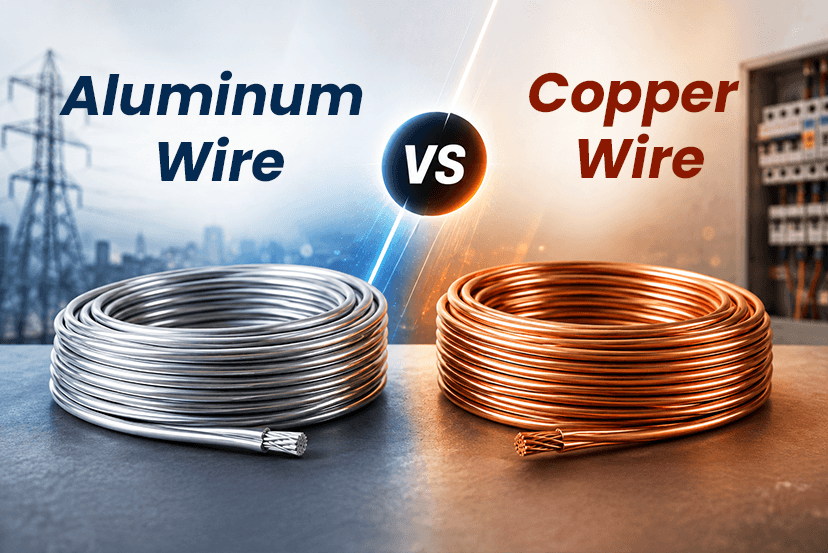
Aluminum Wire vs Copper Wire: Use Cases, Benefits, Differences, and Price
Choosing the right conductor is an important decision in electrical installations, power distribution, industrial equipment, and infrastructure projects. Aluminum wire and copper wire are two of the most widely used electrical conductors, but they differ significantly in conductivity, weight, mechanical properties, installation requirements, and cost. Copper offers higher electrical conductivity and excellent flexibility, while aluminum is lighter and generally more economical for large-scale applications.
If you are looking to procure wires in bulk, you can simply purchase them from business Moglix from various suppliers and manufacturers. The choice between aluminum and copper wire should not be based on material price alone. Conductor size, current-carrying capacity, installation environment, termination requirements, voltage drop, maintenance, and overall project cost also need to be considered. In 2026, elevated copper prices are encouraging manufacturers and infrastructure projects to consider aluminum as an alternative in applications where its lower weight and cost provide an advantage.
What Is Aluminum Wire?
Aluminum wire is an electrical conductor manufactured using aluminum or aluminum alloys. It is valued for its low density, relatively good electrical conductivity, corrosion resistance, and lower material cost compared with copper. Because aluminum is much lighter than copper, it is particularly useful where conductor weight has a major impact on installation, supporting structures, or transportation.
Aluminum conductors are widely used in overhead transmission lines, distribution networks, utility cables, large feeder circuits, and certain industrial electrical installations. However, aluminum has higher electrical resistance than copper for the same cross-sectional area, so a larger conductor may be required to carry the same current.
What Is Copper Wire?
Copper wire is an electrical conductor made from copper and is extensively used in residential, commercial, industrial, electronic, and electrical applications. Copper has excellent electrical and thermal conductivity, making it highly effective for transmitting electrical current with relatively low resistance.
Copper wire is also more ductile and generally easier to bend and terminate than aluminum. These properties make it popular for building wiring, control panels, motors, transformers, appliances, electrical equipment, and many applications where compact conductor sizes and reliable connections are important.
Also read: Top 10 Wire Manufacturing Companies in India 2026: Types, Price, and Features to Look For
Aluminum vs Copper Wire: Key Differences
| Feature | Aluminum Wire | Copper Wire |
| Electrical conductivity | Lower | Higher |
| Weight | Much lighter | Heavier |
| Material cost | Generally lower | Generally higher |
| Required conductor size | Usually larger | Usually smaller |
| Flexibility | Lower | Higher |
| Thermal expansion | Higher | Lower |
| Long-distance transmission | Excellent suitability | Suitable but heavier/costlier |
| Residential wiring | Application-dependent | Widely preferred |
| Overhead power lines | Widely used | Less advantageous for weight-sensitive lines |
| Termination requirements | Requires careful connection practices | Generally easier |
| Scrap/resale value | Lower | Higher |
| Best advantage | Low weight and cost | High conductivity and compactness |
Aluminum vs Copper Wire: based on Conductivity
One of the biggest differences between these two materials is electrical conductivity. Copper has higher conductivity than aluminum, meaning a copper conductor of the same size can carry more current or provide lower resistance.
Aluminum can still deliver excellent electrical performance when the conductor is appropriately sized. In practical installations, engineers compensate for its lower conductivity by selecting a larger cross-sectional area.
This is why comparing a copper wire and an aluminum wire only by diameter can be misleading. The correct comparison should consider ampacity, conductor size, insulation, installation method, ambient temperature, and applicable electrical standards.
Aluminum vs Copper Wire: Based on Weight
Aluminum has a major advantage in terms of weight. It is substantially lighter than copper, which becomes particularly important when installing long lengths of cable or overhead conductors.
For large power transmission projects, reducing conductor weight can help lower the structural load on poles, towers, supports, and other infrastructure. It can also make transportation and handling easier.
Copper, although heavier, provides higher conductivity and can therefore achieve the required electrical performance with a smaller conductor cross-section in many applications.
What are the Benefits of Aluminum Wire?
1. Lower Weight
The lightweight nature of aluminum makes it suitable for long-distance power transmission and distribution. Large quantities can be transported and installed with comparatively lower handling requirements.
2. Cost Advantage
Aluminum generally costs less per kilogram than copper. This can make it attractive for large-scale electrical projects where substantial quantities of conductor material are required.
3. Suitable for Power Transmission
Aluminum conductors are extensively used in overhead transmission and distribution because their low weight and reasonable conductivity provide a useful balance between performance and infrastructure cost.
4. Good Corrosion Resistance
Aluminum naturally forms a thin oxide layer that helps protect the underlying metal from further corrosion. However, electrical connections still require appropriate termination practices.
5. Suitable for Large Conductors
Because aluminum is lightweight, producing larger conductor sizes does not create the same weight burden as using copper. This is useful in high-capacity power applications.
What are the Benefits of Copper Wire?
1. Excellent Conductivity
Copper has superior electrical conductivity, allowing efficient current transmission with relatively low resistance.
2. Smaller Conductor Size
For equivalent electrical requirements, copper can often use a smaller cross-sectional area than aluminum. This can be valuable where installation space is limited.
3. Excellent Flexibility
Copper is highly ductile and can be bent and routed relatively easily, making it convenient for electrical installations with complex layouts.
4. Reliable Connections
Copper’s mechanical and electrical properties make it widely used with terminals, lugs, switches, breakers, and other electrical connection systems.
5. Strong Thermal Performance
Copper’s high thermal conductivity helps dissipate heat efficiently, which is useful in motors, transformers, electrical equipment, and other heat-generating applications.
Aluminum Wire: Common Use Cases
Aluminum wire is particularly suitable for applications where low weight, large conductor sizes, and cost efficiency are important.
Common applications include:
- Overhead power transmission lines
- Electrical distribution networks
- Utility feeder systems
- Large commercial and industrial feeders
- Underground power cables
- Renewable energy power systems
- Large-scale infrastructure projects
- Certain transformer and motor applications
- Electrical conductors where weight reduction is important
Aluminum is increasingly being considered as a copper alternative in power transmission, automotive, construction, and other industries where its weight and cost advantages can outweigh its lower conductivity.
Copper Wire: Common Use Cases
Copper wire is widely used in applications where high conductivity, compact size, flexibility, and dependable electrical connections are priorities.
Typical applications include:
- Residential electrical wiring
- Commercial buildings
- Industrial control panels
- Motors and generators
- Transformers
- Electrical appliances
- Switchgear and control equipment
- Electronic equipment
- Automotive wiring
- Data and communication applications
- Earthing and bonding applications
Price Comparison of Aluminum vs Copper Wire
Price is one of the most important factors when choosing between aluminum and copper wire. However, the wire price is not the same as the raw metal price. The final price depends on conductor purity, wire gauge, insulation, manufacturing process, cable construction, voltage rating, brand, quantity, taxes, transportation, and market conditions.
As a recent market reference, copper was around ₹1,228/kg, while aluminum was around ₹330/kg in the broader Indian market following a correction from approximately ₹393/kg in early June (prices may fluctuate). These are commodity/reference prices rather than finished wire prices, which can be substantially different.
| Price Factor | Aluminum Wire | Copper Wire |
| Raw material cost | Lower | Higher |
| Cost per kg | Generally lower | Generally higher |
| Material required for equivalent conductivity | More | Less |
| Transportation cost | Lower for equivalent conductor mass | Higher |
| Finished cable price | Usually more economical | Usually more expensive |
| Long-term project economics | Strong for large installations | Strong where compactness/performance matters |
Important: Commodity prices change frequently, so buyers should check the latest supplier quotation before purchasing electrical wire or cable. The final price should be compared on an electrical-performance basis, rather than simply by ₹/kg.
Why Is Copper More Expensive Than Aluminum?
The price difference is influenced by several factors. Copper has strong demand across electrical equipment, renewable energy, electric vehicles, construction, power infrastructure, and electronics. Its higher conductivity also makes it valuable where high performance is required in a limited physical space.
Aluminum, meanwhile, benefits from its lower density and availability as an industrial metal. Recent copper price increases have further encouraged some manufacturers to explore aluminum alternatives in suitable applications.
However, aluminum is not automatically the cheaper option for every installation. A larger aluminum conductor may be required to achieve comparable electrical performance, and additional considerations such as connectors, installation practices, and voltage drop can affect total project cost.
Which One Should You Choose?
The right choice depends on the application.
Choose aluminum wire when:
- Low conductor weight is important.
- The project involves long transmission or distribution runs.
- Large conductor sizes are acceptable.
- Initial material cost needs to be controlled.
- The installation has adequate space for larger conductors.
- The electrical design and termination system are suitable for aluminum.
Choose copper wire when:
- High conductivity is a priority.
- Space is limited.
- Smaller conductor sizes are preferred.
- Flexibility is important.
- Reliable and compact connections are required.
- The application involves motors, panels, appliances, or building wiring where copper is commonly specified.
Aluminum vs Copper Wire for Different Applications
| Application | Generally Preferred Material | Main Reason |
| Overhead transmission | Aluminum | Lightweight and economical |
| Utility distribution | Aluminum | Cost and weight advantages |
| Residential internal wiring | Copper | Conductivity, flexibility and established practice |
| Industrial panels | Copper | Compactness and connection performance |
| Large feeders | Aluminum/Copper | Depends on design and project economics |
| Motors | Copper/Aluminum | Depends on motor design |
| Transformers | Copper/Aluminum | Both are widely used |
| Electronics | Copper | High conductivity and compactness |
| Long-distance power lines | Aluminum | Low weight |
| Space-constrained wiring | Copper | Higher conductivity per cross-sectional area |
Aluminum vs Copper Wire: Pros and Cons
Aluminum Wire
Pros
- Lightweight
- Lower raw material cost
- Good conductivity relative to its weight
- Suitable for long-distance power transmission
- Good corrosion resistance
- Useful for large conductor sizes
Cons
- Lower conductivity than copper
- Requires larger conductor size for equivalent performance
- Greater thermal expansion
- Connections require appropriate installation practices
- Generally less flexible than copper
Copper Wire
Pros
- Excellent electrical conductivity
- High thermal conductivity
- Flexible and ductile
- Smaller conductor size for equivalent electrical performance
- Widely accepted across electrical applications
- Reliable for compact installations
Cons
- Higher material cost
- Heavier than aluminum
- More expensive for very large conductor quantities
- Higher weight can increase handling and structural requirements
Aluminum vs Copper Wire: Final Verdict
There is no universal winner in the aluminum vs copper wire comparison. Copper is the better choice when conductivity, compactness, flexibility, and connection performance are the main priorities. Aluminum becomes highly attractive when low weight, large-scale installation, and material cost are more important.
For large transmission and distribution projects, aluminum can offer significant economic and weight advantages. For residential, commercial, industrial control, electronic, and space-constrained applications, copper often remains the preferred option.
The best purchasing decision should therefore compare conductor size, ampacity, voltage drop, insulation, installation requirements, connector compatibility, expected service life, and total installed cost – not just the price per kilogram.
Frequently Asked Questions
1. Which is better, aluminum or copper wire?
Copper is generally better for conductivity and compact applications, while aluminum is advantageous for lightweight and large-scale power applications.
2. Is aluminum wire cheaper than copper wire?
Generally, yes. Aluminum has a lower raw material cost, although the final price depends on conductor size, insulation, manufacturing, taxes, and market conditions.
3. Which wire is more conductive, copper or aluminum?
Copper has higher electrical conductivity than aluminum. Therefore, aluminum normally requires a larger conductor cross-section to achieve comparable electrical performance.
4. Why is aluminum used for overhead power lines?
Its low weight, reasonable conductivity, and cost advantage make aluminum highly suitable for long-distance overhead transmission and distribution.
5. Can aluminum wire replace copper wire?
In some applications, yes. However, it should only be substituted when the electrical design, conductor size, connectors, standards, and installation requirements are suitable.
6. Which wire lasts longer, aluminum or copper?
Both can provide long service when correctly designed and installed. Service life depends on conductor quality, insulation, environmental conditions, connections, loading, and maintenance.
7. Why is copper preferred for household wiring?
Copper offers high conductivity, flexibility, compact conductor sizes, and convenient termination, making it widely used in building electrical systems.
8. What is more important than the wire price per kg?
Buyers should consider ampacity, conductor size, voltage drop, insulation rating, installation cost, connector requirements, energy losses, and total lifecycle cost.
15 Types Of Water Taps For Home, Kitchen & Bathroom: Use Cases And Key Benefits
15 Types Of Water Taps For Home, Kitchen & Bathroom: Use Cases And Key Benefits
Water taps are an essential part of every home, but choosing the right tap is not always as simple as it seems. From traditional pillar taps and bib taps to modern mixer, sensor, pull-out, and wall-mounted taps, there are many options available for different applications. Each type offers different benefits in terms of design, water flow, installation, convenience, and durability.
Understanding the different types of water taps can help homeowners, architects, contractors, and businesses choose the right product for kitchens, bathrooms, wash basins, utility areas, gardens, and other spaces. At the Moglix business, you can procure bathroom fittings and sanitary ware products in bulk at the most reasonable prices.
This guide explains 15 types of water taps, their uses, features, advantages, and key factors to consider before making a purchase.
What Are Water Taps?
A water tap is a plumbing fixture used to control and regulate the flow of water from a supply pipe. Depending on its design, a tap may control hot water, cold water, or both. Modern taps and faucets are available in different configurations, materials, finishes, and operating mechanisms.
The right water tap depends on various factors, including installation location, water pressure, plumbing configuration, frequency of use, available space, design preference, and budget.
Also read: How To Fix A Leaky Faucet in 10 Easy Steps (2026 Complete Guide)
15 Types of Water Taps for Home, Kitchen & Bathroom
Here are some of the most commonly used water tap types for residential and commercial applications.
1. Pillar Taps
Pillar taps are among the most common and traditional types of water taps. They are generally installed as a pair, with one tap supplying hot water and the other supplying cold water. These taps are commonly used with wash basins and bathroom sinks. Their straightforward design makes them relatively easy to install and maintain.
Best for: Bathrooms, wash basins, and traditional plumbing systems.
Key benefits:
- Simple design
- Easy operation
- Available in different finishes
- Suitable for separate hot and cold water supplies
Also read: Top 10 Sanitary Ware And Bathroom Fittings Brands In India 2026
2. Bib Taps
Bib taps, also known as bibcocks, are widely used for general water supply applications. They typically have a horizontal outlet and are installed directly onto a wall or pipe connection.
They are commonly found in utility areas, gardens, garages, bathrooms, and outdoor spaces.
Best for: Garden, utility, and general-purpose water connections.
Key benefits:
- Simple construction
- Easy to operate
- Suitable for outdoor applications
- Available with hose-compatible outlets
3. Mixer Taps
Mixer taps combine hot and cold water through a single outlet. The user can adjust the temperature by controlling the hot and cold water flow.
Mixer taps are particularly popular in kitchens and bathrooms because they provide greater convenience than separate hot and cold taps.
Best for: Kitchen sinks, bathroom basins, and utility areas.
Key benefits:
- Combines hot and cold water
- Convenient temperature control
- Modern appearance
- Available in various designs
4. Monobloc Taps
Monobloc taps are a type of mixer tap installed through a single mounting hole. They typically feature a single lever that controls both water flow and temperature.
Their compact configuration makes them suitable for modern kitchen sinks and bathroom basins.
Best for: Modern kitchens and countertop wash basins.
Key benefits:
- Single-hole installation
- Easy temperature adjustment
- Contemporary design
- Convenient one-handed operation
5. Wall-Mounted Taps
Wall-mounted taps are fixed directly to the wall instead of being installed on the basin or countertop. They can create a clean and uncluttered appearance.
These taps are commonly used in bathrooms, kitchens, wash areas, and commercial spaces.
Best for: Wall-mounted basins, bathrooms, and modern kitchens.
Key benefits:
- Saves countertop space
- Easy-to-clean surrounding area
- Stylish appearance
- Suitable for different basin configurations
6. Sensor Taps
Sensor taps use an infrared or electronic sensor to detect hand movement and automatically release water. The water stops when the user moves their hands away.
They are increasingly used in offices, hotels, restaurants, hospitals, shopping centres, and other high-traffic areas.
Best for: Commercial and public washrooms.
Key benefits:
- Hands-free operation
- Helps reduce unnecessary water flow
- Hygienic operation
- Suitable for high-traffic areas
7. Touchless Taps
Touchless taps work without requiring the user to physically operate a handle. Depending on the model, they may use motion sensors or other electronic controls.
They are particularly useful where hygiene and convenience are important considerations.
Best for: Commercial washrooms, healthcare facilities and modern homes.
Key benefits:
- Contact-free operation
- Convenient to use
- Modern design
- Can help control water consumption
8. Angle Taps
Angle taps are compact plumbing fixtures generally used to control water supply to individual appliances or fixtures. They are often installed where a water pipe changes direction from the wall to the appliance.
They are commonly used beneath wash basins, kitchen sinks, toilets, and other plumbing fixtures.
Best for: Controlling water supply to individual fixtures.
Key benefits:
- Compact size
- Easy water shut-off
- Useful for plumbing maintenance
- Available in different finishes
9. Swan-Neck Taps
Swan-neck taps feature a tall, curved spout that provides additional clearance between the outlet and the sink or basin. Their shape makes it easier to fill large containers and wash larger utensils.
They are particularly popular in kitchens.
Best for: Kitchen sinks and utility areas.
Key benefits:
- Tall curved spout
- Better clearance
- Convenient for large utensils
- Attractive appearance
10. Pull-Out Taps
Pull-out kitchen taps have a detachable spray head that can be pulled towards the user. The flexible hose allows the water stream to be directed into different areas of the sink.
They can make tasks such as rinsing vegetables and cleaning dishes more convenient.
Best for: Kitchen sinks.
Key benefits:
- Flexible spray head
- Easy sink cleaning
- Convenient for rinsing
- Better reach around the sink
11. Pull-Down Taps
Pull-down taps are similar to pull-out taps but feature a spray head that is pulled downward from the spout. They are commonly paired with high-arc kitchen faucet designs.
They are useful for deep sinks and kitchens where greater flexibility is required.
Best for: Modern kitchens and deep sinks.
Key benefits:
- Extended reach
- Flexible water direction
- Convenient for cleaning
- Suitable for large kitchen sinks
12. Basin Taps
Basin taps are specifically designed for wash basins and bathroom sinks. They are available in pillar, mixer, monobloc, wall-mounted, and sensor configurations.
When choosing a basin tap, consider the basin’s mounting arrangement, available space, spout height, and water pressure.
Best for: Bathroom and washroom basins.
Key benefits:
- Designed for basin applications
- Available in multiple styles
- Easy to operate
- Available in modern and traditional designs
13. Sink Taps
Sink taps are designed primarily for kitchen and utility sinks. They are available in different configurations, including single-lever, dual-handle, pull-out, pull-down, and high-neck designs.
The right sink tap should provide sufficient reach and clearance for the size and depth of the sink.
Best for: Kitchen and utility sinks.
Key benefits:
- Designed for frequent use
- Multiple design options
- Different spout heights available
- Suitable for various sink sizes
14. Shower Taps
Shower taps control the flow and temperature of water supplied to a shower. Depending on the design, they can include separate controls or a mixer mechanism.
Thermostatic shower mixers are also available and are designed to help maintain a more consistent water temperature.
Best for: Residential and commercial bathrooms.
Key benefits:
- Temperature control
- Convenient shower operation
- Available in different configurations
- Modern designs available
15. Garden Taps
Garden taps are designed for outdoor water applications. They are commonly installed on exterior walls and can be connected to hoses for gardening, cleaning, vehicle washing, and other outdoor tasks.
Durability and resistance to outdoor conditions are important considerations when selecting a garden tap.
Best for: Gardens, outdoor cleaning, and utility areas.
Key benefits:
- Suitable for outdoor use
- Easy hose connection
- Simple operation
- Available in durable materials
Types of Water Taps Based on Material
Apart from design and application, water taps can also be classified according to the material used in their construction.
- Brass Water Taps: Brass is widely used in plumbing fixtures because of its strength and durability. Brass taps are available in polished, chrome-plated, matte, and other finishes.
- Stainless Steel Water Taps: Stainless steel taps offer a modern appearance and are valued for their corrosion resistance. They are commonly used in kitchens and contemporary bathrooms.
- Plastic Water Taps: Plastic taps can be economical and lightweight. They are often used for temporary, low-cost, or specific utility applications where heavy-duty performance is not required.
How to Choose the Right Water Tap?
Selecting the right tap requires more than simply choosing an attractive design. Consider the following factors before making a purchase.
1. Application
First, determine where the tap will be installed. A kitchen sink may require a pull-down or swan-neck tap, while a garden may need a bib tap.
2. Installation Type
Check whether you need a wall-mounted, deck-mounted, single-hole, or multi-hole tap. The plumbing configuration should be compatible with the selected tap.
3. Water Pressure
Check the water pressure available at the installation point. Some advanced fixtures may perform differently depending on the pressure available.
4. Material and Durability
Choose a tap made from a suitable material for the intended application. For frequently used fixtures, durability should be a major consideration.
5. Spout Height and Reach
For kitchen and basin taps, ensure that the spout provides sufficient clearance and reaches the appropriate area of the sink or basin.
6. Finish and Design
Chrome, brushed finishes, matte finishes, and other options are available. Choose a finish that complements the surrounding fixtures and is practical to maintain.
7. Water Efficiency
If reducing water consumption is important, look for taps designed with flow-control or water-saving features.
8. Maintenance Requirements
Choose a tap that is easy to clean and maintain. Replacement cartridges, washers, aerators, and other components should also be readily serviceable where applicable.
Which Type of Water Tap Is Best for the Kitchen?
For kitchens, the ideal tap depends on the sink size and the tasks performed regularly. Pull-down, pull-out, mixer, monobloc, and swan-neck taps are popular options.
For a large or deep sink, a high-neck or pull-down tap can provide better reach. For a compact kitchen, a single-lever mixer or monobloc tap may be more practical.
Which Water Tap Is Best for the Bathroom?
For bathrooms, pillar taps, basin mixer taps, wall-mounted taps, sensor taps, and shower mixer taps are commonly used.
For a modern bathroom, a mixer or wall-mounted tap can provide a clean appearance. Sensor taps may be particularly useful for commercial washrooms where touch-free operation is preferred.
Mixer Tap vs Pillar Tap: Which Is Better?
| Feature | Mixer Tap | Pillar Tap |
| Water control | Single outlet | Separate outlets |
| Hot & cold mixing | Yes | Usually separate |
| Operation | Generally convenient | Simple |
| Design | Modern and varied | Traditional |
| Best suited for | Modern kitchens & bathrooms | Traditional bathrooms |
| Installation | Depends on configuration | Generally straightforward |
Neither option is universally better. The right choice depends on your plumbing arrangement, design preference, available space, and usage requirements.
Benefits of Choosing the Right Water Tap
Choosing the right water tap can improve both functionality and convenience. A suitable tap can:
- Provide better water-flow control
- Improve kitchen or bathroom usability
- Complement the overall interior design
- Make cleaning and maintenance easier
- Provide better reach and clearance
- Support efficient water usage
- Offer better long-term durability
Common Mistakes to Avoid When Buying Water Taps
Before purchasing a water tap, avoid these common mistakes:
- Ignoring the installation configuration: Always check the number and position of mounting holes.
- Choosing based only on appearance: A stylish tap may not be suitable for your water pressure or plumbing setup.
- Ignoring dimensions: Check the tap’s height, spout reach, and clearance before installation.
- Buying the wrong application type: A bathroom basin tap may not be suitable for a large kitchen sink.
- Overlooking material quality: Consider durability, corrosion resistance, finish quality, and maintenance requirements.
Water Tap Buying Guide: What to Check Before Purchase
Whether you are buying a single tap for your home or sourcing taps for a residential project, hotel, office, or commercial facility, compare products based on:
- Tap type
- Application
- Material
- Installation method
- Water-pressure compatibility
- Spout height and reach
- Handle configuration
- Finish
- Water-saving features
- Warranty and after-sales support
- Replacement parts availability
- Price and overall value
For bulk requirements, businesses and contractors should also compare supplier reliability, product specifications, certifications where applicable, minimum order quantities, delivery timelines, and bulk pricing before placing an order.
Conclusion
Understanding the 15 types of water taps makes it easier to choose a fixture that matches your home’s kitchen, bathroom, utility area, or outdoor space. From simple pillar and bib taps to convenient mixer, pull-out, pull-down, sensor, and touchless taps, every design serves a different purpose.
Before buying, consider the application, installation type, material, water pressure, dimensions, finish, water efficiency, durability, and maintenance requirements. For residential projects, commercial facilities, or bulk procurement, comparing specifications and suppliers can help you find the right water taps at the right value.
If you are planning to buy water taps, sanitary ware, and bathroom fittings online, then Moglix Business is the one stop destiniation to procure them in bulk at reasonable prices. You can also compare multiple tap types and specifications to select products that offer the right combination of functionality, durability, design, and price for your requirements.
Frequently Asked Questions About Water Tap Types
1. What are the main types of water taps?
Common types include pillar taps, bib taps, mixer taps, monobloc taps, wall-mounted taps, sensor taps, touchless taps, angle taps, swan-neck taps, pull-out taps, pull-down taps, basin taps, sink taps, shower taps, and garden taps.
2. Which type of tap is best for a kitchen?
Mixer, pull-out, pull-down, and swan-neck taps are popular choices for kitchens. The best option depends on sink size, water pressure, installation type, and usage.
3. Which tap is best for a bathroom?
Pillar taps, basin mixers, wall-mounted taps, and sensor taps are commonly used in bathrooms. The appropriate option depends on the basin, plumbing arrangement, and desired functionality.
4. Are mixer taps better than pillar taps?
Mixer taps offer convenient hot and cold water mixing through a single outlet, while pillar taps provide separate controls. The better option depends on the plumbing configuration and user preference.
5. What material is best for water taps?
Brass and stainless steel are commonly preferred for durable plumbing fixtures. The best material depends on the application, water conditions, design requirements, and budget.
How To Repair A Cracked Marble At Home: 7 Important Tips And Guide (2026)

How To Repair A Cracked Marble At Home: 7 Important Tips And Guide (2026)
Marble is one of the most elegant and durable natural stones used in homes for flooring, countertops, staircases, tabletops, walls, and decorative surfaces. However, despite its strength, marble can develop cracks due to heavy impact, improper installation, foundation movement, temperature changes, or aging.
A small crack may not seem like a major issue initially, but if left untreated, it can expand over time, weaken the stone, collect dirt, and ruin the appearance of your marble surface. Fortunately, many minor and moderate marble cracks can be repaired at home using the right materials and techniques.
In this comprehensive guide, you’ll learn how to repair cracked marble at home, the tools required, common causes of cracks, expert repair tips, maintenance practices, and when it’s time to call a professional.
Also Read: Top 10 Best Marble Companies in India 2026: Types, Applications, and Prices
Why Does Marble Crack?
Before repairing marble, it’s important to understand what caused the damage.
Some common reasons include:
- Heavy objects falling on marble
- Poor installation or uneven subfloor
- Structural movement in buildings
- Excessive pressure on countertops
- Natural aging of marble
- Temperature fluctuations
- Water seepage beneath marble flooring
- Low-quality marble slabs
- Improper transportation or handling
Tools and Materials Required
Before starting the repair, gather the following items:
- Marble epoxy adhesive
- Clear epoxy resin
- Marble repair kit
- Putty knife
- Painter’s tape
- Soft microfiber cloth
- Acetone or rubbing alcohol
- Fine-grit sandpaper (600–2000 grit)
- Marble polishing powder
- Rubber gloves
- Safety glasses
- Dust mask
- Soft sponge
Having all tools ready ensures a smoother repair process.
Go through the Steps to Repair A Cracked Marble At Home
Step 1: Clean the Marble Thoroughly
Start by cleaning the cracked area.
Remove:
- Dust
- Dirt
- Oil
- Wax
- Moisture
Use acetone or rubbing alcohol with a microfiber cloth.
Avoid household cleaners containing acids because marble is highly sensitive to acidic chemicals.
Allow the surface to dry completely.
Step 2: Inspect the Crack
Determine whether the crack is:
- Hairline crack
- Surface crack
- Deep crack
- Full-thickness crack
Hairline cracks require very little epoxy, while deeper cracks may need fillers and reinforcement.
Step 3: Protect the Surrounding Area
Use painter’s tape around the crack. This prevents epoxy from spreading across the marble and makes cleanup much easier.
Step 4: Apply Marble Epoxy
Mix the epoxy according to the manufacturer’s instructions.
Using a putty knife or applicator:
- Fill the crack slowly.
- Remove trapped air bubbles.
- Ensure the crack is completely filled.
For colored marble, use tinted epoxy that closely matches the stone.
Step 5: Remove Excess Epoxy
Before the epoxy hardens:
- Wipe away excess adhesive.
- Smooth the repair.
- Keep the surface level.
Avoid over-cleaning, as this may pull epoxy out of the crack.
Step 6: Allow Proper Curing
Most marble repair epoxies require:
- 12–24 hours for light curing
- Up to 48 hours for full strength
Avoid walking on repaired marble flooring or placing heavy objects on repaired countertops during this period.
Step 7: Sand and Polish the Surface
Once fully cured:
- Wet-sand gently using fine-grit sandpaper.
- Polish the repaired area using marble polishing powder.
- Buff with a soft cloth until the repaired section blends naturally with the surrounding marble.
The repair should now be smooth and nearly invisible.
7 Important Tips for Marble Crack Repair
1. Repair Small Cracks Immediately
- Even tiny cracks can expand over time.
- Prompt repairs prevent moisture penetration and larger structural damage.
2. Always Use Marble-Specific Epoxy
- Generic adhesives often fail to bond properly with natural stone.
- Choose products specifically designed for marble repair.
3. Match the Marble Color
- Clear epoxy works well for white marble, while colored marble often requires tinted epoxy to achieve a seamless finish.
4. Never Use Acidic Cleaners
Avoid products containing:
- Vinegar
- Lemon juice
- Bleach
- Harsh bathroom cleaners
These chemicals can permanently etch marble surfaces.
5. Avoid Excessive Force During Sanding
- Too much sanding may remove the marble’s natural polish.
- Use only fine-grit sandpaper and apply light pressure.
6. Seal the Marble After Repair
A quality marble sealer helps:
- Prevent moisture penetration
- Reduce staining
- Increase durability
- Protect repaired areas
Reseal periodically based on usage and manufacturer recommendations.
7. Monitor the Crack
If the repaired crack widens or reappears within a few months, the issue may be structural rather than cosmetic. Consult a professional for inspection.
Common Mistakes to Avoid
Many DIY repairs fail because of simple mistakes.
Avoid:
- Applying epoxy on dirty surfaces
- Using super glue instead of stone epoxy
- Walking on marble before curing
- Using coarse sandpaper
- Skipping polishing
- Ignoring deep structural cracks
- Using acidic cleaning products
How Long Does Marble Repair Last?
Repair durability depends on:
| Factor | Expected Performance |
| Quality epoxy | 10–20 years |
| Proper installation | Excellent |
| Indoor marble | Long-lasting |
| Outdoor marble | Moderate due to weather exposure |
| Regular maintenance | Significantly extends lifespan |
With proper care, many repairs remain effective for years.
When Should You Replace Instead of Repair?
Replacement is recommended when:
- The marble has shattered.
- Multiple cracks intersect.
- Large sections are loose.
- The slab has severe structural damage.
- Water has compromised the base.
- Repairs would be more expensive than replacement.
Marble Maintenance Tips
After repairing your marble, follow these maintenance practices:
- Clean with a pH-neutral stone cleaner.
- Wipe spills immediately.
- Use mats beneath heavy furniture.
- Avoid dragging appliances or furniture across marble floors.
- Place coasters under beverages.
- Use cutting boards on marble countertops.
- Reseal marble periodically as recommended for your stone and environment.
DIY vs Professional Marble Repair
| Feature | DIY Repair | Professional Repair |
| Cost | Low | Higher |
| Suitable for hairline cracks | Yes | Yes |
| Suitable for deep cracks | Limited | Yes |
| Color matching | Moderate | Excellent |
| Polishing quality | Good | Professional-grade |
| Structural repairs | No | Yes |
Conclusion
Repairing a cracked marble surface at home is often a practical and cost-effective solution for minor damage. By cleaning the area thoroughly, selecting a marble-specific epoxy, allowing adequate curing time, and finishing with careful sanding and polishing, you can restore both the appearance and functionality of your marble. Regular maintenance, prompt attention to new cracks, and proper sealing will help keep your marble surfaces looking beautiful for years. For deep, structural, or recurring cracks, seeking professional assistance is the safest way to ensure a durable and long-lasting repair. Businesses and industries looking to buy marbles in bulk at the most reasonable prices can simply procure them at Business Moglix. You can also raise the RFQ for the best and most compatible prices.
Frequently Asked Questions (FAQs)
1. Can cracked marble be repaired permanently?
Most hairlines and minor cracks can be repaired for many years using high-quality epoxy and proper maintenance. Structural cracks may require professional repair or replacement.
2. Can I use super glue to repair marble?
No. Super glue is not designed for natural stone and generally lacks the strength, durability, and appearance needed for marble repairs. Use marble-specific epoxy instead.
3. Is repairing marble cheaper than replacing it?
Yes. Repairing small cracks is typically much more affordable than replacing an entire marble slab or floor section.
4. How long should the epoxy cure before using the marble?
Many marble repair epoxies cure enough for light use within 12–24 hours, but full strength can take up to 48 hours. Always follow the product instructions.
5. Can cracked marble become stronger after repair?
A quality epoxy repair restores much of the marble’s integrity for minor cracks, but the repaired area may not be as strong as an undamaged slab, especially if the crack was structural.
10 Ways to Remove Cement From Tiles: Easy, Safe and Effective Methods (2026 Guide)

10 Ways to Remove Cement From Tiles: Easy, Safe and Effective Methods (2026 Guide)
Freshly installed tiles can instantly enhance the appearance of any home, office, or commercial space. However, one of the most common problems after construction or renovation is cement residue on tiles. Whether it is cement splashes, mortar stains, grout haze, or dried concrete, these marks can make your new flooring look dull and unfinished.
The good news is that you don’t always need professional cleaning services. With the right techniques and cleaning materials, you can safely remove cement from tiles without damaging their finish.
In this comprehensive guide, we’ll discuss 10 proven ways to remove cement from tiles, the tools you’ll need, precautions to follow, and expert tips to restore your tiles to their original shine.
Also read: Top 10 Tiles Companies In India: Latest And Updated Rank (2025-2026)
Why Does Cement Stick to Tiles?
During tile installation, masons use cement mortar or tile adhesive to fix tiles in place. While laying the tiles, excess cement often spreads over the tile surface. If not cleaned immediately, it hardens and bonds firmly with the tile.
Common causes include:
- Excess mortar during installation
- Improper cleaning after grouting
- Cement splashes during construction
- Delayed post-installation cleaning
- Concrete dust settling on wet tiles
Also read: Top-10-cement-manufacturing-companies-in-india-2026-latest-ranking-with-prices-and-features
Tools Required to Remove Cement From Tiles
Before starting, gather these cleaning essentials:
- Plastic scraper
- Soft sponge
- Bucket of warm water
- Microfiber cloth
- Nylon brush
- White vinegar
- Mild detergent
- Tile cleaner
- Cement remover solution
- Rubber gloves
- Safety goggles
Here Are The Best Ways To Remove Cement From Tiles
1. Soak the Cement With Warm Water
The easiest solution works best for fresh cement stains.
Warm water softens partially dried cement and makes removal much easier.
Steps
- Pour warm water over the affected area.
- Wait for 20–30 minutes.
- Scrub gently using a sponge.
- Wipe clean with a microfiber cloth.
Best For:
- Fresh cement
- Cement dust
- Thin mortar residue
2. Use White Vinegar Solution
White vinegar is a natural cleaner that helps dissolve cement deposits.
How to Use
- Mix equal parts vinegar and warm water.
- Apply on the stain.
- Leave for 10 minutes.
- Scrub using a nylon brush.
- Rinse thoroughly.
Ideal For
- Ceramic tiles
- Porcelain tiles
- Light cement haze
Avoid using vinegar on marble, limestone, granite, or natural stone tiles, as it may damage the surface.
3. Apply a Commercial Cement Remover
If the cement has hardened, a specialized cement remover can be highly effective.
These products are formulated to break down cement without harming most tile surfaces when used as directed.
Steps
- Wear gloves.
- Apply the solution.
- Wait as instructed.
- Scrub lightly.
- Wash with clean water.
Best For
- Old cement stains
- Thick mortar residue
- Renovation cleaning
4. Remove Cement Using a Plastic Scraper
For thick layers of dried cement, carefully use a plastic scraper.
Avoid metal tools that may scratch the tile surface.
Tips
- Hold the scraper at a low angle.
- Scrape gently.
- Remove loose cement gradually.
- Finish with water cleaning.
5. Baking Soda Paste Method
Baking soda acts as a gentle abrasive and helps lift light cement stains.
Steps
- Mix baking soda with water.
- Make a thick paste.
- Apply to the stain.
- Leave for 15 minutes.
- Scrub gently.
- Rinse thoroughly.
This method is eco-friendly and safe for routine cleaning.
6. Use a Tile Cleaning Solution
Many tile cleaners contain ingredients designed to dissolve grout haze and construction residue.
Apply according to the manufacturer’s instructions and rinse thoroughly after cleaning.
Ideal for:
- Indoor flooring
- Bathroom tiles
- Kitchen tiles
- Wall tiles
7. Clean With a Nylon Brush
Sometimes, mechanical scrubbing is all that’s needed.
A nylon brush provides enough friction to remove softened cement while minimizing the risk of scratching.
Avoid wire brushes, especially on polished or glossy tiles.
8. Remove Cement With Mild Acid-Based Cleaner
For stubborn cement stains, a mild acid-based tile cleaner may help.
Always:
- Test on a small hidden area first.
- Follow the product instructions.
- Wear gloves and eye protection.
- Rinse the surface completely after use.
Do not use strong acids on natural stone tiles unless specifically recommended.
9. Steam Cleaning
Steam cleaners soften cement residue using high-temperature steam without relying heavily on chemicals.
This method is effective for:
- Indoor tiles
- Bathroom floors
- Kitchen flooring
- Large tiled areas
Steam cleaning also removes dirt, grease, and bacteria.
10. Professional Tile Cleaning
If cement stains are extensive or the flooring is made of delicate materials such as marble or premium stone, professional tile cleaning is often the safest option.
Professionals use specialized equipment and chemicals that minimize the risk of surface damage.
How to Remove Cement From Different Types of Tiles
| Tile Type | Recommended Method |
| Ceramic Tiles | Warm water, vinegar, tile cleaner |
| Porcelain Tiles | Cement remover, plastic scraper |
| Vitrified Tiles | Mild detergent, cement remover |
| Marble Tiles | Warm water and pH-neutral stone cleaner only |
| Granite Tiles | Stone-safe cleaner and soft brush |
| Natural Stone | Professional-grade stone cleaner |
Also read: https://business.moglix.com/blogs/top-10-porcelain-tile-manufacturers-in-india-2026
Mistakes to Avoid While Removing Cement
Avoid these common mistakes that can permanently damage your flooring:
- Using metal chisels or screwdrivers
- Applying concentrated hydrochloric acid directly
- Scrubbing with steel wool
- Skipping the rinse after chemical cleaners
- Using vinegar on marble or natural stone
- Scraping aggressively on polished surfaces
- Ignoring safety gloves and eye protection
Tips to Prevent Cement Stains on Tiles
Prevention is easier than cleaning. Follow these best practices during tile installation:
- Clean excess cement immediately.
- Cover finished tiles with protective sheets.
- Use minimal mortar during installation.
- Wipe grout haze before it dries.
- Perform final cleaning on the same day.
- Use quality tile installation tools.
- Avoid allowing cement slurry to dry on tile surfaces.
When Should You Use a Cement Remover?
A cement remover is recommended when:
- Cement has dried for more than 24 hours.
- Thick mortar remains on the tile.
- Water and vinegar are ineffective.
- Renovation work has left extensive residue.
- Large floor areas require cleaning.
Always choose a cleaner compatible with your tile type.
Conclusion
Removing cement from tiles doesn’t have to be a difficult task. Whether you’re dealing with fresh mortar, grout haze, or stubborn dried cement, using the right cleaning method is essential to protect your flooring. Start with the gentlest solutions – such as warm water, a plastic scraper, or a pH-neutral tile cleaner – and move to commercial cement removers only when necessary. Always match the cleaning method to your tile material and avoid harsh tools or chemicals that could cause permanent damage. If you are looking to buy top-quality and best tiles in bulk at the most reasonable prices, then Moglix Business is the one-stop destination to procure them effortlessly.
By following these 10 effective ways to remove cement from tiles, you can restore the original beauty of your floors while extending their lifespan. Regular cleaning, proper installation practices, and timely removal of cement residue will keep your ceramic, porcelain, vitrified, marble, or granite tiles looking clean, polished, and professionally finished for years to come.


 Back
Back