
Top 10 Portable Public Address (PA) System Manufacturers In India 2026: Key Features, Products And Best Uses
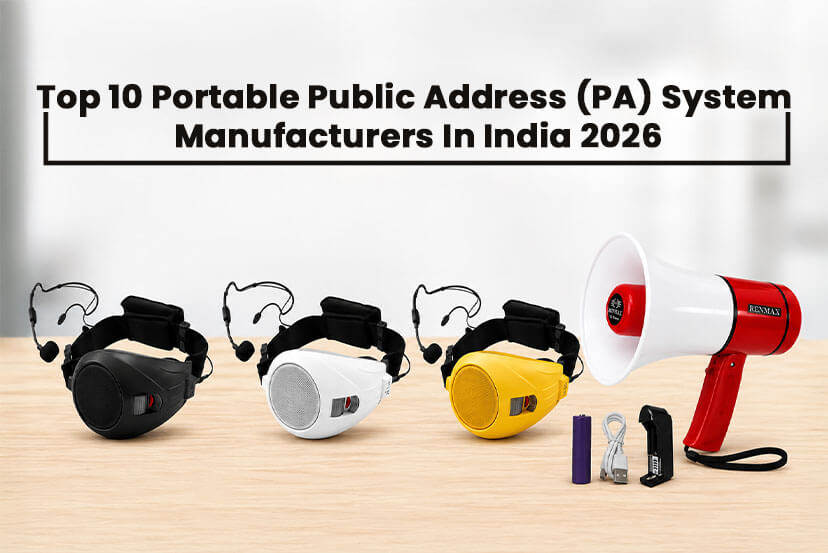
Top 10 Portable Public Address (PA) System Manufacturers In India 2026: Key Features, Products And Best Uses
A portable public address system is an essential communication solution for schools, colleges, religious institutions, government organizations, corporate offices, industrial facilities, event organizers, emergency services, and political campaigns. Modern portable PA systems combine wireless microphones, rechargeable batteries, Bluetooth connectivity, USB playback, FM radio, and powerful speakers into a compact, easy-to-carry unit.
The Indian PA system market continues to grow in 2026 to US$3.7 billion due to increasing demand for public safety announcements, educational institutions, corporate events, and outdoor communication systems. Choosing the right manufacturer ensures better sound quality, long battery life, reliable wireless connectivity, and nationwide after-sales support. Businesses and industries looking to procure other safety goods in bulk can simply purchase them at the Moglix business at the most competitive prices.
In this guide, we explore the Top 10 Portable Public Address System Manufacturers in India 2026 based on product quality, market presence, innovation, customer satisfaction, and service network.
Benefits of Portable Public Address Systems
- Easy to transport and install
- Rechargeable battery-powered operation
- Clear voice projection over large areas
- Wireless microphone compatibility
- Bluetooth, USB, and FM playback options
- Suitable for indoor and outdoor use
- Low maintenance requirements
- Reliable communication during emergencies
List Of The Best Public Address System Manufacturers In India
1. Ahuja Radios
Ahuja is one of India’s most trusted names in professional audio equipment. The company has been manufacturing public address systems for decades and offers a comprehensive portfolio of portable PA systems suitable for educational institutions, government departments, factories, places of worship, and event organizers.
Popular Products
- Portable PA Systems
- Battery Operated PA Systems
- Wireless PA Systems
- Portable Amplifiers
- Megaphones
Key Features
- Excellent voice clarity
- Long battery backup
- Durable cabinet
- Easy portability
- Nationwide service network
Best For: Schools, colleges, election campaigns, seminars, conferences, and public gatherings.
2. Bosch Security Systems
Bosch provides premium-grade portable public address solutions designed for emergency communication, transportation, industrial facilities, airports, and commercial buildings. Their systems are known for superior audio performance and high reliability.
Popular Products
- Portable PA Controllers
- Voice Alarm Systems
- Emergency Announcement Systems
- Portable Amplifiers
Key Features
- Crystal-clear announcements
- Emergency evacuation support
- High durability
- Global quality standards
Best For: Commercial buildings, airports, hospitals, and government projects.
3. TOA Electronics India
TOA is a globally recognized audio manufacturer offering compact and portable PA systems suitable for educational institutions, conferences, religious places, and outdoor events.
Key Features
- Lightweight design
- Rechargeable battery
- Wireless microphone compatibility
- Bluetooth connectivity
- Excellent speech intelligibility
Best For: Training sessions, classrooms, meetings, and seminars.
4. Honeywell
Honeywell manufactures advanced public address and voice evacuation systems that comply with modern safety standards. Their portable solutions are widely used in commercial and industrial environments.
Key Features
- High-performance audio
- Emergency broadcasting
- Easy installation
- Reliable wireless communication
Best For: Industrial facilities, malls, airports, and public infrastructure.
5. JBL Professional
JBL Professional is renowned for premium portable speaker systems that deliver powerful sound with exceptional clarity. Their battery-powered PA systems are popular among musicians, trainers, presenters, and event organizers.
Popular Products
- Portable Bluetooth PA Systems
- Battery-Powered Speakers
- Wireless PA Solutions
Key Features
- Deep bass response
- Bluetooth streaming
- Built-in digital mixer
- Long battery life
Best For: Live performances, corporate events, schools, and outdoor programs.
6. Yamaha
Yamaha offers highly reliable portable PA systems with integrated mixers, wireless support, and premium audio quality. Their products are widely used for educational, corporate, and entertainment applications.
Key Features
- Professional sound quality
- Portable design
- Easy operation
- Durable construction
Best For: Conferences, training sessions, musical performances, and presentations.
7. Studiomaster Professional
Studiomaster has become one of India’s preferred professional audio brands, offering affordable portable PA systems with modern connectivity options.
Key Features
- USB playback
- Bluetooth connectivity
- Rechargeable battery
- Wireless microphone support
Best For: Schools, coaching institutes, religious events, and community gatherings.
8. Harman Professional India
Harman provides advanced portable PA systems under brands such as JBL, Soundcraft, and AKG. Their products are designed for professional applications requiring superior audio performance.
Key Features
- Premium audio technology
- Digital signal processing
- Wireless compatibility
- High output power
Best For: Concerts, conferences, auditoriums, and corporate events.
9. MIPRO
MIPRO is known for manufacturing premium portable wireless PA systems used in educational institutions, fitness centers, religious organizations, and outdoor events.
Key Features
- Lightweight construction
- Rechargeable batteries
- Multiple wireless microphone options
- Bluetooth audio streaming
Best For: Teachers, fitness instructors, tour guides, and public speakers.
10. Anchor by Panasonic
Anchor offers reliable and affordable portable announcement systems suitable for schools, factories, offices, and community events. The brand combines durability with easy operation.
Key Features
- Compact design
- Clear audio output
- Long operational life
- Easy maintenance
Best For: Factories, educational institutions, offices, and public functions.
Comparison Table
| Manufacturer | Battery Powered | Wireless Mic Support | Bluetooth | Best Application |
| Ahuja | Yes | Yes | Yes | Schools & Events |
| Bosch | Yes | Yes | Limited | Emergency Communication |
| TOA | Yes | Yes | Yes | Education |
| Honeywell | Yes | Yes | Yes | Commercial Buildings |
| JBL Professional | Yes | Yes | Yes | Live Events |
| Yamaha | Yes | Yes | Yes | Conferences |
| Studiomaster | Yes | Yes | Yes | Public Speaking |
| Harman Professional | Yes | Yes | Yes | Professional Events |
| MIPRO | Yes | Yes | Yes | Outdoor Presentations |
| Anchor | Yes | Yes | Selected Models | Community Programs |
How to Choose the Best Public Address System?
When selecting a portable PA system, keep the following factors in mind:
- Sound Output: Choose a system with adequate wattage based on your audience size and venue.
- Battery Backup: Look for rechargeable batteries that provide at least 6–10 hours of continuous operation.
- Wireless Connectivity: Bluetooth, USB, FM radio, and wireless microphone compatibility improve flexibility and convenience.
- Portability: Select lightweight models with carrying handles or wheels for effortless transportation.
- Microphone Options: Ensure the system supports both wired and wireless microphones, including headset and lapel microphones.
- Durability: For outdoor applications, choose a rugged enclosure designed to withstand frequent movement and varying weather conditions.
- After-Sales Support: Opt for manufacturers that provide reliable customer service, warranty coverage, and easily available spare parts.
Applications of Portable Public Address Systems
Portable PA systems are widely used in:
- Schools and Colleges
- Government Offices
- Corporate Meetings
- Religious Institutions
- Industrial Facilities
- Sports Events
- Political Campaigns
- Emergency Evacuation
- Tourism and Guided Tours
- Exhibitions and Trade Shows
Conclusion
The demand for portable public address systems continues to grow across educational institutions, businesses, industries, government organizations, and event management companies in 2026. Whether you need a compact system for classroom teaching, a powerful speaker for outdoor events, or a reliable communication solution for emergency announcements, choosing a trusted manufacturer ensures superior sound quality, durability, and long-term performance. Brands such as Ahuja, Bosch, TOA, Honeywell, JBL Professional, Yamaha, Studiomaster, Harman Professional, MIPRO, and Anchor offer a wide range of portable PA systems to meet diverse communication needs and budgets, making them some of the most reliable choices in the Indian market. You can simply procure them through Moglix and even purchase other safety goods and materials at the Moglix business for bulk procurement.
Frequently Asked Questions
Which is the best portable public address system manufacturer in India?
Ahuja, Bosch, TOA, Honeywell, JBL Professional, Yamaha, Studiomaster, Harman Professional, MIPRO, and Anchor are among the leading manufacturers offering high-quality portable public address systems in India.
What is a portable public address system?
A portable public address system is a compact audio solution that includes speakers, an amplifier, and one or more microphones. It is designed for easy transportation and is often powered by rechargeable batteries for use in various indoor and outdoor locations.
Where are portable PA systems commonly used?
Portable PA systems are commonly used in schools, colleges, factories, corporate events, religious places, political rallies, exhibitions, sports events, emergency response, and public gatherings.
How long does a battery-operated PA system last?
Most modern portable public address systems offer a battery backup ranging from 6 to 12 hours, depending on usage, volume level, and battery capacity.
Which features should I consider before buying?
Key factors include power output, battery life, wireless microphone support, Bluetooth connectivity, USB playback, portability, durability, warranty, and after-sales service.
Top 10 Best GI Binding Wire Manufacturers in India 2026
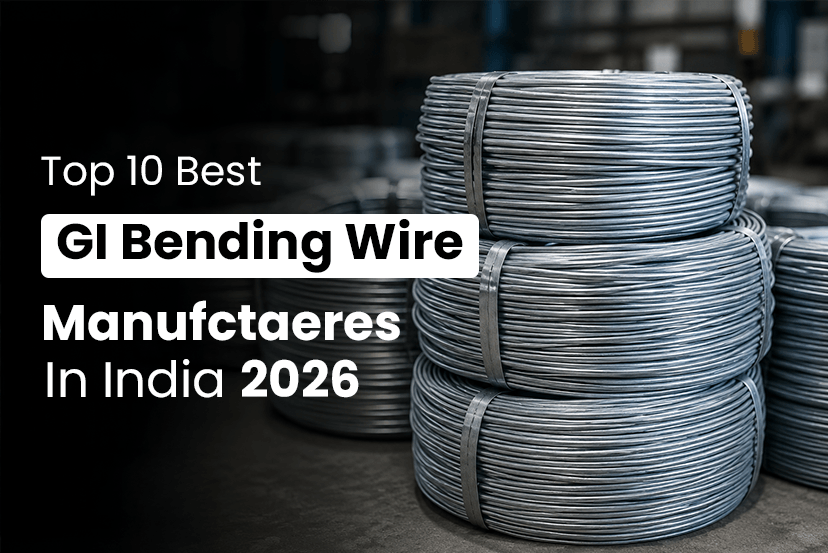
Top 10 Best GI Binding Wire Manufacturers in India 2026
The Indian construction industry continues to expand with the rapid development of residential buildings, commercial complexes, highways, bridges, metro projects, and industrial infrastructure. One of the most essential materials used during reinforcement work is GI binding wire, which securely ties reinforcement bars (rebars) before concrete is poured.
High-quality GI binding wire offers superior corrosion resistance, excellent flexibility, and high tensile strength, ensuring long-lasting structural stability. Choosing a reliable GI binding wire manufacturer helps contractors, builders, engineers, and procurement professionals maintain quality standards while reducing maintenance costs. If you are looking to procure the best GI Binding wire in bulk, then Business Moglix is the right place to procure it effortlessly.
This article lists the Top 10 Best GI Binding Wire Manufacturers in India 2026, along with their specialties, product offerings, applications, and buying considerations.
What is GI Binding Wire?
GI (Galvanized Iron) Binding Wire is a mild steel wire coated with zinc through a galvanization process. The zinc coating protects the wire against corrosion and rust, making it ideal for tying reinforcement steel bars in RCC construction.
Compared to ordinary binding wire, GI binding wire offers:
- Excellent corrosion resistance
- Higher tensile strength
- Longer service life
- Better flexibility
- Superior weather resistance
- Low maintenance
Top 10 Best GI Binding Wire Manufacturers in India 2026
1. Tata Steel Wires
Tata Steel Wires is one of India’s leading manufacturers of galvanized steel wire products. Their GI binding wire is widely preferred for construction and infrastructure projects due to its superior strength and durability.
Highlights
- Premium galvanized coating
- Excellent tensile strength
- Uniform wire thickness
- Long service life
- BIS-compliant products
Best For: Large infrastructure and commercial construction
2. Bansal Wire Industries Ltd.
Bansal Wire Industries is among India’s largest steel wire manufacturers, offering an extensive range of galvanized binding wires for construction, industrial, and engineering applications.
Highlights
- High-strength GI binding wire
- Bulk production capability
- Consistent product quality
- Wide wire gauge options
- Nationwide distribution
Best For: Builders, contractors, and infrastructure companies
3. Usha Martin Limited
Usha Martin is well known for manufacturing premium steel wire products for construction, mining, and industrial sectors.
Highlights
- High-quality galvanization
- Excellent durability
- Superior flexibility
- International manufacturing standards
Best For: Heavy engineering and industrial construction
4. JSW Steel
JSW Steel manufactures premium galvanized wire products that meet modern construction and engineering requirements.
Highlights
- High corrosion resistance
- Consistent wire quality
- Advanced manufacturing technology
- Reliable nationwide supply
Best For: Commercial and industrial projects
5. Tata Wiron
Tata Wiron has earned a strong reputation for producing durable galvanized wires suitable for construction and reinforcement applications.
Highlights
- Smooth wire finish
- Easy tying and bending
- High tensile strength
- Excellent rust protection
Best For: Residential and commercial construction
6. Kiswire India Pvt. Ltd.
Kiswire India manufactures world-class galvanized steel wire products used across construction, engineering, automotive, and industrial sectors.
Highlights
- Premium manufacturing quality
- High flexibility
- Excellent mechanical properties
- Long-lasting zinc coating
Best For: Industrial and engineering applications
7. Systematic Industries Limited
Systematic Industries manufactures galvanized iron wire for reinforcement, binding, fencing, and general construction.
Highlights
- Reliable product quality
- Multiple wire diameters
- Competitive pricing
- Durable galvanization
Best For: General construction work
8. Hindustan Wires
Hindustan Wires supplies galvanized binding wire suitable for infrastructure, industrial fabrication, and reinforcement applications.
Highlights
- High corrosion resistance
- Uniform galvanization
- Excellent ductility
- Strong wire performance
Best For: Infrastructure projects
9. Rajratan Global Wire Ltd.
Rajratan Global Wire is known for producing precision-engineered steel wire products with advanced manufacturing technologies.
Highlights
- Premium wire quality
- Excellent tensile strength
- Consistent coating thickness
- Industrial-grade performance
Best For: Engineering and industrial sectors
10. Bedmutha Industries Ltd.
Bedmutha Industries manufactures galvanized steel wire solutions for construction, agriculture, and industrial applications.
Highlights
- Superior corrosion protection
- High-quality production
- Modern manufacturing facilities
- Wide product portfolio
Best For: Construction and infrastructure projects
Comparison Table
| Manufacturer | Specialty | Best Application |
| Tata Steel Wires | Premium Quality | Infrastructure |
| Bansal Wire Industries | Large-scale Production | Construction |
| Usha Martin | Heavy-duty Wire | Industrial |
| JSW Steel | High-strength GI Wire | Commercial Projects |
| Tata Wiron | Durable Wire | Residential Construction |
| Kiswire India | Engineering Wire | Industrial |
| Systematic Industries | Affordable Solutions | General Construction |
| Hindustan Wires | Corrosion Resistance | Infrastructure |
| Rajratan Global Wire | Precision Manufacturing | Engineering |
| Bedmutha Industries | Versatile Products | Construction & Agriculture |
GI Binding Wire Specifications
| Specification | Details |
| Material | Mild Steel |
| Coating | Hot-Dip Galvanized Zinc |
| Wire Diameter | 0.90 mm – 5.00 mm |
| Tensile Strength | 350–700 MPa |
| Zinc Coating | 40–300 GSM |
| Finish | Bright Silver |
| Packaging | Coil / Roll |
| Standards | BIS / IS Specifications |
Benefits of Using GI Binding Wire
- Excellent Corrosion Resistance: The galvanized zinc coating prevents rust formation and increases the lifespan of the wire.
- High Tensile Strength: Provides secure binding of reinforcement bars without frequent breakage.
- Easy to Handle: Its flexibility allows workers to tie rebars quickly and efficiently.
- Longer Service Life: GI binding wire lasts significantly longer than ordinary binding wire.
- Weather Resistant: Performs efficiently in humid, coastal, and outdoor environments.
- Cost-Effective: Lower maintenance and replacement costs make it an economical choice for construction projects.
How to Choose the Best GI Binding Wire Manufacturer?
Before purchasing GI binding wire, consider the following:
- Product quality
- Zinc coating thickness
- Tensile strength
- BIS certification
- Manufacturer reputation
- Wire flexibility
- Corrosion resistance
- Bulk availability
- Delivery timelines
- After-sales support
Conclusion
GI binding wire is an essential component in modern construction, ensuring the secure tying of reinforcement bars and improving structural integrity. Choosing a trusted manufacturer guarantees superior product quality, longer durability, and reliable performance across residential, commercial, and industrial projects. Businesses and industries looking to buy GI binding wires at the most reasonable prices, then Moglix business is the one stop detsiniationto procure them easily.
Frequently Asked Questions (FAQs)
Which is the best GI binding wire manufacturer in India?
Some of the leading manufacturers include Tata Steel Wires, Bansal Wire Industries, Usha Martin, JSW Steel, Tata Wiron, Kiswire India, Systematic Industries, Hindustan Wires, Rajratan Global Wire, and Bedmutha Industries.
What is GI binding wire used for?
GI binding wire is primarily used for tying reinforcement bars (rebars) in RCC construction. It is also used in industrial fabrication, fencing, and infrastructure projects.
What are the advantages of GI binding wire?
GI binding wire offers corrosion resistance, high tensile strength, excellent flexibility, longer service life, weather resistance, and cost-effective performance.
Which wire gauge is commonly used for construction?
The most commonly used wire gauges are 18 SWG, 20 SWG, and 22 SWG, depending on the application and reinforcement requirements.
What should buyers consider before purchasing GI binding wire?
Buyers should check the zinc coating thickness, tensile strength, wire diameter, BIS certification, corrosion resistance, manufacturer reputation, product consistency, and supply capability.
Top 10 Best Safety Shoe Brands In India 2026: Benefits, Specifications, and Reviews
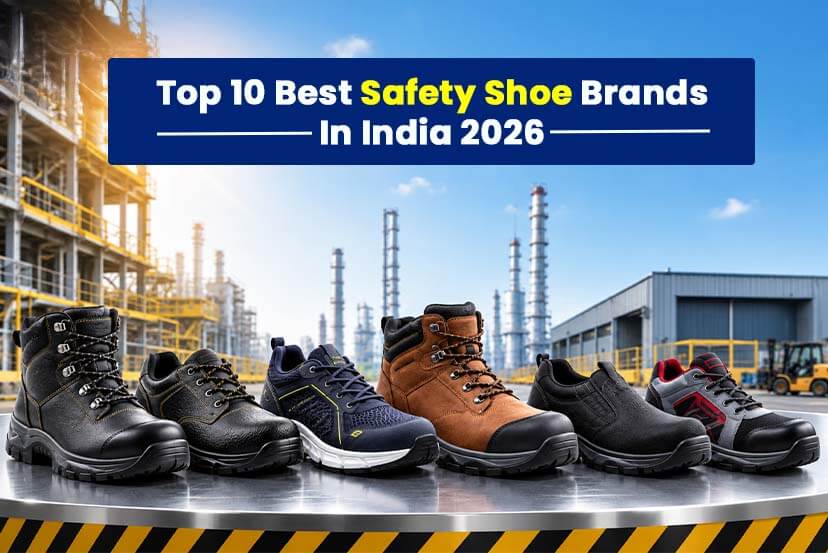
Top 10 Best Safety Shoe Brands In India 2026: Benefits, Specifications, and Reviews
Safety shoes are an essential part of personal protective equipment (PPE) across various industries, including construction, manufacturing, logistics, oil & gas, automotive, pharmaceuticals, and warehousing. Unlike regular footwear, safety shoes are specifically designed to protect workers from workplace hazards, including falling objects, punctures, electrical shocks, chemical spills, slips, and extreme temperatures. If you plan to buy safety shoes in bulk, you can simply procure them from Business Moglix. We provide you with a wide collection of safety shoes at the most affordable prices.
With India’s industrial sector growing rapidly, the demand for certified and comfortable safety footwear continues to rise. This guide covers the top 10 best safety shoe brands in India for 2026, along with their benefits, specifications, ideal applications, and reviews to help you make the right purchase decision.
Why Safety Shoes Are Important?
Industrial workplaces expose workers to numerous hazards that ordinary shoes cannot withstand. Certified safety shoes provide enhanced protection against:
- Heavy falling objects
- Sharp nails and metal scraps
- Oil and chemical spills
- Wet and slippery surfaces
- Electrical hazards
- High temperatures
- Compression injuries
Top 10 Best Safety Shoe Brands In India 2026
1. Allen Cooper
Allen Cooper has become one of India’s most trusted industrial footwear brands. It is widely preferred for combining premium comfort with heavy-duty protection.
Key Features
- Steel toe protection
- Double-density PU sole
- Anti-static models
- Slip-resistant outsole
- Leather upper
- Lightweight construction
Best For
- Manufacturing
- Warehouses
- Construction
- Heavy industries
Advantages
- Excellent comfort
- Premium finish
- Durable outsole
- Good cushioning
Review
Allen Cooper consistently receives positive reviews for durability, comfort, and long-term performance, making it one of the best premium safety shoe brands in India.
2. Bata Industrials
Bata Industrials combines decades of footwear expertise with industrial-grade safety standards.
Key Features
- Steel toe
- Oil-resistant sole
- Anti-slip outsole
- Breathable lining
- Leather upper
Best For
- Factories
- Automotive
- Warehouses
- Logistics
Advantages
- Trusted brand
- Comfortable fit
- Easily available
- Wide product range
Review
Bata remains one of India’s most reliable safety shoe brands, offering dependable protection and strong after-sales support.
3. Liberty Safety Shoes
Liberty has expanded its industrial footwear portfolio significantly over the years.
Key Features
- Steel toe
- PU sole
- Anti-skid design
- Comfortable cushioning
Best For
- Engineering
- Warehousing
- Construction
Advantages
- Affordable
- Lightweight
- Good durability
Review
Liberty offers an excellent balance between affordability and workplace protection, making it a popular choice among Indian industries.
4. Hillson
Hillson is one of India’s leading manufacturers of safety shoes and gumboots.
Key Features
- Steel toe
- PVC and PU sole options
- Water-resistant models
- Slip-resistant outsole
Best For
- Construction
- Agriculture
- Warehouses
- Manufacturing
Advantages
- Budget-friendly
- Durable
- Large product portfolio
Review
Hillson is widely appreciated for delivering dependable industrial footwear at affordable prices, especially for bulk procurement.
5. Karam
Karam is among India’s largest PPE manufacturers and offers certified industrial footwear.
Key Features
- Composite toe and steel toe options
- Electrical hazard protection
- Anti-static footwear
- Slip-resistant sole
Best For
- Electrical work
- Infrastructure
- Manufacturing
Advantages
- BIS-certified products
- Excellent protection
- Strong brand reputation
Review
Karam is often preferred for projects requiring certified PPE solutions and comprehensive worker protection.
6. Safari Pro
Safari Pro has built a strong reputation for affordable industrial footwear.
Key Features
- Steel toe
- Oil-resistant sole
- Leather upper
- Lightweight construction
Best For
- Logistics
- Construction
- Warehousing
Advantages
- Good value
- Comfortable
- Durable
Review
Safari Pro is known for offering practical safety footwear with reliable performance at competitive prices.
7. Acme Safetywear
Acme manufactures industrial footwear designed for demanding work environments.
Key Features
- Steel toe
- Heat resistance
- Slip-resistant sole
- Leather upper
Best For
- Manufacturing
- Chemical industries
- Heavy engineering
Advantages
- Strong build quality
- Reliable protection
- Industrial-grade durability
Review
Acme is a dependable option for businesses seeking durable safety footwear for heavy-duty applications.
8. JCB Safety Footwear
JCB safety shoes are designed for demanding work conditions and rugged industrial use.
Key Features
- Steel toe
- Shock absorption
- Slip-resistant outsole
- Comfortable footbed
Best For
- Mining
- Construction
- Infrastructure
Advantages
- Rugged design
- Comfortable fit
- Durable materials
Review
JCB safety footwear is a solid choice for workers who require durable protection in challenging environments.
9. Vaultex
Vaultex offers a wide range of certified industrial safety shoes suitable for multiple industries.
Key Features
- Steel toe
- Anti-static
- PU sole
- Slip-resistant design
Best For
- Warehouses
- Factories
- Logistics
Advantages
- Lightweight
- Good grip
- Comfortable fit
Review
Vaultex has become increasingly popular among industrial buyers for its reliable safety features and value-for-money offerings.
10. Tiger Safety Shoes
Tiger safety shoes are recognized for premium industrial protection and comfort.
Key Features
- Steel toe
- Puncture-resistant sole
- Oil resistance
- Leather upper
Best For
- Oil & Gas
- Heavy engineering
- Industrial manufacturing
Advantages
- Excellent protection
- Comfortable insole
- Premium quality
Review
Tiger safety shoes are well-regarded for combining advanced safety features with all-day comfort, making them suitable for demanding industrial environments.
Key Specifications to Consider before Buying Safety Shoes
Before purchasing safety shoes, evaluate the following features:
| Specification | Importance |
| Toe Type | Steel Toe / Composite Toe |
| Upper Material | Genuine Leather, Nubuck, Synthetic |
| Sole Material | PU, PVC, Rubber, TPU |
| Slip Resistance | Essential for wet workplaces |
| Anti-static | Prevents static discharge |
| Electrical Hazard Protection | Recommended for electricians |
| Heat Resistance | Required for welding and foundries |
| Waterproof Design | Useful for outdoor applications |
| Breathability | Improves comfort |
| Weight | Lightweight shoes reduce fatigue |
Comparison Table: Price range, Use cases, and Key Strengths
| Brand | Best For | Price Range | Key Strength |
| Allen Cooper | Manufacturing | ₹1,500–₹4,000 | Premium comfort |
| Bata Industrials | Warehouses | ₹1,000–₹4,000 | Trusted brand |
| Liberty | General Industry | ₹900–₹3,000 | Affordable |
| Hillson | Construction | ₹600–₹2,500 | Budget-friendly |
| Karam | Electrical Work | ₹1,000–₹4,500 | Certified PPE |
| Safari Pro | Logistics | ₹700–₹3,000 | Value for money |
| Acme | Heavy Industry | ₹800–₹3,500 | Rugged build |
| JCB | Construction | ₹1,200–₹4,000 | Heavy-duty design |
| Vaultex | Manufacturing | ₹900–₹4,000 | Lightweight |
| Tiger | Oil & Gas | ₹1,500–₹5,000 | Premium protection |
What are the Benefits of Safety Shoes?
1. Toe Protection: Steel toe or composite toe caps protect feet from crushing injuries.
2. Slip Resistance: Special rubber or PU soles reduce slipping on oily and wet floors.
3. Puncture Protection: Steel midsoles prevent nails and sharp objects from piercing the shoe.
4. Electrical Safety: Electrical hazard (EH) shoes protect against accidental electric shocks.
5. Long-Term Comfort: Modern cushioned insoles reduce foot fatigue during extended work shifts.
6. Chemical Resistance: Many industrial safety shoes resist oil, acids, and mild chemicals.
7. Better Durability: Premium leather uppers and double-density soles increase lifespan.
Final Verdict
Investing in a quality pair of safety shoes is essential for protecting workers from workplace injuries while ensuring long-lasting comfort and productivity. Whether you need affordable options like Hillson and Safari Pro, trusted names such as Bata Industrials and Liberty, or premium choices like Allen Cooper, Karam, and Tiger, selecting certified footwear that matches your work environment is the best way to enhance safety and performance. At Moglix Business, we provide you with a complete range of safety shoes at the most reasonable prices. You can easily procure safety shoes in bulk from reputed brands and raise RFQs for customized and bulk procurement.
Before making a purchase, always evaluate the required safety features, comfort, durability, certification, and industry-specific protection to ensure the footwear meets your operational needs.
Frequently Asked Questions
Which is the best safety shoe brand in India in 2026?
Allen Cooper, Bata Industrials, Liberty, Hillson, and Karam are among the top safety shoe brands in India due to their quality, durability, and certified protection.
Are steel-toe shoes better than composite-toe shoes?
Steel-toe shoes offer maximum impact protection, while composite-toe shoes are lighter, non-metallic, and suitable for environments requiring electrical insulation.
What certification should safety shoes have?
Look for BIS-compliant models that conform to IS 15298 or internationally recognized standards, depending on your workplace requirements.
Which industries require safety shoes?
Safety shoes are commonly used in construction, manufacturing, mining, logistics, warehousing, automotive, pharmaceuticals, oil & gas, chemical processing, and engineering industries.
How long do safety shoes last?
With regular industrial use, quality safety shoes typically last between 12 and 24 months, depending on working conditions and maintenance.
Can safety shoes be used daily?
Yes. Modern safety shoes are designed with cushioned insoles, breathable linings, and ergonomic construction, making them comfortable for everyday industrial use.
Types of Safety Gloves -Importance, Use Cases, and Features
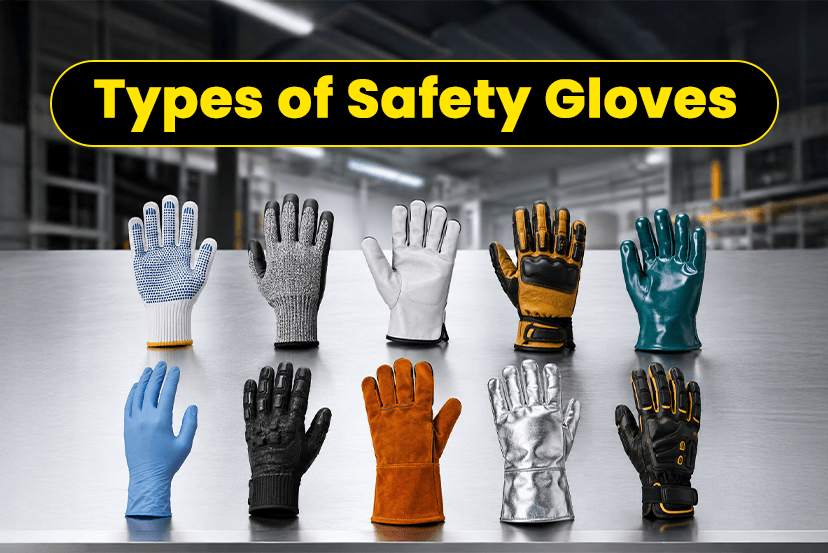
Types of Safety Gloves -Importance, Use Cases, and Features
Safety gloves are one of the most essential Personal Protective Equipment (PPE) used across industries to protect workers from cuts, chemicals, heat, electricity, abrasion, and other workplace hazards. Whether you work in manufacturing, construction, healthcare, food processing, welding, or laboratories, choosing the right type of safety gloves significantly reduces the risk of hand injuries.
According to workplace safety standards, hand injuries are among the most common occupational accidents. Wearing appropriate industrial safety gloves not only enhances worker safety but also improves productivity, grip, and comfort. If you are looking to buy safety gloves in bulk from reputed brands, you can simply procure them through the Moglix business.
In this guide, we’ll explore the different types of safety gloves, their importance, features, applications, and how to choose the best gloves for your workplace.
Why Are Safety Gloves Important?
Using proper safety gloves offers several advantages.
1. Prevents Hand Injuries
Protects hands from:
- Cuts
- Abrasions
- Burns
- Punctures
- Electric shocks
- Chemical exposure
2. Improves Workplace Safety
Safety gloves reduce workplace accidents and help organizations comply with occupational safety standards.
3. Enhances Grip
Many gloves feature textured coatings that improve grip, especially when handling oily, wet, or slippery objects.
4. Increases Productivity: Workers can confidently perform tasks involving sharp tools, machinery, chemicals, or extreme temperatures.
5. Ensures Regulatory Compliance
Many industries require PPE gloves to comply with standards such as:
- EN 388
- EN 374
- EN 407
- ASTM
- ANSI
- IS Standards
What are the different Types of Safety Gloves?
Below are the most commonly used safety gloves across various industries.
1. Cut-Resistant Gloves
Overview
Cut-resistant gloves are designed to protect hands from sharp objects such as blades, sheet metal, glass, and knives.
Materials
- Kevlar
- HPPE
- Dyneema
- Steel mesh
- Glass fiber blends
Key Features
- Excellent cut protection
- Flexible and lightweight
- High dexterity
- Abrasion resistant
- Comfortable for prolonged use
Common Applications
- Glass handling
- Automotive manufacturing
- Warehousing
- Construction
- Packaging
2. Nitrile Safety Gloves
Overview
Nitrile gloves are disposable or reusable gloves made from synthetic rubber.
They are among the most popular gloves because they resist oils, chemicals, and punctures.
Features
- Latex-free
- Chemical resistant
- Oil resistant
- Puncture resistant
- Excellent tactile sensitivity
Applications
- Laboratories
- Automotive workshops
- Food processing
- Pharmaceuticals
- Hospitals
- Chemical handling
3. Latex Gloves
Overview
Latex gloves offer excellent elasticity and comfort while providing protection against biological contaminants.
Features
- High flexibility
- Comfortable fit
- Good sensitivity
- Affordable
- Disposable
Applications
- Healthcare
- Medical examinations
- Cleaning
- Food handling
Note: Latex may cause allergies in some individuals.
4. PVC Safety Gloves
PVC gloves provide excellent resistance against oils, grease, acids, and chemicals.
Features
- Waterproof
- Chemical resistant
- Durable
- Good abrasion resistance
Applications
- Petrochemical industry
- Agriculture
- Chemical plants
- Cleaning operations
5. Leather Safety Gloves
Leather gloves are ideal for heavy-duty industrial work.
Features
- Heat resistant
- Durable
- Comfortable
- Excellent grip
- Long service life
Applications
- Welding
- Construction
- Mining
- Material handling
- Heavy engineering
6. Welding Gloves
These gloves are specially designed for welding operations involving sparks and molten metal.
Features
- Flame resistant
- Heat resistant
- Reinforced stitching
- Long cuffs
- High durability
Applications
- Fabrication shops
7. Heat-Resistant Gloves
Heat-resistant gloves protect workers handling hot equipment or working in high-temperature environments.
Features
- Thermal insulation
- Flame resistant
- Comfortable inner lining
- High temperature protection
Applications
- Foundries
- Steel plants
- Glass manufacturing
- Kitchens
- Bakeries
8. Cold-Resistant Gloves
Designed to protect workers in freezing environments.
Features
- Thermal insulation
- Waterproof options
- Flexible at low temperatures
- Comfortable lining
Applications
- Cold storage
- Refrigeration
- Frozen food industry
- Outdoor construction
9. Chemical-Resistant Gloves
These gloves protect against hazardous chemicals, solvents, acids, and alkalis.
Common Materials
- Neoprene
- Nitrile
- Butyl
- Viton
- PVC
Features
- Chemical protection
- Waterproof
- Durable
- Long-lasting
Applications
- Chemical plants
- Laboratories
- Pharmaceutical industries
- Cleaning services
10. Electrical Insulating Gloves
Electrical gloves protect workers from electric shock during maintenance and repair work.
Features
- High voltage insulation
- Flexible
- Certified safety standards
- Rubber construction
Applications
- Electrical maintenance
- Utility companies
- Power plants
- Electrical installations
11. Anti-Vibration Gloves
Designed to reduce vibration transferred from power tools to workers’ hands.
Features
- Shock absorption
- Comfortable padding
- Improved grip
- Reduced fatigue
Applications
- Jackhammer operators
- Construction
- Mining
- Mechanical workshops
12. Cotton Safety Gloves
Simple and lightweight gloves used for low-risk tasks.
Features
- Breathable
- Comfortable
- Washable
- Economical
Applications
- Warehousing
- Assembly lines
- Inspection work
Comparison of Different Types of Safety Gloves
| Type | Protection Against | Best For |
| Cut-Resistant Gloves | Sharp objects | Manufacturing |
| Nitrile Gloves | Oils, chemicals | Medical, Automotive |
| Latex Gloves | Biological hazards | Healthcare |
| PVC Gloves | Chemicals | Chemical Industry |
| Leather Gloves | Heat, abrasion | Construction |
| Welding Gloves | Sparks, molten metal | Welding |
| Heat-Resistant Gloves | High temperatures | Steel Plants |
| Cold-Resistant Gloves | Freezing temperatures | Cold Storage |
| Chemical Resistant Gloves | Acids, solvents | Laboratories |
| Electrical Gloves | Electric shock | Electrical Work |
| Anti-Vibration Gloves | Tool vibration | Construction |
| Cotton Gloves | Dust, light handling | Packaging |
Key Features to Look for in Safety Gloves
Before purchasing industrial safety gloves, consider the following features:
- Material Quality: Choose gloves made from high-quality materials suitable for your application.
- Grip: Textured palms improve the handling of slippery tools and materials.
- Dexterity: Workers performing precision tasks require gloves with high finger flexibility.
- Comfort: Proper fit reduces fatigue during extended use.
- Durability: Reusable gloves should withstand wear and tear without compromising safety.
- Chemical Compatibility: Ensure gloves are compatible with the chemicals being handled.
- Temperature Resistance: Select gloves rated for hot or cold environments as required.
- Certification: Look for compliance with relevant safety standards such as EN 388, EN 374, EN 407, ANSI, ASTM, or applicable national standards.
How to Choose the Right Safety Gloves?
Selecting the correct gloves depends on the specific workplace hazards.
Step 1: Identify the Hazard
- Cuts
- Heat
- Chemicals
- Electricity
- Abrasion
- Cold
- Vibrations
Step 2: Choose the Right Material
Different glove materials offer different levels of protection.
Step 3: Check Safety Ratings
Verify compliance with recognized PPE standards.
Step 4: Ensure Proper Fit
Ill-fitting gloves can reduce grip, comfort, and safety.
Step 5: Consider Task Requirements
Choose gloves that balance protection with dexterity for the job at hand.
Best Practices for Using Safety Gloves
To maximize protection:
- Inspect gloves before every use.
- Replace damaged or worn-out gloves immediately.
- Store gloves in a clean, dry environment.
- Use gloves only for their intended purpose.
- Clean reusable gloves according to the manufacturer’s instructions.
- Avoid using contaminated gloves across different tasks.
- Train employees on the correct selection and use of PPE.
Conclusion
Safety gloves are a vital component of workplace personal protective equipment, helping protect workers from a wide range of hazards, including cuts, chemicals, heat, electricity, and mechanical injuries. With various glove materials and designs available, selecting the right type depends on the nature of the job, the hazards involved, and the required level of protection. If you are looking to buy safety gloves in bulk, then you can partner with Moglix Business and procure quality products
By understanding the types of safety gloves, their importance, features, and use cases, employers can improve workplace safety, ensure regulatory compliance, and enhance employee productivity. Investing in high-quality protective gloves and using them correctly is a simple yet effective step toward creating a safer work environment.
Frequently Asked Questions (FAQs)
Which safety gloves are best for construction work?
Leather gloves, cut-resistant gloves, and anti-vibration gloves are commonly used in construction, depending on the specific task.
Are nitrile gloves better than latex gloves?
Nitrile gloves generally offer better puncture and chemical resistance and are latex-free, making them suitable for users with latex allergies.
Which gloves protect against electrical shock?
Electrical insulating rubber gloves that are tested and certified for the appropriate voltage class should be used for electrical work.
Can chemical-resistant gloves be reused?
Some chemical-resistant gloves are reusable if cleaned, inspected, and maintained according to the manufacturer’s recommendations. Disposable chemical gloves should not be reused.
How often should safety gloves be replaced?
Replace gloves immediately if they show signs of damage, punctures, excessive wear, contamination, or reduced protective performance.
8 Types Of Fall Arrester Systems: Complete Guide To Fall Protection Equipment (2026)
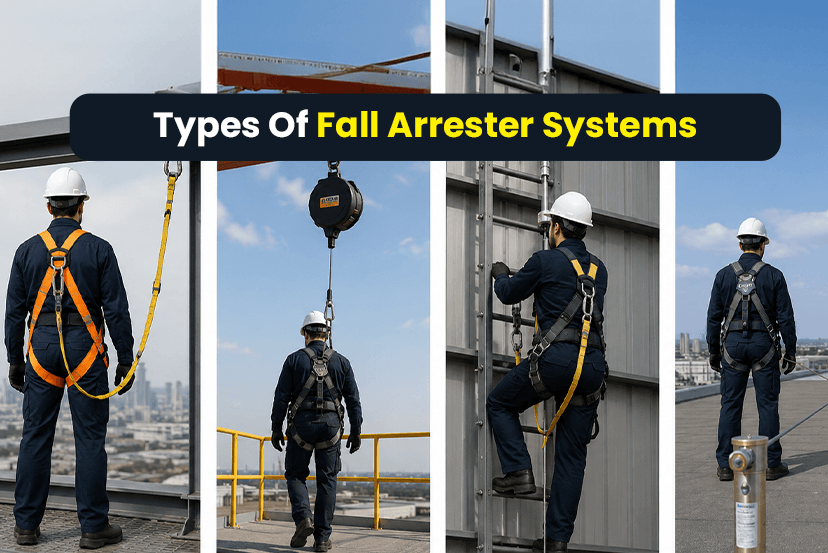
8 Types Of Fall Arrester Systems: Complete Guide To Fall Protection Equipment (2026)
Working at heights remains one of the most hazardous activities across industries such as construction, oil & gas, telecom, manufacturing, utilities, mining, warehousing, and infrastructure. Falls from elevated surfaces continue to be one of the leading causes of workplace injuries and fatalities worldwide. This makes fall arrester systems an essential part of every organization’s workplace safety program.
A fall arrester system is designed to safely stop a worker’s fall before they hit the ground or another obstacle. These systems reduce impact forces, minimize injuries, and comply with occupational safety regulations. If you are looking to buy fall arrest equipment in bulk at the most reasonable prices, you can procure them at Moglix business efficiently.
What Is a Fall Arrester System?
A fall arrester system is a personal fall protection system that automatically arrests a worker’s fall while minimizing impact forces on the body.
Unlike fall prevention systems that stop workers from reaching hazardous edges, a fall arrest system allows movement while ensuring the worker is safely stopped if a fall occurs.
These systems are widely used for:
- Construction sites
- Rooftop maintenance
- Wind turbine maintenance
- Telecom towers
- Power transmission
- Industrial plants
- Warehouses
- Bridges
- Airports
- Shipyards
- Oil & Gas facilities
Why Are Fall Arrester Systems Important?
Fall protection equipment provides multiple safety benefits.
- Prevents Fatal Falls: The primary purpose is to arrest falls before serious injury occurs.
- Reduces Impact Force: Energy absorbers reduce the force transmitted to the worker’s body.
- Improves Worker Safety: Employees can work confidently at heights.
- Regulatory Compliance: Helps organizations comply with workplace safety regulations.
- Reduces Downtime: Fewer accidents result in uninterrupted project execution.
- Protects Company Reputation: Strong safety practices improve client trust and reduce legal liabilities.
What are the Types Of Fall Arrester Systems?
Different workplaces require different fall protection solutions.
1. Vertical Fall Arrester System
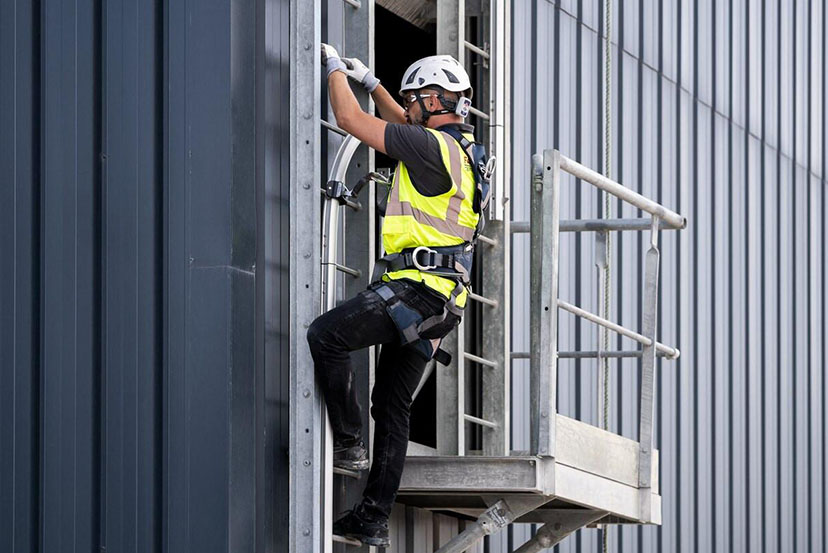
Best For
A vertical fall arrest system protects workers climbing ladders, towers, and vertical structures.
- Telecom towers
- Wind turbines
- Industrial ladders
- Chimneys
- Water tanks
Advantages
- Continuous protection
- Hands-free climbing
- High worker mobility
- Reliable fall arrest
2. Horizontal Lifeline System
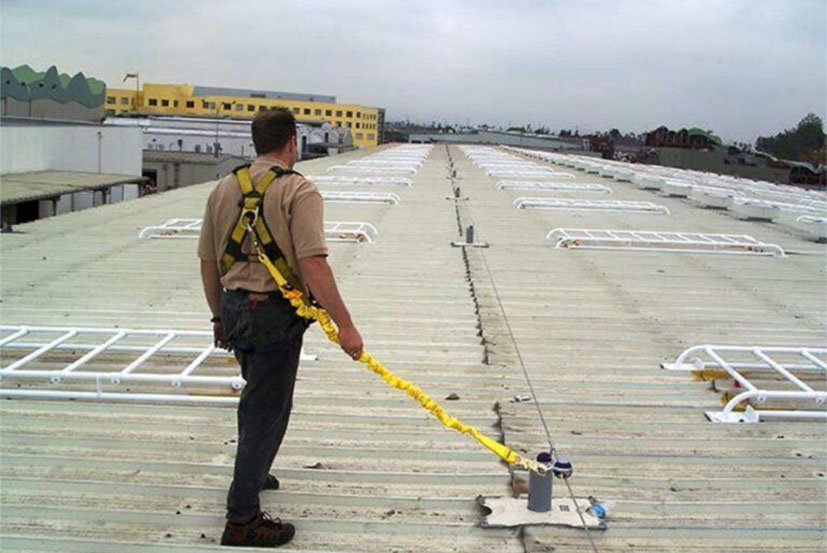
A horizontal lifeline allows workers to move safely across rooftops or elevated workspaces.
Applications
- Roof maintenance
- Solar panel installation
- Aircraft maintenance
- Bridge construction
- Warehouses
Benefits
- Large work coverage
- Continuous protection
- Multiple worker access
- Easy movement
3. Self-Retracting Fall Arrester
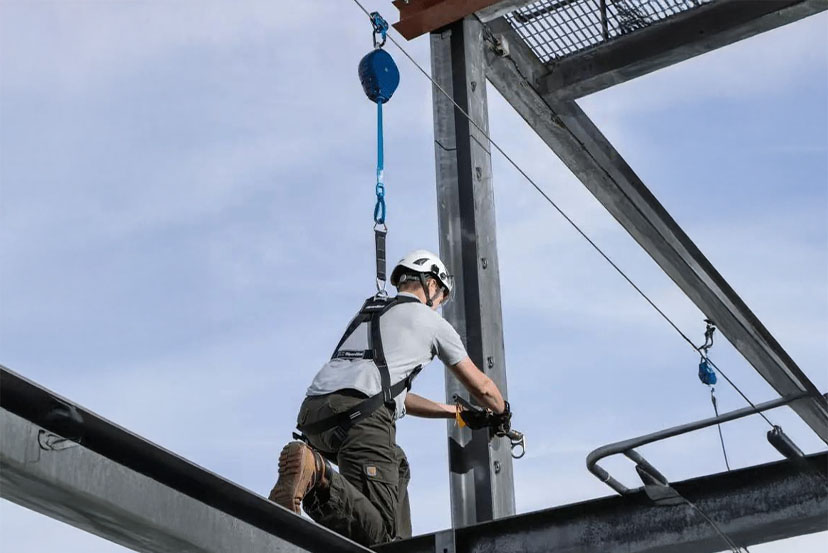
This advanced fall arrester retracts automatically while workers move.
Features
- Instant locking mechanism
- Compact design
- Reduced free-fall distance
- Lightweight
Suitable Industries
- Manufacturing
- Construction
- Warehousing
- Utilities
4. Rope Grab Fall Arrester
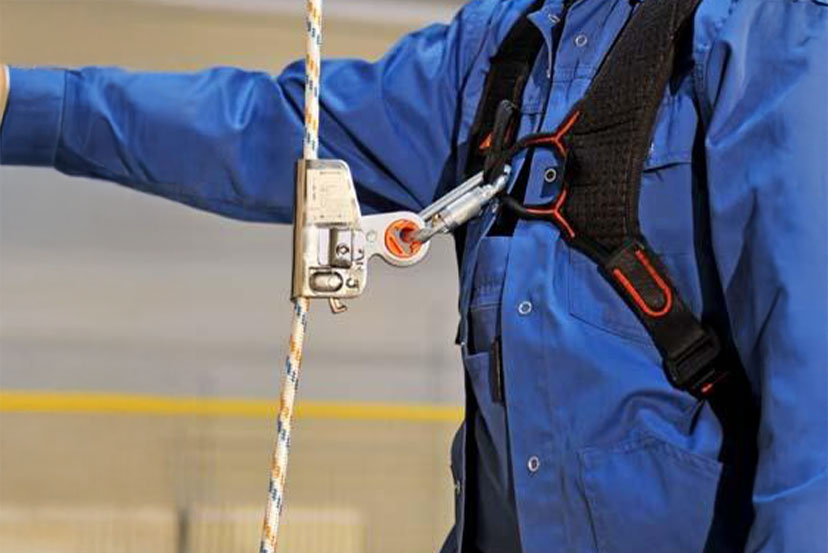
A rope grab moves freely along the rope during climbing but locks immediately during a fall.
Common Uses
- Tower climbing
- Rope access
- Rescue operations
- Maintenance work
5. Guided Type Fall Arrester
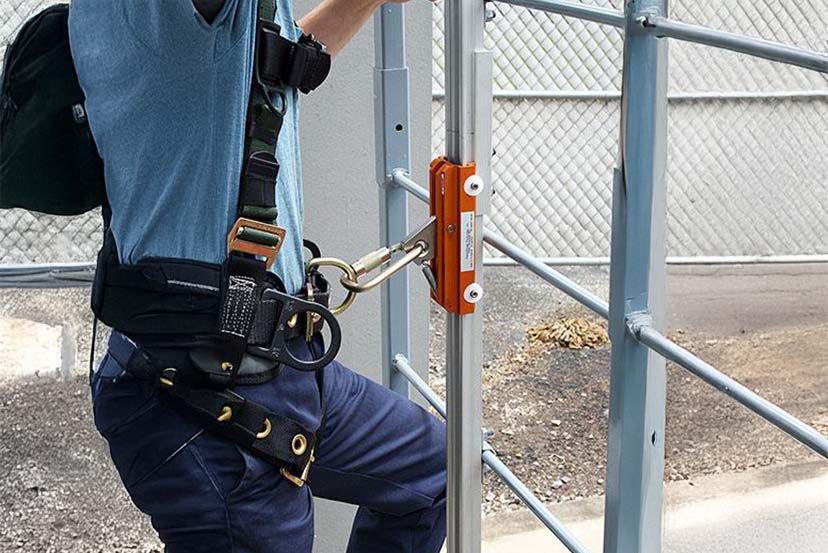
This system moves along a rigid rail or cable installed permanently on ladders.
Advantages
- Smooth movement
- Permanent installation
- Minimal maintenance
- High reliability
6. Twin Lanyard Fall Arrester
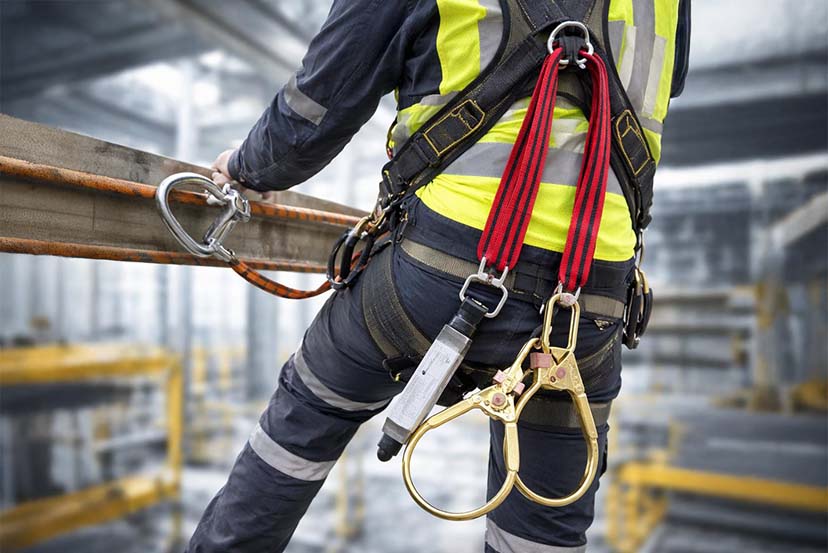
Twin lanyards enable workers to remain connected while moving between anchor points.
Benefits
- 100% tie-off
- Continuous protection
- Increased flexibility
- Better mobility
7. Temporary Horizontal Lifeline System
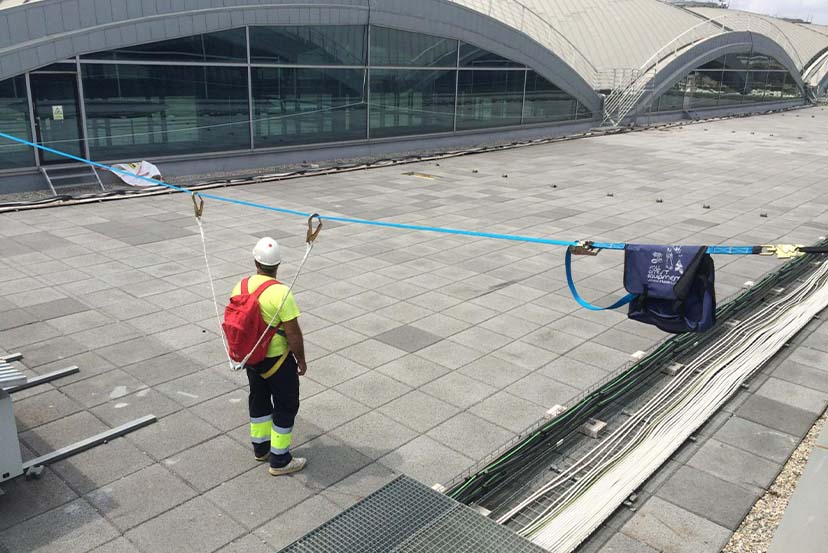
These systems are installed temporarily during construction or maintenance projects.
Best For
- Construction sites
- Shutdown maintenance
- Industrial repairs
- Bridge maintenance
8. Permanent Fall Arrest System
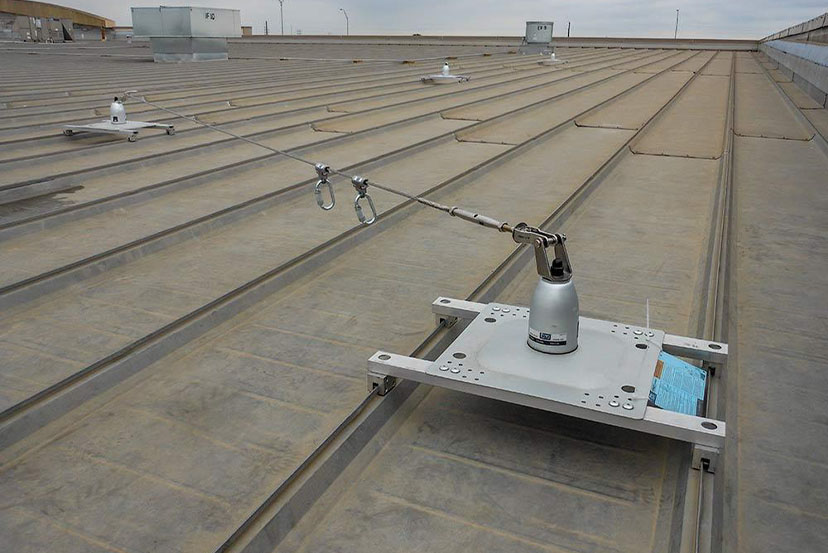
Permanent systems remain installed on buildings or industrial structures.
Ideal Applications
- Commercial buildings
- Factories
- Airports
- Warehouses
- Power plants
Main Components of a Fall Arrester System
Every complete fall arrest system includes several interconnected components.
1. Full Body Harness
A full body harness distributes arrest forces across the shoulders, thighs, chest, and pelvis.
Features include:
- Adjustable straps
- Dorsal D-ring
- Side D-rings
- Chest buckle
- Comfortable padding
- Lightweight construction
2. Shock Absorbing Lanyard
The lanyard connects the worker to the anchor point.
Shock absorbers reduce fall forces during sudden deceleration.
Common lengths include:
- 1.5 meters
- 1.8 meters
- 2 meters
3. Self-Retracting Lifeline (SRL)
An SRL automatically extends and retracts as workers move.
If a fall occurs, the internal braking mechanism locks immediately.
Benefits:
- Increased mobility
- Faster fall arrest
- Lower arrest forces
- Reduced free-fall distance
4. Anchorage Point
The anchor is the strongest point in the fall arrest system.
It may include:
- Steel beams
- Roof anchors
- Concrete anchors
- Temporary anchor slings
- Structural columns
5. Connectors
Connectors include:
- Carabiners
- Snap hooks
- Rope grabs
- Quick links
These securely join various fall protection components.
6. Lifeline
The lifeline connects workers to the anchor.
It can be:
- Vertical
- Horizontal
- Temporary
- Permanent
Comparison of Different Types of Fall Arrester Systems
| Fall Arrester Type | Best Application | Mobility | Permanent/Temporary |
| Vertical Lifeline | Ladder climbing | Medium | Permanent |
| Horizontal Lifeline | Rooftops | High | Both |
| Self-Retracting Lifeline | Construction | Very High | Both |
| Rope Grab | Tower climbing | Medium | Temporary |
| Guided Rail System | Fixed ladders | High | Permanent |
| Twin Lanyard | Structural work | High | Temporary |
| Temporary Lifeline | Construction | High | Temporary |
| Permanent Lifeline | Industrial buildings | High | Permanent |
How to Choose the Right Fall Arrester System?
Selecting the appropriate system depends on several factors.
- Work Height: Higher elevations may require SRLs or advanced lifeline systems.
- Work Environment: Indoor, outdoor, corrosive, or confined environments influence equipment selection.
- Worker Mobility: Tasks requiring extensive movement benefit from horizontal lifelines or SRLs.
- Anchor Availability: Verify that suitable certified anchor points are available.
- Weight Capacity: Ensure the system supports the user’s weight, including clothing and tools.
- Applicable Standards: Use equipment certified to recognized safety standards and compatible with local regulations.
Inspection Checklist Before Every Use
Always inspect fall protection equipment before use.
- Check harness stitching
- Inspect webbing for cuts
- Verify buckle operation
- Examine D-rings
- Inspect lanyards
- Check shock absorbers
- Test SRL locking mechanism
- Inspect hooks and connectors
- Verify anchor condition
- Remove damaged equipment from service
Common Mistakes to Avoid
Avoid these common errors when using fall protection equipment.
- Using damaged harnesses
- Connecting to weak anchor points
- Ignoring inspection schedules
- Using incompatible components
- Exceeding weight limits
- Skipping worker training
- Improper harness adjustment
- Reusing equipment after a significant fall without proper evaluation
How Often Should Fall Arrest Equipment Be Inspected?
Inspection frequency depends on usage and manufacturer recommendations.
| Inspection Type | Frequency |
| User Inspection | Before every use |
| Supervisor Inspection | Weekly or as required |
| Competent Person Inspection | At least every 6–12 months (or per manufacturer and local regulations) |
| After a Fall | Immediately before reuse, affected equipment often requires removal from service |
Conclusion
Choosing the right fall arrester system is essential for protecting workers at height and ensuring compliance with workplace safety requirements. Whether you need a harness and belts, vertical fall arrester, horizontal lifeline, fixed line system, self-retracting lifeline (SRL), Lanyards, rope grab, or twin lanyard system, selecting equipment that matches the work environment and is properly inspected can significantly reduce the risk of serious injuries. Now you can buy a fall arrester and protection equipment in bulk at Moglix business efficiently.
As industries adopt smarter safety technologies in 2026, investing in high-quality fall protection equipment and providing regular training will help create safer, more productive workplaces. A well-designed fall protection program is not only a regulatory requirement but also a long-term investment in employee safety and operational excellence.
Safety Helmets Color Code in India 2026: Meaning and Guidelines
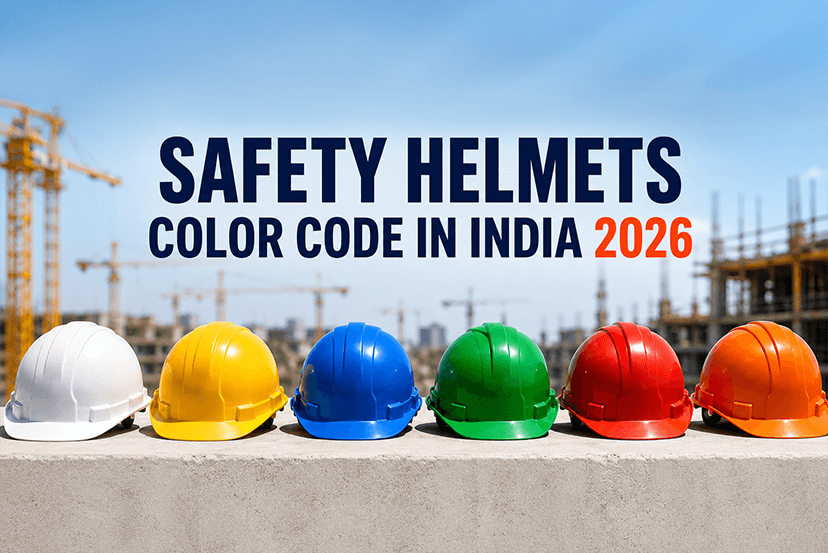
Safety Helmets Color Code in India 2026: Meaning and Guidelines
Safety helmets are one of the most essential pieces of Personal Protective Equipment (PPE) used across construction sites, factories, warehouses, mining operations, and industrial facilities. Beyond protecting workers from head injuries caused by falling objects, impacts, or electrical hazards, helmet colours play a crucial role in workplace organization.
Although India does not have a mandatory national safety helmet colour code, most organizations follow widely accepted industry practices while complying with BIS IS 2925 standards for helmet performance. In this guide, we’ll explain the meaning of each helmet colour, the commonly followed colour code in India, and the key guidelines every employer and worker should know in 2026.
What is a Safety Helmet Colour Code?
A safety helmet colour code is a system that assigns different helmet colours to employees based on their job roles. It enables quick identification of workers, supervisors, engineers, safety officers, and visitors on construction sites and industrial workplaces.
Is Helmet Colour Coding Mandatory in India?
As of 2026, there is no legally prescribed helmet colour code in India. However, organizations commonly follow industry-standard colour practices and define their own helmet colour policies while complying with BIS IS 2925 safety standards.
Safety Helmet Colour Code Chart (India 2026)
| Helmet Colour | Common Users | Purpose |
| White | Engineers, Managers, Supervisors | Site supervision and project management |
| Yellow | Construction Workers, Labourers | General site work |
| Blue | Electricians, Technicians, Carpenters | Skilled technical work |
| Green | Safety Officers, HSE Team | Safety monitoring and emergency response |
| Red | Firefighters, Emergency Personnel | Fire safety and emergency services |
| Orange | Traffic Marshals, Signalmen | High-visibility operations |
| Brown | Welders, Heat-related Work | Specialized industrial tasks |
| Grey | Trainees, Apprentices | Training and temporary staff |
| Pink | Visitors or Spare Helmets | Temporary replacement helmets |
Note: Helmet colour assignments may vary depending on company or project-specific safety policies.
Understand the Helmet Colour Meanings
- White Helmet: Typically worn by engineers, project managers, architects, and supervisors responsible for planning, inspections, and site management.
- Yellow Helmet: Used by general construction workers, labourers, and machine operators performing day-to-day operational tasks.
- Blue Helmet: Assigned to skilled workers, including electricians, plumbers, technicians, and maintenance personnel.
- Green Helmet: Reserved for safety officers, HSE engineers, and first-aid responders responsible for workplace safety compliance.
- Red Helmet: Generally worn by emergency response teams and fire safety personnel.
- Orange Helmet: Used by traffic controllers, lifting supervisors, and workers requiring high visibility in hazardous zones.
- Brown Helmet: Often assigned to welders or workers involved in high-temperature operations, depending on company policy.
- Grey Helmet: Commonly used for trainees, apprentices, or temporary workers.
- Pink Helmet: Usually kept as a spare helmet for visitors or employees who forget their assigned helmets.
Why Helmet Colour Codes Matter
- Enables quick worker identification
- Improves emergency response
- Enhances workplace communication
- Supports visitor management
- Promotes better safety compliance
Safety Helmet Guidelines
- Use BIS IS 2925-certified industrial safety helmets.
- Wear the helmet correctly with the chin strap securely fastened.
- Inspect helmets regularly for cracks, dents, or other signs of damage.
- Replace helmets after a major impact or at the manufacturer’s recommended interval.
- Follow your company’s approved helmet colour code, as colour assignments may differ between organizations.
- Store helmets away from direct sunlight, chemicals, and excessive heat to maintain their protective performance.
Why Helmet Colour Codes Matter
| Benefit | Importance |
| Quick Identification | Helps identify workers and supervisors instantly. |
| Better Safety | Improves emergency response and hazard management. |
| Efficient Communication | Makes it easier to locate the right personnel on-site. |
| Visitor Management | Clearly distinguishes visitors from authorized workers. |
| Regulatory Compliance | Supports organized PPE management and workplace safety programs. |
Conclusion
Safety helmet colour codes play a vital role in improving workplace safety, communication, and operational efficiency. While India does not mandate a standard helmet colour code, following widely accepted industry practices and using BIS-certified helmets helps create a safer and more organized work environment. Employers should clearly communicate their colour-coding policy to ensure consistency and compliance across all job sites. If you are looking to buy safety helmets in bulk at the most reasonable prices, then Moglix Business is the one stop destiniation to procure effortlessly.
7 Types of Electrical Wiring for House Installation in 2026: Complete Guide
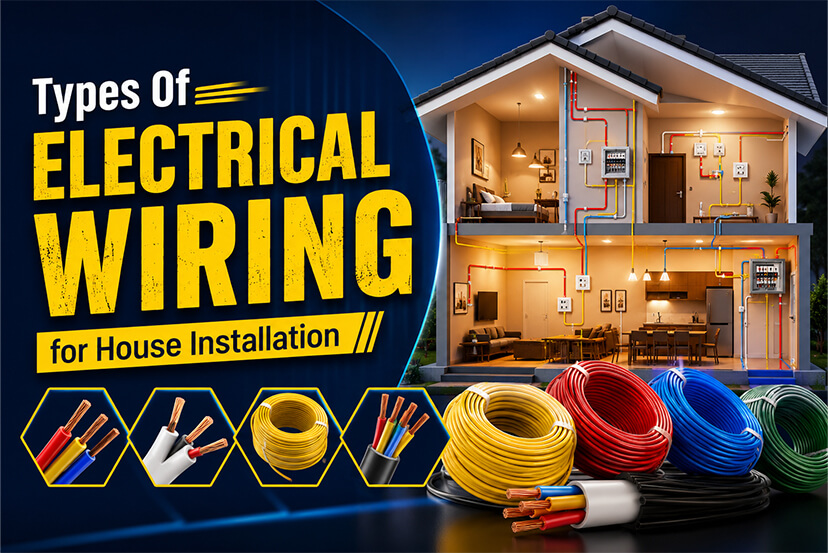
7 Types of Electrical Wiring for House Installation in 2026: Complete Guide
Electrical wiring is the backbone of every residential building. Whether you are constructing a new house, renovating an apartment, or upgrading an old electrical system, selecting the right type of wiring ensures safety, efficiency, and long-term reliability. Modern electrical wiring has evolved significantly in 2026 with improved insulation materials, higher fire resistance, enhanced durability, and better compatibility with smart home technologies. If you are looking to buy top-quality and different types of electrical wires at the most affordable prices, you can purchase them at Moglix Business.
This guide explains the various types of electrical wiring used in residential installations, their advantages and disadvantages, applications, installation methods, and key factors to consider when selecting the best wiring system.
Why Choosing the Right Electrical Wiring Matters
Proper house wiring offers several long-term benefits:
- Improved electrical safety
- Longer lifespan
- Lower maintenance costs
- Better power distribution
- Reduced energy losses
- Enhanced appliance protection
- Compliance with electrical standards
- Higher property value
Main Components of a House Electrical Wiring System
A complete residential wiring system includes:
- Electrical cables
- Copper or aluminium conductors
- PVC conduits
- Distribution board (DB)
- Miniature Circuit Breakers (MCBs)
- Residual Current Devices (RCDs)
- Earthing system
- Switches
- Socket outlets
- Junction boxes
- Ceiling rose
- Isolators
List Of The Top Different Types Of Electrical Wiring Used In Houses 2026
1. Cleat Wiring
Cleat wiring is one of the oldest and simplest wiring methods. The cables are supported on porcelain or plastic cleats fixed to walls.
Advantages
- Low installation cost
- Easy maintenance
- Quick installation
- Ideal for temporary installations
Disadvantages
- Poor appearance
- Less durable
- Not suitable for permanent homes
- Vulnerable to mechanical damage
Applications
- Temporary construction sites
- Festivals
- Outdoor events
- Temporary workshops
2. Batten Wiring (CTS/TRS Wiring)
Batten wiring uses PVC or TRS insulated cables mounted on wooden battens using brass clips.
Advantages
- Economical
- Easy to repair
- Quick installation
- Suitable for dry environments
Disadvantages
- Limited lifespan
- Not suitable for damp locations
- Less attractive
Best Applications
- Small homes
- Shops
- Offices
- Temporary buildings
3. Casing and Capping Wiring
In this system, wires are laid inside wooden or PVC casing channels and covered using caps.
Advantages
- Neat appearance
- Easy inspection
- Better protection
- Organized cable routing
Disadvantages
- Wooden casing may absorb moisture
- Higher maintenance
- Less popular today
Applications
- Renovation projects
- Low-budget residential installations
4. Lead Sheathed Wiring
Lead sheathed wiring uses insulated conductors covered with a lead alloy sheath that protects against moisture.
Advantages
- Moisture resistant
- Durable
- Long service life
- Good mechanical protection
Disadvantages
- Expensive
- Requires skilled installation
- Heavy material
Applications
- Industrial buildings
- Damp locations
- Chemical plants
5. Conduit Wiring (Most Popular in Modern Homes)
Conduit wiring is the most widely used electrical wiring method in modern residential buildings.
The electrical cables pass through PVC or metal conduits concealed inside walls or mounted on the surface.
Also read: Top 10 Wire Manufacturing Companies in India 2026
Types of Conduit Wiring
Concealed Conduit Wiring
The conduits are embedded inside walls before plastering.
Advantages
- Excellent appearance
- High safety
- Long lifespan
- Better fire protection
- Reduced mechanical damage
Best For
- Modern houses
- Villas
- Apartments
- Commercial buildings
Surface Conduit Wiring
The conduits are fixed directly on walls.
Advantages
- Easy maintenance
- Simple inspection
- Quick installation
- Cost-effective
Applications
- Factories
- Warehouses
- Garages
- Workshops
6. PVC Insulated Wiring
PVC-insulated cables dominate residential electrical installations because of their durability and affordability.
Features
- Heat resistant
- Waterproof
- Chemical resistant
- Flame retardant
- Flexible
Advantages
- Affordable
- Long-lasting
- Easy installation
- Low maintenance
Common Uses
- Lighting circuits
- Power sockets
- Ceiling fans
- Kitchen appliances
7. Armoured Cable Wiring
Armoured cables contain steel wire armour that protects against physical damage.
Advantages
- High mechanical strength
- Outdoor durability
- Rodent resistant
- Suitable for underground installations
Applications
- Outdoor power supply
- Garden lighting
- Solar systems
- Underground electrical connections
Types of Electrical Cables Used in House Wiring
Single-Core Cable
Used inside conduits for lighting and socket circuits.
Applications
- Switchboards
- Internal wiring
- Distribution boards
Multi-Core Cable
Contains multiple conductors within one insulated sheath.
Applications
- Home appliances
- Air conditioners
- Water heaters
Flexible Cable
Designed for portable electrical devices.
Applications
- Extension boards
- Household appliances
- Power tools
Twin and Earth Cable
One of the most common residential wiring cables.
Features
- Phase wire
- Neutral wire
- Earth wire
Applications
- Residential power circuits
- Lighting systems
- Socket outlets
Factors to Consider Before Choosing Electrical Wiring
Safety Standards: Always select ISI-certified and fire-resistant wires.
Wire Material: Copper conductors provide better efficiency and durability.
Load Capacity: Choose wire gauge according to electrical load requirements.
Future Expansion: Plan additional circuits for future appliances.
Environmental Conditions: Select moisture-resistant wiring for kitchens, bathrooms, and outdoor areas.
Budget: Consider installation, maintenance, and replacement costs rather than only the initial purchase price.
Things To Know: Industrial Trends And Market Insights (2026)
The residential electrical industry continues to evolve due to rapid urbanization, smart home adoption, and stricter safety regulations.
- Fire-retardant and low-smoke PVC cables are becoming the preferred choice for new residential projects.
- Copper wiring continues to dominate premium housing due to its superior conductivity and long service life.
- Smart electrical panels with remote monitoring are increasingly being installed in modern homes.
- EV charging infrastructure is driving demand for higher-capacity residential wiring systems.
- Solar-ready electrical installations are becoming standard in newly constructed houses.
- Modular switchgear and intelligent circuit protection devices are replacing conventional electrical panels.
- Builders increasingly specify concealed conduit wiring for improved aesthetics and safety.
- Energy-efficient homes now include dedicated circuits for high-power appliances and renewable energy systems.
Why choose Moglix to buy Electrical Wires?
Moglix Business offers a comprehensive range of premium electrical wires and cables from trusted brands, ensuring superior safety, durability, and performance. All products are sourced from reliable manufacturers and meet industry quality standards for residential and commercial installations. You can choose from various wire sizes, insulation types, and load capacities at competitive prices. With bulk purchasing options, genuine products, fast delivery, and dedicated customer support, Moglix is your trusted destination for buying electrical wiring online.
Conclusion
Choosing the right electrical wiring system is one of the most important decisions during house construction or renovation. From traditional cleat wiring to advanced concealed conduit systems, each wiring type serves different needs based on budget, safety, and application. In 2026, homeowners are increasingly opting for concealed conduit wiring with copper conductors, fire-resistant insulation, and smart-home compatibility. If you are planning to buy house electrical wires in bulk at the most reasonable prices, then the Moglix business is the one-stop destination to procure them effortlessly.
How To Fix A Leaky Faucet in 10 Easy Steps (2026 Complete Guide)
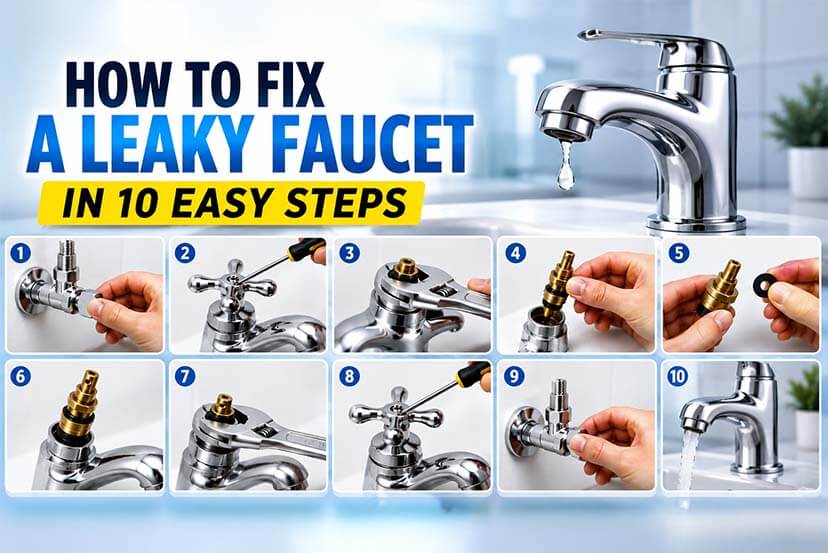
How To Fix A Leaky Faucet in 10 Easy Steps (2026 Complete Guide)
A leaky faucet may appear to be a small household problem, but it can waste thousands of liters of water annually, increase your water bills, and eventually damage your sink or countertop. Fortunately, many faucet leaks can be repaired without hiring a plumber. By identifying the cause and using the right tools, homeowners can fix the most common faucet leaks in less than an hour.
In this guide, you’ll learn the common causes of faucet leaks, essential tools required, step-by-step repair methods, the top 10 tips to fix a leaky faucet, maintenance practices, and when it’s time to replace your faucet altogether.
What is a Leaky Faucet?
A leaky faucet is a tap that continues to drip water even after being turned off. The leak usually occurs because internal components such as washers, O-rings, cartridges, seals, or valve seats have worn out over time.
Ignoring a leaking faucet can lead to:
- Increased water bills
- Water wastage
- Mineral deposits
- Mold and mildew growth
- Rust and corrosion
- Damage to cabinets and countertops
Common Causes of a Leaky Faucet
Before repairing a faucet, it’s important to understand what’s causing the leak.
| Cause | Description |
| Worn-out Washer | Most common reason for compression faucets |
| Damaged O-Ring | Causes leaks around the handle |
| Faulty Cartridge | Common in cartridge faucets |
| Corroded Valve Seat | Mineral buildup damages the sealing surface |
| Loose Parts | Packing nuts or screws becomes loose |
| High Water Pressure | Causes dripping even when closed |
| Broken Ceramic Disc | Common in modern faucets |
| Worn Seals | Rubber seals deteriorate with age |
| Mineral Deposits | Hard water affects internal components |
| Old Faucet | Aging parts become unreliable |
What are the Different Types of Faucets
Understanding your faucet type makes repairs easier.
1. Compression Faucet
- Two separate handles
- Uses rubber washers
- Most common in older homes
Common Repair:
Replace the washer and valve seat.
2. Ball Faucet
- Single handle
- Uses a rotating ball mechanism
- Common in kitchens
Common Repair:
Replace seals and springs.
3. Cartridge Faucet
- Single or double handle
- Uses replaceable cartridge
Common Repair:
Install a new cartridge.
4. Ceramic Disc Faucet
- Modern design
- Highly durable
- Uses ceramic discs
Common Repair:
Replace the ceramic cartridge or clean the seals.
Understand The Tools Required For Fixing A Leaky Faucet
Keep these tools ready before beginning.
- Adjustable wrench
- Screwdriver set
- Allen key
- Slip-joint pliers
- Needle-nose pliers
- Replacement washers
- O-rings
- Faucet cartridge
- PTFE (Teflon) tape
- Silicone plumber’s grease
- Cleaning cloth
- White vinegar
- Small brush
- Bucket
- Flashlight
Step-by-Step: How To Fix a Leaky Faucet
Step 1: Turn Off the Water Supply
Locate the shut-off valves beneath the sink and turn them clockwise. If no local valve is available, turn off the home’s main water supply.
Step 2: Plug the Drain
Use a sink stopper or a cloth to prevent screws and small parts from falling into the drain.
Step 3: Remove the Handle
Unscrew the decorative cap and remove the faucet handle using a screwdriver or Allen key.
Step 4: Inspect Internal Components
Carefully examine:
- Washer
- O-ring
- Cartridge
- Valve seat
- Springs
- Seals
Look for cracks, wear, corrosion, or mineral deposits.
Step 5: Replace Worn Parts
Install new replacement parts that match the faucet model.
Avoid forcing components during installation.
Step 6: Clean Mineral Deposits
Soak removable metal parts in white vinegar for 20–30 minutes to dissolve limescale. Rinse thoroughly before reassembly.
Step 7: Lubricate Moving Parts
Apply silicone plumber’s grease to O-rings and seals to improve movement and extend their lifespan.
Step 8: Reassemble the Faucet
Reinstall all components in the reverse order. Tighten screws securely, but avoid overtightening.
Step 9: Turn On the Water Supply
Slowly reopen the shut-off valves and inspect for leaks while operating the faucet.
Step 10: Test the Faucet
Run both hot and cold water several times. Ensure there is no dripping after turning the faucet off.
Also read: Top 10 Sanitary Ware And Bathroom Fittings Brands In India 2026
Quick Look At The Top 10 Tips to Fix a Leaky Faucet
1. Identify the Faucet Type First
Different faucet designs require different repair methods. Knowing whether you have a compression, cartridge, ball, or ceramic disc faucet helps you choose the correct replacement parts.
2. Always Shut Off the Water Supply
Turning off the water before disassembly prevents flooding and protects your plumbing system.
3. Replace Worn Washers Immediately
Rubber washers naturally wear out over time. Replacing them is one of the quickest and most affordable solutions to stop leaks.
4. Change Damaged O-Rings
A cracked or worn O-ring often causes water to leak around the faucet handle. Replacing it is a simple fix that restores proper sealing.
5. Clean Mineral Deposits
Hard water can leave behind calcium and lime deposits that interfere with faucet operation. Regular cleaning helps maintain smooth performance.
6. Use Genuine Replacement Parts
Choose components that match your faucet’s brand and model. Properly fitting parts improve durability and reduce the chance of recurring leaks.
7. Avoid Overtightening
Applying excessive force when tightening screws or fittings can damage threads, seals, or washers. Tighten only until snug.
8. Apply PTFE (Teflon) Tape Correctly
Wrap PTFE tape neatly around threaded connections to create a secure, leak-resistant seal and prevent water seepage.
9. Lubricate Seals and O-Rings
A thin layer of silicone plumber’s grease reduces friction, protects rubber components, and extends the life of moving parts.
10. Replace Very Old Faucets
If the faucet is heavily corroded, frequently leaks, or has multiple damaged components, replacing the entire unit may be more cost-effective than repeated repairs.
Mistakes to Avoid Before Repairing
Avoid these common errors during repair:
- Forgetting to shut off the water supply
- Losing small screws and springs
- Using incorrect replacement parts
- Overtightening fittings
- Ignoring corrosion
- Mixing up removed components
- Reusing damaged washers
- Skipping lubrication
- Using excessive force
- Not testing after reassembly
Preventive Maintenance Tips to Avoid Leaks In The Future
Regular maintenance helps prevent future leaks and extends faucet life.
- Clean faucets monthly.
- Remove mineral buildup regularly.
- Replace worn seals promptly.
- Inspect for corrosion every six months.
- Avoid excessive force when turning the tap.
- Fix minor drips immediately.
- Check the water pressure if leaks persist.
- Use water softeners in hard-water areas.
When Should You Replace Instead of Repair?
Consider replacing the faucet if:
- It is over 10–15 years old.
- The body is cracked or severely corroded.
- Replacement parts are no longer available.
- Leaks continue after multiple repairs.
- You want improved water efficiency or a modern design.
A new faucet can reduce water consumption, enhance the appearance of your kitchen or bathroom, and provide more reliable performance.
Benefits of Fixing a Leaky Faucet
Repairing a leaking faucet offers several advantages:
- Saves water and reduces utility bills.
- Prevents water damage to cabinets and countertops.
- Extends the lifespan of the faucet.
- Reduces mold and mildew growth.
- Improves overall plumbing efficiency.
- Conserves natural resources through reduced water wastage.
- Avoids costly repairs caused by prolonged leaks.
Conclusion
A leaky faucet is one of the most common household plumbing issues, but it is also one of the easiest to fix with the right approach. By identifying the source of the leak, replacing worn components, and following proper repair techniques, you can restore your faucet’s performance while saving water and reducing utility costs. Regular inspection and preventive maintenance will also help prevent future leaks and extend the life of your plumbing fixtures.
If you’re planning a repair or replacement, invest in high-quality faucets, replacement cartridges, washers, O-rings, PTFE tape, plumber’s grease, and plumbing tools from a trusted platform like Moglix Business to ensure long-lasting and reliable performance.
Frequently Asked Questions (FAQs)
1. What is the most common cause of a leaky faucet?
The most common cause is a worn-out washer or damaged O-ring. Over time, these components deteriorate due to regular use, leading to water leakage.
2. Can I fix a leaky faucet without calling a plumber?
Yes. Many common faucet leaks can be repaired at home with basic tools and the correct replacement parts, making it a suitable DIY project.
3. How long does it take to repair a leaking faucet?
For most standard faucets, the repair takes between 30 minutes and one hour, depending on the faucet type and the availability of replacement parts.
4. Should I repair or replace an old faucet?
If the faucet is severely corroded, frequently leaks, or replacement parts are unavailable, replacing it is often the more practical and cost-effective option.
5. How can I prevent my faucet from leaking again?
Regular cleaning, replacing worn seals promptly, avoiding excessive force when operating the handle, and inspecting the faucet periodically can help prevent future leaks.
Top 10 Safety Goggle Manufacturers in India 2026: Best Industrial Eye Protection Brands
Top 10 Safety Goggle Manufacturers in India 2026: Best Industrial Eye Protection Brands
Workplace eye injuries remain one of the leading causes of occupational accidents across industries such as manufacturing, construction, mining, pharmaceuticals, automotive, chemicals, welding, and laboratories. According to industrial safety experts, nearly 90% of eye injuries can be prevented by wearing certified safety goggles or safety glasses. As workplace safety regulations become stricter in 2026, businesses are increasingly investing in high-quality eye protection equipment that complies with national and international safety standards.
India has emerged as a major manufacturing hub for Personal Protective Equipment (PPE), with several companies producing world-class safety goggles for domestic and global markets. Whether you need anti-fog goggles, chemical splash goggles, welding goggles, UV protection eyewear, or impact-resistant safety glasses, choosing the right manufacturer ensures maximum worker safety and regulatory compliance.
In this comprehensive guide, we’ll explore the Top 10 Safety Goggle Manufacturers in India 2026, their specialties, product offerings, and factors to consider before purchasing industrial eye protection.
Why Safety Goggles Are Important?
Industrial safety goggles are designed to protect workers from numerous workplace hazards.
Common Hazards Include
- Flying metal particles
- Wood chips
- Chemical splashes
- Dust particles
- Molten metal
- Welding sparks
- UV radiation
- Laser exposure
- Laboratory chemicals
- Industrial fumes
Without proper eye protection, even a minor accident can lead to permanent vision loss.
Types of Safety Goggles
1. Chemical Splash Goggles
Designed for laboratories, chemical plants, pharmaceutical manufacturing, and cleaning applications.
Best For
- Chemical industries
- Laboratories
- Hospitals
- Research centers
2. Impact Resistant Safety Glasses
Protect against high-speed flying particles and debris.
Suitable for:
- Construction
- Engineering
- Fabrication
- Automotive workshops
3. Welding Goggles
Protect eyes from:
- Arc flashes
- Sparks
- Heat
- Infrared radiation
- UV rays
4. Anti-Fog Safety Goggles
Ideal for humid environments where lenses frequently fog.
Used in:
- Food processing
- Healthcare
- Pharmaceuticals
- Cold storage
5. Dust Protection Goggles
Provide complete sealing against airborne particles.
Ideal for:
- Cement plants
- Mining
- Stone cutting
- Woodworking
Top 10 Safety Goggle Manufacturers in India 2026
1. KARAM Safety
KARAM is among India’s most recognized PPE manufacturers with a comprehensive range of industrial safety products. The company manufactures premium-quality safety goggles featuring anti-scratch lenses, UV protection, lightweight construction, and excellent impact resistance.
Popular Products
- Clear safety goggles
- Chemical splash goggles
- Anti-fog eyewear
- Visitor safety glasses
- Over-spectacles
Best For
- Construction
- Manufacturing
- Oil & Gas
- Warehouses
- Mining
Key Features
- ANSI-compliant models
- Comfortable wraparound design
- Polycarbonate lenses
- Adjustable temples
2. Udyogi
Udyogi has over four decades of experience delivering industrial safety solutions. Their eye protection products are widely used in automotive, pharmaceutical, and heavy engineering sectors.
Product Range
- Safety spectacles
- Industrial goggles
- Anti-fog eyewear
- Face shields
- Chemical protection goggles
Highlights
- Premium optical clarity
- Lightweight design
- International certifications
- Durable construction
3. Honeywell
Honeywell manufactures premium industrial safety eyewear trusted across hazardous workplaces. Their products combine advanced lens technology with ergonomic designs for extended wear.
Best Products
- UV protection goggles
- Anti-fog safety glasses
- Scratch-resistant eyewear
- Prescription-compatible models
4. 3M India
3M is globally recognized for innovative safety solutions. Their industrial safety goggles provide excellent visibility while protecting workers from mechanical and chemical hazards.
Advantages
- Superior comfort
- High-impact resistance
- Anti-fog coating
- UV protection
- Lightweight frame
5. Venus Safety & Health
Although best known for respiratory protection, Venus also manufactures quality industrial eye protection suitable for manufacturing, construction, and engineering sectors.
Best Features
- Comfortable fit
- Durable lenses
- Affordable pricing
- Wide dealer network
6. Midas Safety
Midas Safety offers complete head-to-toe PPE solutions, including certified eye protection products that meet Indian and international standards.
Product Highlights
- Anti-fog goggles
- Visitor eyewear
- Chemical splash protection
- Scratch-resistant lenses
7. Mallcom
Mallcom is one of India’s largest PPE manufacturers, supplying safety equipment to industrial and export markets. The company provides eye protection designed for demanding work environments.
Best For
- Heavy engineering
- Mining
- Infrastructure
- Logistics
- Manufacturing
8. Sure Safety India
Sure Safety manufactures a wide range of certified PPE products, including industrial safety goggles used in construction, chemical processing, and engineering industries.
Key Benefits
- Industrial-grade protection
- Comfortable design
- Chemical resistance
- Certified quality
9. Lakeland India
Lakeland is internationally known for protective clothing and industrial safety products. Their eye protection solutions are widely used in hazardous environments requiring high-performance PPE.
Suitable Industries
- Chemical plants
- Fire safety
- Oil & Gas
- Hazardous material handling
10. Acme Safetywear
Acme Safetywear offers affordable industrial eye protection products for manufacturing units, construction companies, and engineering industries.
Key Features
- Budget-friendly
- Comfortable fit
- Durable construction
- Good optical clarity
Comparison Table
| Manufacturer | Popular Products | Best Industries | Key Strength |
| KARAM | Safety goggles, spectacles | Construction, Manufacturing | Premium quality |
| Udyogi | Industrial eyewear | Engineering, Pharma | Comfortable design |
| Honeywell | Safety glasses | Heavy industries | Global technology |
| 3M India | Anti-fog goggles | Manufacturing | Innovation |
| Venus | Industrial goggles | Construction | Value for money |
| Midas Safety | Chemical goggles | Laboratories | Certified products |
| Mallcom | Industrial eyewear | Mining | Wide product range |
| Sure Safety | Splash goggles | Engineering | Reliable protection |
| Lakeland | Hazard protection goggles | Chemical industries | International quality |
| Acme Safetywear | General safety glasses | Industrial use | Affordable pricing |
How to Choose the Best Safety Goggles
Before purchasing industrial safety goggles, consider the following factors:
Lens Material
- Polycarbonate lenses
- Scratch resistance
- High impact resistance
Safety Certifications
Choose products certified under:
- ISI
- ANSI Z87.1
- EN166
- CE
Comfort
Look for:
- Adjustable straps
- Lightweight frames
- Soft nose bridge
- Ventilated design
Anti-Fog Coating
Especially useful for:
- Humid environments
- Healthcare
- Laboratories
- Cold storage
UV Protection
Essential for:
- Outdoor work
- Welding
- Construction
- Solar installations
Industries That Require Safety Goggles
Safety goggles are widely used in:
- Manufacturing
- Construction
- Pharmaceuticals
- Chemical plants
- Mining
- Automotive
- Oil & Gas
- Welding workshops
- Laboratories
- Food processing
- Power plants
- Engineering industries
Conclusion
Selecting the right safety goggle manufacturer is essential for protecting workers from workplace hazards while ensuring compliance with industrial safety regulations. Leading brands such as KARAM, Udyogi, Honeywell, 3M India, Venus, Midas Safety, Mallcom, Sure Safety, Lakeland, and Acme Safetywear offer dependable solutions for a wide range of industries and applications.
As workplace safety standards continue to advance in 2026, investing in certified, comfortable, and durable safety goggles is no longer optional—it is a critical part of building a safer and more productive work environment. By choosing trusted manufacturers and products that meet recognized safety standards, organizations can significantly reduce eye injuries, improve regulatory compliance, and safeguard their most valuable asset: their workforce.
Frequently Asked Questions (FAQs)
Which company manufactures the best safety goggles in India?
KARAM, Udyogi, Honeywell, 3M India, and Midas Safety are among the leading manufacturers known for certified, high-quality industrial eye protection.
Which safety standards should safety goggles meet?
Look for products certified under ANSI Z87.1, EN166, CE, or ISI standards to ensure reliable protection.
Are anti-fog safety goggles worth buying?
Yes. Anti-fog goggles maintain clear vision in humid, hot, or temperature-changing environments, improving both safety and productivity.
Can safety goggles be worn over prescription glasses?
Yes. Many manufacturers offer over-spectacle (OTG) safety goggles specifically designed to fit comfortably over prescription eyewear.
Which industries require safety goggles?
Construction, manufacturing, pharmaceuticals, laboratories, mining, oil & gas, automotive, food processing, welding, and chemical industries all require certified eye protection.
Which Submersible Pump Is Best in India for Various Purposes? (2026 Buying Guide)
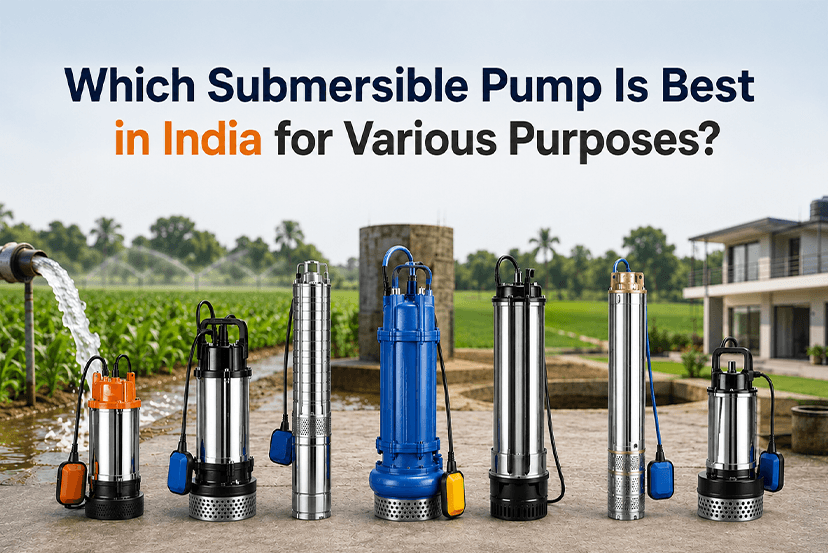
Which Submersible Pump Is Best in India for Various Purposes? (2026 Buying Guide)
Choosing the best submersible pump in India depends on the application rather than simply selecting the most expensive model. A pump designed for domestic water supply may not perform efficiently in agricultural irrigation or industrial wastewater handling. Factors such as water depth, discharge capacity, motor power, water quality, and energy efficiency play a significant role in selecting the right pump.
Submersible pumps have become the preferred choice across Indian households, farms, construction sites, commercial buildings, and industries because they operate underwater, deliver high efficiency, require minimal maintenance, and consume less electricity compared to traditional surface pumps.
This comprehensive guide explains which submersible pump is best for different purposes, compares major pump types, highlights top brands in India, discusses important buying factors, and provides an updated price guide to help you make an informed purchasing decision.
What Is a Submersible Pump?
A submersible pump is an electrically powered pump that operates while completely submerged in water or another liquid. Unlike surface pumps, it pushes water upward rather than pulling it, resulting in higher efficiency and lower energy loss.
Its sealed motor prevents water ingress, making it reliable for continuous operation in harsh environments.
Main Components
- Electric motor
- Pump impellers
- Diffusers
- Mechanical seals
- Cable joint kit
- Delivery outlet
- Suction inlet
- Pump casing
Why Are Submersible Pumps Popular in India?
The demand for submersible pumps has increased rapidly due to expanding agriculture, urban housing, groundwater dependence, and industrial development.
Key Benefits
- High pumping efficiency
- Lower electricity consumption
- Quiet operation
- No priming required
- Minimal maintenance
- Longer service life
- Compact installation
- Suitable for deep borewells
- Reliable during continuous operation
What are the different Types of Submersible Pumps?
1. Borewell Submersible Pump
These pumps are specifically designed for deep borewells and tube wells.
Best For
- Homes
- Apartments
- Villages
- Commercial buildings
- Farms
Features
- Multi-stage impellers
- High head pressure
- Slim design
- Deep installation
- Corrosion-resistant construction
2. Openwell Submersible Pump
These pumps work inside open wells, ponds, tanks, and reservoirs.
Best For
- Domestic water supply
- Small farms
- Hotels
- Residential societies
3. Agricultural Submersible Pump
Designed for heavy-duty irrigation.
Applications
- Drip irrigation
- Sprinkler systems
- Canal irrigation
- Farm water transfer
Available in:
- 3 HP
- 5 HP
- 7.5 HP
- 10 HP
- 15 HP
4. Sewage Submersible Pump
These pumps handle dirty water containing solids.
Used In
- Municipal drainage
- STPs
- ETPs
- Basements
- Commercial complexes
5. Dewatering Pump
Suitable for removing accumulated water quickly.
Applications
- Construction sites
- Mining
- Flood water removal
- Excavation projects
6. Industrial Submersible Pump
Heavy-duty pumps for continuous industrial operations.
Industries
- Chemical
- Textile
- Food processing
- Steel plants
- Power plants
- Manufacturing
Which Submersible Pump Is Best for Different Applications?
| Purpose | Recommended Pump Type | HP Range |
| Home water supply | Domestic borewell pump | 0.5–1 HP |
| Apartment | Borewell submersible | 1–3 HP |
| Agriculture | Agricultural pump | 3–10 HP |
| Drip irrigation | Multi-stage pump | 5 HP+ |
| Open well | Openwell submersible | 1–5 HP |
| Sewage | Sewage submersible | 2–20 HP |
| Construction | Dewatering pump | 2–15 HP |
| Industrial water transfer | Industrial pump | 5–50 HP |
Best Submersible Pump Brands in India (2026)
1. Kirloskar
Kirloskar is one of India’s oldest and most trusted pump manufacturers, offering a comprehensive range of submersible pumps for domestic, agricultural, and industrial use. Its pumps are known for their durability, high efficiency, and dependable performance even in challenging operating conditions.
Highlights
- Excellent energy efficiency
- Long service life
- Wide service and dealer network across India
- Suitable for homes, farms, and industries
- Corrosion-resistant construction
- Low maintenance requirements
- Available in multiple HP ratings
2. Crompton
Crompton is a leading electrical equipment brand that manufactures energy-efficient submersible pumps for homes, borewells, and agricultural applications. The company is known for incorporating advanced motor technology that ensures consistent water flow while reducing electricity consumption.
Best For
- Residential water supply
- Borewell installations
- Agricultural irrigation
- Apartments and housing societies
- Energy-conscious users
- Small commercial establishments
Key Features
- High-performance copper winding motors
- Compact and robust design
- Thermal overload protection
- Excellent after-sales service
- Low operating noise
3. CRI Pumps
CRI Pumps has earned a strong reputation for manufacturing technologically advanced pumping solutions with superior hydraulic efficiency. Its stainless steel submersible pumps are widely used in domestic, agricultural, and industrial sectors due to their excellent performance and durability.
Advantages
- High water discharge efficiency
- Low power consumption
- Stainless steel pump construction
- Advanced hydraulic design
- Corrosion and rust resistance
- Suitable for deep borewells
- Long operational life
4. Texmo
Texmo is one of the most preferred submersible pump brands among Indian farmers because of its rugged construction and dependable performance. The brand offers a wide variety of pumps suitable for irrigation, borewells, and domestic water supply.
Features
- Heavy-duty motors
- Reliable long-term performance
- Good spare parts availability
- Designed for continuous operation
- Efficient water delivery
- Easy maintenance
- Strong dealer network
5. Havells
Havells offers premium-quality submersible pumps that combine modern engineering with energy-efficient performance. Its pumps are suitable for residential buildings, villas, apartments, and light commercial applications, providing a reliable water supply with minimal maintenance.
Best For
- Domestic water supply
- Residential complexes
- Borewell applications
- Small commercial buildings
Key Features
- Premium build quality
- Energy-efficient motors
- Rust-resistant materials
- Quiet operation
- Thermal protection
- Easy installation
- Long service life
6. V-Guard
V-Guard has become a trusted name in residential pumping solutions by offering affordable, reliable, and energy-efficient submersible pumps. The brand focuses on delivering consistent performance with robust motor protection features.
Known For
- Durable copper-wound motors
- Energy-efficient operation
- Affordable pricing
- Residential water pumping
- Compact designs
- Low maintenance
- Reliable after-sales support
7. Shakti Pumps
Shakti Pumps is a leading manufacturer of solar-powered and energy-efficient pumping systems in India. The company is especially popular among farmers due to its innovative solar irrigation solutions and sustainable water management technologies.
Suitable For
- Agricultural irrigation
- Solar pumping systems
- Rural water supply
- Government irrigation schemes
- Commercial farming
Key Features
- Solar-compatible pumps
- High energy efficiency
- Stainless steel construction
- Environment-friendly operation
- Suitable for deep borewells
- Advanced hydraulic performance
8. Lubi Pumps
Lubi Pumps is known for manufacturing high-performance submersible pumps for industrial, commercial, and residential applications. Its pumps are designed to deliver consistent performance while handling demanding operating conditions.
Best For
- Industrial water supply
- Commercial buildings
- Agricultural irrigation
- Municipal water projects
Highlights
- Robust construction
- High pumping efficiency
- Corrosion-resistant materials
- Wide product range
- Low maintenance
- Reliable continuous operation
- Excellent service support
9. KSB Pumps
KSB Pumps is a globally recognized brand specializing in premium industrial pumping solutions. Its submersible pumps are engineered for heavy-duty applications and are widely used in infrastructure, wastewater treatment, and manufacturing industries.
Best For
- Industrial applications
- Sewage treatment plants
- Water utilities
- Construction projects
- Large commercial facilities
Key Features
- German engineering standards
- High operational efficiency
- Heavy-duty construction
- Excellent reliability
- Advanced hydraulic technology
- Long operating life
- Suitable for continuous-duty applications
10. Oswal Pumps
Oswal Pumps has rapidly established itself as a reliable manufacturer of agricultural and domestic submersible pumps. The company offers cost-effective pumping solutions with modern technology, making it a preferred choice for farmers and homeowners alike.
Best For
- Domestic water supply
- Agricultural irrigation
- Borewell applications
- Rural households
Highlights
- Competitive pricing
- Energy-efficient motors
- Durable construction
- High water discharge
- Easy installation
- Wide product availability
- Growing service network
How to Choose the Best Submersible Pump?
Before purchasing, consider the following factors.
1. Borewell Depth
Measure the total bore depth and static water level.
2. Water Requirement
Estimate daily consumption.
For example:
- Family of four: 700–1000 litres/day
- Small farm: 10,000+ litres/day
3. Motor Horsepower (HP)
General recommendation:
- Home: 0.5–1 HP
- Agriculture: 3–10 HP
- Industry: 5 HP and above
4. Flow Rate
Choose the required discharge measured in:
- Litres per minute (LPM)
- Litres per hour (LPH)
5. Total Head
Calculate:
- Vertical lift
- Pipe friction
- Delivery height
6. Power Supply
Available options:
- Single phase
- Three phase
7. Water Quality
If the water contains:
- Sand
- Mud
- Chemicals
- Sewage
Choose specialized pump models accordingly.
8. Material
Preferred materials include:
- Stainless steel
- Cast iron
- Bronze impellers
- Thermoplastic components
Submersible Pump Price in India (2026)
| Pump Type | Approximate Price Range |
| Domestic submersible pump | ₹4,000 – ₹12,000 |
| Borewell submersible pump | ₹8,000 – ₹35,000 |
| Openwell submersible pump | ₹7,000 – ₹30,000 |
| Agricultural submersible pump | ₹18,000 – ₹80,000 |
| Sewage submersible pump | ₹12,000 – ₹1,50,000 |
| Dewatering pump | ₹6,000 – ₹70,000 |
| Industrial submersible pump | ₹25,000 – ₹5,00,000+ |
Common Problems and Solutions
| Problem | Possible Cause | Solution |
| Low water flow | Clogged impeller | Clean pump |
| Pump not starting | Electrical fault | Check power supply |
| Excessive vibration | Worn bearings | Replace bearings |
| Dry running | Low water level | Install dry-run protection |
| High electricity bill | Incorrect pump sizing | Choose the correct HP |
| Motor overheating | Continuous overload | Reduce operating load |
Conclusion
Selecting the best submersible pump in India requires matching the pump’s specifications with your specific application rather than focusing solely on price or brand. Whether you need a compact pump for household water supply, a high-capacity model for agricultural irrigation, or a heavy-duty unit for industrial or sewage applications, understanding factors like borewell depth, discharge rate, motor power, and energy efficiency is essential.
Leading brands such as Kirloskar, Crompton, CRI, Texmo, Havells, V-Guard, Shakti Pumps, Lubi, KSB, and Oswal offer reliable solutions across different budgets and use cases. Investing in the right pump not only ensures a consistent water supply but also reduces maintenance costs, lowers electricity consumption, and provides dependable performance for years to come. If you are looking to procure pumps in bulk at the most reasonable prices, then you can partner with Moglis Business. We provide you with a complete range of pumps and motors at the best prices.
By evaluating your water requirements, installation conditions, and long-term operating costs, you can confidently choose a submersible pump that delivers the best value and performance for your home, farm, commercial establishment, or industrial facility.
Frequently Asked Questions (FAQs)
1. Which submersible pump is best for home use in India?
A 0.5 HP to 1 HP borewell or openwell submersible pump is generally suitable for most homes, depending on the borewell depth and daily water requirement.
2. Which HP pump is best for agriculture?
Most farms require 3 HP to 10 HP agricultural submersible pumps, though larger irrigation systems may need higher capacities based on the acreage and water source.
3. Which is better: openwell or borewell submersible pump?
An openwell submersible pump is ideal for open wells, ponds, and storage tanks, whereas a borewell submersible pump is specifically designed for deep, narrow borewells with higher lifting requirements.
4. How long does a submersible pump last?
With proper installation and regular maintenance, a quality submersible pump can last 8–15 years, depending on usage conditions and water quality.
5. What factors should I consider before buying a submersible pump?
Key considerations include borewell depth, total head, required flow rate, motor horsepower (HP), water quality, power supply (single-phase or three-phase), construction material, energy efficiency, and the availability of after-sales service.


 Back
Back