
Types of PVC Pipe Coupling and Fittings: Features, Importance, and Price Chart (2026 Guide)
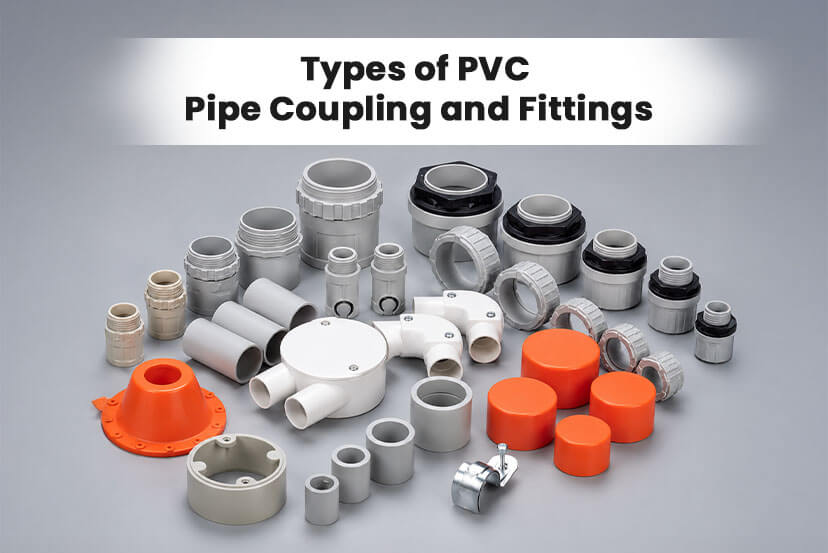
Types of PVC Pipe Coupling and Fittings: Features, Importance, and Price Chart (2026 Guide)
PVC (Polyvinyl Chloride) pipes have become one of the most widely used piping solutions across residential, commercial, industrial, and agricultural sectors. However, a PVC piping system is only as efficient as the PVC pipe fittings and couplings used to connect, divert, reduce, or terminate the pipeline.
Whether you’re installing a household water supply, irrigation system, drainage line, or industrial pipeline, selecting the right PVC pipe coupling and fittings ensures leak-proof performance, higher durability, and easy maintenance.
This comprehensive guide covers everything you need to know about PVC pipe fittings, including their types, features, applications, benefits, selection tips, and an updated PVC fittings price chart for 2026.
What Are PVC Pipe Couplings and Fittings?
PVC pipe fittings are specially designed connectors used to join multiple PVC pipes together or modify the direction and flow of water or other fluids. A PVC pipe coupling is one of the most common fittings used to connect two PVC pipes of the same diameter into a continuous pipeline.
Depending on the application, there are numerous fittings available for branching, reducing, capping, joining, and controlling water flow. PVC fittings are manufactured according to national and international standards to ensure proper sealing, pressure resistance, and long service life.
Why PVC Pipe Fittings Are Important
PVC fittings play a critical role in maintaining an efficient plumbing system. Their importance includes:
- Prevent water leakage
- Connect multiple pipe sections securely
- Enable easy maintenance and repairs
- Allow directional changes in pipelines
- Reduce installation time
- Improve overall pipeline strength
- Enhance water flow efficiency
- Increase the service life of plumbing systems
Features of PVC Pipe Couplings and Fittings
1. Corrosion Resistant: Unlike metal fittings, PVC does not rust or corrode, making it suitable for long-term water transportation.
2. Lightweight Construction: PVC fittings are significantly lighter than GI pipe or metal fittings, reducing transportation and installation costs.
3. Leak-Proof Connection: When installed using PVC solvent cement, the fittings create strong and watertight joints.
4. Chemical Resistance: PVC fittings withstand various chemicals, acids, alkalis, and salts, making them suitable for industrial applications.
5. High Durability: Quality PVC fittings can last more than 30–50 years under normal operating conditions.
6. Low Maintenance: PVC requires minimal maintenance throughout its lifecycle.
7. Smooth Internal Surface: The smooth inner wall minimizes friction loss and improves water flow efficiency.
8. Cost-effective: PVC fittings offer excellent value due to their affordability and long lifespan.
Types of PVC Pipe Couplings and Fittings
1. PVC Coupling
A PVC coupling joins two pipes of the same diameter in a straight line.
Applications
- Water supply
- Agricultural irrigation
- Residential plumbing
- Industrial pipelines
Features
- Strong connection
- Leak-proof
- Easy installation
- Available in multiple sizes
2. PVC Elbow
PVC elbows change the direction of water flow. Common angles include:
- 45°
- 90°
Applications
- Bathroom plumbing
- Drainage systems
- Industrial pipelines
3. PVC Tee
A PVC tee creates a branch connection from the main pipeline.
Applications
- Water distribution
- Irrigation systems
- Commercial plumbing
4. PVC Reducer
Reducers connect pipes of different diameters.
Applications
- Pressure adjustment
- Industrial process pipelines
- Municipal water supply
5. PVC Union
A union allows quick removal and reconnection of pipe sections without cutting.
Applications
- Pump installations
- Water treatment plants
- Maintenance areas
6. PVC End Cap
End caps seal the end of a pipeline.
Applications
- Temporary pipeline closure
- Water storage systems
- Testing pipelines
7. PVC Socket
Sockets connect two pipes using solvent cement.
Benefits
- Strong joint
- Simple installation
- Affordable
8. PVC Cross Fitting
A cross fitting connects four pipeline directions.
Applications
- Irrigation networks
- Industrial water systems
9. PVC Adapter
Adapters connect PVC pipes with threaded metal or CPVC components.
Types
- Male Adapter
- Female Adapter
10. PVC Ball Valve
Although technically a valve, it is commonly installed with PVC fittings.
Applications
- Water flow control
- Agriculture
- Swimming pools
- Industrial systems
Common Applications of PVC Pipe Fittings
PVC fittings are widely used in:
- Residential plumbing
- Commercial buildings
- Agricultural irrigation
- Borewell systems
- Water treatment plants
- Swimming pools
- Industrial process lines
- Chemical transportation
- Drainage systems
- Rainwater harvesting
Advantages of PVC Pipe Couplings and Fittings
| Feature | Benefit |
| Corrosion Resistance | Long lifespan |
| Lightweight | Easy transportation |
| Leak-proof Joints | Reduced water loss |
| Affordable | Budget-friendly installation |
| Smooth Interior | Better water flow |
| Chemical Resistant | Suitable for industries |
| Easy Installation | Saves labor cost |
| Durable | Low maintenance |
How to Choose the Right PVC Pipe Fittings
Before purchasing PVC fittings, consider:
Pipe Size: Always match the fitting size with the pipe diameter.
Pressure Rating: Choose fittings suitable for the operating pressure.
Application: Different fittings are designed for water supply, drainage, irrigation, or industrial use.
Material Quality: Buy ISI-certified PVC fittings from trusted manufacturers.
Type of Joint: Select between:
- Solvent Weld
- Threaded
- Compression
- Push-fit
Brand Reputation: Opt for reputed brands offering warranty and quality assurance.
PVC Pipe Coupling and Fittings Price Chart (2026)
| PVC Fitting Type | Approximate Price (₹) |
| PVC Coupling | ₹8 – ₹70 |
| PVC Elbow | ₹10 – ₹120 |
| PVC Tee | ₹15 – ₹150 |
| PVC Reducer | ₹20 – ₹180 |
| PVC Socket | ₹8 – ₹80 |
| PVC Union | ₹60 – ₹350 |
| PVC Adapter | ₹20 – ₹120 |
| PVC End Cap | ₹8 – ₹60 |
| PVC Cross | ₹40 – ₹250 |
| PVC Ball Valve | ₹120 – ₹900 |
Note: Prices vary depending on size, pressure class, manufacturer, and retailer.
Maintenance Tips for PVC Pipe Fittings
- Inspect joints periodically for leaks.
- Avoid excessive bending or mechanical stress.
- Use only the recommended PVC solvent cement.
- Protect outdoor pipes from prolonged UV exposure.
- Replace damaged fittings immediately.
- Clean pipelines regularly to prevent blockages.
Conclusion
PVC pipe couplings and fittings form the backbone of modern plumbing and piping systems. From simple couplings and elbows to reducers, tees, unions, and adapters, each fitting serves a specific purpose in ensuring a secure, leak-free, and efficient pipeline.
When selecting PVC fittings, always prioritize quality, pressure rating, compatibility, and certification. Investing in reliable fittings not only improves system performance but also reduces maintenance costs and extends the overall lifespan of the pipeline.
Whether you’re working on a home plumbing project, agricultural irrigation network, or industrial installation, choosing the right PVC pipe fittings will ensure long-term reliability, safety, and value for money.
Frequently Asked Questions (FAQs)
Which PVC fitting is used to connect two pipes?
A PVC coupling is used to join two pipes of the same diameter in a straight line.
What is the lifespan of PVC fittings?
High-quality PVC fittings typically last 30 to 50 years, depending on operating conditions and maintenance.
Are PVC fittings suitable for drinking water?
Yes. Food-grade and certified PVC fittings are commonly used for potable water supply systems.
What is the difference between a coupling and a union?
A coupling provides a permanent connection using solvent cement, while a union allows easy disassembly for maintenance without cutting the pipe.
Which PVC fitting is used to change pipe direction?
A PVC elbow, available in 45° and 90° variants, is used to change the direction of a pipeline.
Can PVC fittings be used for industrial applications?
Yes. PVC fittings are widely used in chemical processing, water treatment, irrigation, manufacturing plants, and industrial fluid transportation due to their corrosion and chemical resistance.
Top 10 Tips to Remove Air from Water Pipes: A Complete Guide for Smooth Water Flow
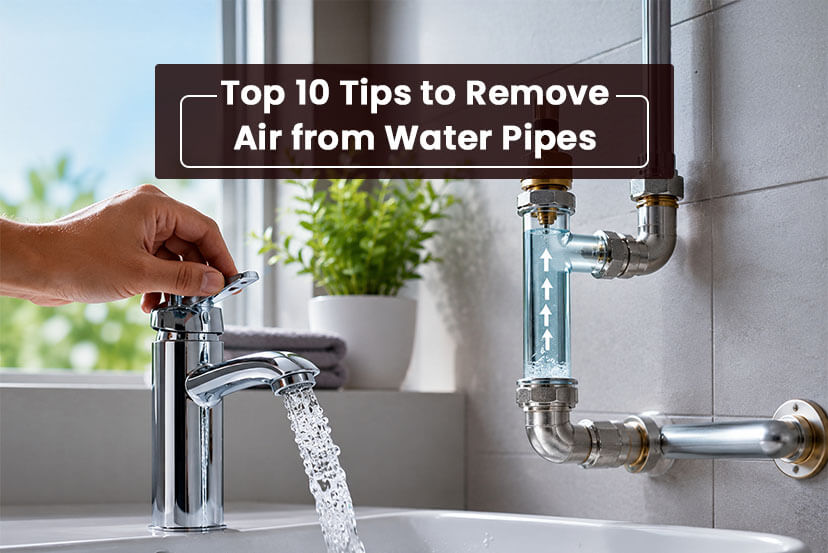
Top 10 Tips to Remove Air from Water Pipes: A Complete Guide for Smooth Water Flow
Air trapped inside water pipes is one of the most common plumbing problems in homes, apartments, commercial buildings, and industrial facilities. If you’ve noticed sputtering faucets, irregular water pressure, strange banging noises, or inconsistent water flow, chances are there is air in your plumbing system.
Although a small amount of air may seem harmless, prolonged air pockets can reduce the efficiency of your plumbing system, create pressure fluctuations, and even damage pumps and valves over time. In this comprehensive guide, we’ll explain why air gets trapped in water pipes, the symptoms, and the top 10 effective tips to remove air from water pipes safely and permanently.
Why Does Air Get Trapped in Water Pipes?
Several factors can introduce air into your plumbing system.
Common causes include:
- Water supply interruption
- New plumbing installation
- Pipe repairs or replacements
- Water pump maintenance
- Municipal water line servicing
- Empty overhead water tanks
- Leaking joints allow air entry
- Faulty pressure valves
- Improper pipe slopes
- Water hammer issues
Signs of Air in Water Pipes
Before fixing the issue, identify whether your plumbing system has trapped air.
Common symptoms include:
- Faucets sputter before water flows
- Water pressure suddenly drops
- Uneven water flow
- Gurgling sounds inside pipes
- Banging or knocking noises (water hammer)
- Air bubbles coming from taps
- The pump frequently loses prime
- Vibrating pipelines
How to Remove Air from Water Pipes: Top 10 Tips
1. Open Every Water Faucet
The easiest and most effective way to remove trapped air is by opening all faucets.
Steps:
- Turn off all water-using appliances.
- Start with the faucet on the lowest floor.
- Open every cold water tap.
- Then open every hot water tap.
- Allow water to flow continuously for 10–15 minutes.
- Close the taps after the water runs smoothly.
This process pushes trapped air out through the fixtures.
Best for: Homes, Apartments, Offices, etc.
2. Flush the Entire Plumbing System
A complete system flush helps remove stubborn air pockets.
How to do it
- Shut off the main water valve.
- Open all taps to drain the pipes.
- Wait until all the water has emptied.
- Turn the main supply back on slowly.
- Keep faucets open until a steady water flow returns.
Flushing refreshes the plumbing system and eliminates trapped air.
3. Start with the Lowest Faucet
Always begin bleeding air from the lowest point of your plumbing.
Why? Gravity helps force trapped air upward toward higher outlets.
Recommended sequence:
- Basement tap
- Ground floor
- First floor
- Upper floors
- Terrace connections
This method ensures maximum air removal.
4. Bleed Air from Outdoor Hose Bibs
Outdoor taps often become effective air release points.
Connect a garden hose and let water run for several minutes.
Benefits include:
- Faster air removal
- Better system flushing
- Reduced pipe vibration
This works especially well after municipal water supply interruptions.
5. Check the Water Pressure
Low water pressure often prevents trapped air from escaping.
Ideal household water pressure:
- 40–60 PSI (2.7–4.1 bar)
If pressure is too low:
- Inspect the pressure regulator.
- Verify municipal water supply.
- Check booster pumps.
- Ensure overhead tanks are adequately filled.
Proper pressure helps purge air naturally.
6. Inspect for Plumbing Leaks
Tiny leaks can continuously introduce air into your plumbing.
Inspect:
- Pipe joints
- Valves
- Pump connections
- Flexible hoses
- Water meter fittings
Repairing leaks prevents recurring airlock problems.
7. Prime the Water Pump
For homes using borewell or booster pumps, loss of pump prime often causes air entry.
Steps:
- Turn off the pump.
- Fill the pump casing with water.
- Remove trapped air.
- Restart the pump.
- Observe water flow.
A properly primed pump maintains consistent pressure.
8. Install Automatic Air Release Valves
Automatic air release valves remove trapped air without manual intervention.
Advantages:
- Continuous air removal
- Reduced maintenance
- Improved pump efficiency
- Lower noise levels
- Better pipeline performance
These valves are commonly used in:
- Commercial buildings
- Industrial pipelines
- Irrigation systems
- High-rise apartments
9. Inspect Water Heater Connections
Sometimes the air originates from the hot water system.
Check:
- Water heater inlet
- Expansion tank
- Pressure relief valve
- Hot water lines
Run only the hot water taps for several minutes. If sputtering disappears, the issue may be isolated to the water heater.
10. Call a Professional Plumber for Persistent Airlocks
If the problem keeps returning despite repeated bleeding, professional inspection is recommended.
Possible hidden causes include:
- Underground pipe leaks
- Damaged pressure-reducing valves
- Faulty check valves
- Air entering through the pump suction
- Improper pipeline design
- Hidden pipe damage
A licensed plumber can perform pressure testing and identify the root cause.
Common Mistakes to Avoid
Avoid these errors while removing air from water pipes:
- Opening only one faucet
- Turning the water pressure on too quickly
- Ignoring plumbing leaks
- Running pumps without priming
- Closing taps too early
- Overlooking the water heater
- Neglecting routine maintenance
These mistakes can leave air trapped inside the system or lead to recurring problems.
Benefits of Removing Air from Water Pipes
Removing trapped air provides several advantages:
- Restores consistent water pressure
- Eliminates sputtering faucets
- Reduces pipe noise and vibration
- Prevents water hammer
- Improves pump efficiency
- Protects plumbing fixtures
- Extends the lifespan of pipes and valves
- Enhances overall plumbing performance
Final Thoughts
Air trapped in water pipes is a common issue, but it is usually easy to resolve with the right approach. By opening all faucets, flushing the plumbing system, checking water pressure, inspecting for leaks, and maintaining pumps and valves, you can restore smooth, consistent water flow and prevent recurring airlocks. Regular maintenance and timely inspections not only improve plumbing performance but also help extend the life of your entire water supply system, ensuring reliable operation for years to come. If you are looking to buy top-quality pipes in bulk at the most reasonable prices for infrastructure projects, construction work, and residential projects, Business Moglix helps you in procuring them effortlessly.
Also read: https://business.moglix.com/blogs/top-10-cpvc-pipe-companies-in-india-comparison-and-latest-rank
Frequently Asked Questions (FAQs)
1. What causes air to get trapped in water pipes?
Air usually enters the plumbing system after water supply interruptions, plumbing repairs, new installations, pump maintenance, or through leaking pipe joints.
2. Can trapped air damage plumbing?
Yes. Persistent air pockets can cause water hammer, pressure fluctuations, increased pump wear, noisy pipes, and reduced plumbing efficiency.
3. How long does it take to remove air from water pipes?
In most residential systems, running all faucets for 10–20 minutes is enough to remove trapped air. Larger or more complex systems may require additional flushing or professional assistance.
4. Why is my faucet sputtering?
A sputtering faucet is one of the clearest signs of trapped air in the water line. The issue often resolves after bleeding the plumbing system.
5. Can low water pressure cause air in pipes?
Low pressure does not directly create air, but it can make it harder for trapped air to escape, allowing air pockets to persist longer in the plumbing system.
10 Types Of Pipes Used In Plumbing – Importance And Use Cases
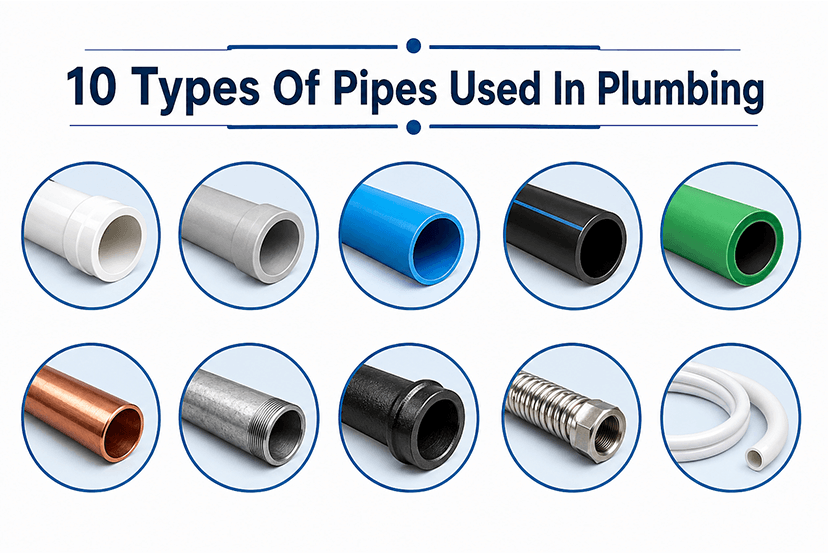
10 Types Of Pipes Used In Plumbing – Importance And Use Cases
Plumbing systems are a vital component of residential, commercial, and industrial infrastructure. Whether it is water supply, drainage, gas transportation, or waste disposal, selecting the right type of plumbing pipe plays a major role in ensuring durability, efficiency, and safety. Different types of pipes are designed for specific applications based on factors such as pressure resistance, corrosion protection, flexibility, and temperature handling capacity.
Today, the plumbing industry offers a wide range of pipe materials suitable for various use cases. Understanding the importance and applications of these pipes helps homeowners, contractors, builders, and businesses make informed decisions for long-lasting plumbing systems. It also helps in buying the right type of pipe used for various purposes in the plumbing process. However, businesses and industries looking to buy top-quality plumbing pipes at wholesale prices should consider Moglix Business as the right platform to procure them through a hassle-free process.
In this blog, we will explore the 10 most commonly used plumbing pipes, their importance, advantages, and ideal use cases.
Importance of Choosing the Right Plumbing Pipes
Selecting the correct plumbing pipe is crucial for maintaining a reliable and leak-free system. High-quality plumbing pipes help improve water flow, reduce maintenance costs, and ensure long-term durability.
Key Benefits of Using Proper Plumbing Pipes
- Ensures smooth water supply and drainage
- Prevents leakage and corrosion issues
- Enhances plumbing system lifespan
- Supports safe drinking water transportation
- Reduces maintenance and repair expenses
- Improves overall plumbing efficiency
Quick Look At The Types Of Plumbing Pipes You Must Know
Based on the importance and high prioritization by users, we have provided you with a list of 10 types of plumbing pipes, including their names, use cases, and advantages.
1. PVC Pipes (Polyvinyl Chloride Pipes)
PVC pipes are among the most widely used pipes in modern plumbing systems. These lightweight and cost-effective pipes are highly resistant to corrosion and chemical damage.
Importance of PVC Pipes
PVC pipes are preferred for their durability, affordability, and easy installation. They require minimal maintenance and offer excellent resistance against rust and scaling.
Use Cases of PVC Pipes
- Cold water supply systems
- Drainage and sewage systems
- Irrigation pipelines
- Underground water transportation
- Residential plumbing applications
Advantages
- Lightweight and easy to install
- Corrosion-resistant
- Affordable pricing
- Long service life
2. CPVC Pipes (Chlorinated Polyvinyl Chloride Pipes)
CPVC pipes are an upgraded version of PVC pipes designed to handle higher temperatures.
Importance of CPVC Pipes
These pipes are commonly used in hot and cold water supply systems because they can withstand high heat and pressure conditions.
Use Cases of CPVC Pipes
- Hot water plumbing systems
- Residential water supply lines
- Industrial liquid transportation
- Commercial plumbing projects
Advantages
- Heat resistant
- Durable and strong
- Easy joining and installation
- Low maintenance
3. Copper Pipes
Copper pipes have been used in plumbing for decades due to their excellent durability and reliability.
Importance of Copper Pipes
Copper is naturally resistant to bacteria and corrosion, making it ideal for clean water supply systems.
Use Cases of Copper Pipes
- Drinking water supply
- Hot and cold water systems
- HVAC systems
- Gas lines in some regions
Advantages
- Long lifespan
- Corrosion-resistant
- High-temperature tolerance
- Environmentally friendly
4. PEX Pipes (Cross-Linked Polyethylene Pipes)
PEX pipes are flexible plastic pipes increasingly used in modern plumbing systems.
Importance of PEX Pipes
These pipes simplify plumbing installation because of their flexibility and resistance to freezing temperatures.
Use Cases of PEX Pipes
- Residential water supply systems
- Underfloor heating systems
- Retrofitting old plumbing
- Hot and cold water lines
Advantages
- Flexible and easy to install
- Freeze-resistant
- Cost-effective
- Reduces leakage risk
5. Galvanized Steel Pipes
Galvanized steel pipes are steel pipes coated with zinc to prevent corrosion.
Importance of Galvanized Steel Pipes
These pipes were commonly used in older plumbing systems because of their strength and durability.
Use Cases of Galvanized Steel Pipes
- Water supply systems
- Outdoor plumbing applications
- Industrial water transportation
Advantages
- Strong and durable
- High impact resistance
- Suitable for heavy-duty applications
Limitations
- Can corrode internally over time
- Heavier than modern pipe materials
6. Cast Iron Pipes
Cast iron pipes are heavy-duty pipes mainly used for drainage and sewage systems.
Importance of Cast Iron Pipes
These pipes provide excellent soundproofing and high durability for underground installations.
Use Cases of Cast Iron Pipes
- Sewer lines
- Underground drainage systems
- Commercial buildings
- High-rise plumbing systems
Advantages
- Extremely durable
- Noise reduction properties
- Fire-resistant
7. ABS Pipes (Acrylonitrile Butadiene Styrene Pipes)
ABS pipes are black plastic pipes commonly used for drainage and vent systems.
Importance of ABS Pipes
ABS pipes offer high impact resistance and perform well in low-temperature conditions.
Use Cases of ABS Pipes
- Drain-waste-vent systems
- Underground drainage
- Residential plumbing systems
Advantages
- Lightweight
- Strong impact resistance
- Easy installation
8. HDPE Pipes (High-Density Polyethylene Pipes)
HDPE pipes are highly flexible and durable pipes used for large-scale water transportation.
Importance of HDPE Pipes
These pipes are known for their leak-proof joints, corrosion resistance, and ability to handle harsh environmental conditions.
Use Cases of HDPE Pipes
- Municipal water supply
- Gas distribution systems
- Industrial pipelines
- Agricultural irrigation
Advantages
- Highly durable
- Flexible design
- Chemical-resistant
- Long operational life
9. Stainless Steel Pipes
Stainless steel pipes are premium-quality plumbing pipes used in high-performance applications.
Importance of Stainless Steel Pipes
These pipes provide superior corrosion resistance and excellent strength in extreme environments.
Use Cases of Stainless Steel Pipes
- Industrial plumbing systems
- Chemical industries
- Coastal area plumbing
- High-pressure water systems
Advantages
- Corrosion-resistant
- Attractive appearance
- Strong and durable
- Heat resistant
10. Concrete Pipes
Concrete pipes are mainly used in heavy-duty underground drainage and sewage systems.
Importance of Concrete Pipes
These pipes are ideal for large-scale infrastructure projects due to their strength and load-bearing capability.
Use Cases of Concrete Pipes
- Stormwater drainage
- Sewer systems
- Municipal infrastructure
- Highway drainage projects
Advantages
- Extremely strong
- Long-lasting
- Suitable for underground installations
Factors to Consider While Choosing Plumbing Pipes
Selecting the right plumbing pipe depends on several important factors.
1. Pipe Material: Different materials offer different levels of strength, flexibility, and corrosion resistance.
2. Water Temperature: Hot water systems require heat-resistant pipes like CPVC or copper.
3. Pressure Capacity: Industrial and commercial systems often require high-pressure pipes.
4. Budget: PVC and PEX pipes are generally more affordable than copper or stainless steel pipes.
5. Installation Area: Underground, indoor, and outdoor applications require different pipe properties.
Applications of Plumbing Pipes Across Industries
Plumbing pipes are used in various sectors for different purposes.
| Industry | Common Pipe Applications |
| Residential | Water supply and drainage |
| Commercial | HVAC and plumbing systems |
| Agriculture | Irrigation systems |
| Industrial | Chemical and liquid transportation |
| Municipal | Sewage and water distribution |
Advantages of Modern Plumbing Pipes
Modern plumbing pipes are designed with advanced materials to improve performance and durability.
Major Benefits
- Better corrosion resistance
- Faster installation
- Improved water flow efficiency
- Reduced maintenance costs
- Longer operational lifespan
Conclusion
Plumbing pipes are the foundation of efficient water supply and drainage systems. From affordable PVC pipes to durable stainless steel and HDPE pipes, every type serves a specific purpose based on the application requirements. Selecting the appropriate pipe material helps enhance system efficiency, minimize repair costs, and ensure long-term reliability.
Whether you are planning a residential plumbing installation, an industrial pipeline setup, or a municipal drainage project, understanding the different types of plumbing pipes and their respective applications can help you make the best decision for your specific needs.
Frequently Asked Questions (FAQs)
What are the most common pipes used in plumbing?
PVC, CPVC, copper, PEX, and HDPE pipes are among the most commonly used plumbing pipes.
Which pipe is best for hot water supply?
CPVC and copper pipes are widely preferred for hot water applications due to their heat resistance.
Why are PVC pipes popular in plumbing?
PVC pipes are affordable, lightweight, corrosion-resistant, and easy to install.
What are HDPE pipes used for?
HDPE pipes are mainly used in water supply, gas distribution, irrigation, and industrial piping systems.
Which plumbing pipe lasts the longest?
Copper and stainless steel pipes are known for their long lifespan and durability.
Top 10 Stainless Steel Pipe Manufacturers in India 2026: SS Pipes Price, Weight Chart, And Grades
Top 10 Stainless Steel Pipe Manufacturers in India 2026: SS Pipes Price, Weight Chart, And Grades
Stainless steel (SS) pipes are among the most popular and demanding types of pipes used in various industries. They are known for offering corrosion resistance, longer lifespan, and durability, which makes them ideal for various construction projects like plumbing, chemical plants, the food and beverages sector, petroleum and crude oil, and many other infrastructure projects. As India is becoming the prime location and hub for industrial growth, the rise of stainless steel and tubes is also increasing at a continuous pace. To deal smoothly and fulfill the requirements of various industries, Moglix offers you a complete range of Stainless-steel pipes at the most affordable prices. If you are looking to buy stainless steel pipe in bulk from reputed and trusted manufacturers and suppliers, then Moglix is your reliable partner in this journey of SS pipe procurement.
However, before you plan to purchase, we have provided a comprehensive list of the top 10 stainless steel manufacturing companies in India for 2026, with price range, Weight chart, and Grades, making it easier to choose the right pipe.
What Are Stainless Steel Pipes?
Stainless steel pipes are strong and durable pipes made up of steel alloys that contain around 10.5% of chromium. This efficient and protective layer prevents rust and corrosion.
Key Features
- High corrosion resistance
- Long service life
- High strength and durability
- Low maintenance
- Heat resistance
Check Out the Top 10 Stainless Steel Pipe Manufacturers In India 2026
We have compiled the list of the top 10 stainless steel pipe manufacturers in India for 2026 based on their customer reviews, loyalty, and range of products. Let’s have a quick look at them:
- Jindal Stainless Limited
Jindal stainless steel pipes are one of the most popular and are trusted by many buyers. Jinsal Stainless is one of th leading manufacturers of stainless-steel pipes in India and offers a wide range of SS pipes like seamless, ERW pipes, Welded and grades, like 304, 316, and duplex.
- Tata Steel
Tata is another Indian most trusted brand in India. It manufactures a wide range of stainless (SS) steel for different types of construction, industrial, and engineering projects. They offer premium quality products with durability.
- APL Apollo Tubes
ALP Apollo is widely popular for offering top-quality steel pipes and tubes. The company mainly focuses on serving infrastructure nd fabrication projects with effective prices.
- Ratnamani Metals & Tubes
Ratnami is one of the leading brands manufacturing alloy and stainless-steel pipes. The brand prioritizes various sectors like oil and gas, power industries, and petrochemicals. You can opt for this brand or their specialization in seamless pipe designs.
- Salem Steel Plant
This brand is operated by SAIL and produces a large amount of top-quality SS pipes and sheets. They are known for manufacturing industrial-grade pipes with durability and strength.
- Venus Pipes & Tubes
If your requirement is for welded and seamless steel pipes at the most affordable prices, then you can also opt for the Venus brand, which majorly serves various industries like Chemical, power plants, and engineering.
- Suraj Limited
Suraj Limited specializes in stainless steel welded and seamless pipes, particularly used in the food processing and pharmaceutical industries.
- Maharashtra Seamless Limited
This company is known for producing seamless pipes used in oil, gas, and industrial applications.
- ISMT Limited
ISMT manufactures stainless steel and alloy steel pipes used in the engineering and infrastructure sectors.
- Sachiya Steel International
Sachiya Steel produces high-quality stainless-steel pipes and fittings for domestic and export markets.
Look At the Prices of Stainless-Steel Pipe in India
The price of SS pipes depends on grade, thickness, diameter, and finishing type.
Average Price Per Kg
| Grade | Price Range |
| SS 202 | ₹120 – ₹160/kg |
| SS 304 | ₹180 – ₹250/kg |
| SS 316 | ₹250 – ₹350/kg |
Understand the Stainless-Steel Pipe Weight Chart Precisely
Below is a general weight chart for SS 304 pipes.
Pipe Weight Per Meter (Approx)
| Size | Weight (kg/m) |
| ½ inch | 0.8 – 1.2 kg |
| ¾ inch | 1.0 – 1.6 kg |
| 1 inch | 1.3 – 2.5 kg |
| 1.5 inch | 1.9 – 4.0 kg |
| 2 inch | 2.5 – 6.0 kg |
The weight varies based on pipe thickness and schedule.
What are the Types of Stainless-Steel Pipes?
There are different types of stainless-steel pipes. Look at them to understand properly:
Seamless Pipes: This type of stainless-steel pipe is engineered and crafted without any welding joints. They are known for offering high strength, making them ideal for high-pressure applications.
Welded Pipes: This type of SS pipes are manufactured by rolling the sheets and welding them together. They are often effective and generally used in plumbing processes.
ERW Pipes: These types of SS pipes are widely used in structural applications.
Common Stainless Steel Pipe Grades
1. SS 202
- Low cost
- Moderate corrosion resistance
- Used in furniture and railing
2. SS 304 (Most Popular)
- Excellent corrosion resistance
- High durability
- Used in the food industry, plumbing, and construction
3. SS 316
- Highly corrosion-resistant
- Best for the marine and chemical industries
4. Duplex Steel
- High strength
- Used in offshore and oil industries
Conclusion
In India, the construction industry is booming continuously, and the requirement for stainless steel pipe is also increasing due to its multiple use cases. SS pipes remain an essential part of the various construction sectors due to their durability and corrosion resistance. If you are looking to buy stainless steel in bulk, Moglix is the right platform to partner with. At our online shopping platform, you can purchase and procure SS pipes from various reputed manufacturers at the most competitive prices.


 Back
Back