
Lessons and Insights From HR Leaders During Pandemic
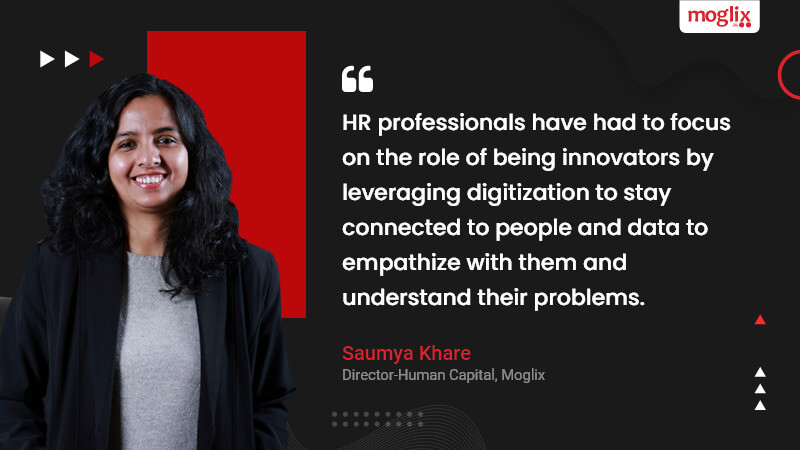
Lessons and Insights From HR Leaders During Pandemic
On the occasion of International Human Resources Day, Read some interesting insights from the leading HR professionals of India Inc. and the lessons learned from the last 1.5 years, since the pandemic struck.
Read MoreMoglix: How Rahul Garg built an unexpected unicorn
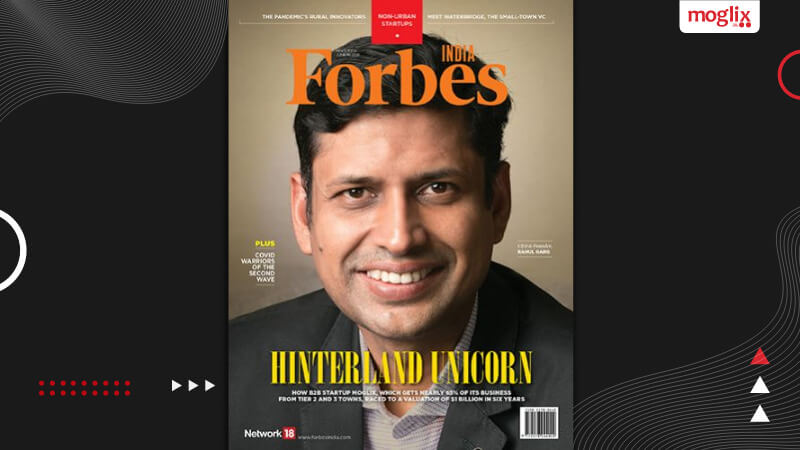
Moglix: How Rahul Garg built an unexpected unicorn
This fortnight, Forbes India has covered an inspiring story of Mr. Rahul Garg and his journey of building an unexpected unicorn. Six-year-old Moglix, which gets nearly 65 percent of its business from Tier II and III towns helps over 500,000 small & medium-sized businesses procure industrial goods.
During the first wave, Moglix did its bit to supply PPE kits and N95 masks, and in the devastating second wave, it managed to procure some 6,000 oxygen concentrators; the startup reckons it has touched half a million lives through these devices. Of course, there’s more to Moglix than Covid-19 relief, deep-dive, into the fascinating story of this B2B venture that has raised $220 million in funding so far written by Manu Balachandran, turn to page 24 of Forbes June’2021 edition.
Read MoreMoglix becomes Latest Startup to Join the Unicorn Club
Moglix becomes Latest Startup to Join the Unicorn Club
Moglix, a B2B e-commerce platform for manufacturing goods, has raised $120 million as a part of its latest series E funding round, led by Falcon Edge Capital and Harvard Management Company (HMC), taking the overall valuation of the company to $1 billion.
Existing investors Tiger Global, Sequoia Capital India and Venture Highway also participated as part of this round.
This is almost a three-time jump in valuation for the company which had last raised $60 million in July 2019, at a valuation of $200 million-$300 million.
Read: Moglix launches supply chain finance platform Credlix
With the current equity infusion, the total funds raised till date by Moglix stands at $220 million.
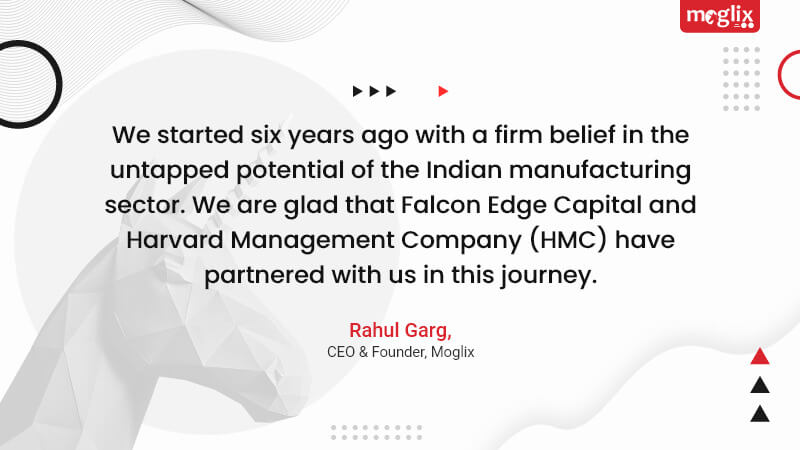
“We started six years ago with a firm belief in the untapped potential of the Indian manufacturing sector. We are glad that Falcon Edge Capital and Harvard Management Company (HMC) have partnered with us in this journey. Falcon Edge, with its deep roots in the Middle East and Europe and an understanding of public companies will guide us through the next phase of our journey,”
said Rahul Garg, founder and chief executive officer, Moglix.
The six year old startup provides manufacturers with industrial goods through its e-commerce platform, and is building an operating system for manufacturing that provides its customers a full stack service covering procurement, packaging, supply chain financing and highly integrated software.
Read MoreStartups fight COVID-19: Moglix fights against India’s oxygen crisis
Startups fight COVID-19: Moglix fights against India’s oxygen crisis
As India battles the deadly second wave of the COVID-19 pandemic, startups, corporates, and individuals are all rallying together to ensure that they are doing their bit. The biggest challenge in the second wave is the dearth of oxygen cylinders along with crucial medicines.
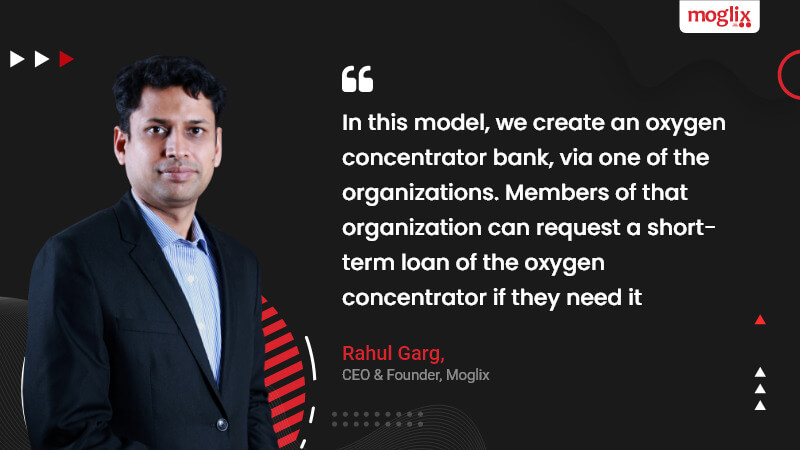
“We estimate the need for at least 100,000 oxygen concentrators across India. However, each person buying an oxygen concentrator for themselves is not scalable and will lead to inefficient distribution of precious resources. Most people will find the cost prohibitive and the requirement short-lived (one to two weeks),”
Rahul says.
B2B ecommerce startup Moglix has been supplying PPE, oxygen concentrators, oximeters, thermometers etc. to essential goods and services companies to ensure their employees are protected. It has also distributed 15 million+ PPE kits and safety items amid this pandemic.
The startup has developed a “group sharing model” for increasing the impact of every oxygen concentrator by 100x, and is enabling organisations, NGOs, trusts, and RWAs to create oxygen concentrator banks for patients and providing a safety net for their communities.
Read More“If your organisation would like to join us in this mission to provide a safety network to corona warriors, please write to us at info@moglix.com. We can help you set up similar network-based models for your organisation and share our learning/ SOPs. Let us come together to do our bit in this fight,”
Rahul Adds.
Rise of Artificial Intelligence in Human Resource Management
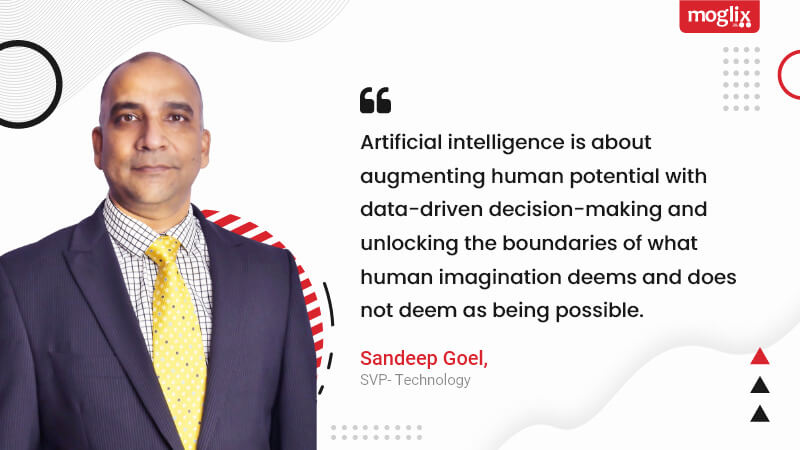
Rise of Artificial Intelligence in Human Resource Management
Human resource management’s future lies in making the business function…Read More
Supply Chain Finance Automation Fast-Tracks MSME Payments
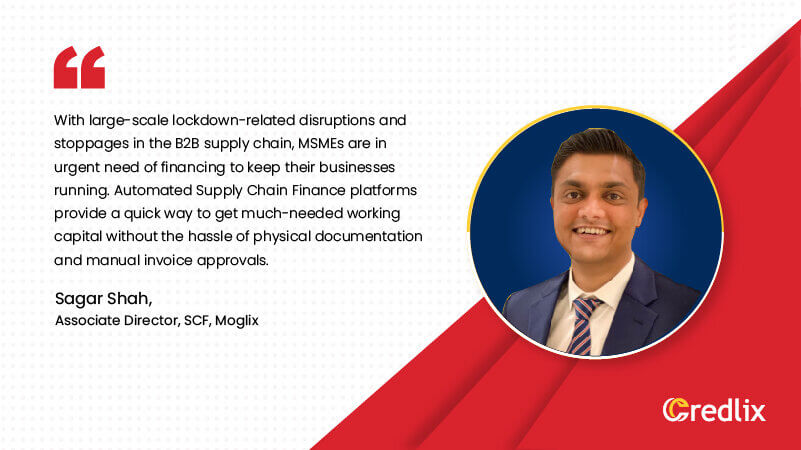
Supply Chain Finance Automation Fast-Tracks MSME Payments
Did you know only six crore MSMEs in India account for 29 peancing? What does…Read More
Creating a 100x Impact of Oxygen Concentrators
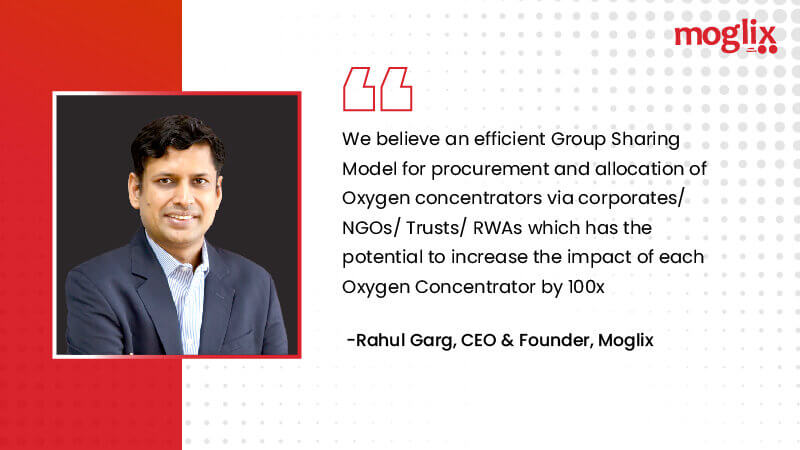
Creating a 100x Impact of Oxygen Concentrators
As hospitals struggle with bed and oxygen availability, Oxygen concenhome/ clinic care….Read More
The PLI scheme will facilitate bulk order generation for MSMEs
The PLI scheme will facilitate bulk order generation for MSMEs
The manufacturing supply chain in India is witnessing a rebound within a year of the announcement of the Productivity Linked Incentive scheme for 13 sub-sectors. Envisaged at an outlay of Rs 145,000 crores, the scheme is expected to recharge job growth and manufacturing output. It has already attracted investment proposals worth Rs 5100 crores in pharmaceuticals and another Rs 11000 crores in large-scale electronics manufacturing. These numbers reflect a robust takeoff for the scheme despite a very challenging business climate due to the pandemic.
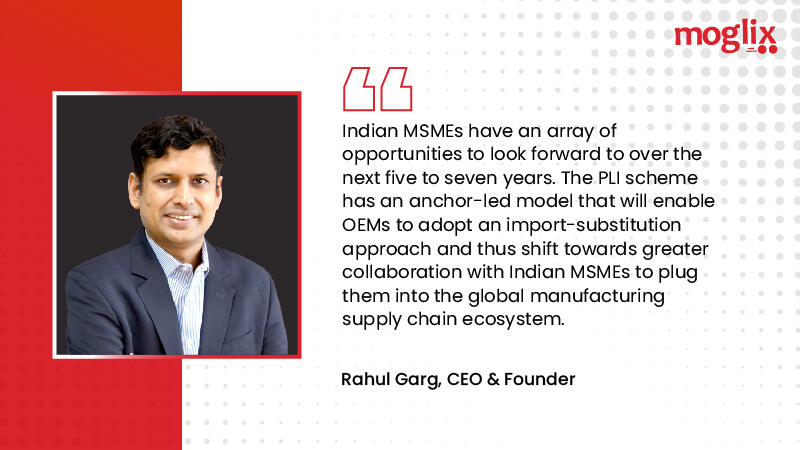
Indian MSMEs have an array of opportunities to look forward to over the next five to seven years. The PLI scheme has an anchor-led model that will enable OEMs to adopt an import-substitution approach and thus shift towards greater collaboration with Indian MSMEs to plug them into the global manufacturing supply chain ecosystem.
Backward Linkages Will Pass-Through Incentives to MSMEs
The PLI scheme envisages an annual increment in sales of goods made in India and minimum capital investment caps as the two factors for identifying the beneficiaries. The uniqueness of the PLI scheme’s systemic design will nudge large OEMs towards local sourcing for greater “Made in India” capacity utilization of Indian MSMEs and foster strong OEM-MSME partnerships. The supply chain collaboration will ensure a pass-through of the 4-6 percent cost cushion to MSMEs in the short-term, helping them develop cost competitiveness in the long run.
Moglix amongst Deloitte’s 2020 Technology Fast 50 India list for the 3rd time in a row
Moglix amongst Deloitte’s 2020 Technology Fast 50 India list for the 3rd time in a row
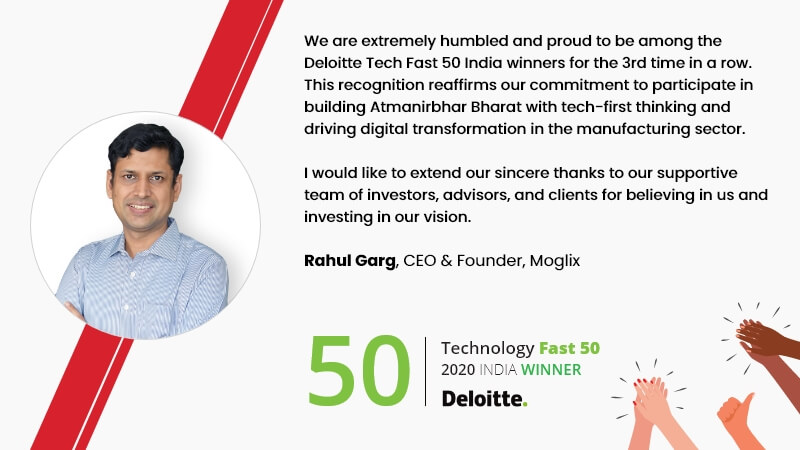
Moglix has again secured a spot in Deloitte’s 2020 Technology Fast 50 India list for the 3rd time in a row. Securing the 1st spot in 2018 with a winning growth rate of 11,836%, our growth record has remained unbeatable in the last 3 years.
Deloitte Technology Fast 50 India programme that started in 2005 has now become a pre-eminent event that recognises excellence in technology in India. The programme recognises, honours, and encourages businesses and entrepreneurs who have achieved remarkable revenue growth rates by harnessing technology, innovations, and skilled human resources.
Moglix is proud to share this achievement with fellow tech disruptors like Urban Company, Rupeek, RateGain, DataBeat, Razorpay, Vedantu, and many others for being the fastest tech-enablers in the country.
Read MoreHow Technology is Accelerating Value Creation in the Manufacturing Sector
How Technology is Accelerating Value Creation in the Manufacturing Sector
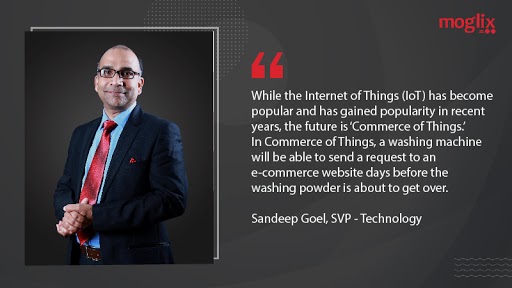
Sandeep Goel, SVP- Technology shares his thoughts on how technology will pave the way for a futuristic manufacturing sector, at the Future Of Work Summit organized by YourStory.
He talks about the impact of COVID-19 and how it transformed the manufacturing sector in India. The pandemic accelerated the shift that Make in India has enabled in the sector, bringing about transformations, both physical and digital, boosting the self-reliance of India’s manufacturing sector.
Sandeep outlined key challenges that continue to persist in the sector, highlighting the need for streamlining order processing, and transaction data integration, and lack of intuitiveness when it comes to the application ecosystem.
He highlighted the role of technology in altering the future of manufacturing. How rapid advancements in digital technologies are revolutionizing business supply chains, and are poised to transform how the procurement function delivers value and enables swift decision-making in the ecosystem. He also talked about the need for constant connectivity as the norm, and how sensors are bringing devices and machines to life in the Internet of Things.
Read More


 Back
Back