
Building Quietly at Scale: Moglix’s Journey to a $700 Mn B2B Marketplace
Building Quietly at Scale: Moglix’s Journey to a $700 Mn B2B Marketplace
In Inc42, Rahul Garg reflected on Moglix’s journey, underscoring disciplined execution, strong unit economics, and deep supplier integration as the foundation for sustainable growth.
Procurement Challenges in Building EV Battery Supply Chains

Procurement Challenges in Building EV Battery Supply Chains
It is not an exaggeration to term electric vehicles as the ones transforming the global automobile scene. Over the last five years alone, the market for EVs has transitioned from niche to mass. The International Energy Agency records that EV sales passed the 14 million mark in 2023, nearly double their level in 2021. That’s not a modest change; it is a revolution in the way the world perceives mobility.
But underneath each EV driving down the street is a tale of ruthless supply chain stress. Unlike traditional cars, where steel, plastics, and electronics hold sway in procurement, EV manufacturing is rooted in batteries. And batteries are voracious consumers of resources. They demand lithium, cobalt, nickel, and graphite, minerals that are unevenly dispersed across the globe. Consequently, procurement executives have the dual challenge of obtaining sufficient supply and doing so in a manner that is cost-efficient, ethical, and resilient.
Here, in this blog, we are going to discuss the special procurement issues in EV battery supply chains, from raw material shortages to sustainability, and how businesses are coping with this changing world.
Grasping the EV Battery Supply Chain
In an effort to better grasp the procurement puzzle, it is beneficial to first consider how EV batteries are assembled.
An average battery pack consists of cells, modules, and packs. The most complicated part of it all is the cells. They are dependent on a combination of cathodes, anodes, separators, and electrolytes. All these need particular materials. The cathodes, for example, require lithium and nickel; anodes are constructed from graphite.
It begins in mining, proceeds to refining, proceeds further to chemical processing, and then goes to cell and pack assembly. Procurement is absolutely essential at every step. If there is a shortage of mining capacity, or refining is geographically aggregated, then procurement groups have to work their way out by finding alternatives or negotiating long-term agreements.
What sets this supply chain apart from the norm in the traditional automotive world is its fragility. However, steel or aluminum from multiple global suppliers can be easily obtained, while battery-grade lithium or cobalt is much more concentrated, often in politically unstable or geographically limited regions.
Challenges in EV Battery Supply Chains for Procurement
Procurement teams in this domain do not merely buy materials but are stepping into a minefield of risks. Some of the greatest challenges are:
1. Shortages and Price Fluctuations
Lithium has been referred to as the “white gold” of the EV era, and for a good reason. Prices have skyrocketed between 2020 and 2022 before tempering down, but the underlying problem persists: demand is increasing faster than supply. A new mine for lithium can take close to a decade to come online, with automakers bringing new EV models to market every year. This mismatch creates cost predictability nightmares for procurement leaders.
2. Converged Supply Chains
More than 70% of EV battery manufacturing is done in China. That level of concentration is effective from a manufacturing perspective but dangerous from an acquisition point of view. Any geopolitical strain, trade restriction, or domestic interruption can have far-reaching effects across the world, exposing manufacturers to vulnerabilities.
3. Long Lead Times
Unlike with conventional auto components, which generally can be procured in a hurry, EV battery materials are long-range. Approvals to mine, facilities to refine, and gigafactory expansion all have multi-year schedules. For procurement buyers, this entails planning decades in advance, in some cases making gambles on technologies and suppliers that won’t deliver for years.
4. ESG and Ethical Issues
No EV maker would want to sell “green” vehicles manufactured using materials associated with child labor or ecologically harming the environment. But this is a genuine fear, particularly with regards to cobalt mining in the Democratic Republic of Congo. Procurement professionals are compelled to trace and certify sourcing, balancing commercial requirements and ethical considerations.
5. Logistics and Transportation
Batteries are heavy, bulky, and hazardous materials due to their flammability. Shipment across continents entails specialized care and strict mandatory requirements. This imposes another level of expense and complexity that procurement teams have to contend with.
Sustainability and Circular Procurement
There is another dimension to procurement in EV supply chains: sustainability. There are increasing demands from regulators, investors, and customers for cleaner solutions. For procurement teams, this is not a “nice to have”; rather, it is fast becoming a compliance requirement.
One such promising sector is circular procurement. Rather than using virgin mining, firms are going in for recycling. Recycling EV batteries at the end of their life are being stripped down, and major metals like lithium, cobalt, and nickel are recovered for reuse. Recovery rates as high as 95% for major materials have been estimated by some studies.
In tandem, “second-life” uses are being developed. Batteries that are no longer up to scratch for EVs can be used for stationary energy storage applications, like backing solar farms or balancing power grids. That minimizes waste and increases the choice procurement teams have in sourcing practices.
By integrating circularity into procurement, businesses are able to decouple themselves from raw material scarcity while still meeting sustainability objectives. The EU Battery Regulation is already moving in this direction, requiring recycled content in new batteries, which is where the global market is going.
Increasing Competition Among OEMs for Battery Supply
If procurement issues were not complicated enough, competition between automakers makes it more difficult. It’s a regular sprint with every major OEM in the race: Tesla, BYD, Volkswagen, General Motors, Hyundai, and several dozen others. The truth is that battery availability is limited, and the large players are moving quickly to acquire it.
Tesla, for example, has entered into multi-year deals directly with Australian lithium miners. Volkswagen has taken stakes in cell production joint ventures in Europe. Chinese giants such as BYD are integrating vertically, from mining through to finished cars.
This race for military equipment is detrimental to smaller automakers and startups. They lack the volume or budgetary strength to secure supply commitments.
Procurement teams in these organizations must think out of the box!!
Moglix Business specializes in tech-enabled B2B procurement and supply chain solutions, offering MRO sourcing, custom manufacturing procurement, and infrastructure industry supplies to enterprises. Their digital transformation capabilities directly address EV battery supply chain procurement challenges through vendor consolidation, complete visibility dashboards, tech-enabled tracking, and integrated procurement platforms that enable predictability, cost efficiency, and agility at scale for complex manufacturing supply chains like those required in EV battery production.
Margin Protection via Site Aggregation: How Procurement Drives Profitable Growth

Margin Protection via Site Aggregation: How Procurement Drives Profitable Growth
Construction companies across India are fighting a tough battle. Project bids are becoming razor-thin, material prices keep climbing, and clients still expect the same quality at the lowest possible cost.
For companies that are working on large-scale projects, even a small increase in their input cost % can turn their profitable contract into a financial burden.
Take an example, a contractor whose firm bagged three highway projects in different states. They ordered steel; in one state, it was more expensive than in another. Cement was procured during a price hike, and logistics costs ballooned because trucks were traveling half-empty. The company delivered the projects, but the margins were almost gone.
This story is more common than many admit. The root cause is simple: most firms still treat each site as its own procurement unit. It feels natural since projects vary in timelines and needs. But this approach quietly drains profitability.
The smart players are shifting to a different approach. They are aggregating material demand across multiple sites and negotiating as one large buyer. This approach to site aggregation is helping contractors protect their margins and turn procurement into a real profit driver.
In this blog, we’ll find out how the procurement teams can protect margins through site aggregation and drive profitability in projects.
The Margin Pressure in Large Projects
Step into any contractor’s office today, and the frustration is the same. Here are some
1. Clients push for the lowest bids while still demanding top-quality materials.
2. Commodity prices for steel, cement, and fuel swing unpredictably.
3. Skilled labor is harder to find and more expensive to retain.
Now imagine these pressures multiplied across multiple project sites. A company running housing projects in three cities may source cement separately at each location. One site negotiates with a local supplier and pays a fair price. Another, short on time, accepts higher rates. A third places an order during a price surge and pays even more. By the end of the quarter, the same company had paid three different prices for essentially the same material.
That’s not all. With separate orders, purchase volumes are smaller, which means weaker bargaining power with suppliers. Each site builds its own vendor relationships, doubling administrative work. Different suppliers provide varying material grades, raising the risk of quality mismatches. And then there’s logistics: one truck goes out half-full to Site A, while another makes a nearly identical journey to Site B the very next day.
The combined effect is brutal. What looked profitable during bidding becomes a struggle to break even once fragmented procurement costs add up.
What is Site Aggregation in Procurement?
Site aggregation flips this fragmented model on its head. Instead of treating every project as a standalone buyer, companies combine demand across all sites and negotiate centrally.
Think of it like pooling your shopping list with neighbors. Instead of each person going to the market and paying retail prices, everyone combines their list, buys wholesale, and saves more.
In infrastructure, the difference is enormous. Imagine a company constructing ten highway stretches across states. If each site orders 100 tons of steel separately, suppliers see them as small customers. But if procurement aggregates the demand into a 1,000-ton order, the company suddenly has leverage. Suppliers not only offer better rates but also prioritize deliveries for such a large, steady client.
Site aggregation can be done in stages. Some firms start small, aggregating within one region. Others combine demand by material type, like steel or cement, across sites. The most advanced treat their entire portfolio as one coordinated procurement operation.
Why Site Aggregation Protects Margins?
The power of site aggregation lies in the cumulative benefits it creates:
1. Volume pricing power
Bigger orders secure better discounts. A company sourcing 500 tons of steel in one go can save 5–15% compared to fragmented orders. Those savings directly strengthen margins.
2. Smarter logistics
Instead of each site arranging separate deliveries, suppliers plan efficient routes that serve multiple sites. This cuts per-ton transport costs by 20–30% and reduces empty return trips.
3. Reliable suppliers
Suppliers prioritize larger and predictable contracts. Aggregated demand locks in their commitment to delivery schedules, reducing costly site delays.
4. Leaner inventory
Instead of every site keeping a separate buffer stock, companies can optimize inventory across projects. Excess from one site can be shifted to another, reducing waste and carrying costs.
5. Stable pricing
Centralized contracts shield companies from sudden price spikes. All sites pay the same negotiated rate, bringing predictability into cost planning.
Best Practices for Implementing Site Aggregation
Shifting to site aggregation isn’t as simple as pooling orders. It requires process discipline and the right tools. Successful companies follow a few best practices:
1. Classify materials smartly: Standard materials like steel, cement, and aggregates are perfect for aggregation. Specialized, site-specific items may still need local sourcing.
2. Forecast demand centrally: Gather needs from every location and input them into a single demand plan. Continuously update as project timelines change.
3. Facilitate cross-site sharing: Establish simple policies for redistributing surplus material from one site to another to minimize waste.
4. Train site teams: Site supervisors and managers should know how central procurement impacts their schedules and how to coordinate accordingly.
5. Leverage digital platforms: Manual tracking isn’t going to work. Digital procurement systems provide visibility across locations, automate consolidation, and enable simple monitoring of supplier performance.
Procurement as a Profit Driver
For decades, procurement was seen as a cost center, a function that cut purchase orders and managed invoices. Site aggregation is showing companies that procurement can be a strategic profit lever.
By concentrating spending, procurement teams are able to gain negotiating leverage, level out cash flows, and minimize waste. They create more robust relationships with suppliers that extend beyond transient price negotiations. Senior leaders are beginning to hold procurement accountable not only for cost avoidance but also for its direct effect on the profitability of projects.
Together with Moglix, discover how much margin your company could safeguard if all project sites were bought smarter.
Moglix Business accelerates margin protection and revenue growth for businesses through site aggregation in procurement, allowing cost savings across multiple project locations, supplier consolidation, and landed cost optimization. Our technology-enabled solutions accelerate supply chain visibility and simplify buying, allowing clients to attain greater margins and sustainable expansion while minimizing leakages and procurement expenses.
Tooling Procurement in Automotive: Why It’s Different From Other Industries
Tooling Procurement in Automotive: Why It’s Different From Other Industries
If you’ve ever wondered why buying tools and equipment for car manufacturing feels like a whole different ball game compared to other sectors, you’re about to find out.
On the surface, procurement seems like an easily understood process: you require tools, so you buy them. Fortunately, tooling procurement in the automotive sector is a complex process driven by specific requirements, time constraints, and risk factors.
In this blog, you’ll understand why this process is special and what it means for manufacturers passing through this extremely important phase.
Understanding Tooling Procurement in Automotive
Each car on the highway starts life in a factory, formed and assembled using very specialized tools. In the auto industry, “tooling procurement” is the purchasing and management of the dies, molds, jigs, fixtures, and cutting tools that allow mass production. Different from general-purpose equipment, these tools are designed to precise tolerances to accommodate the tight tolerances and repetitiveness of vehicle production.
The contribution of tooling to the car lifecycle is indispensable. It starts at the design stage, where prototypes are produced with the help of custom-made molds and jigs. After a design is settled, mass production needs a huge set of tools that can manufacture millions of identical pieces with consistent quality. From the blanking literature that forms sheet metal panels to the injection molds for dashboards and assembly line fixtures, all phases in the automotive production process rely on successful automotive tooling procurement. Without strong planning and dependable suppliers, the best new car design can’t reach the shop floor.
Differences Between Automotive and Other Industries
On the surface, tooling buying may be no different from one industry to another. The auto industry has some unique characteristics that differentiate it from other industries:
1. Production Scale and Volume
Automotive production is characterized by bulk, repetitive manufacturing. Automakers consistently make hundreds of thousands, if not millions, of the same units yearly. The tooling necessary must thus endure extended usage while producing uniform results. The aerospace industry, on the other hand, works in smaller numbers and extended cycles of production, where the focus is more on precision at the limits rather than volume.
2. Speed of Design Cycles
The car industry brings new models or versions every two to three years, with the need for constant retooling. Every new release requires new dies, molds, and fixtures that conform to the new designs. Compared to business areas like construction equipment or heavy machinery, they might use the same tooling for a decade or even more.
3. Regulatory and Safety Standards
Automotive tooling must adhere to highly stringent global standards, such as ISO 26262 and IATF 16949, that specify quality management and operating safety. These standards make procurement even more difficult, compelling vendors to prove compliance at every stage. On the contrary, the criteria for compliance are less stringent for consumer goods or smaller industrial businesses.
4. Tiered Supplier Ecosystem
In the automotive industry’s tiered supply chain model, finished equipment are delivered by Tier 1 vendors, sub-tools by Tier 2, and lastly, the raw materials by Tier 3 suppliers. Due to the layered model in the procurement of tooling, it gets more challenging, as the procurement needs to be executed and planned across many distinct sectors, regions, and time intervals.
Special Challenges in Automotive Tooling Procurement
The automotive manufacturing process generates a number of procurement challenges that are less evident in other industries.
1. Heavy Capital Investment
Tooling for a new automobile model can cost millions, including not only tools but design, prototype, and testing. Controlling this expense is important through close supplier assessment, fiscal planning, and tight budgeting to avoid cost overrun.
2. Lead Time Constraints
Accuracy tooling, such as dies and molds, may take months to manufacture. Automotive companies have to coordinate procurement with rigorous production plans, with little space for delays or mistakes that can delay launches and cause serious financial damage.
3. Supply Chain Risks
Many automakers depend on international tooling vendors. This makes their production vulnerable to geopolitical crises, supply chain challenges, and trade restrictions. COVID-19 had a major direct impact on the automotive industry, which eventually led companies to consider their sourcing strategies.
4. Integration of Technology
Technologies like CAD/CAM, digital twins, and simulations are transforming procurement. However, global integration is difficult when smaller suppliers lack digital maturity, creating gaps in consistency, collaboration, and innovation across the supply chain.
Localization vs Globalization in Tooling Supply Chains
Historically, automobile manufacturers have relied very much on international suppliers, frequently importing specialized tooling from high-capability nations. Globalization has significantly enabled access to low prices and advanced technologies. However, recent global events highlighted the drawbacks of globalization.
Global supply chains are always vulnerable to lockdowns, trade disputes, and rising logistical costs. Thus, the majority of automobile companies are adopting localization schemes and programs. This modification will surely lead to meeting deadlines soon, reducing reliance on global shipping channels, and creating a resistance barrier towards geopolitical volatility.
Meanwhile, localization is also not trouble-free. There is no uniform level of sophistication in high-end tooling across all locations, and increasing local capacity means investment and lead time. The best approach is usually a hybrid: the utilization of global suppliers to meet specialized demands and local suppliers for volume and robustness. Automotive procurement chiefs must consequently trade cost, capability, and risk when planning their tooling supply chain.
The Future of Automotive Tooling Procurement
The automotive industry is experiencing deep change, and procurement of tooling is changing along with it. A number of trends will characterize the future landscape:
1. Electrification and EV Tooling
The advent of electric vehicles (EVs) is changing tooling needs. Conventional tools for engine and transmission parts are being replaced by battery housing, electric drive unit, and lightweight aluminum structure molds and dies. Procurement teams need to learn to adapt rapidly to these new needs.
2. Industry 4.0 and Digitalization
Smart manufacturing is launching IoT-equipped machines which track tooling wear in real-time. AI-based predictive maintenance will enable producers to foresee tooling failures before they happen, minimizing downtime. Digital twins, virtual copies of actual tools, will enable prototyping and optimization in a shorter time.
3. Additive Manufacturing
In manufacturing specific types of tooling and rapid prototyping, 3D printing is being extensively used. It can even reduce lead times and costs for some exclusive and specialized commodities. While additive manufacturing remains far from traditional tooling, it is still playing a major role in the automotive industry.
4. Sustainability as a Core Requirement
Sustainability will always revolve around procurement decisions. Automakers are making aggressive carbon-reduction targets, which are applied to their suppliers too. Sustainability will become standard practice in sourcing tools for automotives supporting efficient production and recyclable solutions.
5. Resilient Supply Chains
Procurement thinking will focus increasingly on resilience rather than mere cost reduction. This entails diversifying suppliers, investing in local capacity, and using digital platforms for openness and collaboration along the supply chain.
Conclusion
Tooling purchasing within the automotive sector differs from other industries due to its massive size, compressed innovation cycles, rigorous compliance requirements, and multi-tiered supplier base. The risks are all singular: slowness or failure in tooling purchasing can affect entire vehicle launches, affecting revenue, reputation, and competitiveness.
With the sector transforming into electric vehicles, digital manufacturing, and green practices, tooling buying will become increasingly sophisticated and strategic. Are you ready for it?
At Moglix Business, we have a significant relationship with tooling buying in the automotive industry, providing digital supply chain solutions, vendor consolidation, and direct material buying for automobile manufacturers. Our platform facilitates procurement, increases efficiency, provides real-time tracking, and reduces costs, making it a trustworthy partner for automotive tooling and supply chain optimization.
Udaipur Daksh Supplier Meet
Udaipur Daksh Supplier Meet
Date: 13th October
Organizer: Moglix
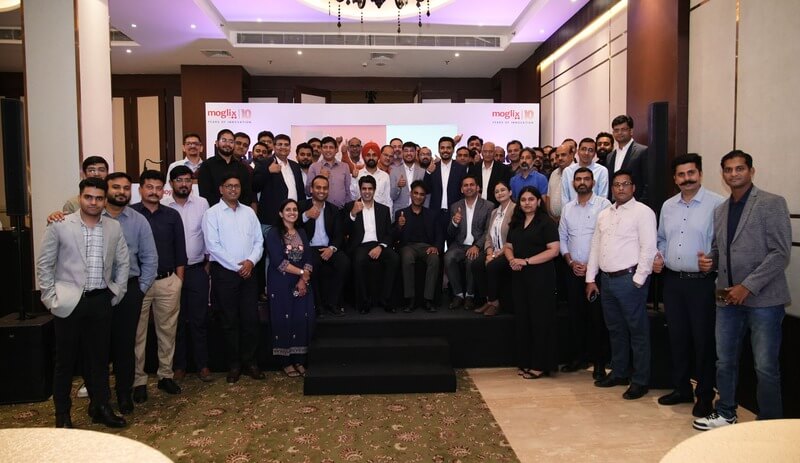
About the Event: We recently hosted the Udaipur chapter of the Moglix Supplier Meet – Daksh, bringing together our supplier partners for a day of collaboration, knowledge sharing, and dialogue under the theme “Winning Together.” The session was led by Mr. Animesh Srivastava (SVP), Mr. Keshav Agrawal (Director), and Mr. Govind Rajawat (Associate Director), who shared strategic insights on strengthening partnerships and driving collective growth.
Moglix Backs Geographic Hedging to Strengthen Semiconductor Supply Chains

Moglix Backs Geographic Hedging to Strengthen Semiconductor Supply Chains
Writing in Business Standard, Rahul Garg pointed to geographic diversification as a critical lever to reduce risk and build resilience in semiconductor supply chains.
From RC-Approved to On-Site: The Speed Advantage for National Projects
From RC-Approved to On-Site: The Speed Advantage for National Projects
Stand at any major construction site in India and you’ll see the same frustrating scene repeated daily. Workers arrive ready to work, but they spend the morning waiting. Equipment sits idle. Project managers make urgent phone calls, asking the same question: “Where are the materials?
This isn’t a story about projects that haven’t started yet. These are active construction sites where the Rate Contracts are already approved, budgets allocated, and timelines set. Yet somehow, basic materials like cement and steel remain stuck somewhere between “approved” and “delivered.”
For India’s infrastructure push, this gap has become a silent killer of project timelines. The National Infrastructure Pipeline (NIP) depends on thousands of projects moving simultaneously. When materials get stuck in bureaucratic or logistical limbo, entire programs slow down. What looks like a simple procurement issue on paper becomes a major roadblock to national development.
The projects that succeed have figured out something crucial: RC approval is just the starting line, not the finish line. The real race begins when materials need to move from approved supplier lists to actual construction sites.
So, in this blog, we’ll understand why speed is an important factor for national projects.
Understanding RC Approval in National Projects
Rate Contract approval might sound like government jargon, but it’s actually quite straightforward. It’s like a pre-approved shopping list with fixed prices. Every time a project needs cement or steel, government agencies negotiate bulk rates in advance with qualified suppliers, instead of running separate tenders every time.
Here’s how it typically works: A highway project needs various grades of cement procurement over two years. Rather than tender separately for each cement purchase, the agency creates a Rate Contract with approved suppliers. These suppliers have already proven their competitive pricing, delivery capabilities, and quality standards.
This system makes sense on paper. Projects get predictable pricing, suppliers get assured business volumes, and procurement teams avoid repetitive tendering. A cement manufacturer might be RC-approved for highway construction across multiple states. A steel company could have Rate Contracts for metro rail projects in several cities.
But here’s where reality gets complicated. RC approval doesn’t mean materials are sitting in a warehouse ready for pickup. It doesn’t account for production schedules, transportation challenges, or competing demand from other projects using the same suppliers. The approval gives you the right to buy at agreed prices – it doesn’t guarantee immediate availability.
This disconnect between approved and available creates the first challenge in the RC-to-site journey.
RC-Approved vs. On-Site Availability: The Real Challenge
While RC approval brings order and transparency to procurement, it also creates a gap. Materials may be approved on paper, but still not physically available at the site.
Common challenges faced in the RC-to-site journey are:
- Processing Delays: Even with pre-approved rates, government procurement involves multiple authorization levels. Purchase orders need review, approval, and processing. What should take days often takes weeks.
- Production Scheduling: Popular suppliers serve numerous projects. When they receive orders, existing commitments might push new production weeks into the future. High-quality suppliers often have the longest waiting lists.
- Manual tracking: Paper-driven systems or fragmented spreadsheets make it difficult to know when materials will actually arrive.
- Site Readiness: Sometimes, materials are ready before sites can receive them. Incomplete access roads, inadequate storage facilities, or missing security arrangements create delays at the final step.
- Each delay seems minor individually. Combined, they extend material delivery far beyond initial estimates.
This lag between RC approval and on-site delivery can leave equipment idle, workers waiting, and deadlines slipping further away.
Why Speed Matters for National Projects
Every day lost in material delivery can affect the entire project. Speed is not just a convenience; it is a necessity for four key reasons:
- Avoiding cascading delays
Construction projects depend on tightly linked activities. If steel is delayed, concreting is delayed, which then pushes back finishing work. A single procurement gap can disrupt an entire schedule.
- Cost savings
Idle machinery, extended labor deployment, and missed deadlines all increase costs. Faster RC-to-site movement reduces these unnecessary expenses.
- Loosen Public Confidence
Citizens and businesses make decisions based on promised infrastructure completion dates. Companies plan factory locations expecting highway completion. Families relocate assuming metro line operations. Persistent delays undermine confidence in all future infrastructure commitments.
- National targets
India’s infrastructure goals under the NIP demand thousands of projects to be completed on time. Speed in procurement directly influences the pace of national progress.
The Speed Advantage: Moving from RC-Approved to On-Site Faster
Smart project managers have developed strategies to compress the time between RC approval and on-site delivery. These approaches don’t require policy changes or additional approvals – just better coordination and planning.
- Early Supplier Engagement
Instead of waiting for formal orders, successful teams engage RC-approved suppliers during project planning phases. They share tentative material schedules, discuss potential challenges, and explore solutions before problems arise. This early communication allows suppliers to plan production runs and arrange raw materials proactively.
- Regional Supply Mapping
Rather than just knowing which suppliers are approved, smart teams map supplier capabilities geographically. A cement plant in Gujarat might be RC-approved nationally, but a smaller facility in Rajasthan could deliver faster for western India projects.
- Vendor Managed Inventory (VMI)
Suppliers maintain stock closer to project sites, ready for immediate dispatch. Thus, vendor-managed Inventory reduces the dependency on long transport times.
- Buffer Planning
Successful projects build time and quantity buffers into their procurement schedules. They order materials slightly earlier than necessary and maintain small inventory cushions for critical items. This buffer absorbs inevitable delays without affecting construction schedules.
Best Practices for Accelerating RC-to-Site Movement
The most successful infrastructure teams follow specific practices that consistently deliver faster RC-to-site movement. These aren’t complex innovations – they’re systematic approaches to managing practical challenges. Here are the best practices infrastructure teams should follow:
- Map approved suppliers by region
Maintain visibility of which RC-approved suppliers can deliver faster to specific project locations.
- Build buffer inventories for critical items
Materials like steel, cement, and aggregates should have pre-planned buffer stocks in high-demand zones.
- Digitize the approval-to-dispatch process
Moving from paperwork to digital approvals speeds up the time between RC confirmation and supplier dispatch.
- Use multi-supplier contracts
Relying on a single RC-approved supplier increases risks. Distributing demand across multiple approved vendors reduces dependency.
- Track shipments in real time
Integration with GPS-enabled logistics and project dashboards keeps project managers updated on delivery timelines.
- Refresh RC-approved lists regularly
Supplier performance should be reviewed continuously. Underperforming suppliers must be flagged and replaced to ensure reliability.
Conclusion
The speed and scope of India’s national projects are unprecedented. Therefore, Procurement needs to transform from being a slow, paper-driven process to one that is quick, transparent, and digitally enabled to meet tight deadlines.
RC-approved projects can be confident of compliance and quality, but they will enjoy that edge in competition if materials are quickly transferred from approval to the site. Businesses can end this gap and continue projects with the help of digital procurement platforms, real-time visibility, and more intelligent supplier management.
The message is clear for project managers: RC-approved should equate to RC-available, and similarly to RC-on-site right away. Speed is not only critical, but it also makes the difference between meeting and missing deadlines.
Transform your procurement speed with Moglix Business today!
Connect with us to discover how we can narrow down your procurement timelines and keep your national projects moving at full speed.
How Smart Procurement Impacts First-Time-Right Production in Automotive Plants
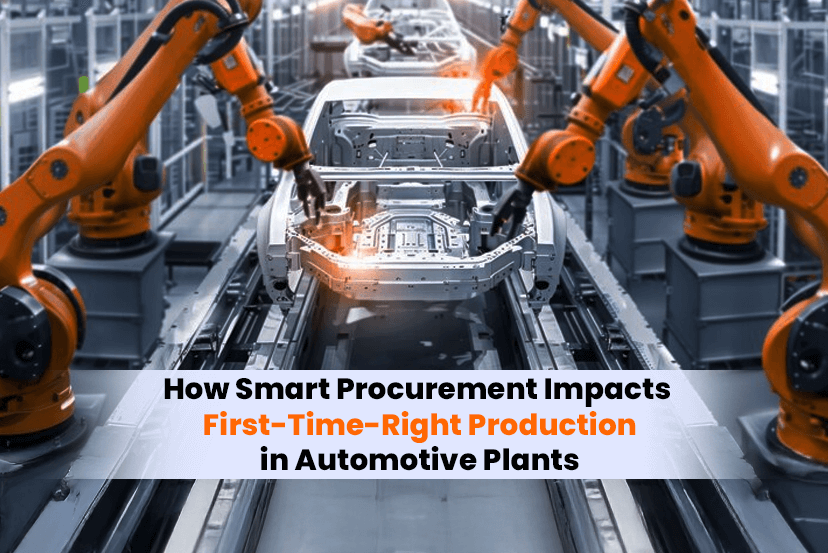
How Smart Procurement Impacts First-Time-Right Production in Automotive Plants
Some companies thrive by building accuracy into every process, while others struggle under the weight of rework and inefficiency. In the automotive industry, operational excellence determines market survival. The concept of First-Time-Right production has emerged as the clearest indicator of which players are driving the industry forward and which are being left behind.
This blog will help you understand the important aspects of First-time-Right Production in Automotive Plants, automotive procurement, and challenges in implementing the same.
Understanding First-Time-Right (FTR) in Automotive Manufacturing
First-Time-Right (FTR) is the capability of an automotive factory to get it right the first time in producing a part, component, or system without rework or adjustments. It is a practice that combines precision, process discipline, and supplier quality to provide spotless execution on the shop floor.
Having FTR is very important in the automobile industry since any defect has a direct impact on efficiency. In an industry where just-in-time schedules are the norm, even minor errors create a ripple effect on the supply base, clogging assembly lines and potentially increasing chances for missed deadlines. Reworking or scrapping materials delays delivery dates, escalates expenses, and consumes a lot of time.
FTR also impacts brand image and customer confidence. A vehicle shipped with zero production defects not only minimizes warranty claims but also creates long-term loyalty. With increasing competition and electric vehicles introducing new complexities, first-time-right production is no longer a goal-it’s an operational imperative.
Role of Procurement in Driving FTR
1. Supplier Selection: The selection of the proper supplier lays the groundwork for quality. Suppliers with strong certifications, reliable records, and capability for uniform output have a direct bearing on the ability of a plant to achieve FTR goals.
2. Quality Contracts: Quality contracts with rigid quality assurance specifications assist in aligning supplier responsibility. Having specifications built into agreements minimizes deviations and ensures expectations are understood from the beginning.
3. Collaborative Development: Engaging suppliers at the outset of product design and development allows possible problems to be resolved prior to manufacturing. This coordination enables smoother implementation when parts arrive on the plant floor.
4. Risk Management: Procurement operations represent the first line of protection against supply chain interruption. By diversifying suppliers and keeping tabs on geopolitical and economic risk, procurement guards against FTR objectives.
5. Cost Versus Value Balance: Lowest cost sourcing is not always the best result. Wise procurement considers overall value, including delivery dependability and compliance, to avoid quality slips, which would damage first-time-right performance.
What Makes Procurement “Smart” in Case of First-Time-Right Production?
Smart procurement integrates technology, data, and teamwork to make sourcing more trustworthy. Its success lies in several essential attributes:
1. Data-Driven Decision Making
Intelligent automotive procurement doesn’t rely on instinct or historical practice but leverages advanced analytics to measure supplier performance, market trends, and quality benchmarks. This presents key findings to decision-makers, which increases accuracy and decreases overall risk.
2. Predictive Analytics
Machine learning platforms analyze past records and market trends to identify probable issues in advance. From a potential shortage of raw materials, delayed delivery, or quality variation, these predictions enable manufacturers to respond before problems derail production schedules.
3. Real-Time Monitoring
Digital dashboards and IoT sensors give companies visibility into what suppliers are actually doing in real time. Everything from shipments to deliveries to inspections is tracked in real time, problems are caught early, and they’re fixed fast.
4. Automated Processes
Amenities such as order processing, contract administration, or regular communication with the suppliers may be automated. This leaves procurement departments free to devote more time to building more collaborative relationships and more strategic priorities.
5. Integrated Platforms
The actual power of smart procurement is in connectivity. If procurement systems integrate smoothly with production planning, quality control, and finance, the payoff is a smooth workflow that enables first-time-right manufacturing in each phase.
Challenges in Implementing Smart Procurement
1. Technology Infrastructure Needs
Organizations have to spend on advanced digital platforms, data management systems, and integration features for enabling smart procurement programs. Such deployments involve heavy capital expenditure, large-scale training initiatives, and wide-ranging change management initiatives. Firms tend to face legacies of system integration issues, data migration issues, and multimodal process integration issues.
2. Supplier Capability and Readiness Gaps
Most suppliers do not have the technology infrastructure and digital capacities to compete in smart procurement ecosystems efficiently. This capacity gap creates roadblocks in information exchange, lowers visibility in supplier operations, and makes it difficult to monitor performance. Organizations have to spend time and money on supplier development programs to close these capability gaps.
3. Data Security and Privacy Concerns
High-end procurement systems handle confidential information such as pricing details, vendor capabilities, and strategic realization plans, needing upmarket security procedures. Firms are required to have full-fledged cybersecurity programs, formal data sharing agreements, and regulatory compliance with several privacy laws. The integrated environment of these systems makes them more susceptible to security intrusions and data theft.
4. Teams’ Skill Gaps
Procurement practitioners must make the shift from transaction-based to data backed decision-making. Institutions grapple with retraining employees, overhauling longstanding processes, and creating cultures that embrace analytic decision-making rather than intuitive decisions.
Best Practices for Automotive Companies
Automotive companies interested in putting in place smart procurement practices for FTR manufacturing must pay attention to developing holistic frameworks that bring together technology, processes, and people suitably.
1. Set solid performance metrics that support alignment of procurement functions with FTR goals.
2. Form cross-functional teams with procurement, quality control, production planning, and engineering to promote an integrated supplier selection and management approach.
3. Invest in sophisticated analytics capabilities that deal with handling supplier data, market insights, and performance metrics.
4. Create thorough risk management strategies that outline potential supply chain risks.
5. Develop long-term strategic alliances with certified suppliers.
6. Train teams to review data and make predictive choices.
7. Pilot new procurement technology before widespread deployment.
Are you looking for procurement processes that enable your plant to achieve first-time-right results?
Moglix Business provides end-to-end B2B procurement solutions tailored for automobile manufacturers looking to attain First-Time-Right production excellence. Our technology-driven platform allows you to connect with qualified suppliers, have real-time performance monitoring, and simplify procurement processes to aid your quality targets. Join us in creating robust supply chains that ensure consistent performance and bring operational excellence to your production operations.
Marketing Leadership Session

Marketing Leadership Session
Date: 9th October
Organizer: SRCC
About the Event: Ms. Nupur Singh, Director – Marketing & Communication at Moglix, recently addressed students at the Industry Interaction Session at Shri Ram College of Commerce (SRCC), sharing her insights on emerging B2B marketing trends, global perspectives, and the evolving landscape of leadership.
Building India’s Future: How Infrastructure Leaders Use Digital Raw Materials Catalogs

Building India’s Future: How Infrastructure Leaders Use Digital Raw Materials Catalogs
Today’s India is running and building faster than ever before. For instance, take highways & airports; they shorten your travel time, roadways that connect you to even small villages, and solar parks that power your home; the development is visible everywhere.
Behind every road and metro line is a factor that determines how smoothly work goes forward, like the availability of raw materials and the ease with which these materials can be sourced. All these materials- cement, steel, aggregates, wiring, and a long list of other components have to be ordered, traced, and available in the right quantities when they are needed.
Traditionally, this process has been slow, fragmented, and susceptible to redundancy. Every agency or contractor has its own list of suppliers and materials. When there are hundreds of projects going on at the same time, you get confusion, delays, and cost overruns.
But today, Infrastructure leaders are turning to a solution that is as powerful as it is poorly understood: digital raw materials catalogs. These catalogs bring order to procurement, allowing projects to move faster while making fewer mistakes and providing more transparency.
In this blog, we’ll explore how Infrastructure leaders are utilizing digital catalogs to manage their raw materials. So, without any delay, let’s get started.
What is a Digital Raw Materials Catalog?
A catalog is simply a structured list of items and suppliers. But in a digital form, it becomes a database that lists not only raw materials but also details like:
- Specifications suited to different applications
- Supplier certifications and delivery capabilities
- Current prices and stock levels
- Compliance with regulatory and environmental standards
A digital catalog is different from a paper catalog or a spreadsheet because it is alive. It updates constantly, showing real-time information, and is easy to find.
Think of it as a matchmaking engine for infrastructure. On one side, you have the demand, housing projects, railways, and energy parks. On the other hand, there are thousands of suppliers. The catalog connects them, making sure the right materials reach each project when needed.
Let’s understand it with an example. A site engineer working in Rajasthan who needs heat-resistant concrete doesn’t just see “concrete” listed. The catalog filters options by grade, supplier reliability, and delivery timelines, helping the engineer make the right choice quickly and confidently.
Why Infrastructure Leaders Are Turning to Digital Catalogs
Digital catalogs have nothing to do with chasing tech trends. It is an answer to very real problems that Infrastructure leaders cannot solve at scale.
Faster Procurement
When infrastructure leaders need to order a piece of equipment for a project, they can go to a catalog and search for it like Amazon or Google, seeing what’s been approved. The purchasing cycles then go down from weeks/months in some cases. With the work window there, the procurement team could not try to stall things out. A digital catalogue makes it easy for teams to quickly locate approved material and suppliers in minutes instead of hours or even days.
Consistency Across Projects
Large projects often operate in several locations. Without standardized sourcing, one site may use the correct grade of steel while another opts for a cheaper substitute. This creates quality issues that surface later. Digital catalogs ensure every site draws from the same approved list of suppliers and specifications.
Cost Control Under Pressure
The digital catalogs eliminate duplication and foster bulk buying, which overall reduces additional costs. Real-time pricing also ensures that budgets are based on the current market – not a legacy estimate.
Best Practices for Digital Raw Materials Catalog Implementation
Shifting to a digital catalog is not just about digitizing a supplier list. To get real value, infrastructure leaders follow certain practices:
Create Sector-Specific Modules
Rather than a single humongous catalog, it is more desirable to develop smaller modules for each of the sectors: transport, energy, housing, and industrial projects.
Integrate with Procurement Tools
A digital catalog works best when it is not isolated. By integrating it with e-auctions, vendor management platforms, and demand planning tools, it can offer a bigger picture of procurement requirements and supplier performance.
Keep the Catalog Dynamic
Infrastructure needs are constantly changing. New technologies like green cement, smart sensors, or EV charging units must be added as they appear in the market. A static catalog will quickly lose relevance.
Embed Supplier Performance Data
Procurement teams must not only view what materials are on hand, but also how effectively suppliers have performed in the past. Delivery timelines, quality consistency, and history of compliance should be integrated into the catalog.
Keep improving continuously
Monitor usage of the catalog. Identify missing categories, confusing workflows, or gaps. Use the feedback to refine over time.
The Impact of Digital Catalogs
The benefits of digital raw materials catalogs are no longer just ideas on paper. They are already visible in large projects across sectors.
Take the example of a metro expansion project in Mumbai. Before digital catalogs, various contractors would often place similar materials individually, occasionally at variable prices. In some instances, even the specifications were slightly different, resulting in inconsistencies that resulted in slower approvals and contributed to delays.
Once a digital catalog was implemented, suppliers and specifications were consolidated into one system. Teams could compare prices all in one location, ensure compliance in an instant, and order in bulk with certainty. Procurement was quicker, costs were more controlled, and materials used were more consistent among all contractors.
Corresponding upgrades are noticed on highways, residences, and renewable energy initiatives. Materials bear tags with specifications and certifications, and procurement departments have access to real-time price changes and select the most effective supplier. For renewable initiatives, catalogs guarantee that solar panels or turbines are sourced from approved suppliers, eliminating the risk of equipment malfunction and enhancing long-term sustainability.
Although these improvements can seem small at the level of an individual project, at the level of the National Infrastructure Pipeline, the difference is huge. When thousands of projects run in parallel, even small efficiencies in procurement can mean large savings in time, effort, and resources.
Conclusion
India’s infrastructure growth depends on more than just funds and blueprints; it depends on how efficiently resources are sourced and supplied. Delays caused by poor procurement can stall even the most ambitious projects.
Digital raw materials catalogs are proving to be one of the most effective tools for bringing structure, speed, and reliability to this critical function. More importantly, they help infrastructure leaders align with the country’s vision of building fast, building smart, and building sustainably.
At Moglix Business, we help infrastructure leaders design, build, and manage digital raw materials catalogs that simplify procurement for large-scale projects. From structuring classification systems and cleaning supplier data to integrating with e-procurement and demand planning tools, we create solutions tailored to the scale of India’s development.
If your organization is looking to bring speed, accuracy, and responsibility to procurement, partner with Moglix. Together, we can make sure every rupee invested in India’s infrastructure goes further, building the future.


 Back
Back