
Top 10 Best TV Brands in India 2026

Top 10 Best TV Brands in India 2026
Televisions have evolved significantly over the past few years, with consumers now seeking immersive viewing experiences, smart features, AI-powered picture enhancements, and gaming-friendly technologies. Whether you’re looking for a budget-friendly smart TV, a premium OLED display, or a feature-rich QLED television, choosing the right brand is essential for long-term satisfaction. If you are looking to buy televisions in bulk at the most reasonable prices, then the Moglix business is the one-stop destination to procure effortlessly.
In 2026, the Indian television market is dominated by brands that offer excellent picture quality, advanced smart TV platforms, reliable after-sales service, and innovative display technologies. This guide explores the top 10 best TV brands in India in 2026 to help you make an informed purchase decision.
TV Industry Overview in India 2026
The Indian TV market continues to witness strong growth driven by increasing demand for 4K content, OTT streaming platforms, gaming consoles, and smart home integration. OLED, QLED, Mini LED, and AI-powered televisions have become increasingly popular among consumers seeking premium entertainment experiences.
According to industry reviews and TV testing platforms, brands such as Samsung, LG, Sony, TCL, and Xiaomi continue to lead the market due to their consistent innovation, display quality, and customer support.
Key Factors to Consider When Choosing a TV Brand
Before selecting a television brand, consider the following factors:
- Display Technology (LED, QLED, OLED, Mini LED)
- Picture Quality & Color Accuracy
- Smart TV Operating System
- Gaming Features (120Hz, VRR, HDMI 2.1)
- Sound Performance
- After-Sales Service Network
- Software Updates
- Value for Money
- Warranty Coverage
Top 10 Best TV Brands In India 2026 For Bulk Procurement As Loyalty Rewards
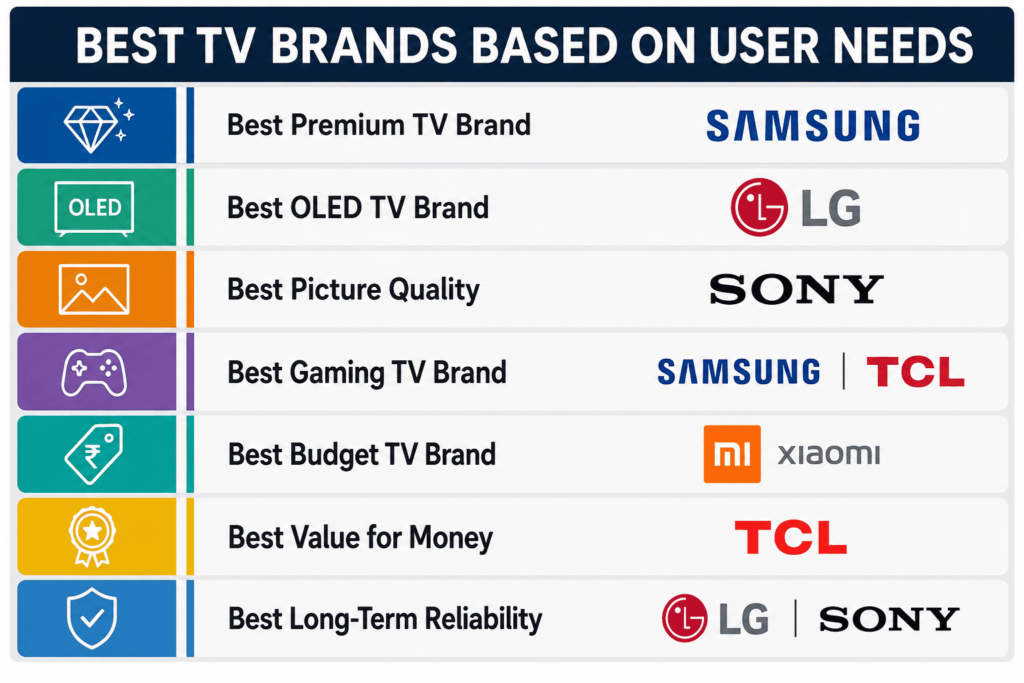
1. Samsung – Best Overall TV Brand
Samsung continues to dominate India’s premium television segment in 2026. The brand offers a wide range of televisions, from affordable Crystal UHD models to premium Neo QLED and OLED TVs.
Why Samsung Stands Out
- Industry-leading Neo QLED technology
- Excellent brightness and HDR performance
- Advanced AI upscaling
- Gaming-focused features
- Long software support
Popular Series:
- Crystal UHD
- QLED
- Neo QLED
- OLED Series
Best For:
- Premium buyers
- Gamers
- Sports enthusiasts
Samsung remains one of the most highly rated TV brands globally thanks to its display innovation and extensive model lineup.
2. LG – Best OLED TV Brand
LG is widely recognized as the leader in OLED television technology. The company’s OLED Evo and OLED C-Series televisions offer exceptional contrast, perfect blacks, and cinematic picture quality.
Key Advantages
- Industry-leading OLED panels
- Excellent webOS platform
- Dolby Vision support
- AI Picture Pro technology
- Strong after-sales support
Popular Series:
- OLED Evo
- OLED C-Series
- QNED
- UHD AI TVs
Best For:
- Movie lovers
- Home theatre setups
- Premium users
LG consistently ranks among the world’s best TV manufacturers due to its OLED expertise and product reliability.
3. Sony – Best for Picture Processing
Sony televisions are renowned for delivering some of the most accurate and natural-looking images in the industry. The BRAVIA lineup continues to impress with industry-leading image processing.
Key Features
- Cognitive Processor XR
- Outstanding motion handling
- Superior color accuracy
- Google TV integration
- Excellent build quality
Popular Series:
- BRAVIA 2
- BRAVIA 5
- BRAVIA 7
- BRAVIA OLED
Best For:
- Cinema enthusiasts
- Sports viewing
- Premium entertainment
Sony remains the preferred choice for consumers seeking the most realistic picture quality.
4. TCL – Best Value-for-Money TV Brand
TCL has emerged as one of the fastest-growing TV brands in India. The company offers Mini LED and QLED technologies at highly competitive prices.
Why Buy TCL
- Affordable Mini LED TVs
- Excellent gaming features
- Google TV ecosystem
- Strong brightness levels
- Competitive pricing
Popular Series:
- QLED Series
- Q6C
- Mini LED Series
Best For:
- Budget-conscious buyers
- Gamers
- Large-screen TV seekers
Many industry experts consider TCL the best value television brand in 2026.
5. Xiaomi (Mi) – Best Budget Smart TV Brand
Xiaomi continues to dominate the affordable smart TV segment with feature-rich televisions at aggressive price points.
Highlights
- Competitive pricing
- Google TV integration
- Dolby Vision support
- Sleek designs
- Good display quality
Popular Series:
- X Series
- FX Pro QLED
- Smart Fire TV Series
Best For:
- First-time smart TV buyers
- Budget households
- OTT streaming
Xiaomi remains a top choice for consumers looking for maximum features at minimum cost.
6. Hisense
Hisense has steadily gained popularity by offering premium features such as QLED displays, Dolby Vision, and high refresh rates at affordable prices.
Advantages
- Competitive pricing
- QLED technology
- Strong brightness
- Gaming-friendly features
Popular Series:
- E-Series
- U-Series
- Vidaa Smart TVs
Best For:
- Mid-range buyers
- Gaming enthusiasts
7. OnePlus
OnePlus televisions combine stylish design with strong performance and seamless integration within the OnePlus ecosystem.
Key Features
- Premium aesthetics
- Google TV interface
- Dolby Audio support
- Good value proposition
Popular Series:
- Y Series
- Q Series
Best For:
- Smart home users
- Young professionals
8. Panasonic
Panasonic remains a trusted television brand known for reliability and long-term durability.
Benefits
- Excellent build quality
- Consistent performance
- Reliable customer service
- Good color reproduction
Popular Series:
- W Series
- MX Series
Best For:
- Family entertainment
- Long-term ownership
9. Haier
Haier offers a wide range of affordable and mid-range televisions featuring Google TV and QLED technologies.
Key Strengths
- Attractive pricing
- Smart TV features
- Good audio quality
- Large display options
Best For:
- Budget-conscious consumers
- Large-screen buyers
10. Vu
Vu remains one of India’s most popular homegrown television brands, offering feature-packed smart TVs at affordable prices.
Why Consider Vu
- Made for Indian consumers
- Affordable pricing
- Google TV support
- Large display sizes
Best For:
- Budget buyers
- OTT streaming enthusiasts
TV Brand Comparison Table
| Brand | Display Technology | Smart Platform | Best For | Price Segment |
| Samsung | Neo QLED, OLED | Tizen OS | Premium Users | Premium |
| LG | OLED, QNED | webOS | Movies & Home Theatre | Premium |
| Sony | OLED, Mini LED | Google TV | Picture Quality | Premium |
| TCL | QLED, Mini LED | Google TV | Value for Money | Mid-Range |
| Xiaomi | LED, QLED | Google TV | Budget Buyers | Budget |
| Hisense | QLED | Vidaa OS | Gaming | Mid-Range |
| OnePlus | QLED | Google TV | Smart Homes | Mid-Range |
| Panasonic | LED, 4K | My Home Screen | Reliability | Mid-Range |
| Haier | QLED | Google TV | Affordable Premium | Mid-Range |
| Vu | LED, QLED | Google TV | Budget Streaming | Budget |
Conclusion
The best TV brand in India in 2026 depends on your budget and viewing preferences. Samsung leads the market with its overall performance, innovation, and premium offerings. LG remains the undisputed king of OLED televisions, while Sony delivers unmatched picture processing and cinematic experiences. For value-conscious buyers, TCL and Xiaomi offer excellent features at affordable prices. If you are looking to buy the best TV brands in bulk at reasonable prices, then partnering with Moglix Business is the most reliable option.
If budget is not a concern, Samsung, LG, and Sony are the safest choices. However, TCL, Xiaomi, Hisense, and OnePlus provide outstanding value and continue to challenge premium brands with innovative technologies and competitive pricing.
Whether you’re upgrading your living room entertainment system, creating a home theatre, or purchasing your first smart TV, these top TV brands offer reliable options for every type of buyer in 2026.
Waterproofing Chemicals for Roof: Types, Features, and Importance

Waterproofing Chemicals for Roof: Types, Features, and Importance
Roof waterproofing is one of the most critical aspects of building maintenance and construction. Whether it’s a residential home, commercial building, or industrial structure, protecting the roof from water damage ensures long-term durability and safety. Waterproofing chemicals play a vital role in preventing leakage, dampness, and structural deterioration caused by moisture.
In this blog, we will explore the types of waterproofing chemicals for roofs, their key features, and why they are essential.
What Are Waterproofing Chemicals for the Roof?
Waterproofing chemicals are specially formulated compounds applied to roof surfaces to create a protective barrier against water infiltration. These chemicals penetrate or coat the surface, sealing cracks, joints, and pores to prevent water from seeping through.
They are commonly used on concrete roofs, terraces, metal roofs, and flat slabs to enhance water resistance and extend the structure’s lifespan.
Types of Waterproofing Chemicals for Roof
1. Acrylic Waterproofing Coatings
Acrylic-based coatings are water-based and highly flexible. They form a seamless protective layer over the roof surface.
Best for: Residential terraces and small buildings
Advantages: UV-resistant, easy application, eco-friendly
2. Polyurethane Waterproofing Chemicals
Polyurethane coatings provide excellent elasticity and strong adhesion. They can withstand extreme weather conditions and structural movements.
Best for: Flat roofs and exposed areas
Advantages: High durability, crack-bridging ability, long lifespan
3. Bituminous Waterproofing Solutions
Bituminous coatings are derived from asphalt and are widely used for waterproofing.
Best for: Low-slope roofs and industrial buildings
Advantages: Cost-effective, strong water resistance, easy availability
4. Cementitious Waterproofing Chemicals
These are cement-based coatings mixed with special additives to improve water resistance.
Best for: Concrete roofs and internal areas
Advantages: Easy to apply, economical, compatible with concrete
5. Liquid Waterproofing Membrane
Liquid membranes are applied as a liquid and cure to form a rubber-like waterproof layer.
Best for: Complex roof shapes and joints
Advantages: Seamless finish, high flexibility, excellent coverage
6. Silicone Waterproofing Coatings
Silicone coatings offer superior water repellency and weather resistance.
Best for: Areas with heavy rainfall
Advantages: Long-lasting, resistant to ponding water, UV stable
Key Features of Roof Waterproofing Chemicals
1. Water Resistance
These chemicals create an impermeable layer that prevents water penetration even during heavy rainfall.
2. UV Protection
Many waterproofing coatings are UV-resistant, protecting roofs from sunlight damage and cracks.
3. Flexibility
They can expand and contract with temperature changes without cracking.
4. Crack Bridging Ability
High-quality waterproofing chemicals can fill and seal minor cracks effectively.
5. Durability
They enhance the lifespan of the roof by preventing moisture-related damage.
6. Easy Application
Most products are user-friendly and can be applied using brushes, rollers, or spray equipment.
Importance of Waterproofing Chemicals for the Roof
1. Prevents Water Leakage
Waterproofing chemicals stop water seepage, protecting interiors from damage such as stains, peeling paint, and mold growth.
2. Enhances Structural Strength
Continuous exposure to moisture weakens concrete and steel. Waterproofing prevents this deterioration.
3. Increases Roof Lifespan
By protecting against environmental factors, these chemicals extend the durability of the roof.
4. Reduces Maintenance Costs
Proper waterproofing minimizes repair and maintenance expenses over time.
5. Improves Indoor Comfort
Leak-proof roofs prevent humidity and dampness, ensuring a healthier indoor environment.
6. Protects Against Mold and Mildew
Moisture leads to fungal growth, which can affect health. Waterproofing eliminates this risk.
How to Choose the Right Waterproofing Chemical
When selecting waterproofing chemicals for your roof, consider the following:
- Type of roof surface (concrete, metal, tile)
- Weather conditions (rainfall, temperature variations)
- Budget and longevity requirements
- Ease of application and maintenance
- Compatibility with existing materials
Application Tips for Better Results
- Clean the roof surface thoroughly before application
- Repair cracks and joints beforehand
- Apply primer if required
- Follow the manufacturer’s instructions for mixing and curing
- Use multiple coats for enhanced protection
Conclusion
Waterproofing chemicals for roofs are essential for protecting buildings from water damage, enhancing durability, and ensuring long-term performance. With various types available, such as acrylic, polyurethane, bituminous, and cementitious, choosing the right solution depends on your specific needs and environmental conditions. Construction businesses looking to buy waterproofing chemicals in bulk can purchase them efficiently at the Moglix business.
Investing in high-quality waterproofing not only safeguards your property but also reduces maintenance costs and improves overall structural integrity. Whether for new construction or renovation, roof waterproofing is a smart and necessary step.
Rahul Garg on Building Moglix and Scaling India’s B2B Commerce

Rahul Garg on Building Moglix and Scaling India’s B2B Commerce
Reflecting on Moglix’s journey, Rahul Garg spoke about solving procurement inefficiencies through technology, supplier integration, and disciplined execution.
What Is Bitumen: Types, Uses, Importance, and Price (Complete guide)

What Is Bitumen: Types, Uses, Importance, and Price (Complete guide)
As we are heading towards an advanced construction and infrastructure era, industries and businesses are also evolving their strategies to streamline the use of high-quality materials, ensuring durability and long-lasting performance. Therefore, in the construction of roads, Bitumen stands as one of the pivotal materials known for its strong binding and waterproofing properties.
Whether you are a bulk procurement team, a construction industry, or any other type of buyer, it is essential to understand Bitumen, recognizing its critical role in modern infrastructure, including its various uses, types, and pricing, to make better decisions before buying bitumen online in bulk from various platforms. This comprehensive guide below will assist you in knowing the in-depth information about Bitumen.
What Is Bitumen?
When it comes to Bitumen, most people are unaware of its basic definition. In simple terms, Bitumen is a viscous, Black, and sticky petroleum-based substance that is extracted during the filtration of crude oil. It plays a major role in binding the materials during road construction, roping, and waterproofing membranes due to its various properties. In overall aspects, it acts as an adhesive to hold all the construction aggregates used in asphalt and pavement road construction
Bitumen is known for its:
- Strong adhesive properties
- Excellent resistance to water
- High durability
Understand the various Types of Bitumen
Before the procurement of Bitumen, it is necessary to know about its various types to select the right type for specific purposes. Let’s have a look at them:
- Penetration Grade Bitumen
These types of bitumen are mostly used in road construction and are available in various grades, like 30/40, 40/50, 60/70, and 80/100. In simple terms, the harder the bitumen is, the lower its penetration, whereas, softer the bitumen is, the higher its penetration. It is best for hot climate regions and heavy traffic roads.
- VG (Viscosity Grade) Bitumen
It is the new composition of bitumen that has replaced the penetration grade in many countries. You can find the various grades like VG-10 (Used in cold climate roads), VG-20 (used in moderate traffic roads), VG-30 (Used for high traffic highways), VG-40 (Extremely high duty pavements).
- Cutback Bitumen
It is a perfect mixture of various solvents and bitumen, which makes it easier to apply at lower temperatures and zones. Therefore, Outback Bitumen is best for cold-weather pavements and patch repairs.
- Emulsion Bitumen
When bitumen is mixed with emulsifiers and the right water percentage, then emulsion bitumen is derived. They are further divided into two types, Cationic and Anionic, which are perfect materials used for cold mixed roads, tack coats, and slurry sealing.
- Polymer Modified Bitumen (PMB)
This bitumen is mixed with polymers, crumb rubber, and SBS. These are mostly used for high-stress roads and airport runways. PMB bitumen offers long-lasting performance and high elasticity.
- Oxidized Bitumen
This type of bitumen is prepared at high temperature by blowing air through the bitumen. These are mostly used for roofing and waterproofing.
What are the various Uses of Bitumen?
When it comes to the uses of Bitumen, it is one of the most essential and trending materials covering a wide industry:
- Road construction
One of the most pivotal applications of bitumen, acting as a binding agent of asphalt concrete for highways, pothole patching, and even pavement coatings. It ensures long-lasting performance by creating a strong bond among various construction aggregates.
- Waterproofing
Biumen is also widely used as a waterproofing agent and plays a pivotal role in building roof membranes, basements, and foundation protection, and sealing water tanks. It prevents water leakage and eliminates the risk of moisture damage.
- Building & Construction
In building and construction projects, bitumen is used in the expansion of joints, enhancing flooring protection, and developing damp-proof coatings.
- Industrial Applications
In industries, Bitumen is used for coating cables, powerful adhesive for binding, and as a soundproofing material.
- Airport Runways
For building smooth, powerful, and long-lasting airport runways, PMB bitumen is used to enhance the overall performance to hold heavy loads.
Acknowledge the Importance of Bitumen
Bitumen comes with amazing and unique properties to elevate the modern infrastructure, such as:
- High durability: It improves the strength of the roads to hold heavy loads and perform robustly in harsh climates.
- Water-Resistant: Bitumen consists of amazing waterproofing properties that make it an effective and efficient material in roofing and underground structures.
- Cost-Effective: Bitumen is affordable and provides long-term value as compared to any other binding agent.
- Recyclable: The biggest advantage of bitumen is its ability of recycled and can be reused in the formation of roads, reducing the cost and environmental impact.
- Good adhesion: One of the most effective and strong adhesive properties, ensuring strong asphalt surfaces.
What is the Bitumen Price in India (2025 Updated)
The price of bitumen may vary based on type, location, and manufacturer. However, we have given an estimated value for every specific type of bitumen you can find market.
- VG-10 Bitumen Price: The price fall between ₹45,000 – ₹48,000 per MT
- VG-20 Bitumen Price: The price fall between ₹47,000 – ₹50,000 per MT
- VG-30 Bitumen Price: The price fall between ₹48,000 – ₹52,000 per MT
- VG-40 Bitumen Price: The price fall between ₹50,000 – ₹55,000 per MT
- Polymer Modified Bitumen (PMB) Price: The price falls between ₹65,000 – ₹80,000 per MT
- Cutback Bitumen Price: The price falls between ₹55,000 – ₹65,000 per MT
- Emulsion Bitumen Price: The price falls between ₹35,000 – ₹42,000 per MT
Where to Buy Bitumen Online in Bulk – Why Moglix Is a Good Option?
As the bitumen demand is rising day by day, it has led industries to buy it regularly. It may be daunting to procure them quickly, but at Moglix Business, we ensure the procurement of Bitumen from reliable and trusted sources and manufacturers. Now you can buy bitumen online in bulk at our platform and get it delivered quickly across various places throughout India. We have a complete collection of various Bitumens used for different purposes, including VG-10, VG-30, VG-40, crumb-rubber modified bitumen (CRMB), polymer-modified bitumen (PMB), and bitumen emulsion at the most competitive prices. With the recent collaboration and launch of the Bitumen production facility, DRG Bitumen Industries, in July 2025, Moglix ensures to connect the buyers and suppliers effectively and provide a hassle-free supply chain reliability across India.
Conclusion
Bitumen has been a priority for various road construction industries, known for its high durability and waterproofing properties. It has showcased its various applications throughout different industries and plays a critical role in modern infrastructure development. With the comprehensive blog, you must understand the importance, uses, and types of Bitumen you can opt for. So, it’s time to elevate the quality and strength of construction and infrastructure by procuring top-notch Bitumen at Moglix.
Rubber and Polymer Sourcing for Automotive: A Hidden Supply Chain Risk
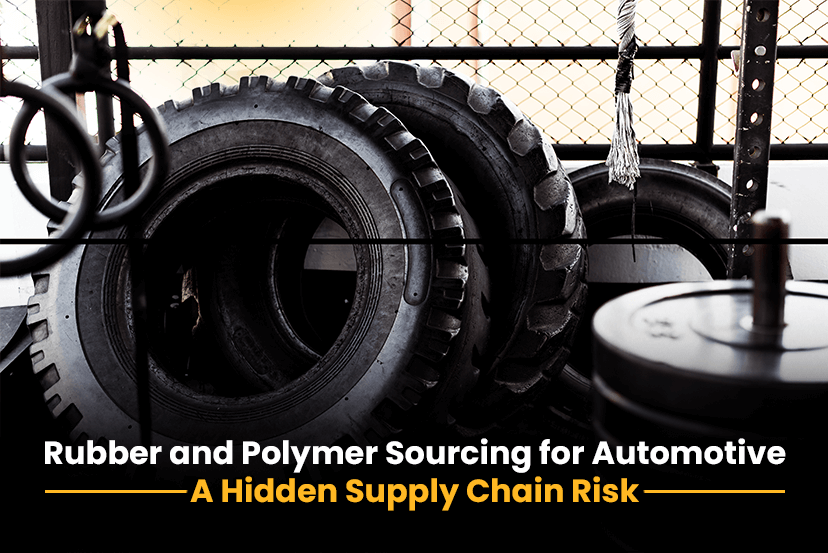
Rubber and Polymer Sourcing for Automotive: A Hidden Supply Chain Risk
When people speak of supply chain risks in the auto industry, they tend to turn toward semiconductors, steel, or rare earth minerals. Very few pause to think about rubber and polymers. Yet, take them away and the industry would grind to a halt. Cars wouldn’t have tires, seals, or hoses. These substances permeate the world around you, but you hardly ever hear about them.
In this blog dive, we’re going to talk about the ways rubber and polymers are sourced and why it matters for the automotive industry, what makes it especially tough for procurement pros to manage, and how the rise of EVs is reshaping demand.
The Role of Rubber and Polymers in Automotive Manufacturing
Manufacturers depend on two main streams: first, natural rubber, which is mainly extracted from plantations in Asia, and second, synthetic polymers, which are made from petrochemicals.
Natural rubber is important for its flexibility and durability, whereas polymers provide strength, heat resistance, and weight reduction. It generally helps in today’s fuel-efficient designs.
Every car contains far more rubber and polymer than most consumers realize. These materials are used extensively in:
1. Seals and gaskets that keep engines and transmissions airtight.
2. Hoses and belts that manage fluids and power transmission.
3. Bushings and suspension components that absorb shock and improve comfort.
4. Dashboards, bumpers, and interior trims made from synthetic polymers and resins.
In some estimates, polymers account for a vast volume in modern cars, especially as automakers focus more on lightweighting.
Even though they are a much smaller percentage of the total material cost than steel or aluminum, rubber and polymers are mission-critical. And if a factory runs short of polymer resins or critical rubber parts, entire assembly lines can grind to a halt.
Why Rubber and Polymer Sourcing Is Different From Other Materials
Rubber and polymer buying isn’t logic that applies to buying steel or aluminum. The issues are more complex.
1. Heavy Dependence on Southeast Asia for Natural Rubber
The rubber industry, for one, was geographically concentrated. Nearly 90% of it comes from Southeast Asia, largely Thailand, Indonesia, and Vietnam. It is produced all over the world, millions of small farmers at the mercy of weather, soil quality, and diseases.
2. Synthetic Polymers and Oil Price Linkages
Synthetic polymers are bound to the oil markets. They derive from petrochemicals, which means their prices many times behave in sync with crude oil. Any geopolitical shake-up in the world’s oil-producing regions can send polymers soaring, pinching automakers that are already running on razor-thin margins.
3. Stringent Quality Demands from Automakers
The bar for quality in auto is unusually high. Parts have to endure intense heat, pressure, and wear over multiple years of use. That implies procurement groups cannot just replace suppliers in the event of shortages. There is only a finite set of suppliers that can meet the standards on a consistent basis, further constraining the choices.
Hidden Supply Chain Risks in Rubber and Polymer Procurement
Risks involved in rubber and polymer sourcing tend to go unnoticed until they become severe.
1. One of the largest risks is environmental vulnerability. Rubber plantations are subject to climatic risks, floods, storms, or extended droughts can decisively affect yields. Crops have been ruined by diseases such as leaf blight. Piled onto this is increasing pressure to stop deforestation associated with rubber farming, leaving procurement leaders competing on cost and sustainability.
2. Price volatility has ever pursued these markets. Price volatility typifies natural rubber, whose prices have fluctuated wildly in the past few decades, while prices of synthetic polymers rise and fall with oil. For manufacturers producing on huge scales, these fluctuations ripple across whole product ranges.
3. Compliance and ESG pressures are also mounting louder. Car companies are being called upon to demonstrate that their sourcing is both sustainable and ethical. Joining initiatives such as the Global Platform for Sustainable Natural Rubber (GPSNR) is becoming less voluntary and increasingly a reputational imperative.
4. There are logistics and geopolitical risks. With all the production based in Southeast Asia, a disruption at ports or shipping lines can hold up deliveries globally. Shortages of containers during the pandemic showed just how exposed these supply chains are.
How EVs Boost Rubber and Polymer Demand
The shift to electrical mobility introduces even greater complexity. EVs do not contain engines in the conventional sense, but they rely heavily on sophisticated polymers and rubber products.
Battery packs, for instance, need specific polymer encasements and insulation to control heat and safety. Light polymers offset the tremendous weight of lithium-ion batteries to enable EVs to be more efficient. Thermal stability and water resistance are essential for battery safety, and rubber seals and gaskets have an even larger role to play in this case.
Even the tires vary. EVs need low-rolling-resistance tires that are capable of withstanding more torque and heavier loads without degrading prematurely. This necessitates proprietary rubber compositions, which further strain the supply.
Therefore, EV take-up doesn’t decrease reliance on rubber and polymers; it heightens it. Procurement leaders need to obtain not only greater volumes but also higher-specified grades of those materials.
Conclusion
Rubber and polymers might not top supply chain conversations the same way that semiconductors or lithium do, but they are not ones to be ignored. They are the unsung heroes of car performance, safety, and comfort. The issue is that their sourcing is accompanied by special vulnerabilities, geographic concentration, oil dependence, climate risk, and increasing ESG focus.
As EVs continue to grow, demand will only be higher, compounding procurement even further. What was once deemed “secondary” material is now at the forefront of the next generation of vehicle development.
Automotive procurement executives must go beyond cost. They have to think resilience, they have to think sustainability, and think diversified supplier base. Traceability technology spend, strategic supplier relationships over the long term, and sustainably sourcing programs will also be key to addressing these unseen vulnerabilities.
Is your company getting ready to build resilience in rubber and polymer purchasing?
Leverage Moglix Business to drive agility through end-to-end procurement solutions for sourcing rubber and polymer components. Turn your weakness in the rubber/ polymer supply chain into a strategic advantage with us. Get in touch today to see how our technology-driven platform can provide the visibility, reliabilit,y and cost savings your automotive venture needs.
Leveraging Data Analytics for Enhanced Supply Chain Visibility

Leveraging Data Analytics for Enhanced Supply Chain Visibility
Supply chains are growing more complex with the expansion of global trade and rising customer expectations. To stay competitive, businesses need supply chain analytics to gain real-time insights, optimize operations, and improve efficiency.
Through data-driven decision-making, manufacturers and suppliers can better forecast, enhance inventory management, and minimize disruptions. In this blog, we’ll explore how supply chain analytics is transforming the industry and enabling greater visibility in manufacturing.
Supply Chain Analytics: A Game-Changer for Manufacturing
Supply chain analytics employs data and technology to track and analyze supply chain performance. It enables manufacturers to:
- Identify inefficiencies and bottlenecks
- Predict demand fluctuations
- Optimize procurement and inventory management
- Improve supplier relationships
- Reduce operational costs
With advanced data-driven decision-making, businesses can react swiftly to market changes and customer demands, ensuring smoother supply chain operations.
How Data-Driven Decision-Making Enhances Supply Chain Visibility
One of the biggest advantages of supply chain analytics is its ability to enhance visibility in manufacturing. Real-time data allows businesses to track shipments, monitor inventory, and anticipate potential disruptions.
Here’s how data-driven decision-making plays a role in supply chain visibility:
- Real-time Tracking: Sensors and IoT devices offer immediate updates on shipments, enabling businesses to swiftly respond to delays or route changes.
- Demand Forecasting: AI-powered analytics predict future demand trends, preventing stockouts or overstocking.
- Supplier Performance Evaluation: Businesses can assess supplier reliability and make informed decisions based on data.
- Risk Management: Predictive analytics can foresee supply chain disruptions and recommend contingency strategies.
With improved visibility in manufacturing, businesses gain full control over their supply chain operations.
Key Data Analytics Tools Transforming Supply Chains
Modern manufacturers use a range of data analytics tools to enhance supply chain analytics and improve efficiency. Some of the most impactful tools include:
- AI and Machine Learning – These tools analyze past trends to provide precise demand forecasts and recommend inventory optimizations
- IoT and Real-Time Tracking – Uses sensors and GPS to provide live supply chain updates.
- Big Data Platforms – Consolidate information from multiple sources to enhance decision-making.
- Cloud-Based Supply Chain Management Software – Facilitates smooth collaboration between teams and suppliers.
- Blockchain for Transparency – Provides secure and transparent tracking of goods from origin to delivery.
By implementing these tools, businesses can enhance data-driven decision-making and gain better visibility in manufacturing processes.
Benefits of Supply Chain Analytics for Inventory Management
Effective inventory management is a crucial aspect of manufacturing, and supply chain analytics plays a vital role in optimizing stock levels. Here’s how:
- Prevents Stockouts and Overstocking: Data insights assist businesses in maintaining the correct inventory balance.
- Reduces Holding Costs: Optimized stock levels reduce warehousing expenses.
- Improves Order Accuracy: Businesses can align inventory with customer demand trends.
- Enhances Supplier Coordination: Real-time inventory tracking ensures timely restocking and reduces delays.
With the right data-driven decision-making tools, manufacturers can maintain lean inventory levels while meeting demand efficiently.
Challenges in Implementing Supply Chain Analytics
While supply chain analytics offers numerous benefits, its implementation comes with challenges:
- Data Quality Issues – Data insights assist businesses in maintaining the correct inventory balance.
- Integration Complexity – Legacy systems may not easily integrate with modern analytics tools.
- Cybersecurity Risks – With more digitized supply chains, protecting sensitive data becomes critical.
- High Implementation Costs – Investing in analytics solutions may require a significant upfront investment.
Despite these hurdles, businesses that effectively implement supply chain analytics can secure a major competitive edge over time.
Take the Next Step Toward Smarter Supply Chain Management
As manufacturing and supply chains evolve, using supply chain analytics is becoming crucial for maintaining a competitive edge. With better data-driven decision-making and enhanced visibility in manufacturing, businesses can optimize operations, reduce costs, and improve efficiency.
At Moglix, we provide advanced supply chain solutions to help businesses harness the power of analytics. Whether you aim to enhance inventory management, improve supplier collaboration, or obtain real-time supply chain insights, Moglix has the expertise to support your transformation
Get in touch with Moglix today and take your supply chain analytics to the next level!
How Digital Supply Chains Are Transforming India’s Core Industries

How Digital Supply Chains Are Transforming India’s Core Industries
From Paperwork to Platforms: A Journey of Resilience and Reinvention
India’s industrial backbone including infrastructure, manufacturing, logistics, pharma, and energy has long relied on traditional, manual procurement systems. But that’s changing, fast. Today, the rise of the digital supply chains is rewriting the rules of B2B procurement, transforming a once paper-heavy, opaque system into a smart, seamless engine of growth.
The Evolution: From Paperwork to Platforms
For decades, procurement teams were buried in paperwork, approvals, and fragmented vendor communications. Not only did this slow down projects but also increased costs and reduced visibility. Enter digital supply chains powered by cloud platforms, real-time data, AI-driven demand forecasting, and end-to-end tracking.
Digital platforms have become the new control rooms of procurement. They unify processes, automate workflows, and enable real-time collaboration among buyers, suppliers, and logistics partners. What once took weeks now takes hours.
Industry-Wise Impact: Real Shifts, Real Results
Infrastructure
In a sector where delays can mean massive cost overruns, digital supply chains offer a clear edge. Real-time tracking of materials, automated purchase orders, and vendor performance analytics help infrastructure companies deliver on time and within budget.
Data Insight: Companies adopting digital procurement in infrastructure projects report up to a 25% reduction in turnaround time (TAT) and 15-20% cost savings due to reduced leakages and improved forecasting.
Pharma
Speed, compliance, and quality are paramount in the pharmaceutical industry. Digital supply chains ensure improved batch traceability, streamlined approvals, and minimized stockouts critical in a regulated and time-sensitive ecosystem.
Data Insight: Leading pharma manufacturers have seen a 40% improvement in supply chain visibility and 30% faster supplier onboarding through digital platforms.
Energy
For the energy sector especially renewables and oil & gas digital procurement enables smarter asset management and faster deployment. Predictive maintenance and just-in-time inventory reduce both downtime and operational cost.
Data Insight: Digital integration has helped energy companies cut procurement costs by 10-15% and enhance project execution speed by 20% or more.
Strategic Payoffs of Going Digital
- Cost Savings: Automated bidding and improved spend analytics lead to smarter supplier decisions.
- Time Optimization: Less paperwork and faster approvals accelerate project timelines.
- Compliance Ease: Audit trails, e-documentation, and real-time dashboards reduce risks and ensure regulatory compliance.
But perhaps the biggest win? is agility. In a world rocked by disruptions from pandemics to geopolitical tensions, having a flexible, digital supply chain isn’t just a choice. It’s a competitive necessity.
The Human Factor
Digital doesn’t mean impersonal. In fact, it’s the opposite. With fewer repetitive tasks, procurement professionals now focus on strategic vendor relationships, innovation sourcing, and long-term value creation.
As one procurement head at a leading infrastructure firm put it, “With our digital platform, we’re not just saving money. We’re saving time, stress, and missed opportunities.”
Final Thoughts
India’s industrial evolution is not just about new buildings, factories, or transport routes it’s about smarter systems behind the scenes. Digital supply chains are quietly yet powerfully redefining how industries operate, collaborate, and grow.
As we move forward, organizations that embrace digital procurement will not only streamline operations but also lead the next era of industrial transformation. Those who stick to outdated practices risk being left behind.
Ready to reimagine your supply chain?
It’s time to move from paperwork to platforms and unlock a new level of speed, savings, and success.
Local Sourcing in a Globalized World: A Balancing Act Between Resilience and Competitiveness

Local Sourcing in a Globalized World: A Balancing Act Between Resilience and Competitiveness
The concept of local sourcing has gained momentum in recent years. Triggered by the pandemic, reinforced by geopolitical shifts, and strengthened by the growing China+1 strategy, India like many other nations is rethinking how and where it sources goods. The pursuit of supply chain resilience, regionalization, and self-reliance is pushing industries to look inward.
But as India doubles down on local sourcing, a critical question arises: Is this shift scalable and sustainable in a globalized economy that thrives on specialization, cost efficiency, and international collaboration?
What’s Driving the Push Toward Local Sourcing?
1. Pandemic Fallout
The COVID-19 pandemic exposed the fragility of over-globalized supply chains. With factory shutdowns in China, delayed shipments, and inventory shocks, businesses and governments learned the hard way that relying on distant suppliers can come at a cost. Local sourcing emerged as a natural hedge.
2. Geopolitical Realignments and China+1
Trade tensions, rising tariffs, and concerns over excessive dependency on China have led to the rise of the China+1 strategy where companies seek alternative manufacturing hubs. India, with its large workforce and policy momentum (PLI schemes, Make in India), is positioning itself as a viable alternative.
3. National Self-Reliance Agenda
India’s emphasis on Atmanirbhar Bharat isn’t just a slogan it’s a policy direction. By promoting domestic manufacturing and reducing import dependency, the government is signaling its intent to strengthen local supply chains across critical sectors.
Sector Readiness: Who Can Truly Localize?
While the idea of local sourcing is appealing, its practicality varies across sectors:
- Pharmaceuticals: India has made strides in localizing APIs (active pharmaceutical ingredients), though full independence from China will take time due to cost and scale challenges.
- Electronics: A work in progress. While assembly lines are being set up locally, the country still depends heavily on imported components like semiconductors.
- Automotive and Engineering: Better positioned for localization. With a well-established vendor ecosystem and strong manufacturing base, many components can be locally sourced or developed.
- Textiles and FMCG: High readiness, thanks to existing domestic supply chains and consumer demand favoring “Made in India” products.
The Trade-Offs: Local vs Global
Cost Pressures
Global suppliers often benefit from economies of scale, driving down per-unit costs. Local sourcing may initially lead to higher production costs, impacting pricing and margins especially in price-sensitive industries.
Quality and Capabilities
Not all local vendors are equipped with the same technology, skillsets, or certifications. Maintaining international quality standards can be a hurdle without substantial investment in vendor development and training.
Scale Limitations
Matching the volume, speed, and efficiency of global giants will require time and infrastructure. Some raw materials and specialized parts may simply not be available locally at least not yet.
The Long-Term Lens: Resilience vs. Global Competitiveness
Local sourcing offers supply chain resilience, reduced lead times, and greater control. But going too far in this direction can limit exposure to global innovation, specialization, and price competitiveness.
The goal, therefore, shouldn’t be isolation but strategic regionalization. A hybrid approach that combines strong domestic capabilities with smart global sourcing may be India’s best path forward.
Supplier Relationship Management: A Complete Guide
Supplier Relationship Management: A Complete Guide
Brief into Supplier Relationship Management
Supplier Relationship Management (SRM) is a structured approach to evaluating suppliers to identify their strengths, weaknesses, and overall significance to your business.
It is a part of vendor management within supply chain management. One can use SRM to categorize suppliers based on how valuable they are to the organization. This categorization ensures smooth operations and helps improve supplier performance.
Simply put, SRM focuses on fostering stronger relationships with suppliers and efficiently managing the products or services they deliver.
How to Develop Supplier Relationships?
Building strong supplier relationships requires trust, communication, and collaboration. Here are some effective steps:
- Clear Communication: Regular updates and clear expectations help avoid misunderstandings. Utilize meetings, emails, or shared platforms to maintain alignment. Performance Metrics: Establish measurable goals such as delivery timelines, quality benchmarks, and cost efficiency to assess supplier performance effectively.
- Mutual Benefits: SRM aims to create win-win scenarios by offering incentives or recognition to suppliers who consistently exceed expectations.
- Feedback Mechanisms: Maintain open communication channels for continuous improvement by actively seeking and providing feedback to suppliers.
- Technology Integration: Use SRM tools to streamline processes, track performance, and enhance collaboration.
Challenges Faced in Supplier Relationship Management
Despite the wholesome benefits of SRM, the implementation comes with its own set of challenges:
- Data Inconsistency: Without accurate data, evaluating supplier performance becomes difficult.
- Supplier Resistance: Some suppliers may hesitate to adapt to new processes or technologies.
- Cultural and Geographical Barriers: Working with global suppliers might lead to communication gaps.
- Balancing Cost and Quality: It’s no longer just about cutting costs. Finding the right balance between affordability and quality is important.
Businesses must proactively address these challenges by aligning their communication and setting clear expectations with their suppliers.
Benefits of Supplier Relationship Management
When SRM is done right, businesses can unlock numerous benefits:
1. Builds Trust with Suppliers:
SRM enables businesses to cultivate deeper partnerships with suppliers, transcending basic transactional relationships. It fosters trust, mutual understanding, and shared goals, enabling both parties to align on opportunities and tackle challenges together.
2. Reduces Risks:
SRM provides businesses with greater visibility into supplier activities, enabling them to identify and mitigate risks more efficiently. Using smart tools and strategies, companies can stay ahead of potential issues, making their supply chain more secure.
3.Better Insights into Supplier Capabilities:
SRM provides businesses with valuable data about what their suppliers can do. This helps in evaluating whether current suppliers can support new products or business models.
Best Practices for Better Supplier Relationship Management
To get the most out of SRM, consider these best practices:
- Invest in Technology: Leverage software that offers real-time visibility into supplier performance and inventory levels.
- Foster Transparency: Share demand forecasts and business plans with key suppliers to enhance trust and transparency.
- Segment Suppliers: Not all suppliers are the same. Segment them based on strategic value to prioritize relationships effectively.
- Regular Reviews: Schedule performance reviews periodically to highlight areas for improvement and acknowledge achievements.
We can Help!
Moglix offers vendor consolidation and management solutions, empowering businesses to establish seamless supplier relationships.
With tools that simplify vendor management, optimize procurement processes, and enhance communication, Moglix ensures businesses can focus on what matters most. From reducing costs to improving supplier community engagement, Moglix provides the technology and insights needed to strengthen SRM strategies.
______________________________________________________________________
Mastering Demand Forecasting and Inventory Management: The Key to Supply Chain Success
Mastering Demand Forecasting and Inventory Management: The Key to Supply Chain Success
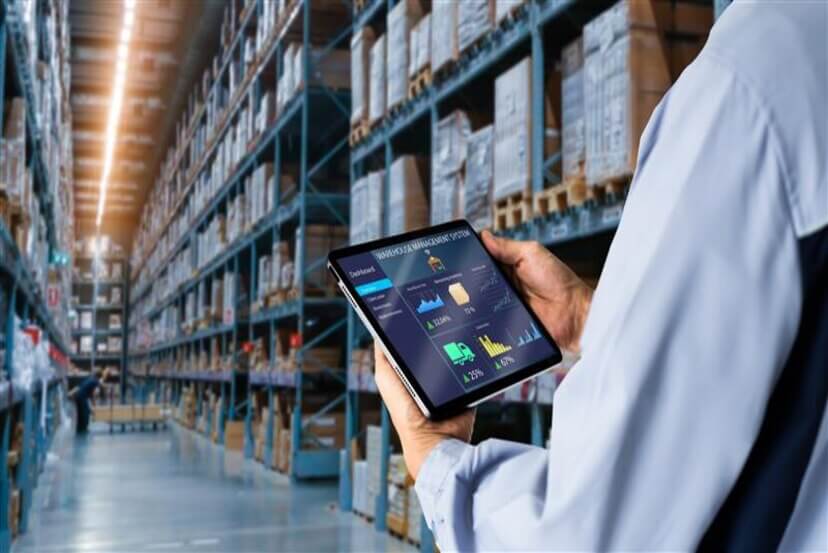
Efficient supply chain management relies on two essential components: demand forecasting and inventory management. Together, these functions help businesses maintain a steady flow of goods, minimize costs, and prevent disruptions. When implemented effectively, these components optimize supply chain operations, allowing businesses to meet customer demands efficiently while maximizing profitability.
But how do these two elements connect, and how do they help achieve supply chain success?
Let’s discuss all these in detail through this blog.
What’s the Connection Between Demand Forecasting and Inventory Management
While demand forecasting and inventory management are distinct concepts, they are closely interconnected in practice. Accurate forecasting enables businesses to make informed inventory decisions, while effective inventory management ensures seamless fulfillment of predicted demand.
Critical Challenges in Balancing Demand and Inventory
Balancing demand and inventory presents significant challenges for businesses. Here are some common challenges faced:
- Inaccurate forecasting: Inaccurate demand forecasting can result in overstocking or stockouts, negatively affecting business profitability.
- Supply chain disruptions: Sudden delays or shortages of raw materials from suppliers can disrupt inventory planning.
- Seasonal demand: Fluctuations in customer preferences can affect the accuracy of forecasts, making it harder to adjust inventory levels appropriately.
- Dealing with Long Lead Times: Some industries, like manufacturing or global retail, face long lead times between placing an order and receiving the inventory.
- Rapid market changes: Sudden trends or competitor actions can make existing forecasts useless, leading to the loss of business time and money.
Proven Strategies for Better Forecasting and Inventory Control
To effectively manage demand forecasting and inventory, follow these simple yet impactful practices:
- Regularly Update Forecasts
Demand fluctuates due to changing market trends, customer behavior, and external factors. Regularly updating forecasts ensures accuracy and relevance.
- Collaborate Across Teams
Collaborate across departments like sales, marketing, finance, and operations to develop accurate forecasts and inventory plans.
- Use Different Techniques to Forecast
Not all products or markets behave the same way, so try various methods, such as historical data analysis, market research, or AI tools.
- Conduct Cycle Counts
Perform regular inventory checks to spot and fix errors early.
- Leverage Technology
Use technological tools such as Artificial Intelligence and machine learning for accurate demand forecasting and inventory planning.
- Track Key Metrics
Track key performance indicators like forecast accuracy, inventory turnover, and holding costs. This will help you find and fix any inefficiencies.
- Have a Backup plan
Have backup strategies for sudden demand spikes or supply chain hiccups.
How can Moglix help?
Moglix provides comprehensive supply chain management solutions designed to enhance demand forecasting and inventory management. With advanced tools and technologies, we empower businesses to improve forecasting accuracy and inventory control. Our solutions optimize stock levels, enhance demand and supply alignment, and create a more resilient supply chain.


 Back
Back