
Solar Fencing For Agriculture: Features, Price And Specifications
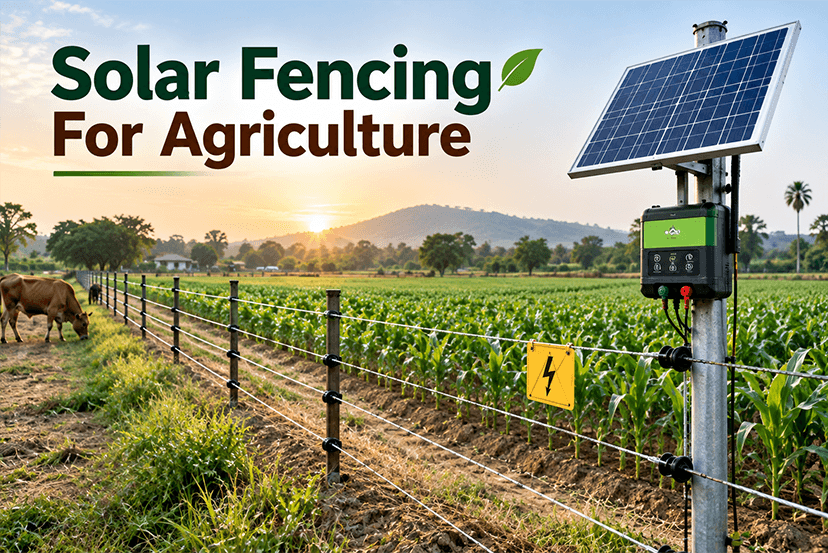
Protecting agricultural land from stray animals, wild animals, and unauthorised entry is an important concern for farmers and landowners. Traditional fencing can require significant installation and maintenance, while a solar fencing system offers an energy-efficient alternative for securing farms, orchards, nurseries, and plantations. Businesses and industries looking for top-quality and complete solar fencing components can procure them at Moglix Business.
A solar fence uses solar energy to power an energiser that generates controlled electric pulses through fencing wires. When an animal or intruder touches the fence, the pulse acts as a deterrent without continuously supplying electricity. This makes solar fencing for agriculture useful for farms located in remote areas where access to grid electricity may be limited.
Also read: Types Of Solar Power Plants in India: A Complete Guide 2026
What Is Solar Fencing?
A solar fencing system is an electric fence powered by a solar panel and battery. The system generally consists of a solar panel, rechargeable battery, solar fence energiser, fencing wire, insulators, poles and other installation accessories.
The solar panel charges the battery during the day, while the stored energy powers the energiser. The energiser converts this energy into high-voltage, short-duration pulses that travel through the fence wire. These pulses are designed to deter animals and intruders rather than provide continuous electrical current.
For agricultural applications, the system can be installed around the perimeter of farms, vegetable fields, orchards, vineyards, plantations, and other agricultural properties.
How Does a Solar Fence Work?
A typical solar fence works through the following process:
- Solar panel captures sunlight: The panel converts sunlight into electrical energy.
- Battery stores energy: The generated electricity is stored in a rechargeable battery.
- Energiser generates pulses: The solar fence energiser converts stored energy into controlled high-voltage pulses.
- Fence wire carries the pulse: The pulse travels along the conductive fencing wire.
- Contact triggers a deterrent: When an animal or intruder touches the fence and completes the circuit, the pulse creates a deterrent effect.
- System continues operating: The battery allows the fence to function during periods of low sunlight or at night, depending on system capacity.
Key Features of the Best Solar Fencing for Agriculture
When selecting a solar fence for farms, consider the following features:
1. Solar-Powered Operation: Solar-powered fencing reduces dependence on conventional electricity and can be suitable for farms in remote or off-grid locations. A properly sized solar panel and battery help maintain operation according to the site’s energy requirements.
2. High-Voltage Pulsed Output: The energiser generates controlled pulses rather than continuous current. The output should be selected according to the fence length, vegetation conditions and type of animal that needs to be deterred.
3. Rechargeable Battery: The battery stores solar energy for use when sunlight is unavailable. Battery capacity is an important specification because it affects how long the system can operate during cloudy weather or at night.
4. Long Fence Coverage: Different energisers are designed for different fence lengths. Before purchasing, check the manufacturer’s recommended fence coverage and consider terrain, vegetation and the number of wires being installed.
5. Low Maintenance: Solar fencing generally requires periodic inspection of wires, insulators, vegetation, and battery condition. Keeping vegetation away from the wires can help maintain effective operation.
6. Weather-Resistant Construction: Agricultural fences remain exposed to rain, dust, sunlight and temperature changes. Choose components with suitable weather-resistant construction for outdoor installation.
7. Battery Backup: A battery backup allows the system to continue functioning after sunset. The required backup duration depends on the battery capacity, energiser consumption and solar charging conditions.
8. Easy Installation: A complete solar fence setup should accommodate poles, insulators, wires, earthing arrangements, and the energiser. Installation should follow the manufacturer’s specifications and applicable local safety requirements.
Also read: Top 10 Solar Water Pump Manufacturers in India 2026
Solar Fencing Specifications to Check Before Buying
The specifications of a solar fencing system vary by manufacturer and application. The most important parameters include:
| Specification | What to Check |
| Power source | Solar panel + rechargeable battery |
| Energiser | Output pulse and energy rating |
| Fence length | Maximum recommended coverage |
| Battery | Voltage, Ah capacity and backup |
| Solar panel | Wattage and charging capacity |
| Fence wire | Material, gauge and conductivity |
| Number of wires | Based on application and perimeter |
| Earthing | Number and type of earth electrodes |
| Insulators | Outdoor/weather-resistant construction |
| Protection | Short-circuit and overload protection, where provided |
| Enclosure | Outdoor/weather-resistant rating |
| Operating conditions | Suitable temperature and environmental range |
Indicative Solar Fencing Price for Agriculture
The solar fencing price depends on several factors, including fence length, energiser capacity, solar panel wattage, battery capacity, number of wires, poles, insulators, and installation requirements. For a small agricultural plot, the overall cost may be lower because fewer fencing materials and a smaller energiser are required. Larger farms, orchards and plantations generally require longer fencing, additional poles and more powerful system components.
Instead of comparing only the price of the energiser, buyers should consider the total solar fencing cost, including the solar panel, battery, fencing wire, poles, insulators, earthing materials and installation.
Note: Solar fencing prices can vary significantly by specifications, brand, fence length, and installation requirements. Check the latest product price and configuration before purchase.
Factors Affecting Solar Fencing Cost
Several factors influence the final cost of a solar fencing system:
- Total perimeter: A larger farm requires more wire, poles, and insulators.
- Energiser capacity: Higher-capacity energisers may cost more.
- Solar panel size: Larger panels can be required for higher energy requirements.
- Battery capacity: A higher Ah battery generally provides greater energy storage.
- Fence configuration: The number and spacing of wires affect material requirements.
- Terrain: Uneven or difficult terrain can increase installation complexity.
- Animal type: The required fence configuration can vary depending on whether the objective is to deter cattle, wild boars, deer, or other animals.
- Installation: Labour and earthing requirements can add to the overall project cost.
Benefits of Solar Fencing for Agriculture
A properly designed solar fencing system can provide several practical advantages:
- Uses renewable solar energy
- Suitable for remote and off-grid agricultural locations
- Provides perimeter deterrence
- Can operate after sunset with battery storage
- Requires relatively low routine maintenance
- Can be configured for different farm sizes
- Helps protect crops and agricultural property
- Can be integrated with existing physical fencing
- Reduces dependence on grid electricity
Tips for Maintaining a Solar Fence
Regular maintenance helps keep the fencing system operating effectively.
- Inspect fence wires: Check for broken, loose, or damaged wires.
- Remove vegetation: Grass, branches, and weeds touching the fence can reduce performance and cause unnecessary energy loss.
- Check the battery: Inspect battery condition and charging performance periodically.
- Clean the solar panel: Dust and dirt can reduce solar energy generation.
- Inspect insulators: Damaged or cracked insulators should be replaced.
- Check earthing: Ensure the earthing system remains properly installed and free from damage.
- Inspect the energiser: Check the energiser and connections according to the manufacturer’s maintenance recommendations.
Also read: Top 10 Solar CCTV Cameras in India 2026 With WiFi and SIM
Conclusion
Choosing the best solar fencing for agriculture requires more than comparing prices. Farmers should evaluate the fence length, energiser output, solar panel capacity, battery backup, fencing wire, number of wires, earthing arrangement, and environmental conditions. A properly designed solar fence system can provide a practical, solar-powered perimeter deterrent for farms, orchards, plantations and other agricultural properties.
When comparing solar fencing prices, consider the complete system cost rather than the energiser alone. Selecting components according to the farm’s perimeter and protection requirements can help create a reliable and maintainable fencing solution.
Frequently Asked Questions
What is solar fencing for agriculture?
Solar fencing is an electric perimeter fencing system powered by solar energy. It uses an energiser to deliver controlled pulses through fence wires to deter animals and unauthorised entry.
Is solar fencing suitable for farms?
Yes, solar fencing can be suitable for farms, orchards, plantations and other agricultural properties, particularly where grid electricity is unavailable or unreliable.
What is the price of solar fencing?
Solar fencing price depends on the fence length, energiser capacity, solar panel, battery, fencing wire, poles, insulators, and installation requirements.
How long does a solar fence battery last?
Battery backup depends on its capacity, energiser consumption, solar charging conditions and system usage. Check the manufacturer’s rated backup and battery specifications.
Does solar fencing work at night?
Yes. A solar fence can operate at night when its battery stores sufficient energy generated during the day.


 Back
Back