
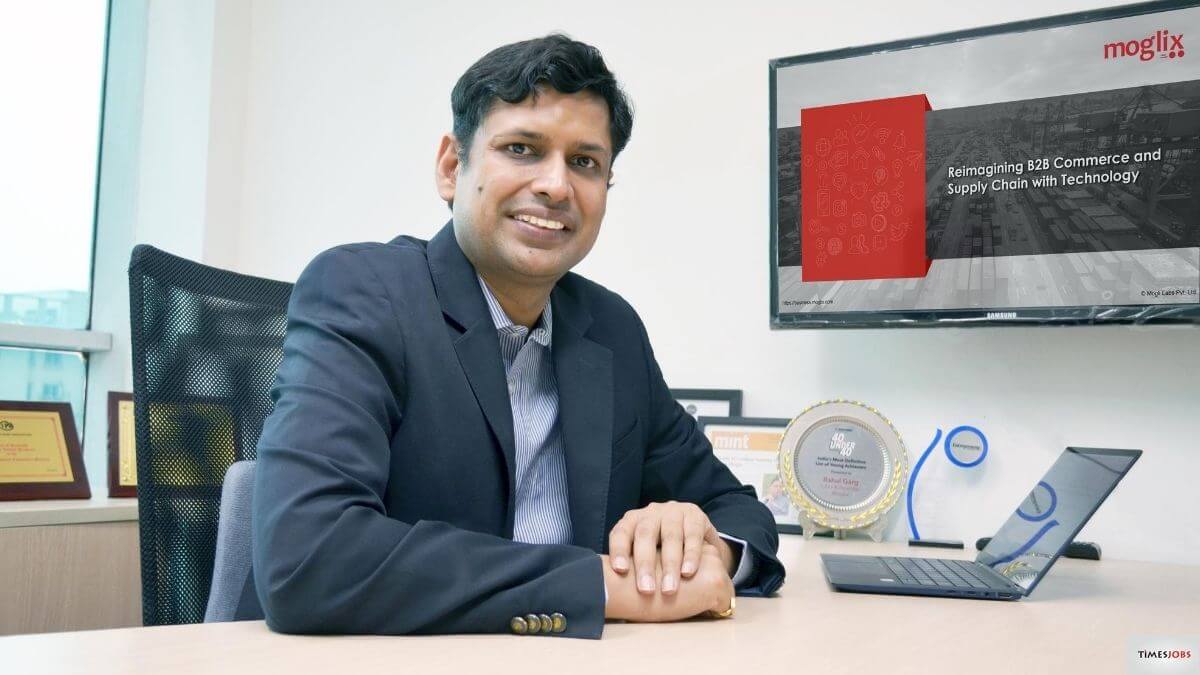
My vision for Moglix is to change the face of industrial commerce: Rahul Garg
My vision for Moglix is to change the face of industrial commerce: Rahul Garg
Times Jobs spoke to Rahul Garg, CEO & Founder, Moglix on his perspectives as a leader and entrepreneur, on founding a B2B commerce Startup, among others. Here’s an excerpt from the interview:
With which job role/ position did you start your career?
After graduating from IIT Kanpur, I started my career with Ittiam Systems in Bengaluru. There I focused on learning the nuances of technology, learning how to build world-class products and working as a team member. It was a high energy environment where I gained well-rounded experience across my project, team and technology. It helped me build the foundation of my career around a high bar on technology expertise, hard work and team-building.
Name one person who had a tremendous impact on you as a leader?
My father has been a significant inspiration to me in my personal and professional journey. He has successfully scaled a large company in India, solving various supply chain challenges in the manufacturing sector and mentoring teams of talented professionals along the way.
5 Priorities for CXOs to Unlock the Manufacturing Supply Chain

5 Priorities for CXOs to Unlock the Manufacturing Supply Chain
Is a turnaround just around the corner for the manufacturing supply chain in India? Insights from various manufacturing indices suggest that while aggregate performance continues to be sub-optimal, the upward plateauing of some verticals suggest that distant signs of recovery may not be too far away after all despite the weak sentiments prevailing now. The dip in the Nomura Business Resumption Index from 70 to 66 over the first fortnight of July, suggests the manufacturing engine cooling down. Despite the Markit PMI rising from 31 in May to 47 in June 2020, industry verticals have continued to grapple with challenges of constrained capacity, weak demand, contraction of the workforce and lack of alternate supplier sites for import substitution. Moglix Business is partnering with manufacturing enterprises to make sense of these emerging patterns and identify the priorities that CXOs need to address to unlock the manufacturing supply chain. Explore these top 5 priorities here.
Read:COVID19: The Three Phases of Recovery in Manufacturing
Map Supplier Clusters, Demand Centers and Labor CorridorsThrough the Pandemic
In India, manufacturing supply chains are highly intertwined and consist of a complex matrix of supplier clusters, demand centers, and highly concentrated labor corridors. CXOs in manufacturing enterprises need to map the exposure of their respective supplier clusters, demand corridors, and labor corridors to the contagion to identify their supplier downtime, time to recovery (TTR), and the spikes in logistics and supply chain management costs. One hundred thirty districts in the country account for 38% of manufacturing output, 50% of final private consumption, and 40% non-farm employment. Many of these districts are still in the red zones. These insights explain the contraction of output and the sub-optimal capacity utilization in the range of 28-63%. Moreover, 50% of truckers in the logistics and construction sectors come from just 15 of these districts. It explains why workforce deployment has continued to be 33-57% and why consumer demand is yet to pick up.
Read: How to Reduce Coronavirus-led Supply Chain Disruptions
Track and Trace Opex Regularly Amidst Shrinking Revenue and Output
Keeping track of the OPEX and managing indirect and direct expenses is imperative to create new avenues of efficiency. The rise in direct and indirect costs facing manufacturing enterprises is due to higher overhead costs of safety protocols, loss of economies of scale due to a drastic reduction in volumes, high freight charges, and other logistic expenses, increased costs of raw materials, power cost and high costs of debt financing. CXOs in Indian manufacturing enterprises need to pivot their management of indirect costs on line items like MRO inventory, packaging materials, packaging design, maintenance, and interest payments on suppliers spend analytics through digital procurement platforms. Digital platforms that run on artificial intelligence and machine learning can enable CXOs to stay informed on evolving developments in the supply chain, exercise higher control on strategic sourcing, and regularly track and trace OPEX from anywhere and at any time.
Realign Supplier Networks to Facilitate Import Substitution
Manufacturing enterprises have continued to witness a decline in exports for four consecutive months during the pandemic. Trade wars and geopolitics have already weakened the global trading environment. The pandemic has caused further supply chain disruptions for several verticals like automotive, textiles machinery, leather goods, footwear, electronics, and electrical equipment. Consequently, these verticals have continued to register abysmal manufacturing output thus far. The erosion of trust in supplier networks with high exposure to one country calls for CXOs to explore import substitution opportunities for their strategic sourcing. While import substitution and realignment of global supply chains are strategic actions, Indian manufacturing enterprises need to avoid further procurement risks. CXOs need to explore strategic partnerships with local industrial suppliers through digital supplier collaboration models to achieve agility at scale in their import substitution efforts and hit the ground running.
Digitize Procurement Processes to Reduce Fixed Costs and De-Leverage
One of the significant challenges facing CXOs in Indian manufacturing enterprises is the resilience of their balance sheets and cost structures. Research suggests that fixed costs account for 20-35% of the total costs for Indian manufacturers due to a high CAPEX on investments in land, plant, equipment, and machinery.CXOs of Indian manufacturing enterprises need to rationalize costs in the short term while creating opportunities to move towards leaner fixed cost models in the long run. Leveraging digital models for the automation of cost centers like procurement organization, supplier collaboration, and quality control can enable supply chain leaders in manufacturing to transform fixed costs incurred on these functions into variable costs and achieve the targeted balance sheet impacts. At Moglix Business, we have seen enterprises that have migrated towards e-procurement models save up to 5% on direct and indirect costs.
Read: What Does Procurement Transformation for the Next Decade Looks Like
Digitize Sales and Distribution Processes to Open New Revenue Streams
The unlocking of the economy has shifted from a cold turkey and holistic approach to a more decentralized and localized one. The uneven spread of the contagion across regions in the country makes it difficult for Indian manufacturers to operate their sales and distribution functions. Technology penetration in Indian manufacturing enterprises is below 5%. One of the significant opportunities for CXOs in Indian manufacturing is to leverage digital B2B commerce models to restart the engines of revenue enablement while ensuring that sales and distribution people, distributors, and customers continue to collaborate from the protected environments of their homes. Research shows that OEMs and authorized distributors of industrial supplies that have leveraged digital B2B commerce models are likely to stay ahead of their contemporaries as the economy continues to move towards recovery gradually.
The PPE Shortage of 2020: 4 Insights for Your Supply Chain

The PPE Shortage of 2020: 4 Insights for Your Supply Chain
A recent press release published by the Department of Health and Social Care in the UK on 25 June suggested that about 2 billion PPE items were delivered to the frontline workers since the start of the pandemic. This outcome, the release said, was a collaborative effort of the government, NHS, industry bodies and the armed forces, to massively scale-up distribution networks. In the last two months, this news has come as a welcome relief to everyone, especially, frontline workers. What the government says it has achieved is no small feat.
However, some reports such as the British Medical Association suggest that about 1 in every 2 frontline UK doctors surveyed had to source their own PPE. Even Italy, which has one of the best public health systems in the world, was dependent on imports and donations of protective equipment and they didn’t have enough to fight the pandemic.
Could many of these have been prevented if they had access to effective and adequate PPE? The answer is a resounding yes. However, our unpreparedness to handle the PPE demand was largely due to the global nature of the crisis. In a scenario where a particular country or a continent were only affected, the rest of the world could have replenished the PPE demand. The global nature of this crisis has accentuated this shortage of PPE around the world. This does not mean that there are gaps in all global supply chains. Even before coronavirus struck, global trade volumes were falling for the first time since the 2008-2009 financial crisis.
In fact, what the pandemic has really done is reinforced the focus on the importance of medical supplies and products in the supply chain. According to a report by WTO, trade in medical products (personal protective products, hospital and laboratory supplies, medicines and medical technology) which have been described as critical and in severe shortage during the COVID-19 crisis totaled about USD 597 billion in 2019, accounting for 1.7% of total world merchandise trade.
Read: COVID19: The Three Phases of Recovery in Manufacturing
Today in the aftermath of the pandemic, it is now estimated that the global personal protective equipment (PPE) market, which was valued at USD 52.7 billion in 2019, is expected to reach USD 92.5 billion by 2025. A number of countries and companies, including us, have repurposed their supply chains to meet demands of masks, sanitizers and medical equipment locally and globally.
To ensure this demand continues to be met, organizations need to invest in increasing visibility and customise the operability of their supply chains if they intend to meet the complex demand patterns across countries and companies alike. These are a few lessons that we have learned from the disruption caused by the coronavirus. These practices will go a long way into exemplifying supply chains of the future.
Listen: How We are Enabling UK Businesses to Get Back to Work.
1) Adapt and learn
The modern supply chain is long and complex with multiple links. Therefore, it is important to establish accurate and timely communication between the suppliers and end-consumers. To ensure that it happens, and that the transfer of information doesn’t get lost in translation, there needs to be open communication between countries where the disruption of one supply chain can be overcome by another in the future. Localisation of supply chains is one thing, but tighter supply networks could also lend better enforcement of supplier standards and improve product quality. Take for instance, Since the 2011 disaster in Japan, global auto suppliers have changed the way they produce and source the auto parts required to assemble a single car, including raising stocks, diversifying production and creating alternative manufacturing capabilities.
2) Keep your customers close, keep your suppliers closer
Let’s consider the example of the NHS. The Category Tower Service Providers (CTSPs), which are responsible for approving the companies that appear on the Secretary of State for Health and Social Care (SCCL) catalogue, are not required to diversify the supplier base for the products in their “category tower”. This is done so, in part, to create an oligopoly or limit the competition. However, in the current circumstances like these, the NHS has the opportunity to expand the SCCL catalogue so that procurement of scarce goods in bulk can take place. This means that more suppliers will have the opportunity to enter the category tower and increase reliability of supply during disruptions.
3) Increase visibility across the supply chain
The modern supply chain is long and complex, but it doesn’t have to be opaque. Investing in increasing visibility across the supply chain will enable executives to make decisions in real-time, conducting an end-to-end risk assessment, identifying potential problem areas, and devising crisis management strategies. Visibility across the supply chain is also critical for making decisions around how to restart lines, prioritize products, and manage relationships with suppliers. A large networking solutions company provides data on changes in supply and demand to partners continuously so they can respond quickly with the help of an technology platform, to connect suppliers and the company. This allows all the firms to have the same demand and supply data at the same time, and keep track of changes in supply or demand immediately.
4) Invest in monitoring tools and analytics
The companies that have responded well to the crisis are ones that took a digital-first approach. They invested in monitoring tools and analytics to forecast the changing demand patterns using market, economic, and social media indicators at the beginning of the pandemic and adjusted their operations appropriately to avoid overstocks and stockouts.
The coronavirus pandemic has given us a lot of food for thought. If nothing else, it has proved that our supply chains need to be more resilient to such unplanned disruptions. Business leaders need to get together to discuss all the possible “what-if” scenarios and the plan of action for the same. The one thing that will aid them in making these decisions? Investing in making their supply chains more transparent and technology-driven.
Moglix has extensive experience in streamlining the supply chains of some of the biggest companies in the world. Our range of solutions including Optimize MRO, Digitize procurement, Simplify packaging, SaaS, and now PPE has helped us in supporting businesses to handle this unprecedented crisis.
How Can Sustainable Packaging Enable Cost Reduction During Covid19?

How Can Sustainable Packaging Enable Cost Reduction During Covid19?
The need for enterprises to be more efficient could have not been more relevant than it is today, thanks to the huge costs imposed by the COVID19 pandemic. One of the ways in which enterprises that manufacture consumer goods can reduce their costs is by reducing wastage in packaging. With intelligent innovation, it is possible for enterprises to combine economic efficiency with compliance with health and hygiene requirements in packaging to achieve the best of both the worlds. Packaging that entails the reduction of wastage and seeks to enable enterprises to do more with less creates new avenues for cost reduction while ensuring hygiene factors for contactless delivery. Some of the major ways in which packaging can enable such hygiene centric cost reduction are as follows:
Reimagine Packaging Design for E-Commerce and Contactless Deliveries
Give the need for social distancing in the wake of the COVID19 pandemic, a clear trend that is emerging in the consumer packaged goods industry is a shift of consumers away from supermarkets, malls, and grocery stores and towards e-commerce enterprises that offer contactless delivery of goods. As such, the paradigm on which packaging is designed has shifted from the locus standi of store shelves to that of e-commerce and online retail. This implies that manufacturers of consumer packaged goods need to pivot their packaging design for greater and clearer visibility on personal devices like smartphones and tablets rather than store shelves. Doing so can actually allow enterprises to reduce packaging costs by forgoing the packaging requirements of grocery stores and supermarkets.
Vendor Consolidation and Single-Window Approach to Procurement of Packaging
Given the evolving contours of quarantine and lockdown across diverse geographies and the decentralized regulatory environment governing these, it makes enormous good sense to suggest that enterprises shall do well to focus on a single-window approach for the procurement of packaging materials to reduce the risks and costs associated with disruptions and freezing of local logistics. An integrated platform for sourcing packaging materials from a single vendor with strong upstream partnerships with local MSMEs and logistics service providers can enabler manufacturers to reduce costs, TAT and respond swiftly to market demand in niche markets.
Digitization of Packaging Supply Chain to Enable Mapping of the Demand and Supply Gap
One of the major factors affecting the packaging supply chain is the manual workflow that impairs the optics of vendor KPIs for packaging. A switch to digital packaging supply chain platforms can enable enterprises to map supplier capacity, objectively assess the TTR (time to recover) from lockdowns, and consequently quantify the quality, cost, and delivery metrics. This shall further allow enterprises to make their packaging supply chains faster, safer and more de-risked during the COVID19 pandemic and beyond.
Differentiate the Necessary Costs from the Unnecessary Costs in Design
The best packaging designs that lead to cost reduction follow a 4D Methodology of ergonomics, cost, sustainability, and logistics. If you want to bring down costs without impacting performance, then you need to think about how you can curb costs on aesthetic aspects. You can do in-depth scrutiny of the below questions to enable the best possible cost optimization process within each carton:
- Can your printing cost be optimized to highlight essential information only?
- Do you need full-color printing? Are there any design tweaks that can give coverage to the blacks and whites?
- Does your product need an inner pack and an outside carton?
- Can your packaging material have more environment-friendly materials like jute, which can reduce your carbon footprint?
Use of Technology to Optimize Packaging Costs
Brands are increasingly using popular CAD systems like Solidworks, Siemens NX12, and ArtiosCAD to ensure the right size and strength needed to package a product. Such technologies will help your enterprise to figure out a lot of information like:
- Dimensions of the inner pack and outer cartons
- Use of right packaging design like blisters, clamshells, corrugated boxes, paper packaging, sacks, or boxboards
- Use of the right dunnage material and size for full protection of the product throughout its journey to the end customer
- How does the carton need to be stacked on a pallet to enable maximum cartons shipped per pallet and higher pallet density?
- Configuration for loading container that holds the pallets
With a focus on these factors in packaging, supply chain professionals can effectively protect the product during its shelf life and the integrity of the contents inside the package. As a result, enterprises gain from reduced cost benefits like no product re-work, lower returns and replacements, and higher savings due to lower occurrence of damaged goods or ‘written off stock’. Also, shipping costs reduce because enterprises can do away with dead weight and optimize volumetric weight and thus make their supply chain more efficient.
Ergonomic Pallet Redesign
Companies are also looking to reconfigure the labor aspect involved in the ‘per piece’ packaging with compact packaging. This technique of simplifying the packaging process needs less labor and brings down the amount of warehouse space needed for storage. Such innovation helps the brand redesign pallet configuration and ship more product volume per pallet. Take the case of an online home décor brand, Exclusive Lane. They used India Post for delivery services. But this service stipulated the wrapping and stitching of products in jute. This step not only took 2 to 3 hours but also an additional cost to execute. When they changed the delivery service, they were able to do away with this packaging cost overhead.
What is Good for Unit Economics Can Address Hygiene Factors Too
It is apparent that in the wake of the COVID19 pandemic enterprises across a wide spectrum of industry verticals will have to prioritize hygiene even as they continue to explore new ways to lessen the devastating impact of COVID19 on businesses. Even a 1-3% cost reduction assumes importance in this context and sustainable packaging has the potential to create new avenues of cost efficiency for enterprises. As enterprises stare at a new normal characterized by the need to be more efficient, safer, and faster in their supply chains, the shift will transform from a trend to a mainstream practice in the packaging domain. In doing so, they are also managing to bring down costs and improve toplines, as seen in the above examples.
The Communicators’ Assembly Point

The Communicators’ Assembly Point
Date: May 2020
Theme: Communications in start-ups
About the event: The virtual event saw participation from some of the most eloquent speakers from the Indian-startup fraternity who expressed their views on navigating reputation in the post-COVID-19 era.
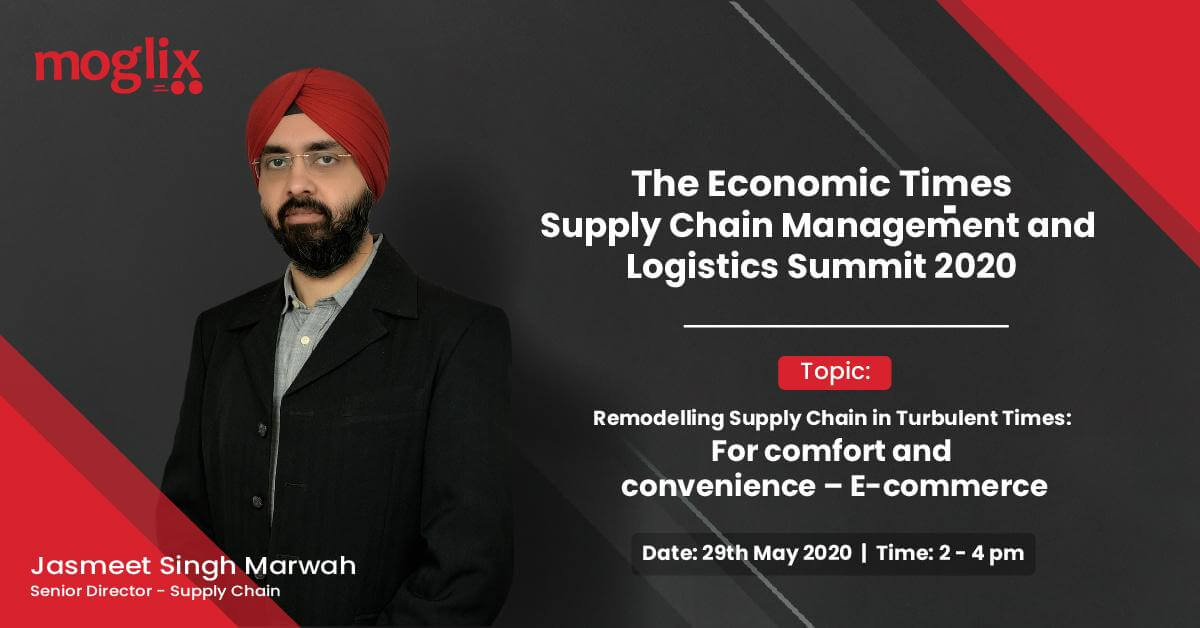
The Economic Times Supply Chain Management and Logistics Summit 2020
The Economic Times Supply Chain Management and Logistics Summit 2020
Date & Location: May 2020
Theme: Remodelling supply chain in turbulent times
About the Event: Dedicated to the OEM community the conference witnessed the coming together of supply chain leaders to discuss some of the most pressing challenges and solutions. Major issues discussed during the course of the event included emerging practices like digital transformation of MRO procurement and digital enablement of supply chains for OEMs to gain greater visibility into supply chain performance
COVID19: The Three Phases of Recovery in Manufacturing

COVID19: The Three Phases of Recovery in Manufacturing
How badly has the manufacturing sector been hit by the COVID19 pandemic? Is recovery from the current situation even possible? Given the huge costs imposed by the lockdown and the unpredictable contours of the spread of the contagion, what can manufacturers do to resume their business once the first signs of ‘Unlock 1.0’ are visible? If so, what trajectory will enterprises in manufacturing need to take to make up for the significant losses that have already occurred and the ones that are anticipated to emerge over a period of time?
The United Nations (UN) has projected that the global economy will shrink by 3-4% in the year 2020. As an outcome, manufacturing enterprises need to introspect on the steps that they need to take today, tomorrow, and over the course of time, leading into the future of a post-pandemic world. At Moglix, we believe that enterprises need to visualize the road to recovery by first rebuilding trust today, enabling businesses processes with technology for tomorrow, and building futuristic supply chains using advanced technology for the foreseeable future beyond COVID19.
What Manufacturers Need to Do Today?
Rebuilding Trust: The Great Lockdown in 2020 has lent a major shock to public healthcare systems and has created an enormous trust deficit at both individual and institutional levels. In the manufacturing sector, trust erosion has emancipated in many forms, including withdrawal of labor from participation in production processes, opaqueness in supplier collaboration, and a lack of visibility into insights on key performance indicators of cost, quality, and expected timelines of delivery. As such decisions to deploy resources and engage them into manufacturing during ‘Unlock 1.0’ must be pivoted on addressing the trust deficit secularly first within enterprises and then scaling up across all enterprises constituting the supply chain in the manufacturing sector.
- Ensuring Health Protection: At the enterprise level, this calls for ensuring the availability of quality rated personal protective equipment (PPE) kits, and medical kits for all employees and the creation of fool-proof systems for implementation of standard operating procedures for regular sanitization of the physical environment at the workplace. The second imperative is to ensure transparency in sharing information on the deployment of such social distancing and contact tracing measures on a “need to know basis” among all stakeholders in the supply chain while staying within the ambit of data privacy.
- Fixing the Broken Fragments with Data: Reviewing supplier collaboration and manufacturing workflows today will play a huge role in creating an open and transparent dialog among OEMs, CMs, EPC enterprises, MSMEs, and suppliers across multiple tiers in the supply chain. A pilot project for mapping the supplier network can follow a template similar to the one used by bankers to conduct a stress test of debtors during the Great Meltdown of 2007 and focus on three Cs: character, capability, and credibility. One way to do this is by creating a similar stress test in manufacturing and encompassing the three Cs can be of paramount importance:
- What is the site location of the supplier including the city, region, and country? Do we have insights into the real-time status of COVID19 spread there?
- Is the supplier adhering to social distancing and contact tracing practices to steer clear of COVID19 risks?
- What are the parts procured from this site? What is the part number and description, part cost, annual volume for this part, rate of replenishment of inventory for this part, and the total spend (per year) from this site?
- What is the end product including the OEM’s end product(s) that uses this part? What is the profit margin for the end product(s)?
- What are the lead times from the supplier site to OEM sites in days?
- What is the Time to Recovery (TTR)? What time would it take for a site to be restored to full functionality if the supplier site is down, but the tooling is not damaged or if the tooling is lost?
- What is the cost of loss if expediting components from other locations is possible? If so, at what cost?
- Can additional resources (overtime, more shifts, alternate capacity) be organized to satisfy demand? If so, what is the cost?
- Does the supplier produce only from a single source? Could alternate vendors supply the part? Is the supplier financially stable? Is there variability in performance (lead time, fill rate, quality)?
- What are the mitigation strategies for this supplier-part combination? Who are the alternate suppliers? How to arrange excess inventory?
What Manufacturers Need to Do Tomorrow?
Enabling Business Processes with Technology: As enterprises in manufacturing and supply chain operations look to move beyond the immediate impact of the COVID19 pandemic over the next financial quarter, it shall make sense for them to scale up the best practices from the peak of the recessionary phase and integrate siloed data repositories for multiple functions into a compact source to pay (S2P) platform for a single-window approach to manage approvals and authorization for procurement decisions. This shall serve the purpose of augmenting enterprise-wide transparency and building greater efficiencies by facilitating multi-tenant models for collaboration spanning across the nerve center leadership, customer relationship, and supply chain teams to optimize costs. Small steps towards instituting a digital “cost control tower” to prioritize urgent and important payments and define clear reporting metrics for managers to track the liquidity status in real-time may over the period of the next financial quarter evolve into rolling forecasts to identify major areas of EBITDA risks and finally implement zero-based budgeting (ZBB) to achieve greater fiscal prudence for discretionary expenditures and indirect procurement. Authorization and access to such information systems may slowly be devolved amongst mid-level managers to move the enterprise forward along the lines of supply chain digitization and learning curve from a strategic to a tactical level
What Manufacturers Need to Do in the Future?
Build Futuristic Supply Chains using Advanced Tech: One of the major lessons coming out of the COVD19 pandemic for enterprises in manufacturing shall be gaining visibility into the next steps and future-proofing their supply chains. They will have learned the value of anticipating the next supply chain disruption in advance and adjusting their positions in the market while they still have time to do so.
Using Advanced technologies like contract management and predictive analytics that allow enterprises to stay informed on their supplier relationships, map the contributions of suppliers by value and volume, and assess their exposure to volatile business environments are likely to emerge as the enablers of de-risking supply chains. With AI, ML, and advanced analytics being able to capture deeper insights on the next steps in the supply chain right up to the end consumer, the direction of supply chain automation is likely to direct towards demand-driven planning and forecasting (DDPF).
While temptations to stay in denial of the challenges in a post COVID19 world and to retain the status quo may still be strong, enterprises shall do well not to risk a return to pre-COVID19 coordinates of workflow, collaboration, and distribution. Instances such as the Y2K, the subprime crisis of 2007, and climate change should serve an adequate warning to enterprises to steer clear of the lure of wishing away a rebound of challenges and then waking up to grave realities. A future that is driven by a high degree of technology enablement for information sharing, engaging in transparent dialogs to drive outcomes, and creating coordinated responses to a crisis may present us with a vertical upward shift in costs. Irrespective of how steep the shift in costs may be, it shall be prudent for enterprises to believe that they shall be able to pass on such incremental costs of technology enablement across the downstream of the supply chain right up to the end consumer.
How a National Supply Chain Network Can Enable India to be Self-Reliant: Looking Beyond COVID19

How a National Supply Chain Network Can Enable India to be Self-Reliant: Looking Beyond COVID19
The compelling need to go into lockdown and maintain social distancing to minimize the transmission of the COVID19 pandemic serves as a glaring case study for enterprises in India to analyze the challenges caused by global supply chain disruptions. Given the projected decline in the real GDP growth rate by at least 1% and a surge in unemployment to 23% due to the freezing of the economy into an abominable lull, it makes sense to: (1) critically examine manufacturing-led exports, (2) explore the scope of a national supply chain network to boost domestic manufacturing and investment, and (3) assess export promotion as a strategy to boost employment generation and economic growth through the multiplier effects thereof.
What Makes India a Strong Contender to Emerge as a Global Manufacturing Hub Beyond COVID19?
A new normal is set to emerge coming out of the COVID19 pandemic accompanied by a major restructuring of global supply chains. While the manufacturing sector has been affected by the global supply chain disruptions caused by the COVID19 pandemic, there is ample reason for enterprises in the manufacturing sector to be optimistic about the India growth story.
Diversification of Export Portfolio of Indian Manufacturing by Geography:
Prior to the COVID19 pandemic, the value of exports of manufactured goods from India, stood at USD 18 billion of which China accounted for USD 1.8 billion while, the United States, India’s top export market accounted for USD 4.2 billion. This is indicative of the highly diversified portfolio of manufacturing exports of India and in hindsight both an opportunity to grow as well as a major lever to de-risk the supply chain of the manufacturing sector in India.
The Resilience of Indian Manufacturing Exports to Sino-U.S Trade Wars:
India’s revenues from the export of manufactured goods had been registering consistent growth for some time before the outbreak of the COVID19 pandemic. In FY 2019 reached its highest ever at USD 330 billion, surpassing the previous peak performance of USD 314 billion in 2013-14. It was achieved despite the strong headwinds due to the reciprocal Sino-U.S imposition of tariff and non-tariff barriers that were projected to weaken growth in global trade by 1.70% for a number of Asian economies including China. The fact that India emerged as the only Asian economy to register 1.7% growth in the value of manufacturing exports proves its resilience to a weakened global economy.
Growth in Exports of Intermediate Goods and Technology Penetration in Manufacturing:
A significant progress in the performance of India’s exports of manufactured goods is the growth registered by various categories of intermediate goods in FY 2019. Major growth drivers in the category of intermediate goods include engineering goods (+6%, USD 83,704 million), petroleum products (+28%, USD 47, 954 million), chemicals (+22%, USD 22,573 million) and pharmaceuticals (+11%, USD 19, 188 million) respectively. Other verticals that registered growth include textiles, electronics, and plastics. The growth in the value of exports of such intermediate goods holds significance from the standpoint of how technology enablement in manufacturing can push Indian manufacturing enterprises up the global value chain in a post COVID19 world. The share of FVA in India’s exports stood at roughly 17% in 2018, with the share of IDA (domestic value-added) in its exports stood at 83%.
National Supply Chain Network Can Enable India to Grab a Greater Share of the Global Value Chain
A National Supply Chain Network can connect Indian manufacturers in the hinterlands to new opportunities in the global supply chain and enable them to earn a greater share of the GVC. This calls for exploring avenues to strengthen domestic manufacturing and attract foreign direct investment to make a greater proportion of the global manufacturing output, locally in India and embrace export promotion. It calls for an integration of initiatives to create fixed assets for infrastructure, improve logistics connectivity, and drive the technology enablement of supply chains through digital connectivity to de-risk global supply chains from the unprecedented shocks experienced during the COVID19 pandemic.
Improving Infrastructure is the Key to Building the National Supply Chain Network
The creation of world-class infrastructure is at the heart of the idea of a National Supply Chain Network and remains a strong impediment to India’s performance in manufacturing. Infrastructure in India has a strong investment-to-GDP multiplier effect of 2X. This means that a 1% increase in investment in infrastructure can create 1,360,000 jobs. The National Infrastructure Pipeline that has been envisaged at the cost of INR 100 lakh crore over the next five years can be leveraged to improve logistics connectivity. The creation of fixed assets like 9000 KM of the economic corridor, 2500 KM of controlled highways and 5000 KM of highways before 2024 in 12 bundles if designed from the ground up to provide greater connectivity beyond terminal gates ports and airports to the hinterland in rural areas can significantly raise the attractiveness quotient of foreign direct investments for global corporations in core industry verticals mentioned above to make in India. The recent announcement on the creation of a land bank to promote investments in the 3376 industrial parks and SEZs spanning across 5 lakh hectares is a step forward in the right direction in this regard. A single-window approach to clearance and approval of land acquisition drives based on the adoption of a scientific and weighted average indexing of economic, technical and environmental feasibility can expedite land acquisition while ensuring that questions on livelihoods of people and the sustainability of the planet are duly addressed. To make economic growth truly inclusive, the scope of land acquisition may be extended to include public healthcare, affordable housing, safe drinking water, irrigation, and warehousing.
Leverage Technology Integration in Manufacturing to Create a Transparent National Supply Chain Network
The lack of visibility into data and limited information sharing has great repercussions for OEMs, CMs, suppliers, and end customers in the manufacturing supply chain because it operates on a foundation built by land, natural resources, and fixed assets all of which have a high gestation period, entail high fixed costs and involve making decisions for the long run. One of the major takeaways for Indian enterprises from the COVID19 pandemic has been the massive trust erosion in supplier relationships and collaborations with major OEMs based out of the epicenter of the supply shock invoking force majeure to seek effective insulation from the loss offsets mandated for dishonoring supplier contracts. Technology integration can significantly improve technical and economic efficiency, reduce project overrun costs, and provide visibility into outlay on direct procurement and enable compliance with contractual obligations and transactional behavior. A focused approach to improving transparency into the mapping of multi-tiered supplier networks is essential to the vision for a National Supply Chain Network. Advance information on possible digression from supplier contracts, supply chain automation to explore repetitive patterns in supplier behavior through tracking of key performance indicators of cost, quality, and on-time delivery can enable Indian enterprises to work with a better sense of anticipation and likelihood into the next steps in the supply chain journey and thus adjust their positions in the market to hedge against supply chain disruptions.
Make in India and the National Supply Chain Network Critical to Job Creation and Growth
Amidst the emerging realities of the COVID19 pandemic and the negative economic shocks, a dialog on making India self-reliant needs to focus on integrating policy narratives and corporate initiatives to boost employment generation and get a greater share of the gross value addition to manufactured goods done locally in India. The manufacturing sector that currently contributes 16-17% of the GDP, 12% of employment generation in India, and 57% of India’s exports, assumes critical importance in this regard. The MSME sector, on the other hand, has been the enabler of the last resort in these challenging times of COVID19 to diverse communities of people in the country. Stand-alone shops, grocery stores, food marts and markets, and ancillary units have demonstrated their capabilities to provide hyperlocal services, deep market penetration, low-cost innovation, and last-mile delivery of goods and services. With a strategic integration of the National Supply Chain Network with the mission to make in India, the share of manufacturing in India’s real GDP may rise to 25%, create new business opportunities for the MSME sector and create the 100 million jobs targeted under the aegis of the “Make in India” campaign. Data suggests an indirect multiplier effect between manufacturing and services in India with one manufacturing job creating three jobs in the service sector. For a labor surplus economy like India, the ability to generate employment and affect a rebound in real GDP growth rates to pre-COVID19 levels should suffice to conclude a dialog on the importance of the National Supply Chain Network and the “Make in India” label.
Getting Indian Businesses Prepared for Restarting the Supply Chain During Lockdown 4.0
Getting Indian Businesses Prepared for Restarting the Supply Chain During Lockdown 4.0
The latest MHA guidelines for enterprises to resume commercial activities during the ensuing period of lockdown 4.0 reflect the solutions required to resolve the local challenges posed by the Covid19 pandemic to India following “mass customization”. The roadmap to be adopted by enterprises for “walking off the seatbelt” must address the twin challenges of scale and diversity that are representative of the economic and geographic environments of India. Given the diversity in the rates of morbidity, mortality, and recovery across regions in the country it is evident that the opening up of the economy while being staggered shall also be localized and follow different timelines across regions and industry verticals in the economy. It is in view of these emerging realities that enterprises need to decode the revised MHA guidelines for resuming activity during the nationwide lockdown.
National Directives for Covid19 Management and Standard Operating Procedures: MHA Guidelines
The latest order for lockdown 4.0 retains the status quo of preceding orders during the last 60 days of the lockdown while devolving regulatory functions of the business to local authorities to assess health risks and resilience of the apparatus for civil administration. It mandates that disinfectants be used for regularly sanitizing: entrance gate of building and office, cafeteria and canteens, meeting room, conference halls, open areas, verandah, the entrance gate of sites, bunkers, portacabins, buildings, equipment and lifts, washrooms, toilets, sinks, water points, walls, and other surfaces. Further, it deems the sanitization of all vehicles, machinery entering the premises, and thermal screening for everyone entering and exiting the workplace as mandatory. The National Directives for Covid19 management mandates compliance with the following workplace safety measures:
- It recommends that the practice of work from home be followed as much as possible.
- It requires enterprises to ensure on the best effort basis that employees install the Aarogya Setu app on their personal devices for safety in the workplace.
- It deems the wearing of masks as compulsory for people in public places and workplaces.
- It deems the making of adequate arrangements for temperature screening and hand sanitizers for people as compulsory.
- It deems as compulsory for organizations to sanitize workplaces between shifts.
- It deems as compulsory for organizations in manufacturing units to ensure frequent cleaning of common surfaces and makes handwashing mandatory.
Reimagining the Solutions for Lockdown 4.0 from a Local Perspective
One of the major highlights of the extended period of lockdown 4.0 from the standpoint of supply chains is the approach to localization of challenges and solutions thereof. The latest order from the MHA for lockdown 4.0 clearly suggests that the delineation of red, green, and orange zones will now be decided by the respective state and UT governments. It also devolves decision-making powers for demarcation of buffer and containment zones to district-level authorities, while requiring them to operate within the guidelines of MoHFW. Enterprises that are looking to resume economic activity in the ensuing period are now required to take cognizance of the decentralization of the business regulatory framework and must look to engage with local authorities, local suppliers, and local communities of people.
Implications for Supply Chains and Workplaces of Enterprises Due to the Localized Approach
The new approach enshrined in the MHA order for lockdown 4.0 brings into focus the aspects of localization of supply chain practices and engagement with business and civil regulatory institutions at the district, state, and UT levels.
Enterprises that are preparing to restart their supply chains thus need to be more aware of the evolving on-ground situation in states and UTs to understand the regulations on the mobility of people, materials, and multimodal logistics and thereafter map their availability for work across multiple locations in their supply chain.
For enterprises that are multi plant operators, this requires them to adopt a new decentralized and bottom-up approach to planning, implementing, and monitoring supply chain operations in different locations across states and UTs in India.
By implicit rationale, it also calls for enterprises in the manufacturing sector to take a fresh look at the upstream and downstream activities of their supply chain. Given the wide diversity in the rates of spread of the COVID19 pandemic across locations, it is prudent for enterprises to keep track of operations across every plant location separately.
The localized approach to lockdown 4.0 calls for a fresh mapping of suppliers against procurement requirements for each plant location. This shall, in turn, set the tone for mapping the available modes of hyperlocal transport, engaging with logistics service providers, planning the logistics routes and number of sorties required for each vehicle, and conducting a gap analysis of headcount of people for covering each touchpoint in the supply chain from the point of manufacturing to the points of distribution.
Social distancing norms for as long as they apply shall compel enterprises to operate at sub-optimal production levels thereby drastically cutting down gross value addition at multiple levels in the supply chain and a search for new models of costs. Owing to the different timelines of the opening up of regions across the country, a restructuring of the supply chain is bound to happen. Enterprises located in regions that are first to open up shall have the first-mover advantage, albeit in the short term. The resumption of economic activities in the regions that lead the race to reopen shall create a local demand for industrial supplies and local suppliers located in proximity to these enterprises shall be the first in line to secure these orders for raw materials, intermediate goods and class C items like packaging and MRO. In the short term, as long as all the regions in the country do not open up for the economic activity to resume, local supply chain ecosystems resembling the raisin-pudding model envisaged by the scientist JJ Thomson shall emerge. As long as logistics across adjacent states shall remain cut off, such local supply chain ecosystems may also increasingly witness opportunities for arbitrage and speculation, thereby affecting new pricing and revenue enablement models in the newly reopened regions.
Building Supply Chain Capabilities for the Short Term and the Long Term
Given the new realities of supply chain restructuring that are about to emerge during lockdown 4.0 and beyond, enterprises need to start building capabilities now and look to scale best practices through a repetitive model to arrive at a new normal in the long term. Creating local supplier networks and investing in collaborative supplier relationships in local geographies shall be integral to restarting economic activity in the short term. Partnering with these new suppliers in the short term and moving towards strategic supplier relationships shall require new supply chain models driven by collation and analysis of data on key performance indicators of supplier performance. Agile collaboration with suppliers shall require switching to a digital workflow to fast track the PR-to-PO process. Most importantly it shall be necessary for enterprises to leverage cloud platforms to store such data and then apply sensing, processing, and learning capabilities of artificial intelligence to drill down their supplier networks to understand their supplier risk exposure better to stay insulated from supply shocks in future. A new normal shall eventually emerge from these altered ground realities.
The New Normal: Supply Chain Touchpoints Separated by Distance and Connected by Technology
The revised MHA guidelines for business enterprises while being effective for the ensuing period of the lockdown 4.0 are integral to the strategic evolution of the economic, geographical, and regulatory environments for business in India towards a more federal and localized supply chain design. There is a likelihood that enterprises may now have to work with a unique supply chain design composed of pools of resources, materials, and people within local jurisdictions and geographical footprints while being connected to each other in India and across the globe through high-end supply chain technology platforms and digital systems.
The takeaways from the localized approach to the lockdown shall in the long term lead towards a trajectory whereby all functions of business shall pivot on gaining visibility into the next steps in the local supply chain, making their supply chains more granular and agile to respond to opportunities and risks in the local environment, designing low-touch processes to stay operational from remote locations and building capabilities to align local resources towards the next opportunities in the shortest turnaround time. The Covid19 pandemic has caught business enterprises unawares amidst a massive supply chain disruptions. The supply chains of the future shall be much more localized and technology-enabled to enable enterprises to insulate themselves from the risks posed by opaque supplier relationships, failures of long-distance logistics, and look to move closer to the point of consumption.
Enabling Indian Food and Beverage Supply Chains During COVID19 and Beyond
Enabling Indian Food and Beverage Supply Chains During COVID19 and Beyond
Food and beverages (F & B), the fourth largest sector in the Indian economy, has continuously endeavored to keep the supplies of essential goods up and running in the wake of the COVID19 pandemic. While the F & B sector had garnered annual revenues of USD 52. 75 bn in FY 2018-19, it had been experiencing growing headwinds over the last 12 months before the onset of the COVID19 pandemic. It was able to register a growth in value in January and February in FY 2019-20 to the tune of 8.6%. Still, the recovery was cut short by the outbreak of the COVID19 pandemic in March, with growth slipping to 6.2%, owing to disruptions to its supply chain emanating from a wide range of factors.
How Does the Geographical Footprint of Indian F & B Affect Its Supply Chain Ecosystem?
The Indian F & B industry finds the presence of several large enterprises with a geographical footprint spread over 40 Mega Food Parks across the country. These Mega Food Parks may be further classified into the categories of: in operation, in progress, and in principle. Five of the top enterprises in the F & B industry in the country run food processing and manufacturing facilities at 17 “in operation” Mega Food Parks, with four such Mega Food Parks each in the north, west, and south and two each in the east and the north-east respectively. These large enterprises also have food processing facilities across the 21 “in progress” Mega Food Parks, with eight of these being distributed across the north, five across the southern states, and four across the central-south zone. The industry is characterized by the presence of a well-established distribution network, and non-price competition between the organized and unorganized segments. Traditionally the industry has benefited from the easy availability of raw materials from farmgate players, low labor costs, and value addition by post-farmgate players and MSMEs.
What Are the Supply Chain Risks and Operational Challenges Facing Indian F & B Now?
From the standpoint of an analysis of the supply chain risks and operational challenges facing the Indian F& B industry, the following factors assume significance:
- the epidemiological dynamics across the geographical footprint of Indian F & B
- the regulatory guidelines for crop harvesting and threshing and social distancing measures to prevent the spread of COVID 19
- the dependence of Indian F & B enterprises on global suppliers and markets
- the dependence of Indian F & B enterprises on supplies for value-added services
- finally, the supply chain risks emanating from a breakdown of contractual obligations and compliance mechanisms in hotspots, red zones, and containment zones
How Does the Spread of the COVID19 Contagion Impact the Indian F & B Industry?
From the standpoint of large Indian F & B enterprises, it is essential to note that its geographical footprint across the Mega Food Parks and beyond farm gates has a direct bearing on the food supply chain and exposure to COVID19 led disruptions. 80% of the final products manufactured and processed by Indian F& B industry comprises of non-food grain items like poultry, dairy farm products, fruits and vegetables, sugars, permissible additives and preservatives, and edible oils and are driven perishable food supply chains (FSCs). These are low-shelf life products, with 60% of volumes being handled by non-farmgate players. Further, a whopping 85% of the FSC is handled by MSMEs that are dynamic and clustered near and in towns. The dynamics of the contagion thus far indicate that urban areas with a high density of population and congested physical environments are especially vulnerable to risks of transmission of the #COVID19 pandemic.
What to Make of the Regulatory Guidelines and Standard Operating Procedures to Combat COVID19?
An analysis of the Indian FSC on the lines of segregation of farmgate players, post-farmgate participants, and downstream MSMEs can enable F & B enterprises to act with prudence and proactively map contingency and recovery mechanisms to ensure compliance with regulatory measures.
Farmgate Players in Indian FSC
The Department of Agriculture, Cooperation, and Farmers’ Welfare, Government of India has issued guidelines for harvesting and threshing for farmgate participants in the FSC. While foodgrain items make for only 20% weight of the FSC in India, the dependence on several critical agro-based products hold relevance to the F & B enterprises.
Post-Farmgate Players in Indian FSC
Indian F & B enterprises face higher exposure to post-farmgate activities that account for 60% of the FSC. Data reported in the National Sample Survey 2011-12 suggests that post-farmgate activities are undertaken in semi-urban areas, towns, and tier-II cities in regions that are close to farm areas. Such physical proximity has traditionally served to reduce the TAT of cargo, reduce logistics costs, and added a measure of speed to the FSC that holds relevance for perishable goods. The low rates of morbidity and mortality reported thus far, coupled with easy access to healthcare services and regulated commercial real estate, make post-farm gate participants less likely to be disrupted by the COVID19 pandemic. Furthermore, the presence of organized labor makes it easier to implement social distancing measures stated by the Ministry of Home Affairs vide the National Directive on COVID 19 Management and Standard Operating Procedures.
MSMEs in Indian FSC
MSMEs form the third key stakeholder group in Indian FSCs. NSSO 2011-12 data suggests that MSMEs handle between 72% and 83% of the F & B products consumed in India for wholesaling, processing, logistics, distribution, and retailing, all of which are labor-intensive and operate with high densities of workers in small commercial real estate. Given the trajectory of the COVID19 metrics thus far, it makes sense to suggest that MSMEs that are engaged in the downstream supply chain are the most susceptible to COVID19 risks. With 80-90% of retailing and distribution being routed through MSMEs operating in densely populated urban areas, the downstream of the Indin F & B supply chain stands at risk of being disrupted.
How Does Dependence on Suppliers for Value Added Services Affect Indian F & B Enterprises?
Dependence of Indian F & B enterprises on domestic MSMEs for class C items like packaging and labeling adds to the supply chain risks. Given the economic environment of MSMEs as discussed above, the withdrawal of people from workforce participation, compromising with regulatory guidelines, and exposure to red zones and containment areas make them susceptible to supply chain disruptions. Further, the bundling of services like third-party logistics and warehousing makes MSMEs more vulnerable to the risks of COVID19, thus raising the risks of inflated costs of packaging, warehousing, and distribution and higher turnaround time of cargo thereby affecting market outreach of enterprises.
Recommendations for Making Indian F & B Supply Chains More Efficient Now.
The Indian F & B industry, while being a leading player in the resolution of the impasse, is required to make its supply chain more efficient to withstand the disproportionate impact created by the Covid19 pandemic. Following operational and supply chain measures are recommended for deployment in the short-run (next two financial quarters):
- Map Exposure to Local Supplier Network in Red Zones and Containment Areas
In the wake of the VUCA (volatility, uncertainty, complexity, and ambiguity) elements that have been accentuated owing to the dynamics of the contagion across India, it makes sense for Indian F & B enterprises to regularly assess the on-ground developments across red zones and containment areas. Given the challenges that are likely to emerge in the downstream distribution of food products, a switch to smart packaging to enable more excellent track and trace of SKUs during the supply chain journey can create customer delight in times of crisis.
- Periodic review of HVACR in Plants and Warehouses and PPE
Given the prerequisites of the operating environment that the F& B industry has, there is a necessity to periodically monitor and review the working condition of cold storages and cold chains to ensure the freshness of perishable products. The most important measures to ensure the safety of the lives of people and ensure minimum disruption to production routines are the optimal procurement of personal protective equipment and regularization of the MRO supply chain. Periodic quality control audits of HVACR (heating, ventilation, air conditioning, and refrigeration) can enable the easy downstream distribution of food products when these are still fresh and fit for human consumption.
- Gradually Evolve to Sustainable Packaging to Protect Edible Contents to Address Health Risks
The immediate supply chain risks posed by the COVID19 pandemic to the downstream activities of wholesaling, retailing, and distribution of F & B products call for enterprises to take greater cognizance of the trust deficit among customers by the need for social distancing. Enterprises can do well to invest in partnering with suppliers that have the necessary capabilities of new product development and industrial-scale to provide tamper-proof packaging solutions that insulate the contents of edible items from the risks of contamination by pathogens during the supply chain journey. With the likelihood of a new normal of contactless delivery and models of low touch distribution, Indian F & B enterprises may like to drive pilot projects of innovation in sustainable packaging for edible items and scale-up deployment across product categories to reduce costs.
- Advance Booking of Logistics and Warehousing Capacity to Counter Surge in Domestic Demand
With an eventual reopening of the economy over the next financial quarter, a surge in domestic demand can hit logistics costs and, by implicit economic rationale, may invite a need for optimization of inventory holdings. Booking of logistics and warehousing capacity can reduce demand-pull inflationary pressures. Vendor managed inventory services for holding inventories can enable Indian F & B enterprises to unlock cash and rationalize working capital usage over the short term.
Beyond COVID 19: What is Next for the Indian F & B Supply Chain?
The COVID 19 pandemic, while having disrupted the downstream supply chains of Indian F & B enterprises offer a vast spectrum of takeaways that are likely to lead to the evolution of a new normal. Currently, the F & B retail market is dominated by food grocery stores and food services, both of which are growing at a CAGR of 25%. The overarching reliance on MSMEs for retailing and distribution routed through the manual workflow may witness a paradigm shift. It should enable Indian F & B enterprises to invest in temperature-controlled supply chain capabilities in urban areas, thereby allowing them greater control over the supply chain, volumes, and value. Given the non-price competition in the packaged F & B industry, a new technology-driven approach to the procurement of packaging and labeling can: reduce TAT of perishable goods, bring visibility into the supply chain journey of every unit of product, strengthen brand equity and reduce spoilage of food products.


 Back
Back