
How Manufacturers Can Save MRO Costs in UAE by 10%?
How Manufacturers Can Save MRO Costs in UAE by 10%?
If your enterprise is searching for solutions to save MRO costs in UAE, here is the catch. MRO costs usually account for somewhere between 5-10% of total costs and may not make up a significant chunk of the cost of goods sold (COGS). However, UAE has a highly competitive manufacturing landscape and even 1-2% of cost efficiencies can make or break your cost advantage.
To assist in a better way, we have outlined some of the steps to help manufacturers in the UAE avoid recurring expenses on MRO. If you are a manufacturer, you can take care of the following points to save MRO costs in UAE.
Manufacturers Must Minimize Return of Items
Delivering a product incurs a cost. Manufacturers price their products inclusive of that cost. However, when anything goes sideways, such as the product not being up to the quality standards as expected or has some defect, the buyer may return it. The return of items will add to the logistics expenses and impact the overall revenue.
Although the irregularities in the product may exist to some extent, manufacturers should try minimizing the double load on logistics by delivering the correct item in the first place. Here are a few points you can keep in check to reduce the rate of return:
- Quality Control Of Goods
- Correct Sizing Information
- Proper Packaging
- Timely Reviews and Feedback
- Round-the-clock Support
Take control of and implement those points to reduce the return of goods sold.
Manufacturers Should Opt for Digital Supply Chain Solutions
What humans can do, automation can do better. It holds in the case of supply chain management processes. It requires diligent work to manage the whole production line, i.e., from procurement to the final product delivery. If we focus just on the initial procurement part, there are different raw materials from various suppliers. On delving deeper, you have separate invoices for every procurement. On top of it, the communication channel is email, which requires regular follow-ups in case of any delays.
If you sum up all this, you will find it takes rigorous manual effort and consumes more time. As a result, your overall production time gets increased. However, if you enable procurement automation, you won’t have to stress repetitive tasks. Below are some notable advantages of relying on P2P automation:
- Easy-to-manage orders and supplies information
- A 50% reduction in TAT
- Easy monitoring of data
- Less hassle
Also, if multiple transactions happen at quick intervals, you can create an SOP and align your process to it. The SOP will help you scale your business. All in all, a refined approach coupled with digital supply chain solutions can create a difference in your final expenses. Thus, helping you boost your profits.
Manufacturers Must Find a Way to Deal with Ad-Hoc Procurement
As a manufacturer, you work on a contractual basis with your partners. You produce a definite amount of goods using the raw materials as decided in the contract. However, there are times when there is an unscheduled requirement of any product. Being a non-recurrent and non-strategic demand, it increases manufacturing enterprises’ expenses.
To solve this issue, manufacturers can take some steps such as:
- Enter into annual rate contracts
- Request for bulk orders
- Regulate your logistics
- Enable Procure-to-Pay solution
- Streamline processes
The main route of escape for manufacturers here is switching to annual rate contracts. In that way, they will be able to fulfill orders in a much better way. It will help them to avoid any unplanned expenses because of no ad-hoc buying.
Manufacturers Should Take Advantage of Data Analytics
The projection of demand and supplies can be difficult to gauge when you rely on static data. For example, an item you are producing may not garner similar interest in the market at a particular time due to various reasons. Since every step in the production line is interconnected, it is critical to have a correct projection right from scratch.
To do so, manufacturing enterprises can use technology and gain valuable insights into the procurement process. New-age technologies such as Artificial Intelligence (AI) and Machine Learning (ML) can help manufacturers create a mathematical model based on inputs from the data collected and facilitate better decision-making.
Some important avenues that AI and ML will open up for manufacturers are:
- Ability to look beyond the static data
- Evaluate the correct demand
- Improved risk management based on collected data
- Flexibility and transparency
P2P software solutions enhanced by AI and ML technologies can unlock opportunities that remain hidden from us. Thus, adding to the MRO costs, which you can save.
Wrapping Up
Summing up what we have learned here is that saving MRO costs for manufacturers in the UAE is a choice. With a careful, proactive approach and use of technology, you can minimize additional expenses and save up to 10% MRO costs, thus maximizing profits in the long run.
Moglix 2.0: Hitting the USD 1 Billion Valuation Mark and Impacting Lives

Moglix 2.0: Hitting the USD 1 Billion Valuation Mark and Impacting Lives
We started with a simple vision: How can we re-imagine B2B commerce and supply chain with technology?
From inception in 2015 to hitting the USD 1 billion valuation mark, the seed to unicorn journey of Moglix has been a tale of fearlessness, innovation, agility, and collaboration. The Moglix story rekindles hope and fires the aspirations of the manufacturing sector in ways that are absolutely unprecedented.
The milestone in our journey is also a testimony to the distance that India’s manufacturing supply chain ecosystem has traversed in these six years, its digital transformation, and the promise it holds for us as we chase the target of a USD 5 trillion GDP manufacturing economy.
Disrupting the Indian Manufacturing Sector with a Tech-first Approach
Technology enablement in the Indian manufacturing supply chain ecosystem in 2015 was at less than 2%. Building an enterprise that would leverage technology to reinvent B2B commerce and supply chains in India and transform a segment that had not seen innovation in a long while. It led to the birth of Moglix, a self-serve e-commerce platform fully equipped to streamline the buying and selling of 3,00,000+ SKUs of industrial goods.
In 2017 when India launched a crucial economic reform in the rollout of the GST, we began institutionalizing the processes needed to simplify our collaboration with all stakeholders in the supply chain. We started building a digital procurement platform with the aim of personalizing the B2B commerce experience for enterprises. Since its rollout, the Moglix Buyer’s Terminal has facilitated enormous ease of procurement of indirect materials, reducing time engagement on supplier collaboration by 80%, enabling 20% cost reduction, and onsite deliveries of 1.5 lac+ SKUs. It has enabled a seamless transition to work from home for 5000+ procurement team employees of our enterprise customers through the pandemic.
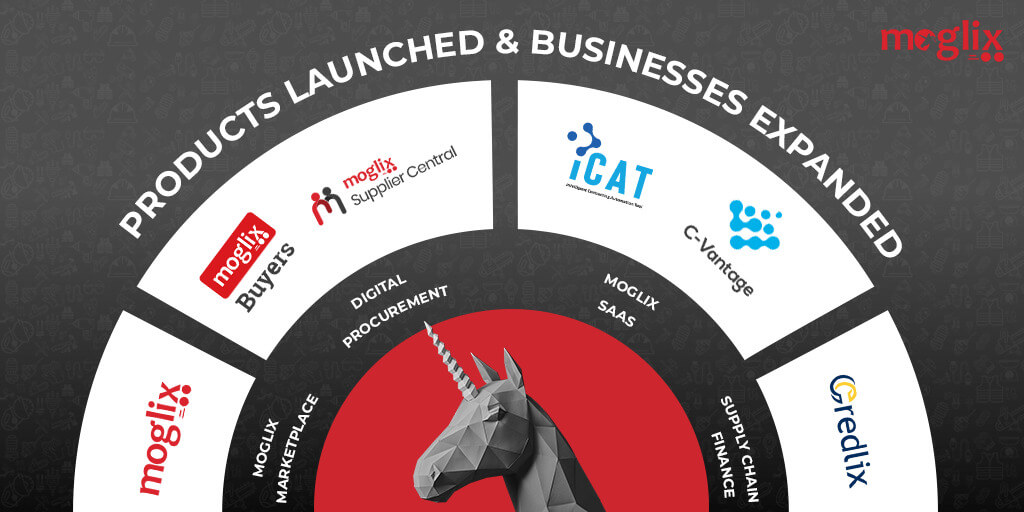
Entering the SaaS realm with iCAT and C-Vantage in 2018, we were focused on simplifying contract creation and enabling effective contract management for procurement teams. we were able to create an impact of 80,000 direct procurement contracts worth USD 10 billion by improving the cycle time of contracts.. In addition, the solution assumes tremendous significance in upholding the values of trust, transparency, and equity in OEM-supplier relationships in times of eroding uncertainty and supply chain disruptions amid the COVID19 pandemic.
Solving the Cash Flow Conundrum for MSMEs
As we continued to partner with enterprise buyers, we realized that there awaits a tremendous opportunity for suppliers, especially MSMEs, to connect to relevant growth and capacity expansion opportunities through OTIF order fulfillment and pan India distribution. The Moglix Supplier Central platform has been instrumental in shaping faster technology adoption in our supplier base.
While letting go of traditional manufacturing methods to embrace digital solutions was one challenge, the other was creating access to on-demand collateral free credit. Building a custom digital supply chain financing solution Credlix. Our vision is to provide working capital solutions to a large base of 500,000 MSMEs and 16,000 suppliers as well as improve collaboration between suppliers and buyers.
Our Secret Ingredient?
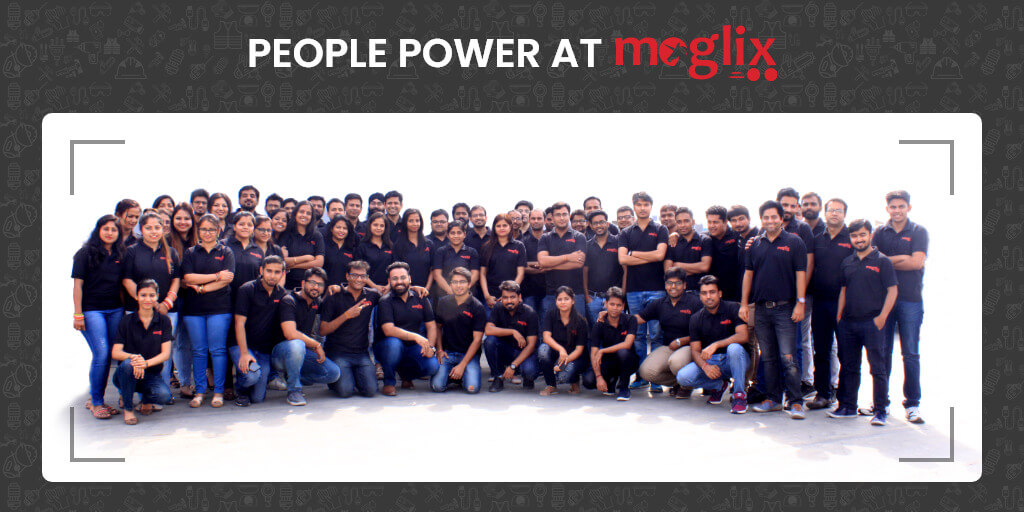
The people working at Moglix. We have a highly skilled team solving the hardest problems with a tech-first approach. We are grateful for the talent across MRO, Packaging, supply chain finance building smart tech to disrupt the #manufacturing sector.
Expanding into New Geographies
The onset of the pandemic has been an eye-opener for all of us. To match steps with our customers and suppliers, we had first to ensure the health and safety of our employees. Being built from the ground up on the cloud allowed us to pivot to a work-from-home model swiftly.
In hindsight, our technology-first approach has been our savior, enabling us to “do more with less for more.” A powerful testament to this adage is how we turned around our supply chain in 3 days at the pandemic’s peak in April and May last year with just 30 onsite staff.
When we launched Moglix in 2015, B2B startups were just 26% of the total startups in India & #B2Bcommerce was the next big area of innovation. Today we are proud to have built a platform that serves over 7 lac SKUs listed on our e-catalog: the largest in India in the MRO category pic.twitter.com/eFxua9YGp7
— moglix (@moglix) May 17, 2021
Our digital supply chain network is also a key enabler of our efforts to go global and transcend geographical boundaries. Over the past year, we have been able to integrate the UAE and the U.K into our supply chain. We exported PPE kits to 4 locations in the United Arab Emirates and 3 Ply masks to the U.K that were approved by International Quality Certification Services UK Ltd and CE certified.
What’s Next: The Immediate, The Intermediate and the Long-Term
The second wave of the COVID19 pandemic has severely impacted vulnerable communities in India in ways least expected. In the immediate aftermath of the pandemic, we will continue to support communities of people through our PPE supply chain solutions as we have been doing over the last year. While we have enabled PPE kit availability for 10 million people across 120 countries and 500 locations across India, we have now taken an initiative to streamline the oxygen concentrator supply chain through our group sharing model.
We are collaborating with 10 large enterprises, NGOs, and RWAs to enable communities of people to access oxygen concentrators across India through our innovative network-based distribution model. Learn more about our role in solving the oxygen crisis here.
Our focus on First Principles Thinking, how we define the market, and success criteria has led us to create the new operating system of B2B commerce for the manufacturing world. Looking forward to achieving many more such milestones as we continue our quest to build a bigger manufacturing economy.
How Can OEMs Benefit from e-Procurement in UAE
How Can OEMs Benefit from e-Procurement in UAE
e-procurement in UAE is not an isolated scenario; today’s world is running on digital wheels. Every industry is employing its digital skills to reap improved performance. The opportunities are immense.
However, despite continuous evolution, OEMs are slow to adapt to digital tools and techniques. It is because of the over-reliance on traditional skills and methods. As a result, the cycle from indirect procurement to the final delivery to customers, consumes 80% of the time of sourcing teams.
Cutting corners has become the pandemic-enforced trend to maximize profits in a business. At this time, digitalization in the supply chain can be a worthy step. It offers multiple advantages and underlines significant growth in the figures. To best understand its influence, let us unearth some key benefits.
Solving the Challenges in Supply Chain
The world is still recovering from the impacts of the COVID-19 pandemic. If we talk about the manufacturing sector, the virus has piled up on the challenges it was already facing. The COVID-19 induced lockdown dealt a heavy blow to the UAE economy, with businesses, and their supply chain all bearing the brunt. The International Monetary Fund (IMF) projected a 6.6% contraction in the GDP last year. It was mainly due to the impact of COVID-19 on key performance sectors and the fall in oil prices.
Sourcing the raw materials took the backseat, which resulted in a dip in manufactured products. Subsequently, the supplies to the end-users also got hampered. The dampening of business activities posed several challenges for the businesses to overcome.
To resolve the challenges, making a move in the right direction is imminent. With digitalization, businesses can adhere to the COVID-19 guidelines while conducting their business activities. Digital supply chain solutions are the most basic and foremost available methods to revive the lull operational activity.
Aligning with the Economic Growth
The UAE government announced a financial stimulus package to the tune of AED 100 Billion, among other measures to dilute the impact of the lockdown. However, the revival is not as instantaneous as the losses.
The IMF painted a brighter picture of the UAE’s economic recovery with a 3.1% growth, better than its 1.3% projection in October 2020. The positive outlook is a result of the combined efforts of the country and its citizens. OEMs can expedite their transition from traditional competencies to modern ones like adoption of a P2P software solution and supply chain digitization initiatives. Procurement automation, also known as P2P automation is integral to OEMs in UAE to stay on the course to recovery.
Taking a Step Towards Procurement 4.0
Since we live in Industry 4.0 era, we can find the production chain going ostensibly digital in its entirety. The ability to get a bird’s-eye view of your complete production link hands a better chance to minimize losses and maximize productivity. Businesses can acquire the necessary information on their logistics, such as the position of trucks, containers, and even pallets. All this at the click of a button.
To promote digital supply chain transformation, the UAE government is already taking steps under its Smart Government initiative to become a paperless government by 2021. The government is inviting the bid for tenders via electronic mode to facilitate a seamless procure-to-pay solution. Through this, suppliers can monitor their purchase orders and also submit digital invoices. This e-Procurement solution aims at digitizing and automating the complete process.
As digitalization is inevitable, OEMs must deploy it in their operational activities to make progress. e-procurement will enable easy management of complex supply chain processes. It will also allow businesses to use their people’s talent in other critical areas that require human involvement.
Experiencing Improved Decision-Making
Data is the key to gaining visibility into the supply chain. It is enabling digital supply chain solutions to divulge critical information to improve your decision-making capabilities and optimize business growth. With procurement automation in place, businesses can effectively monitor key performance indicators. On its basis, they can identify the improvement areas.
Cost-optimization is a must during this period of economic rebound. P2P automation offers this across the whole supply chain management processes. Digitalization’s other advantages are transparency, more visibility, a safe and neat collection of data, and cost-efficiency. All in all, businesses can streamline their processes and manage them effectively.
The Now and the Next for CPOs of OEMs in UAE
Digital supply chain transformation in the UAE is imminent, as the economy branches out to new-age non-oil verticals. However, it should not be in parts. For OEMs in the UAE to benefit from the adoption of e-procurement, CPOs have to take a unified view of the different but interlinked silos of the supply chain. Therefore, CPOs in UAE need to replace multiple solutions for different procurement functions with an integrated procurement automation system and consolidate supplier base management functions into one centralized control tower.
CPOs and the E-Commerce Boom in Indirect Material Sourcing
CPOs and the E-Commerce Boom in Indirect Material Sourcing
Indirect material sourcing has long been riddled with uncontrolled expenditure, non-compliance, and counterfeit products. Traditionally, these risks have made CPOs of large enterprises opt for a direct approach when dealing with suppliers.
With rising costs, potentially unregulated products, and the COVID19 pandemic-led supply chain disruptions in the UAE, a CPO’s job is becoming increasingly stressful. It is especially true for CPOs of large manufacturing enterprises across the Middle-East and North Africa (MENA) geographies where the pandemic has impacted 60% of freight capacity and multimodal logistics.
Integrated Solutions for Procurement
With the e-commerce boom taking over B2B marketplaces, CPOs are welcoming procurement automation solutions with open arms. These new generation P2P software solutions offer scalability, reliability, and risk assessment — all under the same roof.
Besides providing attribute-rich catalogs of pre-vetted, high-quality vendors of indirect materials, these B2B e-commerce solutions offer a dynamic range of functions. Some of these functions are customization, user-friendly interfaces and search options, real-time pricing, and industry benchmark comparisons. With their AI and ML capabilities, these systems can even generate analytics on KPIs such as price spread and per-category spend.
Benefits of E-Commerce for CPOs
B2B e-commerce offers a series of features that are beneficial across the p2p procurement process. They have multiple payment options available in AED, language translation assistance to Arabic, and easy refunds & return policies.
They also offer filtration of vendors based on their proximity to the manufacturing unit, quick logistics, and competitive shipping rates throughout the emirates. Let’s take a look at some of the key benefits e-commerce systems offer to CPOs.
Agility
B2B e-commerce solutions give enterprises quick and easy access to a robust e-catalog of indirect materials, akin to a B2C e-commerce experience. The products and services are structured and itemized based on several attributes and filtered by a configurable list of business rules. This includes but is not limited to compliances, ratings & reviews, technical specs, availability, and shipping rates. These automated systems have rapid TATs across the p2p pathway and endow the CPOs with greater transparency and market awareness channels to make better decisions.
For instance, the global procurement head of an automotive OEM has said that e-commerce adoption for indirect material sourcing has increased their price competitiveness. “It has expanded our knowledge,” he explained, adding that their enterprise is now planning to digitize their direct material sourcing as well.
Cost Savings
Typically, enterprises spend 15% to 30% of their revenue on indirect material sourcing. It is usually valid for enterprises with fragmented spending structures and limited internal resources for procurements. The human capital spent on the traditional procurement process is perhaps the highest. CPOs spend countless hours in monotonous transactional activities that leave them with little to no time for any value-addition work to the enterprise.
However, with digital procurement automation solutions, operational costs in UAE can be reduced up to 40%. More importantly, they offload CPOs with hours of repetitive work. It unlocks critical free time for CPOs to spend on supply chain management and optimization of the p2p procurement process.
Technology Integration
For large manufacturing enterprises, the integration of an e-commerce marketplace with their existing ERP is the deciding feature of pre-investment. By entangling itself with the enterprise’s p2p procurement process, the e-commerce solution automatizes and simplifies a vital link of the digital supply chain. It enables the system to intelligently monitor inventory, issue purchase orders, execute payments, track deliveries, and receive stock. It also minimizes the hassles of negotiations, contract management, and price comparisons.
Some of the advanced digital procurement systems offered by digital supply chain solutions enterprises can seamlessly integrate with ERPs like SAP, Jagger, and Oracle. These systems successfully streamline the accounting, reporting, and controlling of the procurement process, thus building end-to-end supply chain visibility.
Data Cleaning & Management
A global market study indicates that almost 63% of the items listed in a conventional procurement catalog have incomplete or duplicate information. However, with digital supply chain solutions, CPOs can assess their MRO master data quality using the system’s native AI and ML capabilities. These data analytics tools can also learn user behavior over time and generate optimized results that promote operational excellence.
Reports on purchase, fulfillment data, including buying history, spend limits, and wish lists, make it convenient for procurement teams to increase their work efficiency.
What CPOs Need to Know
With increasing demand, the scale of high-quality suppliers of indirect materials is rapidly growing on B2B e-commerce solutions. Some experts predict that by the end of 2021, 60% of the large enterprises will be using digital procurement methods for indirect material sourcing. It is also aligned with the government’s vision to digitize UAE’s economy in the coming years.
With a rationalized and automated procurement solution in place, the role of the CPO is shifting from being a negotiator to that of a creator. The present-day CPO discovers new marketplaces, innovates new procurement strategies, and collaborates with suppliers. The CPO also draws new digital blueprints for quick approvals and reviews, and smoothens the enterprise’s upstream supply chain operations.
Moglix becomes Latest Startup to Join the Unicorn Club
Moglix becomes Latest Startup to Join the Unicorn Club
Moglix, a B2B e-commerce platform for manufacturing goods, has raised $120 million as a part of its latest series E funding round, led by Falcon Edge Capital and Harvard Management Company (HMC), taking the overall valuation of the company to $1 billion.
Existing investors Tiger Global, Sequoia Capital India and Venture Highway also participated as part of this round.
This is almost a three-time jump in valuation for the company which had last raised $60 million in July 2019, at a valuation of $200 million-$300 million.
Read: Moglix launches supply chain finance platform Credlix
With the current equity infusion, the total funds raised till date by Moglix stands at $220 million.
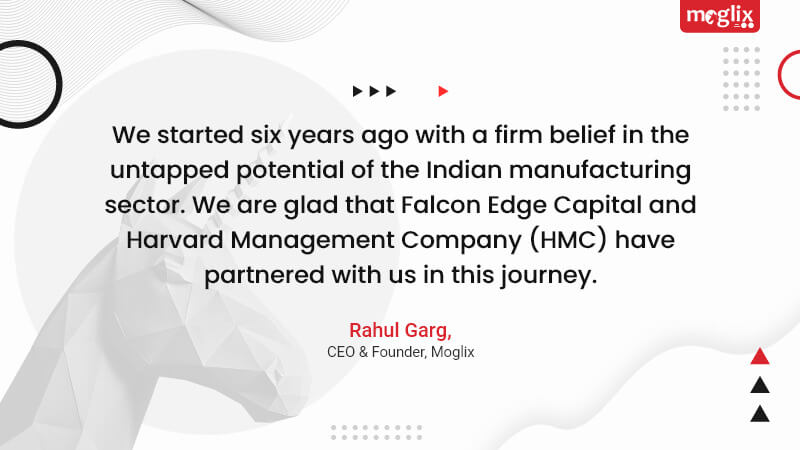
“We started six years ago with a firm belief in the untapped potential of the Indian manufacturing sector. We are glad that Falcon Edge Capital and Harvard Management Company (HMC) have partnered with us in this journey. Falcon Edge, with its deep roots in the Middle East and Europe and an understanding of public companies will guide us through the next phase of our journey,”
said Rahul Garg, founder and chief executive officer, Moglix.
The six year old startup provides manufacturers with industrial goods through its e-commerce platform, and is building an operating system for manufacturing that provides its customers a full stack service covering procurement, packaging, supply chain financing and highly integrated software.
Read MoreThe Benefit of E-Catalog for Indirect Materials Procurement

The Benefit of E-Catalog for Indirect Materials Procurement
E-Catalog | Indirect Materials Procurement |P2P AutomationRead More
Startups fight COVID-19: Moglix fights against India’s oxygen crisis
Startups fight COVID-19: Moglix fights against India’s oxygen crisis
As India battles the deadly second wave of the COVID-19 pandemic, startups, corporates, and individuals are all rallying together to ensure that they are doing their bit. The biggest challenge in the second wave is the dearth of oxygen cylinders along with crucial medicines.
“We estimate the need for at least 100,000 oxygen concentrators across India. However, each person buying an oxygen concentrator for themselves is not scalable and will lead to inefficient distribution of precious resources. Most people will find the cost prohibitive and the requirement short-lived (one to two weeks),”
Rahul says.
B2B ecommerce startup Moglix has been supplying PPE, oxygen concentrators, oximeters, thermometers etc. to essential goods and services companies to ensure their employees are protected. It has also distributed 15 million+ PPE kits and safety items amid this pandemic.
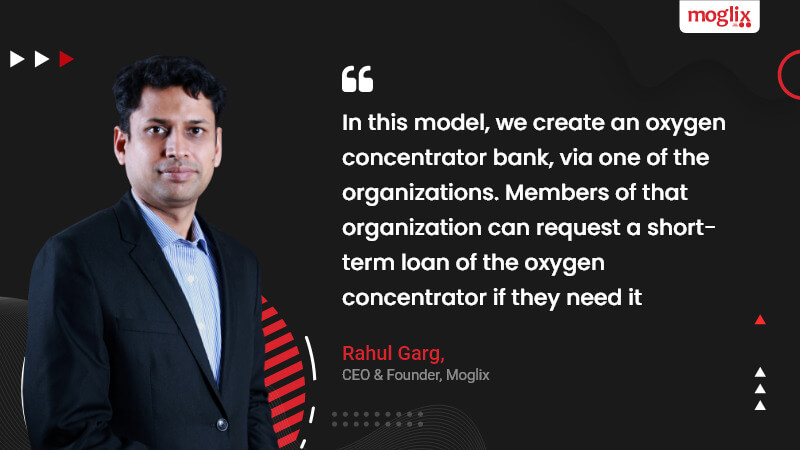
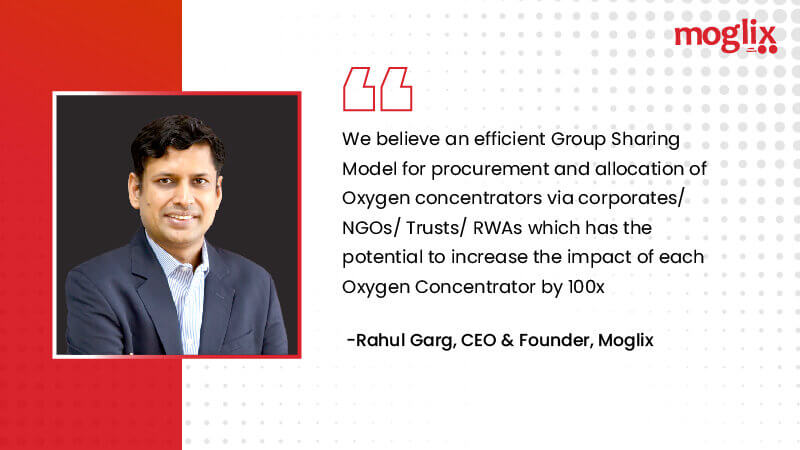
The startup has developed a “group sharing model” for increasing the impact of every oxygen concentrator by 100x, and is enabling organisations, NGOs, trusts, and RWAs to create oxygen concentrator banks for patients and providing a safety net for their communities.
Read More“If your organisation would like to join us in this mission to provide a safety network to corona warriors, please write to us at info@moglix.com. We can help you set up similar network-based models for your organisation and share our learning/ SOPs. Let us come together to do our bit in this fight,”
Rahul Adds.
Rise of Artificial Intelligence in Human Resource Management
Rise of Artificial Intelligence in Human Resource Management
Human resource management’s future lies in making the business function…Read More
Supply Chain Finance Automation Fast-Tracks MSME Payments
Supply Chain Finance Automation Fast-Tracks MSME Payments
Did you know only six crore MSMEs in India account for 29 peancing? What does…Read More
Creating a 100x Impact of Oxygen Concentrators
Creating a 100x Impact of Oxygen Concentrators
As hospitals struggle with bed and oxygen availability, Oxygen concenhome/ clinic care….Read More


 Back
Back